Naval Facility Roofing in Pompano Beach, FL
Salt air comes in off the Atlantic every day of the year, and on a barrier island the roof is the first thing it reaches. That is the situation for the Navy's facility at Port Everglades, a small parcel on the south side of the inlet, about 10 miles south of Pompano Beach, FL. Wind, spray, heat and afternoon storms all arrive there without much in the way of shelter.
Roofing a naval building in South Florida is partly an ordinary Broward roofing problem and partly a set of rules that belong to the Navy. The coast sets the materials, base access and mission schedules set the calendar, and a military installation roofing plan has to fit the facility instead of the other way around.
The Inlet Parcel: what the Navy has near Port Everglades

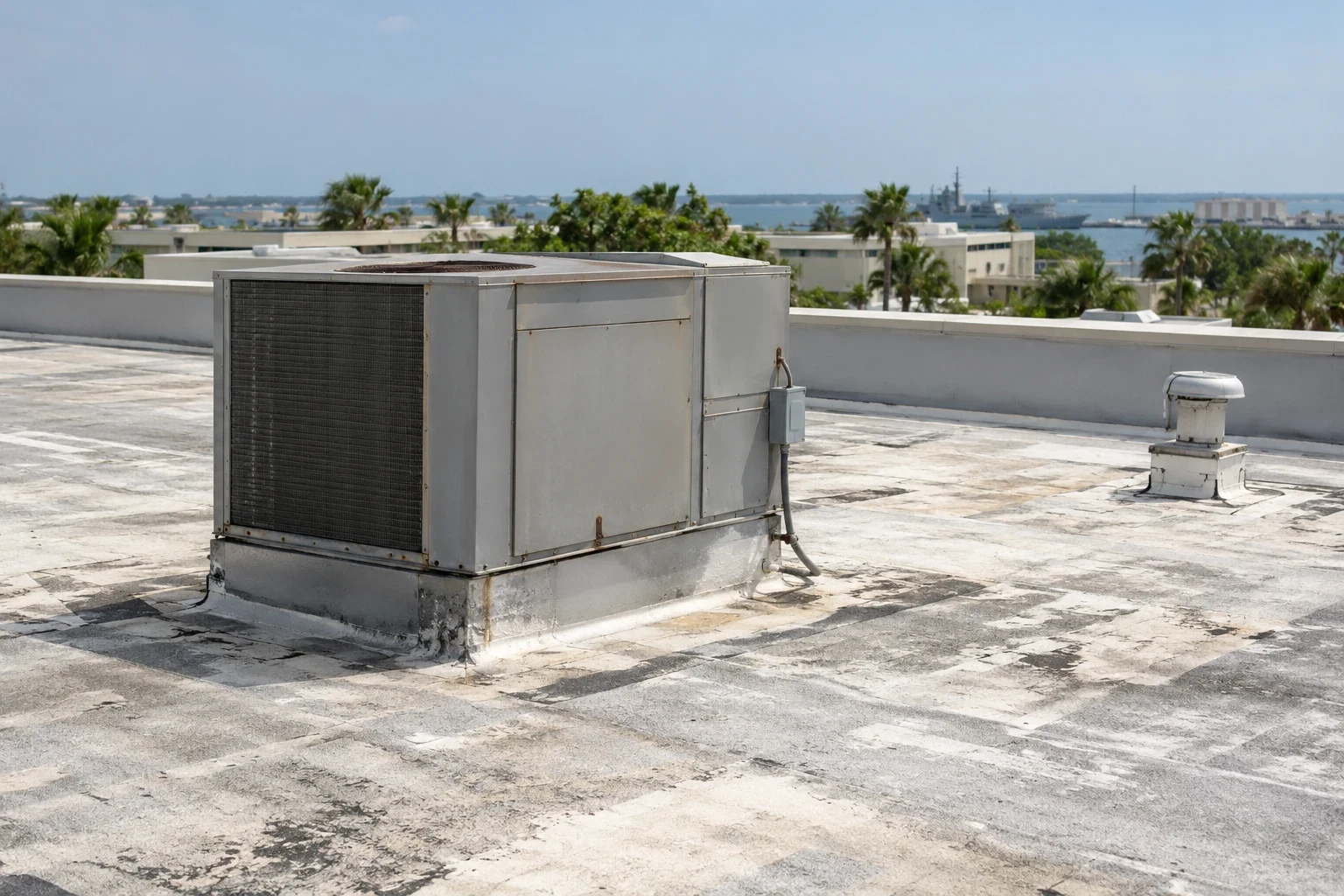
The South Florida Ocean Measurement Facility, run by the Naval Surface Warfare Center, occupies an approximately 8-acre barrier island parcel on the south side of the Port Everglades inlet. It sits east of Fort Lauderdale-Hollywood International Airport, inside Dr. Von D. Mizell-Eula Jackson State Park, in the part of the coast shared by Dania Beach and Hollywood.
Its main job is electromagnetic signature testing of Navy ships and submarines, controlled from a secure range house, and it is described as the only place in the world where the Navy can map signatures this way. A facility with that kind of mission is not a generic office park, and its buildings should not be roofed like one. An exposed barrier island site and a specialized purpose point to a roof plan written for the site, with the facility's own staff at the table. Port Everglades itself spans Hollywood, Fort Lauderdale and Dania Beach and works as a petroleum hub and Foreign Trade Zone, so the water next to the parcel is busy, and the air over it carries whatever the harbor and the Atlantic throw at it.
Salt on Everything: what fails first on a coastal roof
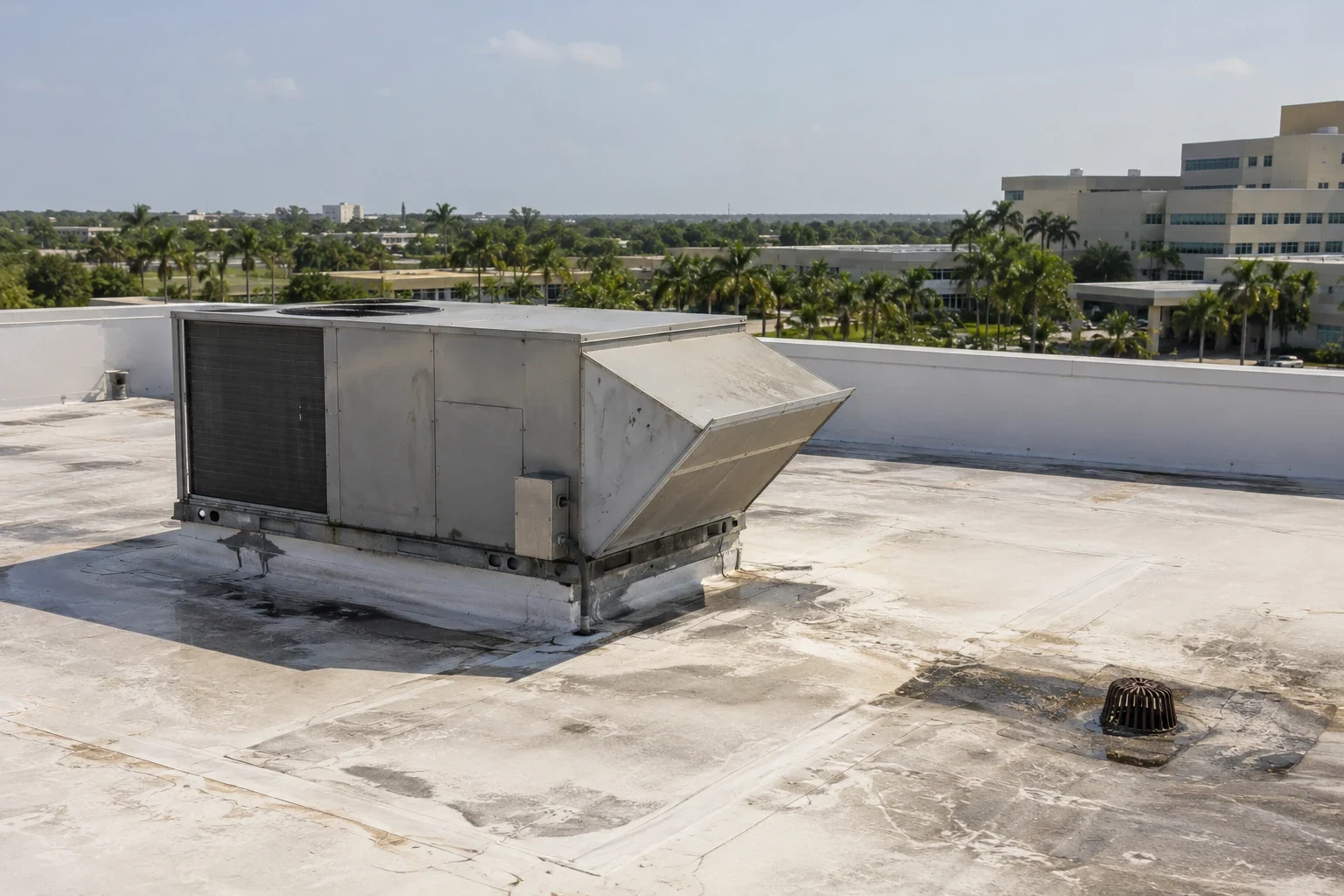
Salt does its work on metal before it touches the membrane. Fasteners, plates, drip edge, coping, gutters and curb flashings corrode first, and once an edge fastener loosens, wind has a way in. At Hillsboro Inlet, the boating and marina businesses in Lighthouse Point face the same salt and wind exposure, and the metal is the first thing to show it.
On a coastal naval roof we specify corrosion-resistant fasteners and heavy-gauge edge metal, rinse salt buildup off the roof during inspections, and check every coping and edge metal joint for lifting paint or white corrosion. Membranes with good chemical resistance, such as PVC, tend to handle the salt-laden humidity well. The sheet is rarely the weak point. The steel screw holding the edge down is. In summer, warm nights and dewpoints in the 70s keep that metal damp for hours after the rain stops, which is why a coating or sealant that skipped one corner turns up as a rust stain a season later.
Sensitive Work Next Door: ask before choosing metal
A building that supports electromagnetic testing may have rules about metal near its instruments, about fasteners that could be magnetic, and about any gear placed on the roof. We do not guess at those rules. Before a membrane, a fastener type or a metal flashing gets picked, we ask the facility's technical staff what is acceptable and what must stay away from the range.
The same caution applies to the other sensitive parts of a naval roof: antennas, cable penetrations, grounding and lightning protection. We seal around them and leave the equipment itself to the people who maintain it. When the answer on materials is restrictive, nonmetallic fasteners, adhered membranes and careful detailing can often get a roof sealed without bringing in anything the facility objects to. The point is to settle those questions on paper, before the first pallet of material shows up at the gate.
Two Commands, One Site: the Coast Guard next door
Coast Guard Station Fort Lauderdale is co-located with the Navy facility at the Port Everglades inlet and belongs to Coast Guard Sector Miami. Two services on one small site can mean two sets of people to coordinate with, two sets of access practices and more than one sign-off before a crew gets onto a roof. A Coast Guard station roof on that shared ground can bring its own schedule and its own rules.
On any naval installation, roofing normally follows base access procedures: advance crew lists, badges or escorts, inspected deliveries and set work hours. Work is also scheduled around mission operations, and roof specifications are typically written to the Unified Facilities Criteria (UFC) for roofing. We plan for all of it up front, ask for the schedule constraints early, and give the facility firm start and stop times so nobody is surprised by a crane or a loud morning.
Surge, Wind and Rain: preparing a coastal roof for the season
Coastal Broward saw about 3 feet of storm surge in Hurricane Irma in 2017, while gusts ran 80 to 100 mph through most of the county and three tornadoes touched down. Surge floods roads and access points, which can keep crews away from a coastal site for days. That is a good reason to finish the pre-season roof checks early, not wait for the first named storm to show on the map.
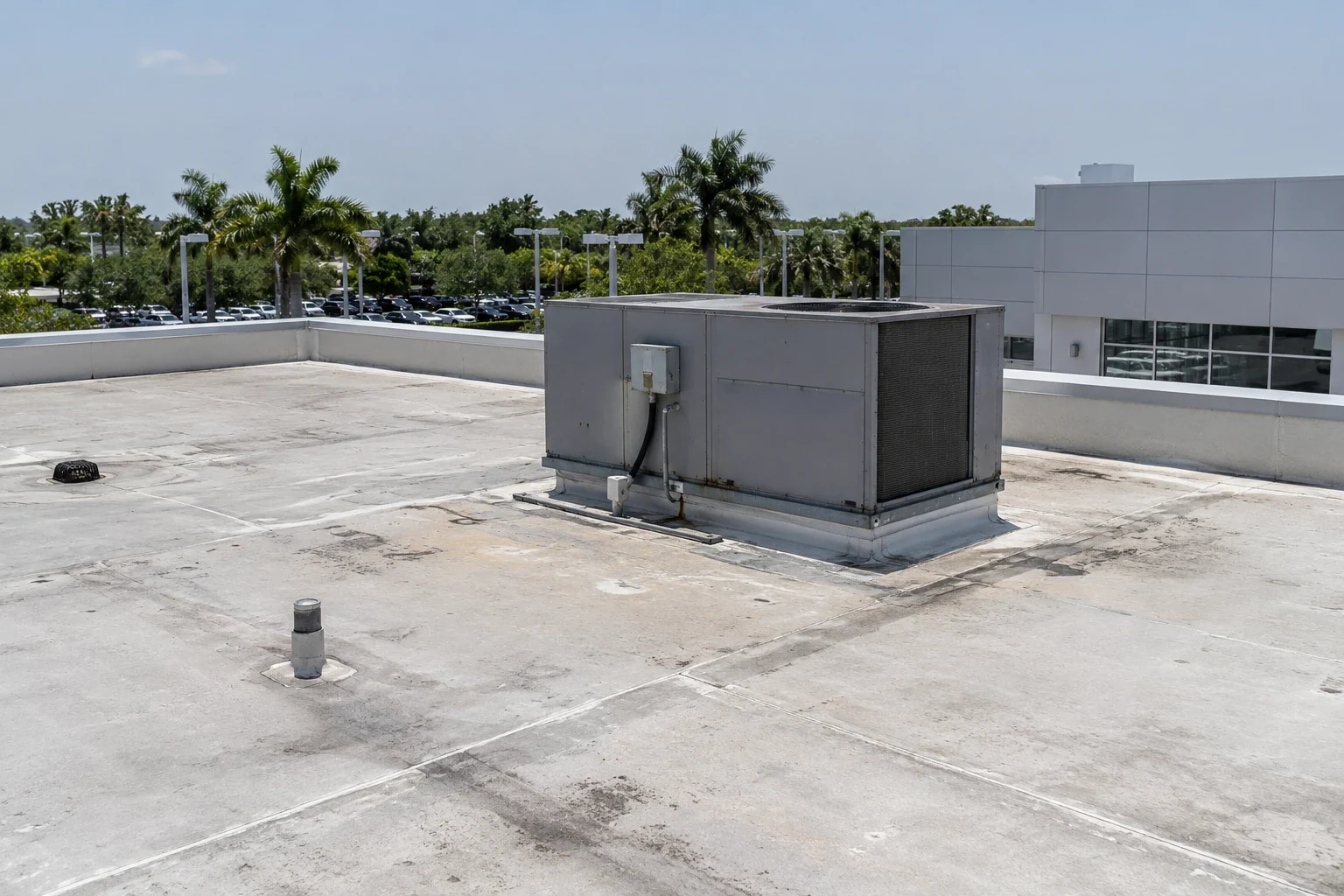
The pre-season walk covers perimeter metal, cap flashing, rooftop equipment tie-downs and every drain and scupper. At a coastal installation, water management starts with dependable primary drains and an accessible secondary overflow route. At an exposed coastal facility, drainage review should use that building's roof plan, outlet capacity and overflow route. We clear drains and scuppers, restore failed sealants and report anything that needs a permanent repair, with photos, so the people responsible for the building can plan the work and the money. Shop and hangar buildings get the same edge-first treatment.
Questions We Hear Often
Is there a Navy facility close to Pompano Beach?
Yes, about 10 miles south, where the South Florida Ocean Measurement Facility sits on the Port Everglades inlet in Dania Beach and Hollywood. The Naval Surface Warfare Center is its host command, and Coast Guard Station Fort Lauderdale shares the site.
What does salt air do to a commercial roof near the water?
It attacks metal first. Edge flashing, fasteners and curb flashings corrode, and a loose edge is how wind starts lifting a membrane. We use corrosion-resistant hardware, rinse salt off during inspections, and recoat or replace edge metal before the corrosion spreads.
How does base access change a roofing schedule?
Mostly through paperwork and timing. Crew names go in ahead, deliveries are inspected, and work happens inside the hours the facility sets. We build the schedule from the approval date forward, because a start date promised before the paperwork clears is a date nobody can keep.
Do roof materials matter near sensitive test equipment?
They can. Metal, magnetic fasteners and rooftop gear may be restricted near instruments, so we ask the facility's technical staff before ordering anything. Where metal is limited, adhered membranes and nonmetallic fasteners are often an option.
What should be checked before hurricane season on a coastal roof?
Edges, drains and anything strapped to the roof. We walk the perimeter metal, test sealants, clear scuppers and confirm that rooftop equipment is tied down. Wilma put gusts near 99 mph at Fort Lauderdale in 2005, and weak edges are where those winds find a roof.
Who do you coordinate with when two commands share one site?
Each one, separately, and then together. The facility managers set access and hours, the technical staff set material limits, and we put the combined answer in a single written schedule so a crew arrives knowing the rules for both.