Edge Metal, Coping and Gutters in Pompano Beach, FL
Salt air does not announce itself. Along Pompano Beach's three miles of coast it just settles on whatever is standing outside, and on a commercial roof the first thing it goes after is the metal nobody looks at: the edge flashing, the coping caps, the fasteners holding both down. Add the heat of a long summer and the daily cycle of afternoon storms, and the perimeter of a roof is wearing from the day it is installed.
That wear matters more than it looks. Edge metal and coping hold the membrane down at the one place a hurricane tries to peel it up, and gutters and downspouts decide where the roof's water ends up. We repair and replace all of it for commercial buildings in Pompano Beach, FL, with materials and fasteners chosen for the coast and the wind, not for a catalog photo.
Salt and Fasteners: why the small parts fail first
Most edge metal does not fail as a sheet. It fails at a screw. Steel fasteners rust in damp salt air, swell inside their holes, and either snap or stop holding. Once a few go, the metal starts to flutter in the wind, the sealant at the joints cracks, and water gets behind the membrane. On a coastal roof we choose stainless or coated hardware, and aluminum or properly coated steel for the metal, so the parts last as long as the roof does.
Inland buildings are not exempt. Even in the western industrial parks, near-daily summer humidity and heat keep the sealant and fasteners working. A building near Hillsboro Inlet faces salt and wind directly, while heat and humidity do most of the work around Central 95; either way the hardware and the metal need to be picked for the place. The A1A Ocean Boulevard Corridor and the beachfront around it sit squarely in the salt zone.
The Perimeter Load: how an edge lets go
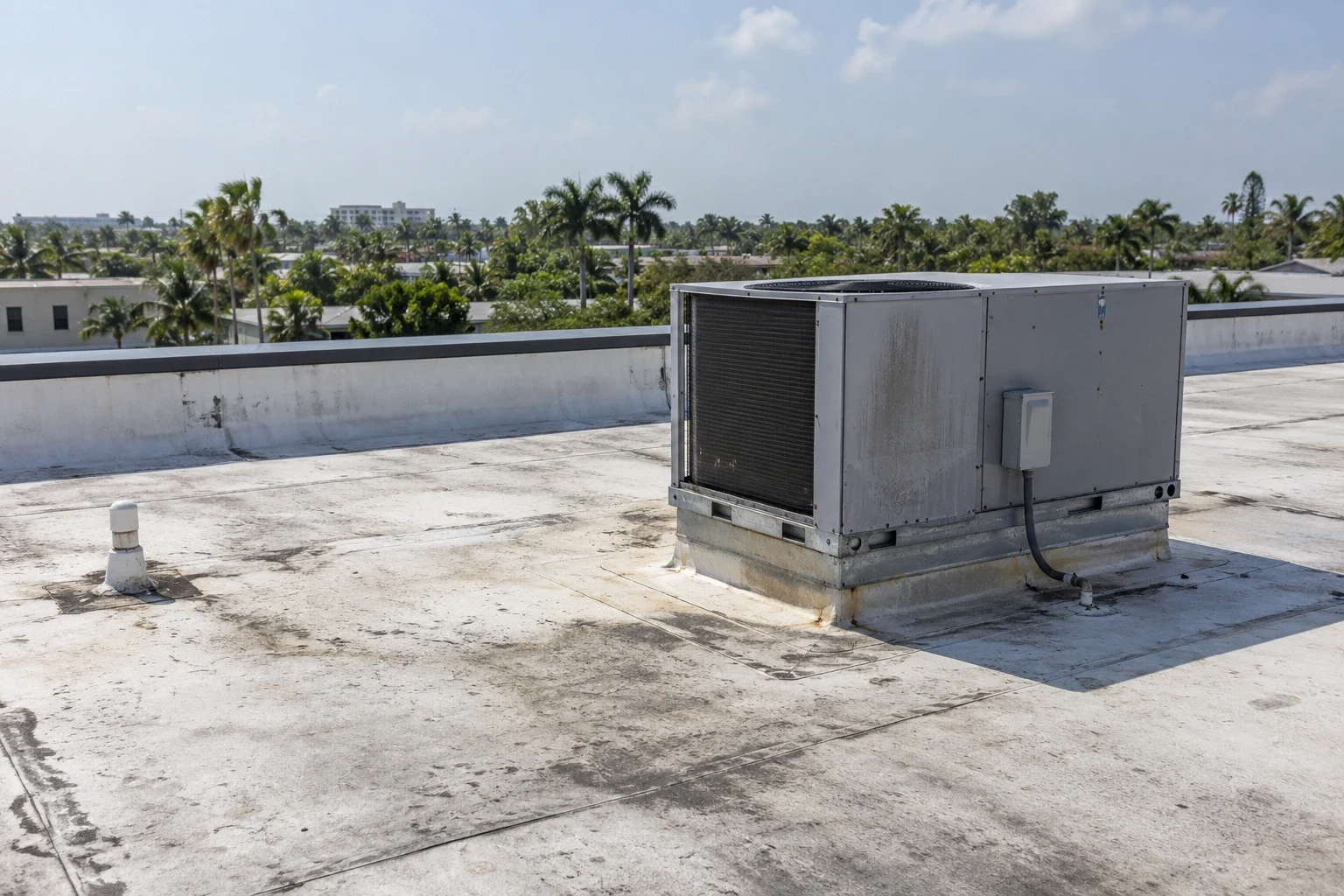
Wind does not push evenly across a roof. It speeds up and swirls around corners and along edges, which is why the perimeter takes the highest uplift on the building. Under the rules for Broward's High Velocity Hurricane Zone, a Risk Category II building is designed for 170 mph, and edge systems share that bar with every other exterior roofing component: a Miami-Dade Notice of Acceptance, earned through missile impact and cyclic pressure testing.
That is the bar for new work. Older metal often falls short of it, and the damage shows up in storms. The 98 mph gust recorded in Pompano Beach during Hurricane Wilma, and the 80 to 100 mph gusts Hurricane Irma spread over the county, were real loads on real perimeters. Once a section lifts, the flashing it protects goes with it, and the membrane under it is next. We treat a loose coping run as a priority, not a cosmetic touch-up.
Coping and Parapets: the cap on the wall
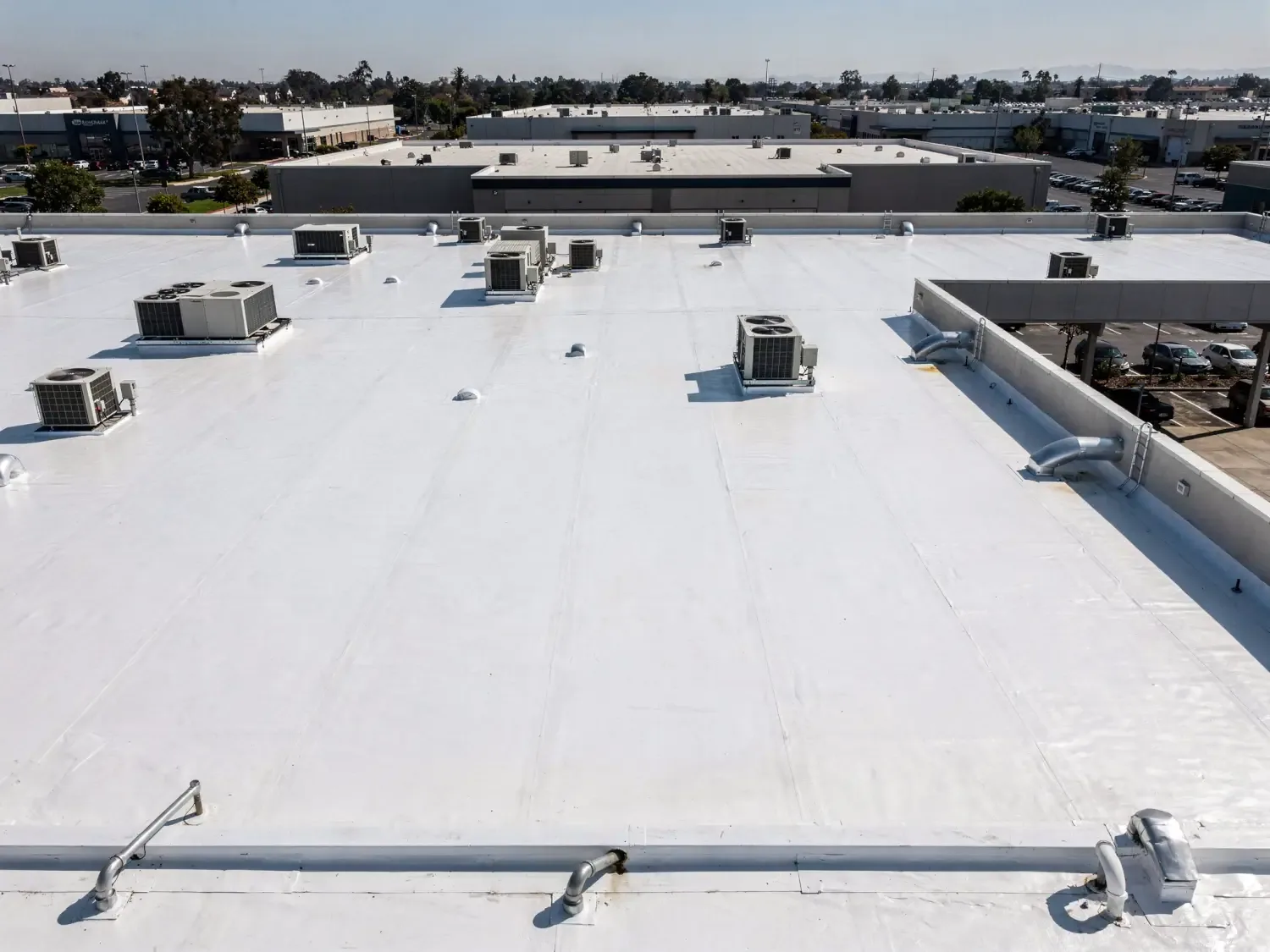
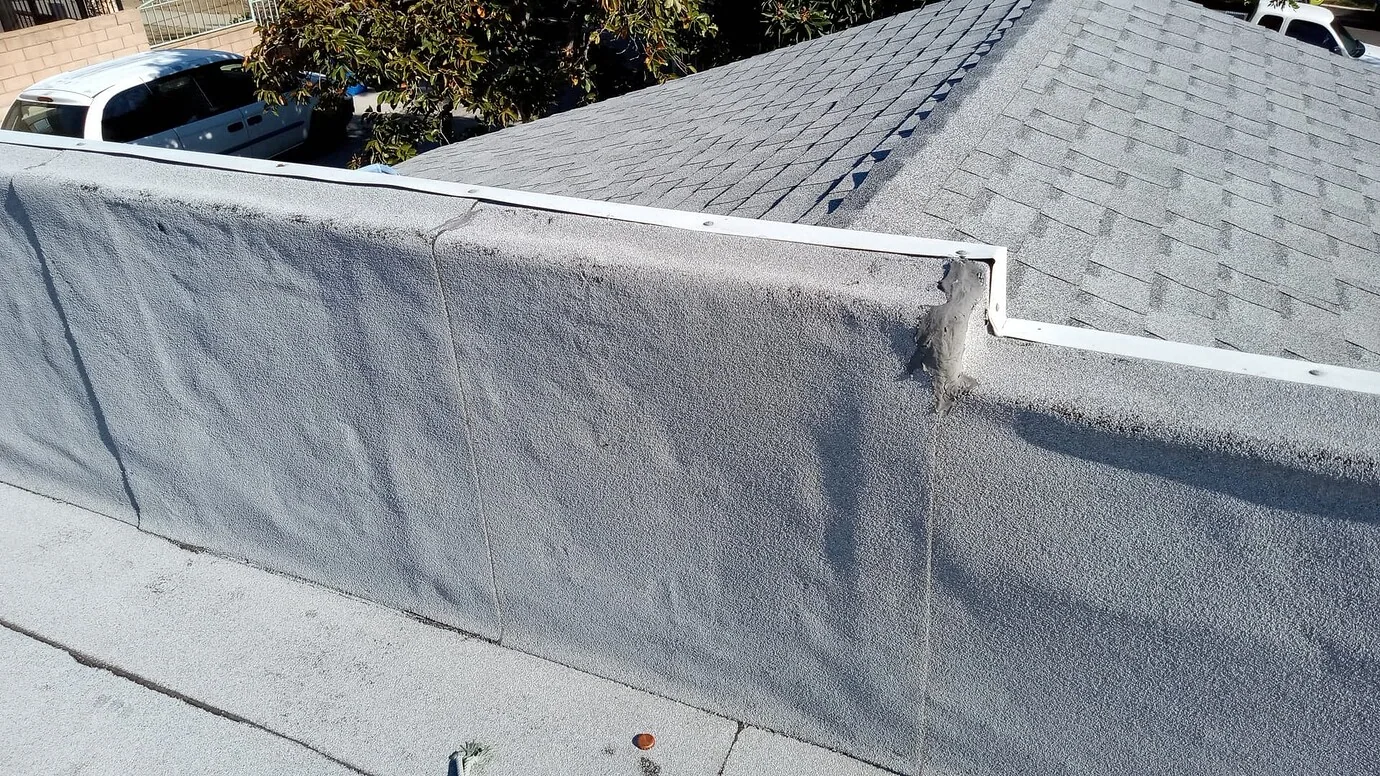
Where a roof meets a parapet wall, the coping is the cap that keeps water out of the top of the wall and holds the flashing in place. Good coping is sloped to shed water, joined with sealed splices, and fastened to continuous cleats so it cannot lift in a gust. Bad coping is a flat piece of metal held by a few exposed screws and a bead of caulk, and it leaks within a couple of summers.
When we replace coping, we look at the wall behind it. Water that has been getting in for years often leaves rotted blocking or damaged masonry, and capping over that only hides the problem. Coping work usually goes together with flashing repairs, so the wall, the metal and the membrane are tied together properly.
Open Edges: fascia, gravel stop and drip edge
On roofs without a parapet, the perimeter is a line of fascia, gravel stop or drip edge that finishes the membrane and sheds water into a gutter or off the building. These pieces are thinner than coping and take direct wind and sun. They bend in storms, dent when a lift or ladder lands against them, and work loose as the roof ages.
Our work here includes re-fastening, replacing damaged sections, resetting the membrane flashing underneath and adding heavier or double-hemmed metal where a roof calls for it. In the big distribution parks, where large low-slope roofs dominate and the edges run a long way, a few failed sections can let a storm strip a long stretch of membrane. Checking edges is a regular part of a maintenance visit, because loose metal is far cheaper to fix before a hurricane watch than after it.
Gutters and Downspouts: carrying water away
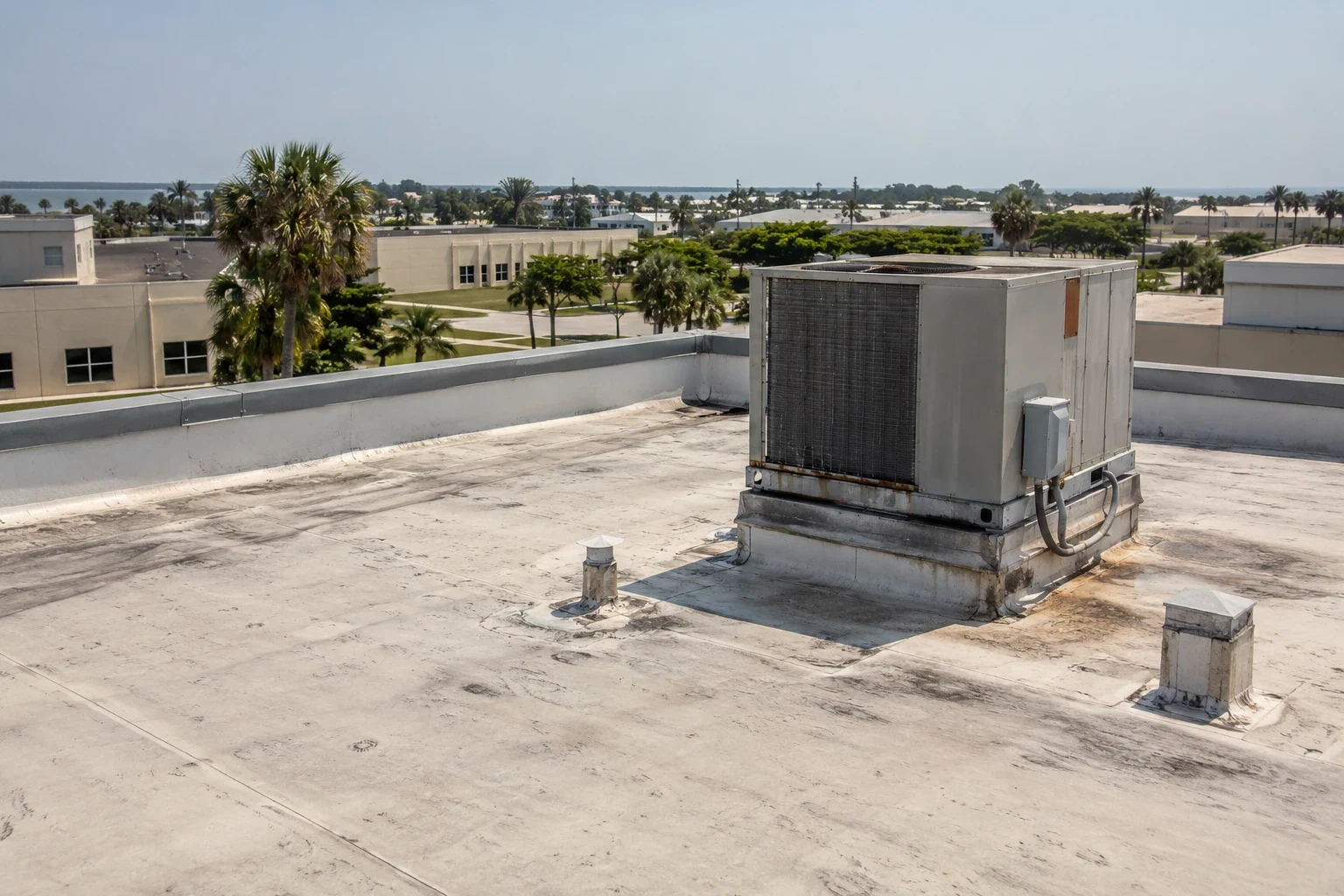
A gutter that cannot handle a Broward cloudburst is just a decoration. Size, slope and outlet count all matter, and so does the condition of the hangers. We replace undersized gutters with larger profiles, re-pitch runs that hold water, add outlets where one downspout is doing the work of two and seal joints so water does not leak behind the fascia. Downspouts get cleared, re-secured and connected to a drainage path that does not wash against the foundation.
These systems work with the rest of the roof's drainage. Gutters and downspouts handle the open edges, while interior drains and scuppers handle parapeted roofs, and when both are present they have to be balanced. After a heavy storm, we check for torn hangers, bent leaders and debris stuck at elbows, because those small failures cause the overflows that stain walls and flood parking areas.
Repair or Replace: how we decide
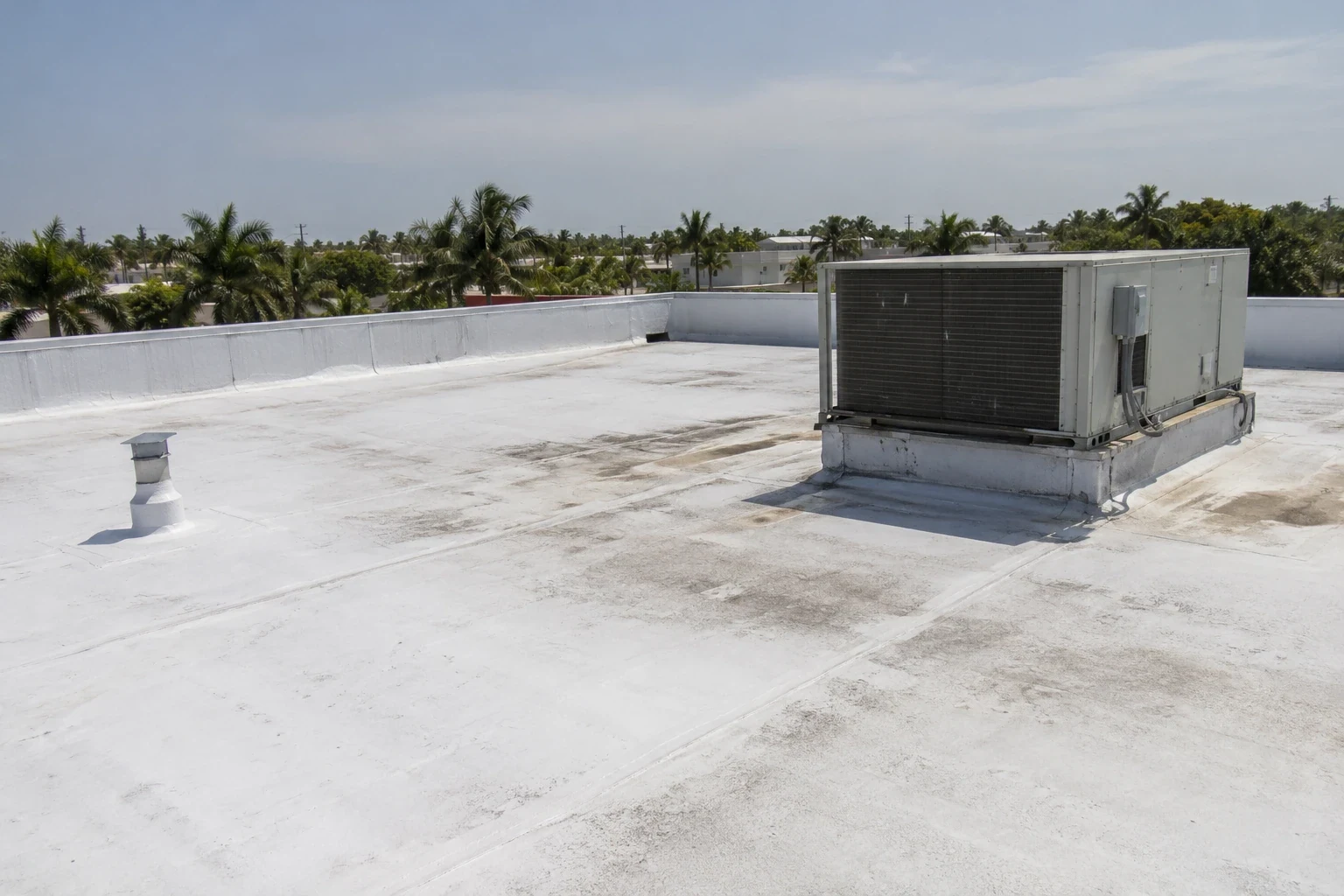
Isolated damage, such as a few bent sections or a handful of corroded fasteners, can often be fixed on the spot. Widespread corrosion, flashing that has pulled away from the roof, or metal that has been repaired several times already usually points to replacement. We show you the condition in photos so you can see why we are recommending one or the other.
When edge metal is part of a larger project, it is best handled with the roof system, which is why it belongs in any replacement scope. After a storm, perimeter damage is one of the first things documented, which is why a storm damage assessment starts at the edges.
Questions We Hear Often
What metal holds up best near the ocean?
Aluminum and properly coated steel do well, and fasteners should be stainless or coated. Plain galvanized screws rust through quickly in salt air. We match the metal and hardware to how close the building sits to the water.
Can loose coping be re-fastened or does it need replacing?
If the metal is sound and the cleats are intact, re-fastening and re-sealing can work. When the metal is corroded, the cleats are missing or the wall behind is wet, replacement is the better move.
Do I need new edge metal when I get a new roof?
In Broward's hurricane zone, nearly always. The edge system has to be approved for the wind loads, and old metal rarely meets that. Reusing it can also complicate the manufacturer's terms on the new membrane.
Why do my gutters overflow in heavy rain?
Usually the gutter is too small, the outlets are clogged or the pitch is wrong. We measure the roof area they serve and size the fix to a real downpour.
Can edge repairs wait until after hurricane season?
Not if the metal is loose. A lifted edge gives wind a place to start, so we fix loose sections right away and plan the full replacement for a calmer window.