
Commercial Roof Leak Repair in Pompano Beach, FL
A drip in a Pompano Beach building almost always starts the same way: a loud afternoon downpour, a facility manager's phone buzzing, and a brown ring spreading across a ceiling tile that was fine yesterday. Water finds the weak spot in a flat roof faster than anyone can climb a ladder. Leak repair is the work of tracing that water back to its entry point, stopping it, and checking that the roof around the spot is not hiding a second leak.
We handle active leaks on commercial roofs of every common type. The goal is simple: get the water out of your building today, find the real cause this week, and make sure the fix holds through the next wet season.
The First Hour: stop the damage before the diagnosis
When water is coming in, the first job is protecting what is under it. Move inventory and equipment, cover electronics, put out containment, and shut off power to wet fixtures if there is any doubt. Take photos of the damage as it is, with date and time, because your insurer may want them later. If the weather is still active, do not send anyone onto a wet roof. The repair is then checked after the surface dries.
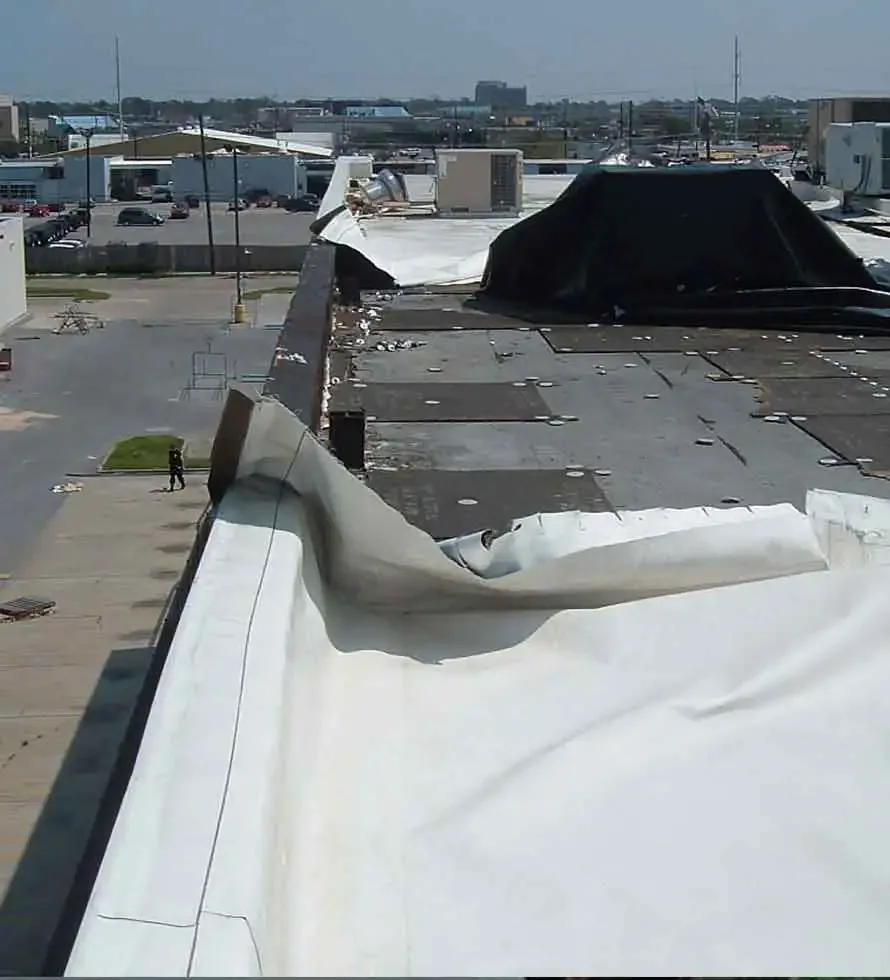
We can often get a crew up as soon as the weather allows to put on temporary protection, such as patching the most likely entry point or tarping a larger area. That buys time without pretending to be the permanent fix. If the situation is bigger than a leak, our emergency roof repair crews work any day or night to dry in the building.
Inside the building, the stain marks where water became visible, not necessarily where it entered. We compare its position with roof drains, unit curbs, wall terminations and seams uphill from the spot, then check the insulation for moisture. A dry surface patch can seal the symptom while leaving wet material underneath to conduct water sideways. Once the entry point is confirmed, the repair should restore the membrane's drainage direction and close the full path, including the vertical flashing and the termination above it.
We also check the overflow route and any nearby drain, because water backed up at one low point can travel under a lap well away from the visible stain.
Tracing It: why the stain is never under the hole
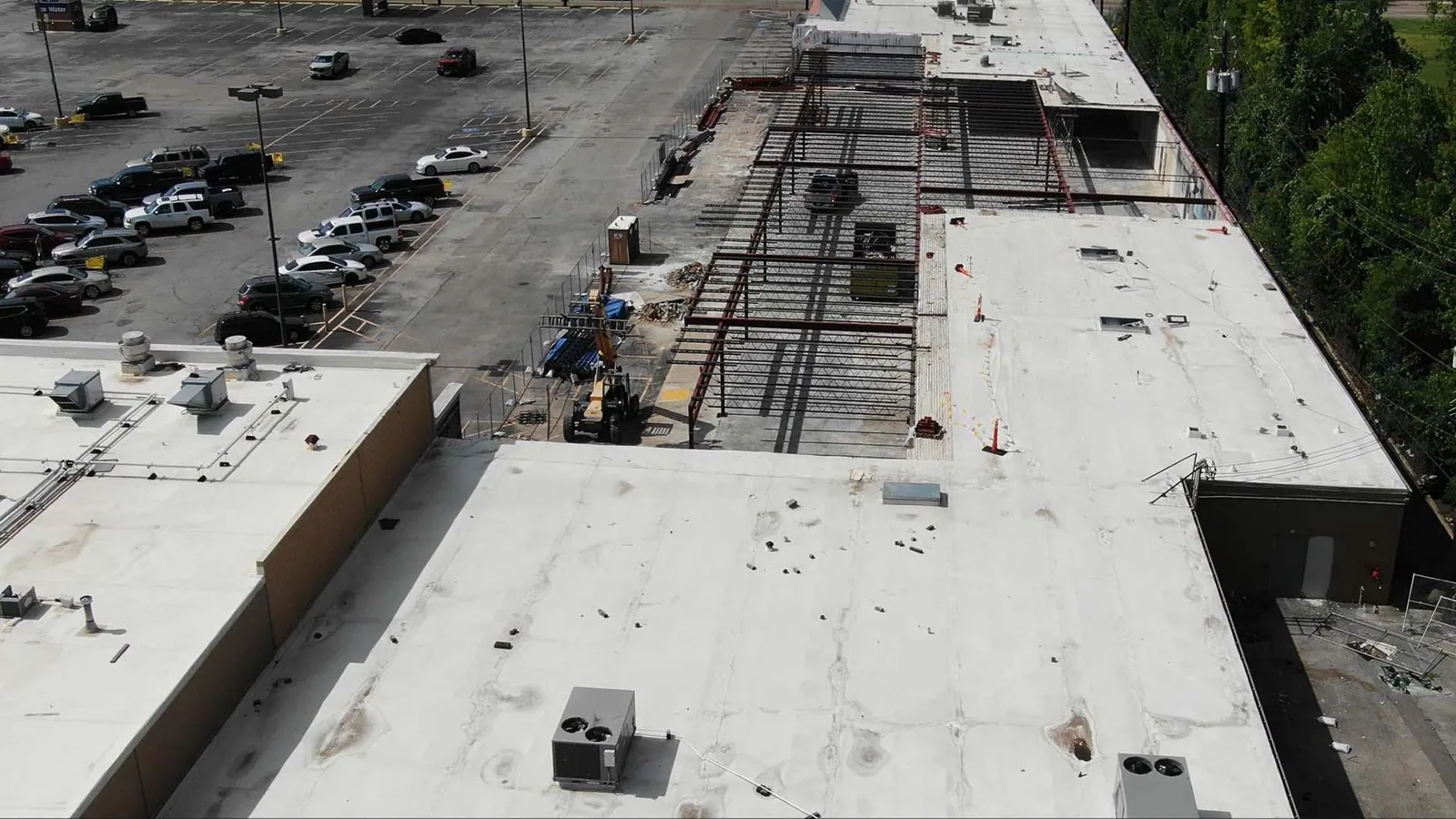
On a low-slope roof, water seldom drops straight down. It enters at a seam or flashing, runs along the top of the deck or through insulation joints, follows a steel flute, and shows up somewhere else entirely, sometimes a long way from the entry point. That is why guessing and sealing the spot above the stain so often fails. A patch in the wrong place is a patch that leaks next week.
We start inside, mapping the stains and the direction of travel, then work the roof from the high side down. We look at every seam, flashing and penetration in the likely path, and when the cause is not obvious we isolate sections and test them with water, one at a time. On larger roofs an infrared moisture survey shows where the insulation is already wet, which narrows the search quickly.
Common Culprits: the usual places water gets in
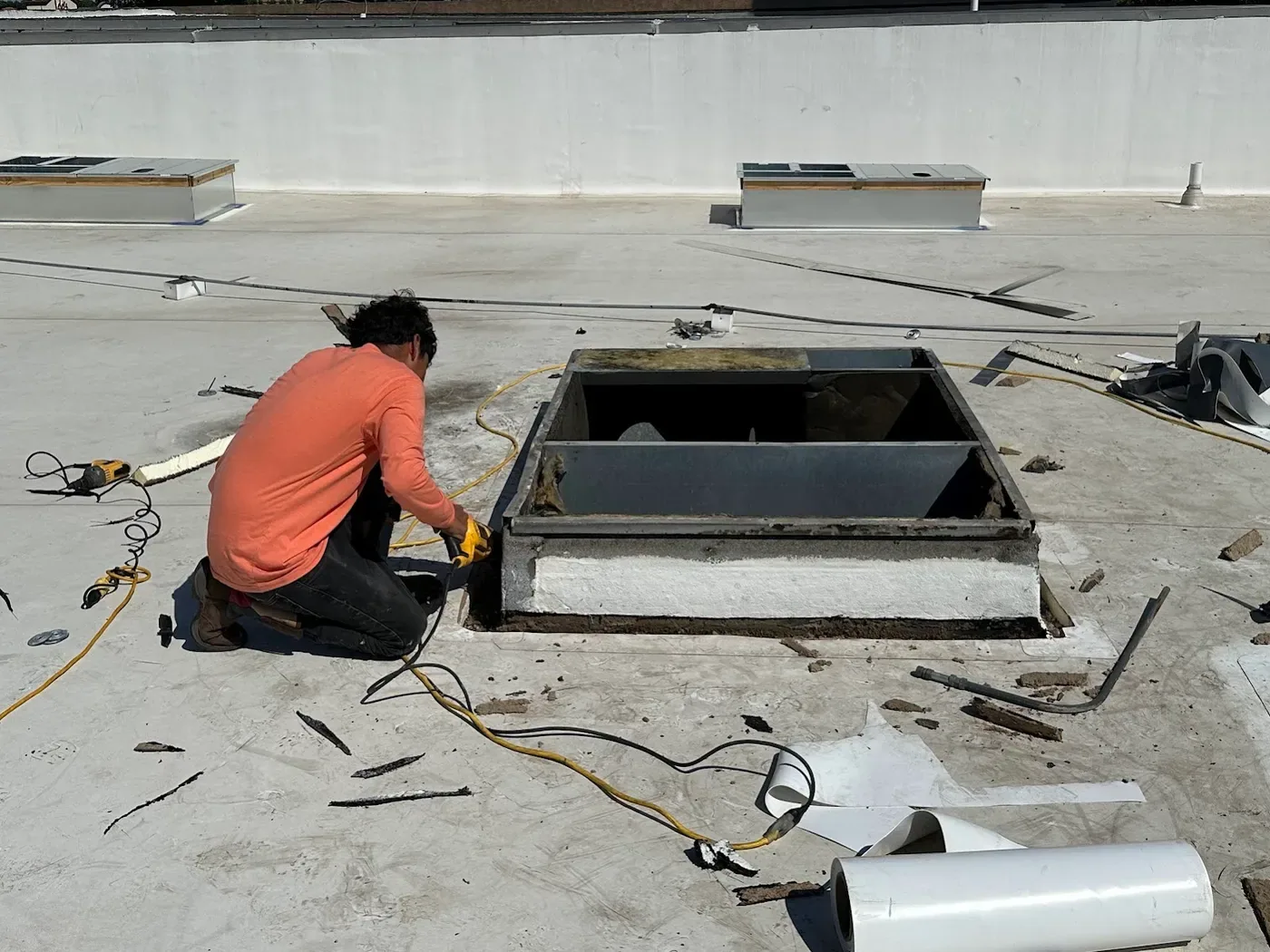
The list of repeat offenders is short. These are the spots we check first:
- Clogged or poorly flashed drains and scuppers, especially after storms that load them with debris.
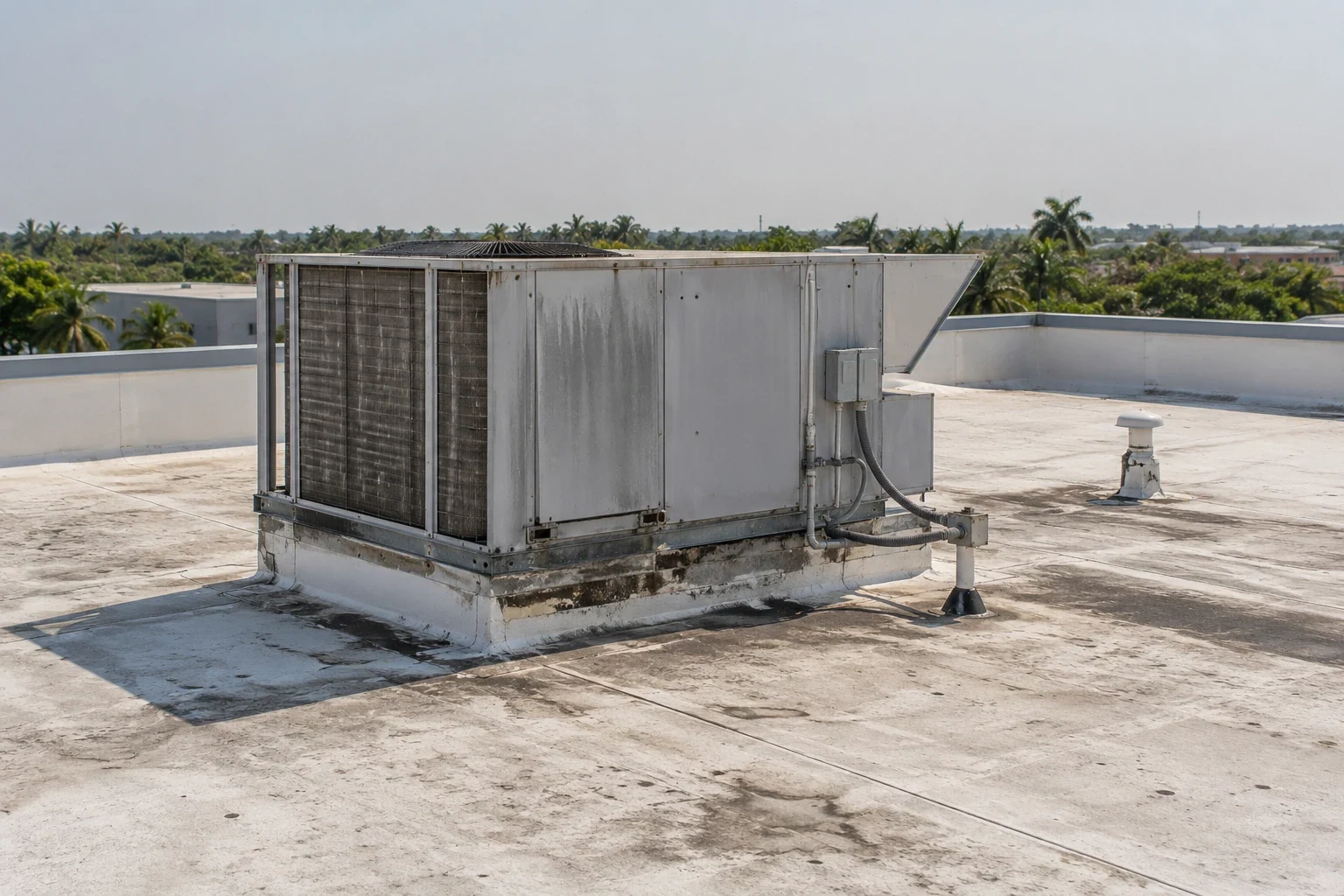
- Flashing at parapets, curbs and equipment bases, including rooftop equipment curbs added after the original roof.
- Pipe, conduit and vent penetrations with cracked boots or dried sealant.
- Open seams and fastener backout on single-ply and metal roofs.
- Skylights and penetration flashing where sealant has aged.
- Low spots where water ponds long enough to find any small defect.
After the Leak Stops: dealing with wet insulation

Fixing the entry point does not dry the roof. Insulation that took on water stays wet for a long time under a membrane, and it keeps feeding moisture back into the deck and the ceiling below. We check the area around every leak with moisture meters and, where needed, core cuts. Small wet areas are cut out and replaced with new insulation and a matching membrane patch.
If the wet area turns out to be large, we tell you right away, with photos, so you can plan for a bigger repair or a replacement rather than patching the same roof again and again. Dry cores around the repair are the sign that the problem was localized and the fix will last.
Storm Season Leaks: when everyone calls at once
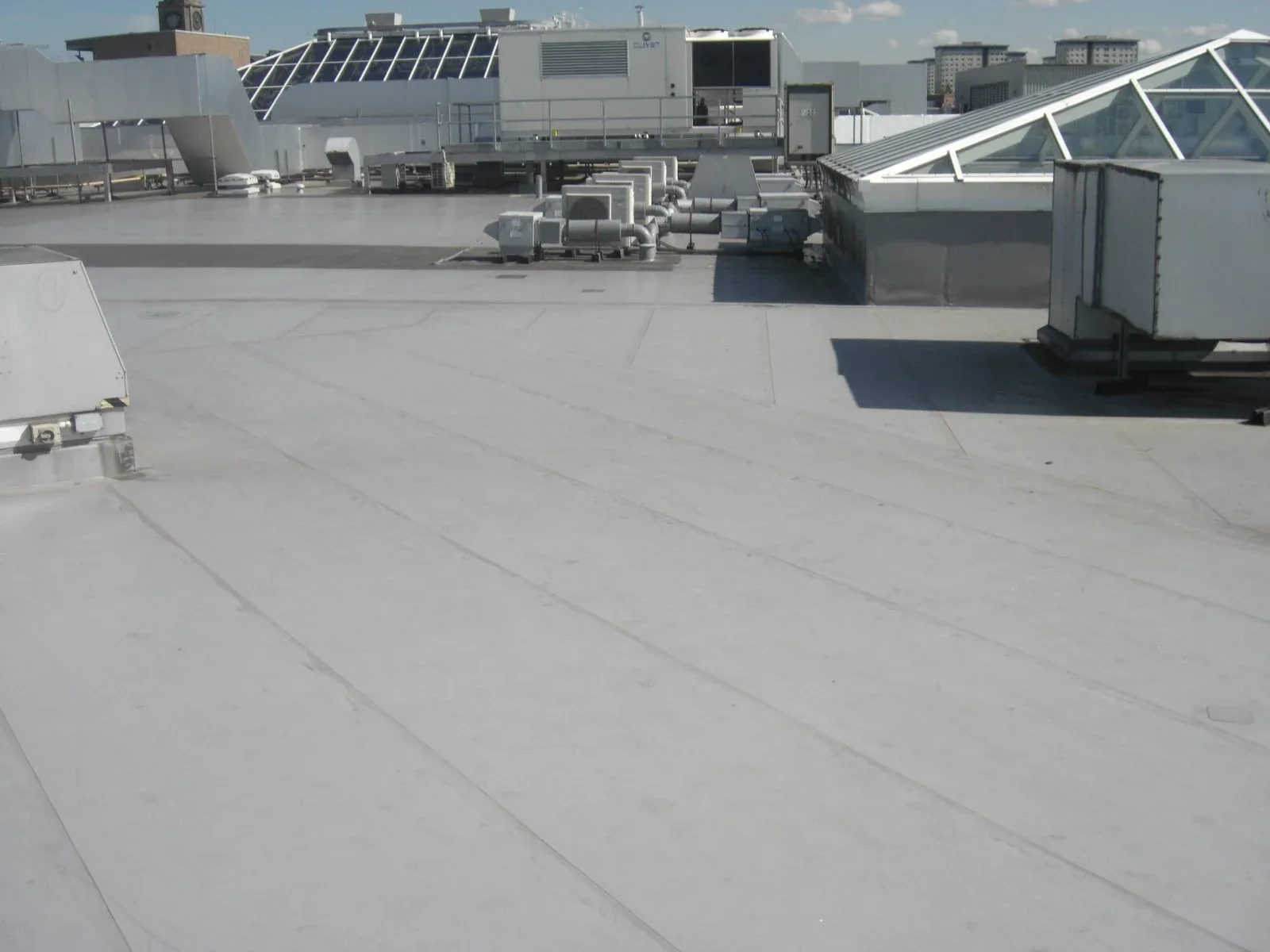
In 2017, Hurricane Irma brought gusts of 80 to 100 mph over much of Broward. Fort Lauderdale recorded roughly 26 inches of rain in one day in April 2023. After a major storm, leak response should begin with the affected building's roof, its drainage and the specific damage found. We triage by severity: occupied spaces taking on water come first, then roofs with exposed insulation or missing membrane, then slower leaks.
If wind or flooding caused the damage, photos and written findings go to your carrier as part of insurance claim assistance, and the repair can be scoped as hurricane damage roof repair. An open-air retail center such as Federal Highway Corridor has many tenants under its roofs, so one heavy storm can turn into several leak calls at once.
Cost and Scope: what changes the price of a leak call
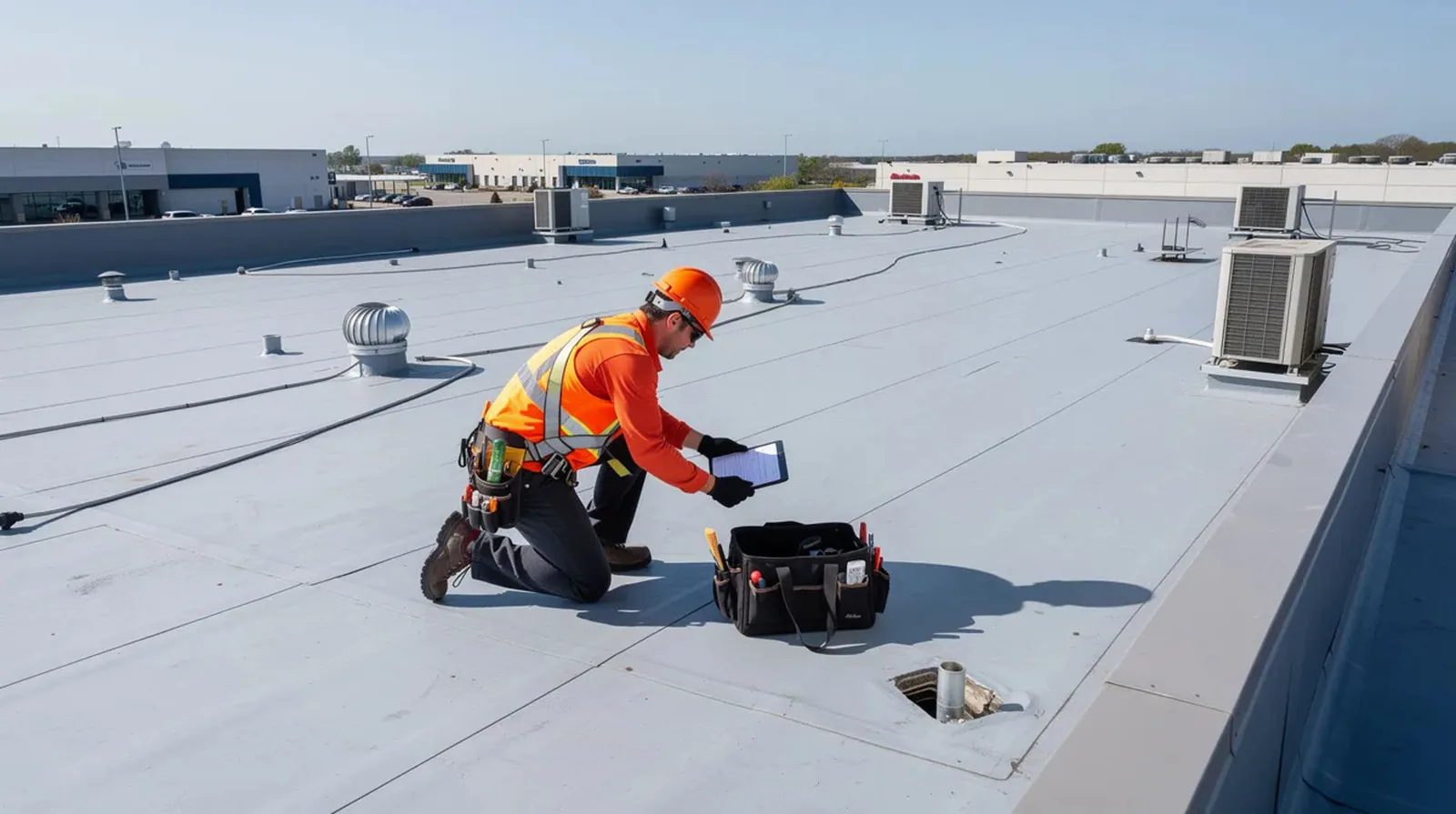
A leak repair can be a short visit or the start of a bigger project, and the difference comes down to cause and spread. A cracked pipe boot or a lifted flashing is a quick fix. A roof with a dozen weak seams and a wide wet area is not. Access, roof height, membrane type, the amount of wet insulation, interior damage and the weather window all shape the scope, so we describe the work in writing before it starts instead of guessing at a number over the phone.
What you get after the visit is practical: where the water was coming in, what we did, photos of the repair, and a plain read on what the rest of the roof looks like. If the same roof keeps leaking, that read helps you decide between more repairs, planned repair of the larger problem areas, or a bigger conversation about replacement.
Questions We Hear Often
Can you fix a leak while it is still raining?
We can protect the building with temporary measures. Permanent repairs need a dry surface, so we finish them once the weather allows.
Why does the leak come back after a patch?
Usually the patch went over the stain instead of the entry point, or wet insulation is still feeding water in. Tracing the path and drying the area fixes.
How do you find a leak that has no obvious source?
We map interior stains, test sections of the roof with water, and use infrared scanning where it helps. The search narrows to a few feet before any repair starts.
Does insurance cover a roof leak?
Sometimes, depending on the cause and your policy. Storm and wind damage are often claimed, while wear and aging usually are not. We document what we find.
What should I do inside while I wait for a crew?
Move valuables, cover equipment, set out containment and photograph the damage. Keep people out of areas with sagging ceiling tiles, since water pooled above a ceiling can drop all at once and bring the tile with it.
Should I call before or after the storm passes?
Call as soon as water is coming in. We will advise on safe steps, and a crew heads out as soon as it is safe on the roof.