Distribution Center Roofing in Pompano Beach, FL
Irma's sustained winds ran 65 to 70 mph over the bulk of the county in 2017, and a distribution center feels a storm like that differently from other buildings. Product is stacked high, the schedule is tight, and one wet conveyor or one soaked pallet wrapper can slow a whole shift. The roof overhead has to stay quiet so nobody on the floor ever thinks about it.
We work on the large, low-slope roofs that sit over fulfillment floors, cross-dock buildings and regional distribution hubs in Pompano Beach, FL. That means repair, recover and full replacement, planned around a building that keeps trucks moving at hours when most roofers have gone home.
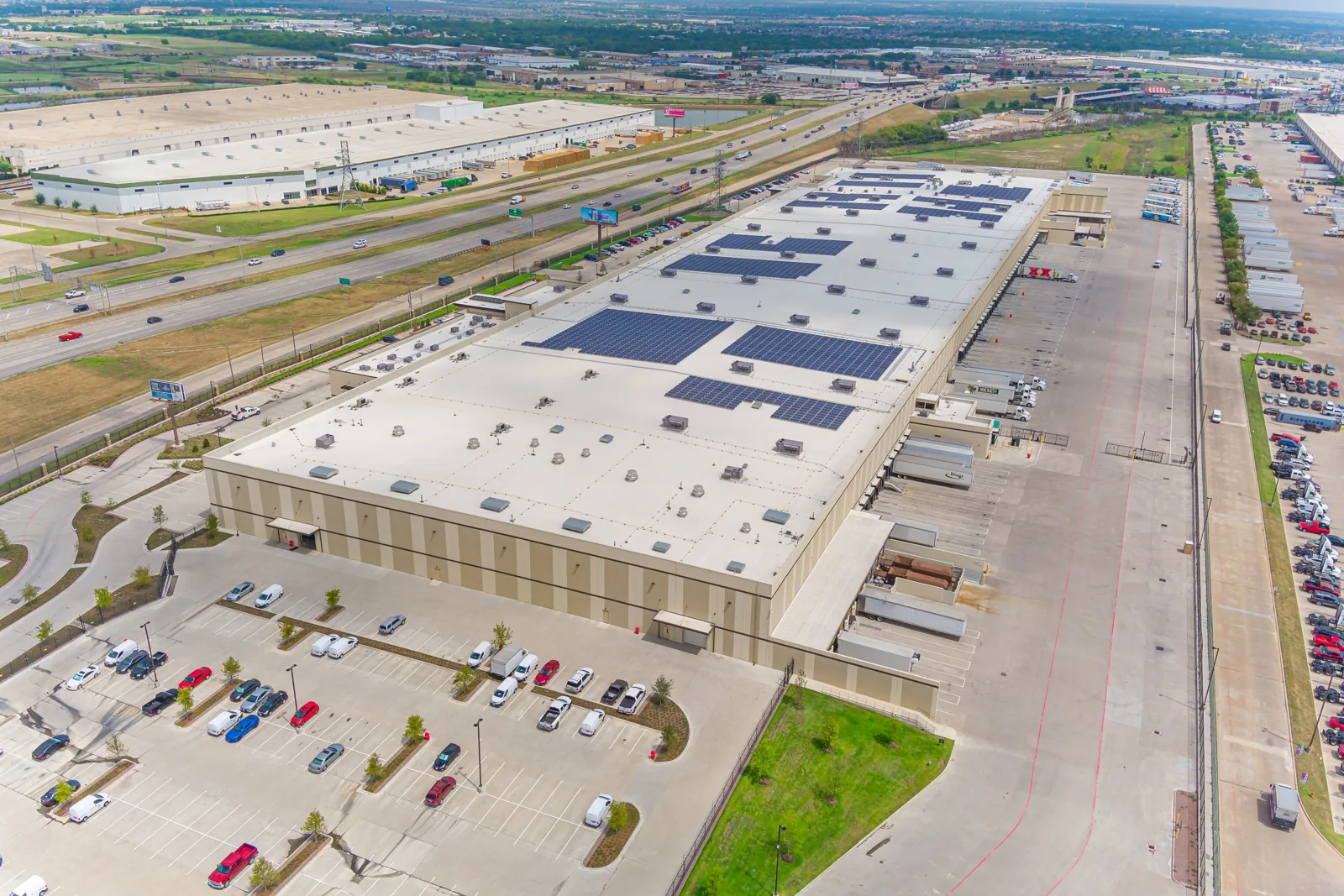
Never Quite Closed: roofing around a building that runs all night
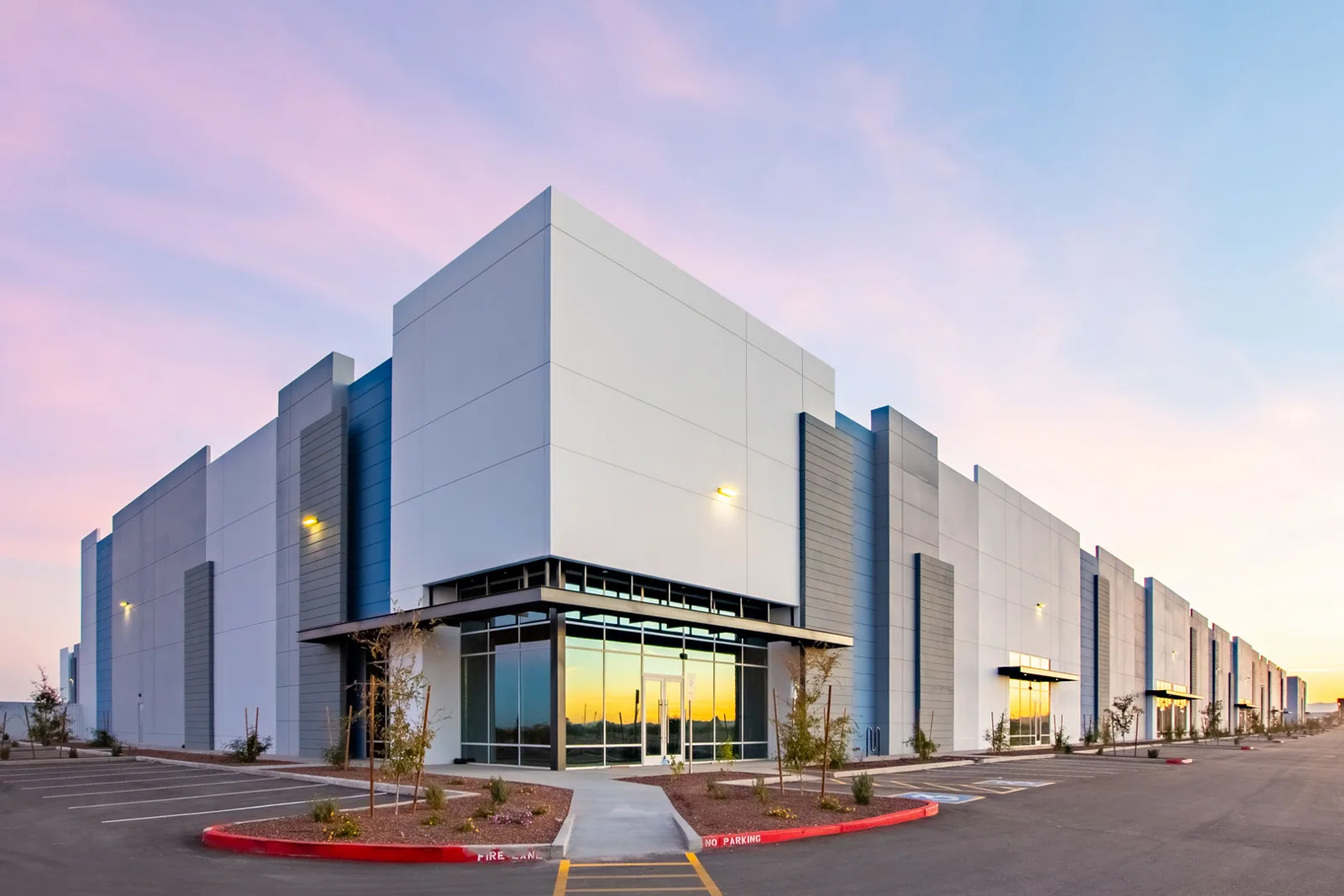
A distribution center rarely has a slow week to hand over to a roofing crew. Inbound trucks arrive in the evening, outbound loads leave before dawn, and the floor inside is lit and busy while a crew is working overhead. So the first conversation is not about membranes. It is about where the loud work can happen when, which dock doors stay clear, and who calls whom if a shift lead hears a noise they do not like.
We usually sequence the work in strips, closing each one before the afternoon cells arrive, and we keep material staging away from truck courts. Re-roofing an occupied building in strips suits a site like this, where a stopped dock costs more than the roof repair itself.
A distribution roof is easiest to maintain when it is divided into service zones that match the building's operations. We map drains and equipment by bay, note which areas can be reached without crossing active loading lanes, and plan repairs around delivery peaks. At dock canopies and wall transitions, water can enter behind metal even when the main membrane is sound, so those edges belong in the same inspection. A written roof plan also helps a facility team isolate a leak report to a specific aisle or roof section instead of closing a broad part of the building.
Where They Cluster: Park Central, Central 95 and Gateway Lakes
Pompano Beach is Broward County's biggest industrial, warehouse and distribution submarket, and the buildings gather close to the highways. Park Central sits between Florida's Turnpike and I-95 in the northern part of the city with roughly 1.99 million square feet of industrial buildings. The Central 95 corridor sits on the west side of I-95 near Copans Road and Powerline Road, a truck-heavy warehouse zone with Centerport up by Sample Road.
Out in the southwest, Gateway Lakes adds about 2.22 million square feet near Pompano Parkway and the Turnpike. The city's economic development office names two Amazon distribution centers among its notable industrial users, and Associated Grocers, FreshPoint and FedEx all rank among the top ten employers here. The FEC and CSX rail lines and the two highways keep the freight moving, and a roof that leaks over a staging area costs the same hour of lost throughput whichever park the building sits in.
Rooftop Traffic: units, walk pads and the paths people actually take
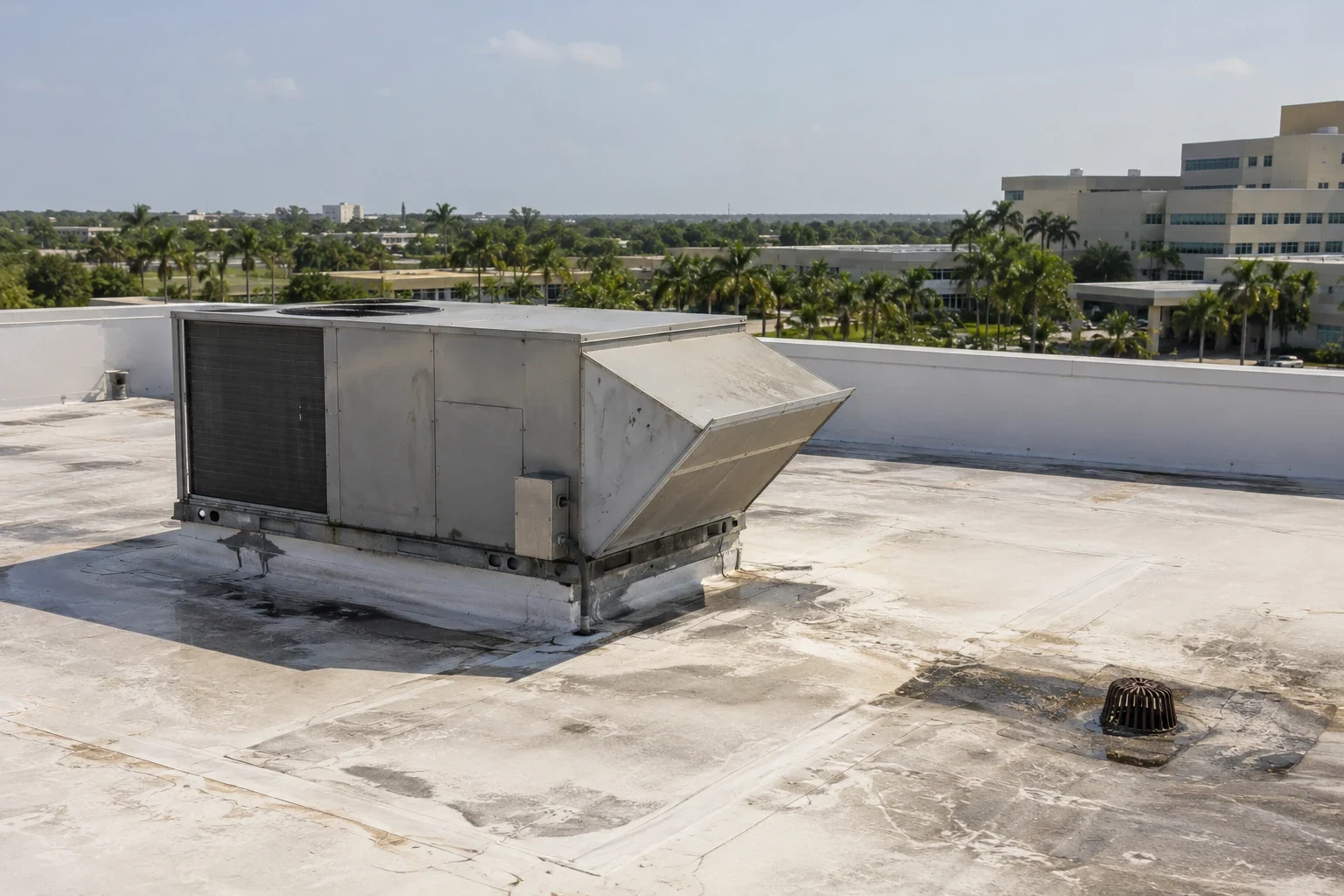
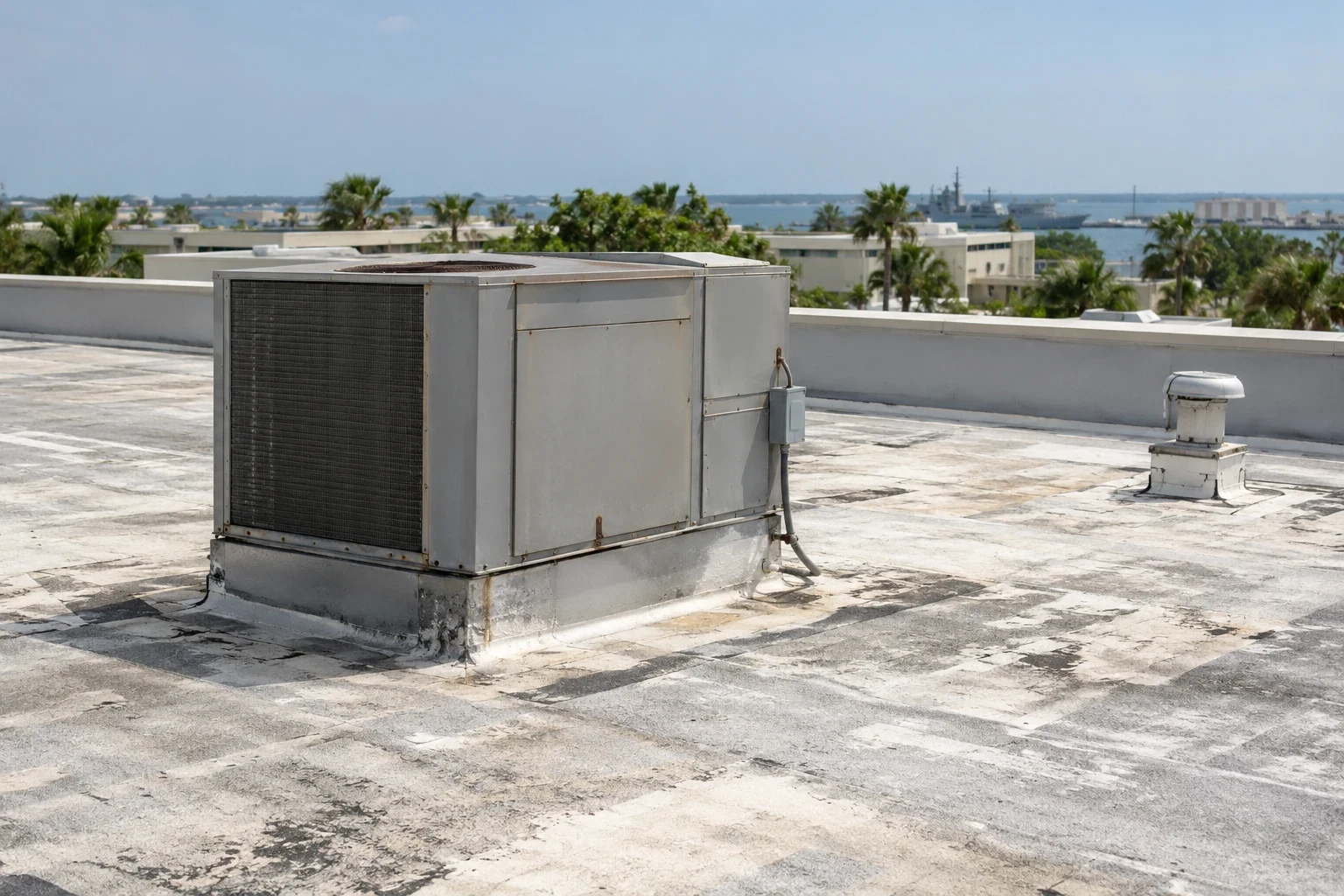
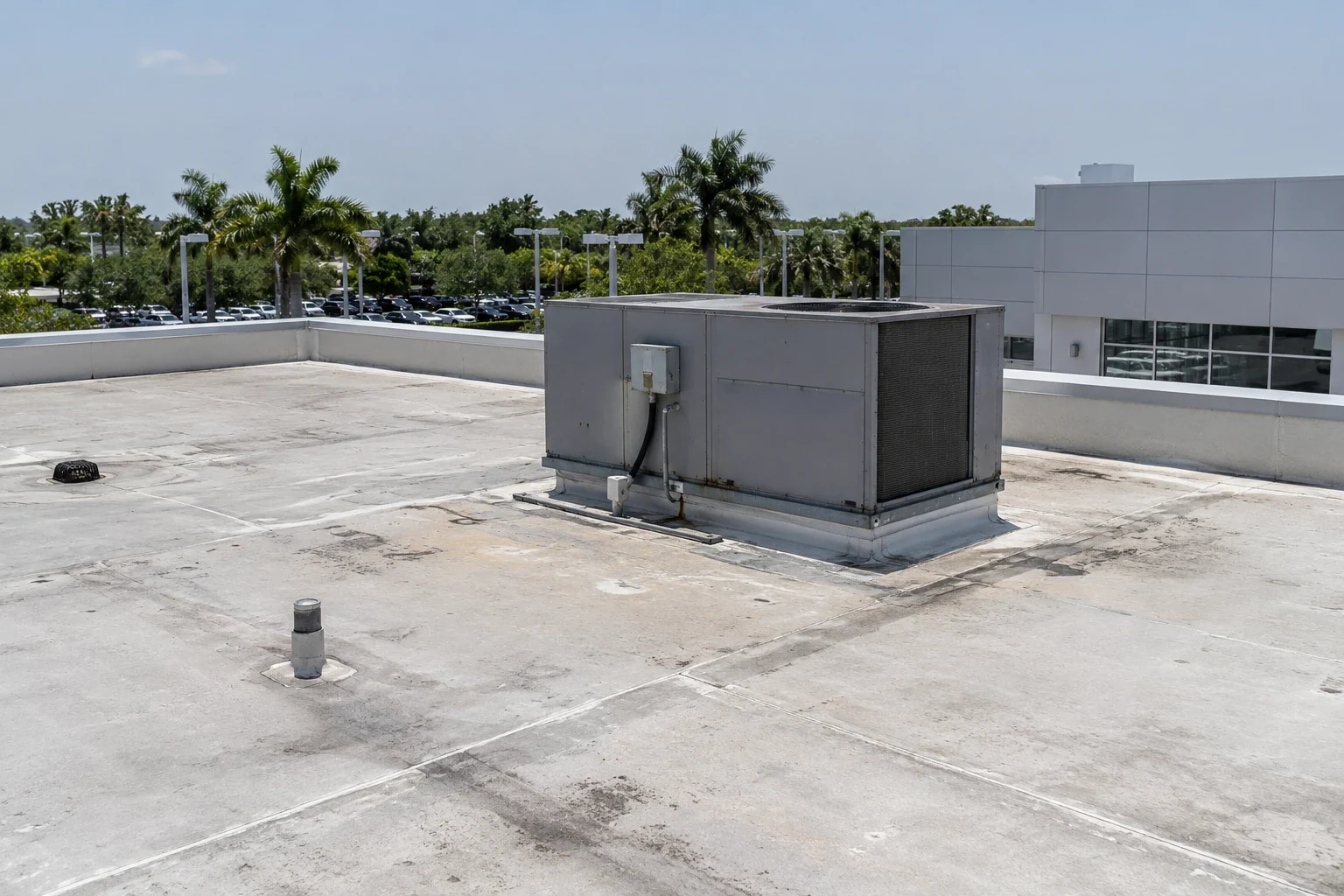
Distribution centers carry rooftop equipment that needs regular service. Exhaust fans, make-up air units and office HVAC all need service, and every technician who walks to them is a source of wear. The membrane around a curb or along a well-worn path takes boots, tools and dropped panel screws all year, and a puncture there goes unnoticed until the first hard rain.
We map the usual routes, add walk pads where the foot traffic runs, and look closely at equipment curbs and supports for cracked sealant and loose flashing. If solar is on your road map, the same walk is the time to plan for it, since an array added later should land on a roof that is ready for the load and the penetrations. Ballast, cover board and the roof's remaining life all matter before panels go anywhere.
Keeping Product Dry: sprinklers, drains and slow leaks
On a wide-span roof, water that gets under the membrane can travel a long way before it drips. It finds a sprinkler line, a light fixture, a seam in the deck, and then it lands on a pallet that has nothing to do with the original leak. The first signs are small: a damp spot on a ceiling tile in the office corner, a rusty drip stain near a column, a puddle on the dock floor after the third storm of the week.
Rain is heaviest from mid-May on, and the roughest weeks arrive early, so a roof with a weak spot tends to show it by July. We schedule drain cleaning and seam checks in April and May for that reason, and we shoot photos before and after each visit so a building manager can compare one season against the next.
Drainage deserves its own look. Frequent afternoon storms put the outlets to work on a large distribution roof. We use the building plan and a roof walk to check drain capacity, scuppers and overflow paths for each property. The inspection follows water to every outlet and confirms where it can escape if a primary drain is blocked by debris from the truck court below.
Wind and Code: approved assemblies for a wide roof
A long roof edge over a row of overhead doors takes uplift along every wall, and Wilma's 98 mph gust at Pompano Beach in 2005 shows how much wind that edge can see. High Velocity Hurricane Zone rules apply here: a standard-occupancy building is designed for 170 mph, and each exterior roof part must have product approval from Miami-Dade, backed by test results for flying debris, repeated pressure swings and rain driven through a damaged surface.
In practice that narrows the approved membranes, adhesives and fastener patterns, and it makes the details at the perimeter and the rooftop equipment the parts to get right. We build the submittal around those approved assemblies so the permit review does not stall the dry-in, and we coordinate with your building's insurer when the carrier has its own wind requirements.
When temperature-controlled inventory sits below the membrane, include the vapor and condensation review used for cold-storage roofing.
Questions We Hear Often
Can you work nights on a distribution center roof?
Some tasks, yes. Loud tear-off and welding are better in daylight when the sky is clear, while inspection, moisture scanning and many repairs can run at night. We build the plan with your operations lead so the busiest hours stay protected.
How do you protect conveyors and stock during a roof job?
Roof sections open only as far as we can close the same day. Temporary dry-in covers anything left exposed when radar turns, and a spotter inside watches for drips. If something does show up, we hear about it in minutes, not tomorrow.
Does a distribution center need a different roof than a plain warehouse?
Often a sturdier one. More rooftop equipment, more foot traffic and a tighter schedule push owners toward heavier membranes, walk pads and cover board. The fundamentals are the same as a plain warehouse roof, but the margins are thinner.
What if our lease makes the tenant responsible for the roof?
Then the condition report matters even more. A photo-based survey gives landlord and tenant one set of facts about what is wearing out and what is damage from a recent storm, which keeps repair discussions short.
How do we budget for roofs across several buildings?
Start with an inspection of each roof, rank them by remaining life, and spread replacement across several years. A capital plan turns surprise leaks into scheduled work, and it helps when a lender or an insurer asks what is coming.