Commercial Roofing in the Central 95 Industrial Area, Pompano Beach, FL
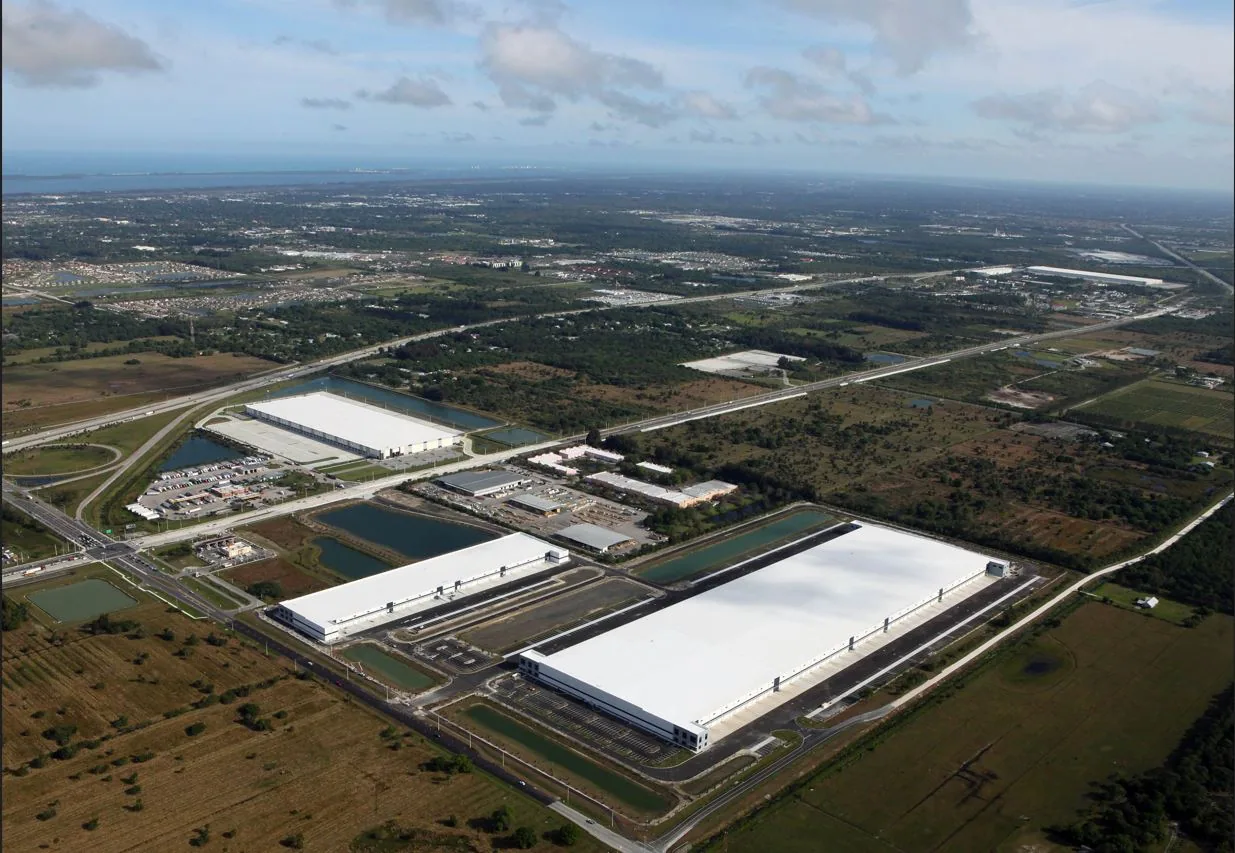
South Florida typically sees 8 to 10 significant flood events in a rainy season. Along Central 95, where low-slope commercial buildings sit west of I-95 near Copans Road and Powerline Road, we match drainage checks to each roof’s low points and outlets. The corridor contains about 3.4 million square feet of buildings, and warehouse operations depend on keeping those roofs dry. Drainage checks need to match each roof rather than a market-wide assumption.
We repair, recover, coat and replace commercial roofs there, and our storm line is open any hour. Our first look at a distribution center roof is always at the water: where it goes, where it sits, and what it has been doing to the insulation underneath.
Flood Count: where the water goes when the sky opens
Drainage is where many flat-roof problems in Broward begin. The slope is shallow, scuppers can be undersized, and a debris-clogged drain turns a normal storm into a shallow pond on the roof. Add the stormiest stretch of the wet season, from mid-May into early July, and the same drains get tested again and again before a crew has had time to clean them. Fort Lauderdale recorded roughly 26 inches of rain in one day on April 12, 2023. Heavy rainfall like that underscores why a roof needs enough drains, scuppers and overflow paths for its own layout.
On a Central 95 roof we start with roof drains and scuppers, checking size, location and condition. Then we look for ponding, which leaves a ring of dirt or algae where water stood, and for membrane that has been sitting under standing water long enough to degrade. A drain set too high or an untapered low corner can often be corrected so water reaches the outlets.
North, Central and South: reading the Central 95 map
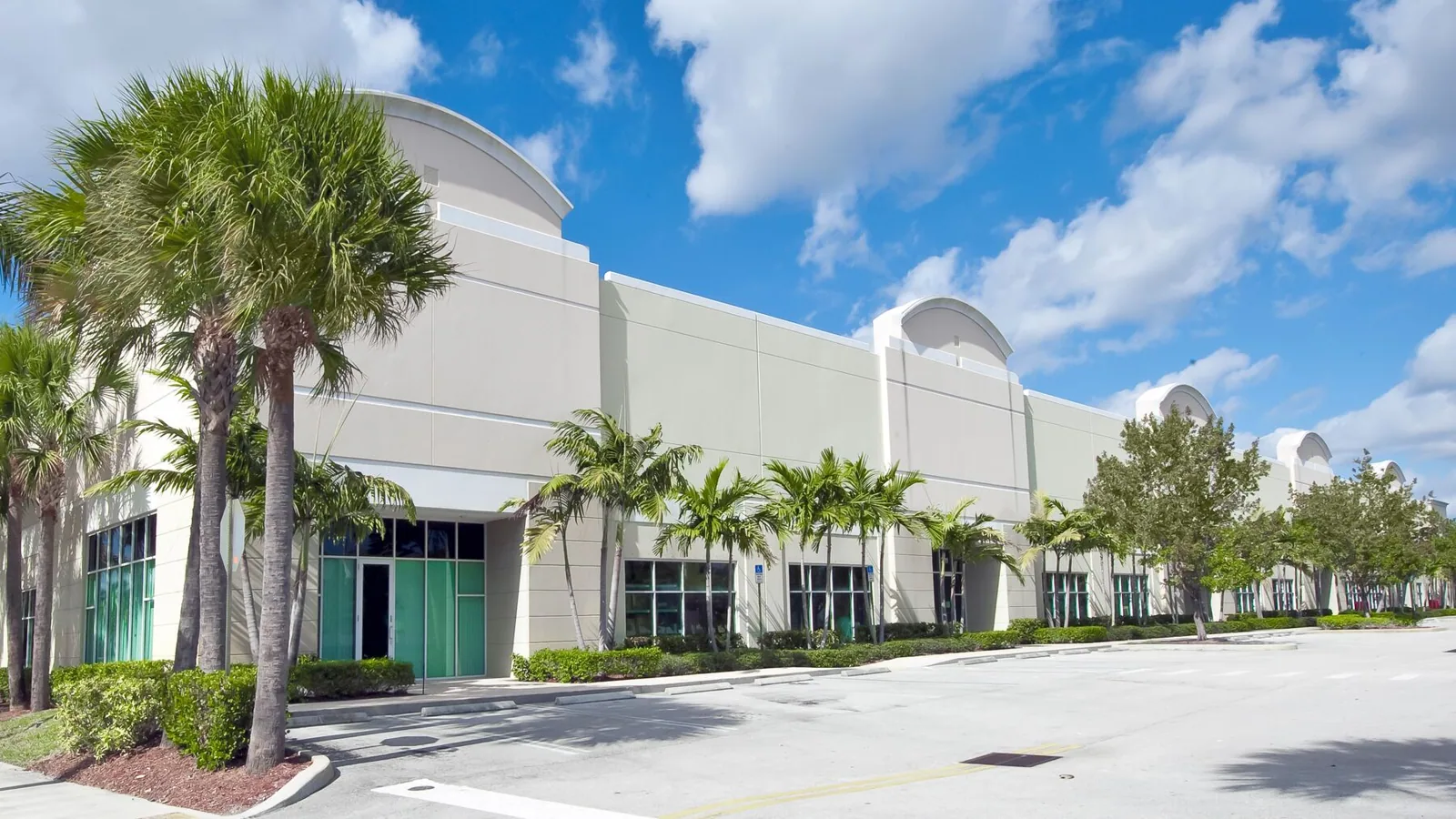
The city divides the corridor into North Central 95 at about 1.77 million square feet, Central 95 at about 1.30 million, and South Central 95 at about 367,000. Centerport contains roughly 912,000 square feet of buildings beside I-95 near Sample Road at the corridor's north end. Four entries on a map can look like four separate markets, and for an owner holding buildings in more than one, they are really one set of roof decisions with different calendars.
We keep a single file for a multi-building owner: condition, age, the work already done and the work coming up. That lets us sort the roofs by need instead of by address. A short list of repairs, a coating candidate and a replacement to plan for is easier to budget than a stack of separate invoices. The same approach works for owners with buildings in Park Central or Powerline as well.
The Truck Zone: foot traffic, equipment and wear
Central 95 is a heavy truck and warehouse zone, and the activity below ends up on the roof in small ways. HVAC technicians, dock-door service crews and equipment vendors walk the membrane to reach units, and every trip across an unprotected membrane adds scuffs, punctures and loose flashings. A rooftop that gets visitors needs walk pads on the routes, clear paths to the equipment and a way to record what was damaged and when.
We add walk pads where the traffic goes and mark the routes on the roof plan. When we find a puncture, we repair it as a membrane puncture, with patch, heat weld or sealant matched to the system, rather than a smear of mastic that fails by August. The upkeep tells the next owner or property manager exactly what has been done to the roof.
Cold Inside, Humid Outside: grocery and produce distribution
Associated Grocers, with 615 employees, and FreshPoint Produce and Dairy, with 420, rank among Pompano Beach's top ten employers and both have distribution operations. A building that moves produce and dairy generally has coolers and cold rooms inside, with a roof above them that sits between chilled air and a summer where dewpoints run in the 70s.
That temperature gap is what a roofer watches. Vapor drive, tight insulation joints and a good vapor retarder keep condensation from building up in the assembly, and a small gap at a penetration can wet insulation from below as easily as a leak wets it from above. For buildings like these, an infrared moisture survey is worth the cost, because it reveals wet insulation that a visual walk misses. Where cold storage is the use, a cold storage roof needs heavier attention to insulation thickness and sealing.
Price and Order: what shapes a Central 95 roof budget
Three questions drive the number more than anything else. How much of the insulation is wet? How many penetrations and curbs does the roof carry, since each one needs its own flashing? And how much of the work can happen while trucks keep moving? A dry roof with a worn surface and a handful of repairs is a very different job from one with saturated insulation and a dozen units to lift and reset.
Order matters as well. We repair drains and flashings first, since those protect everything else, and then move to seams and surfaces. If the budget has to be split across two years, we say which roofs and which details cannot wait, and which can safely be scheduled for the drier months.
Zone and Wilma: building to the wind rules

Hurricane Wilma's eye was 55 to 65 miles wide and covered most of Broward County in October 2005, and Pompano Beach recorded a 98 mph gust. The High Velocity Hurricane Zone rules in Broward are strict: a 170 mph design wind speed for Risk Category II buildings, and Miami-Dade approvals on every exterior roofing component.
Permits submitted today are reviewed under the 8th Edition Florida Building Code, with the 9th Edition due by the close of 2026. A seam failure repair uses approved materials and details. For a full replacement, we plan the attachment, the edge metal and the fastener pattern as one system to match the zone.
Questions We Hear Often
Why do drains matter so much on a warehouse roof?
A flat roof relies on a few drain points to move a lot of water quickly. If one clogs or sits high, the water ponds, loads the structure and works at the seams. Clearing and tapering around drains is among the cheapest forms of long-term protection a roof can get.
Our vendors walk the roof all the time. Does that damage the membrane?
It can. Repeated foot traffic scuffs the surface, snags on flashing and sometimes punctures the membrane. Walk pads on the routes to equipment, plus a log of every roof visit, protect the roof and make warranty and claim conversations easier.
How can I tell if insulation under a dry-looking roof is wet?
A scan with an infrared camera at the right time of day shows temperature patterns that point to trapped moisture, and core samples confirm it. You do not need to see a leak to have a wet roof.
Does a produce or grocery distributor need a special kind of roof?
It needs the assembly detailed for the temperature difference inside. That means attention to insulation, vapor control and penetration seals rather than a particular brand of membrane, and the details get settled before the job starts.
Can one repair visit cover several buildings?
Yes, when they share an owner and a schedule. We send a crew with materials for the likely repairs and walk each roof in a planned order, so the work is done in one trip and the report covers every building.