Commercial Roof Repair in Pompano Beach, FL
Seams, flashing and edges take the abuse first when a Broward summer settles in. The membrane field gets all the credit on a roof plan, but the details are where water actually gets in: a seam that has opened a hair after a thousand heat cycles, a flashing that pulled loose from a wall, a sealant bead that cracked in the sun. Planned repair is how we fix those problems before they turn into a stained ceiling or a wet warehouse floor.
We repair commercial roofs across Pompano Beach, FL on membranes, flashings, seams and rooftop details, and we try to fix the cause rather than cover the symptom. If a repair is all your roof needs, that is what we will recommend, and if it needs more, you will hear that too.
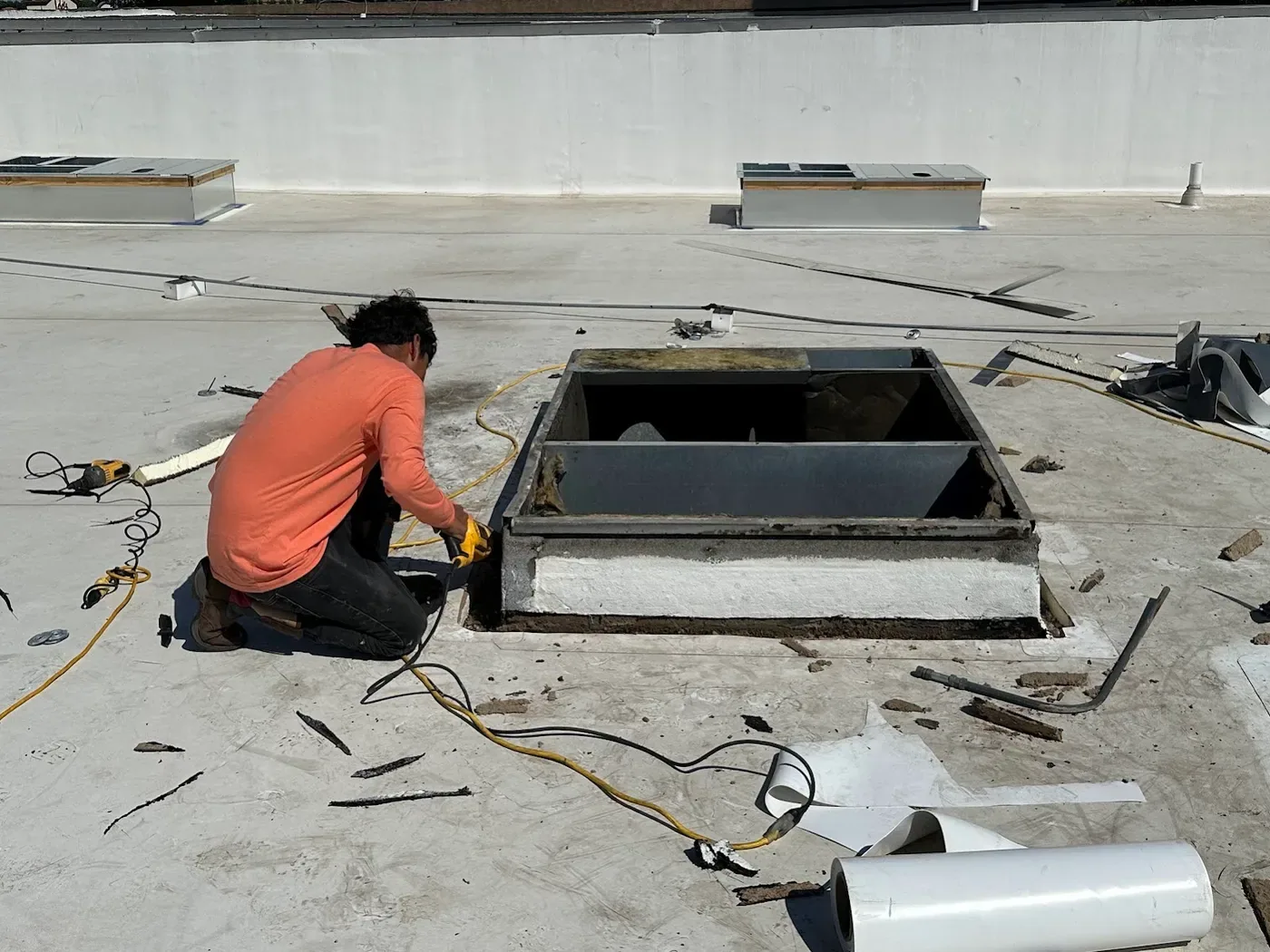
Where Roofs Fail First: the details, not the field
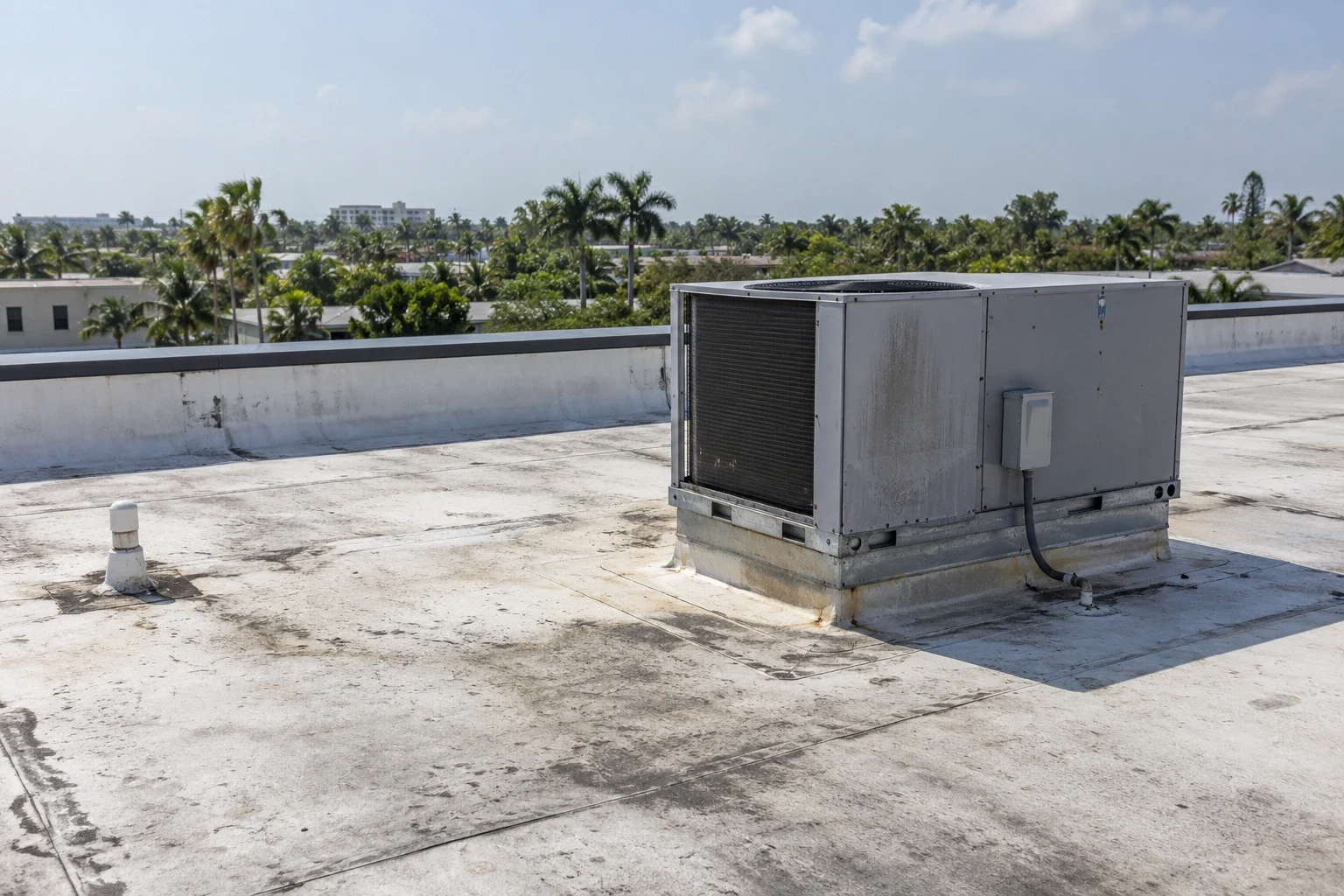
Most commercial roof problems start at a transition. Seams where two sheets meet, flashings at parapets and curbs, pipe boots, drain bowls, expansion joints and edge metal all move differently from the membrane around them. Thermal movement pulls at those spots every day, and in a climate with warm nights and near-daily summer storms they rarely get a chance to rest. Small gaps let in a little water, a little water softens the insulation, and softened insulation lets the next gap open wider.
Wind adds its own pressure. During a hurricane or a hard thunderstorm squall, the edges and corners carry the most load. A flashing that was marginal in March can peel back in August. That is why we look at the details first when we get on a roof, and why a short list of well-done repairs often does more good than a big pile of sealant.
A repair ticket should name the location and the detail, not just say that the leak was patched. We photograph the opening, note the membrane and substrate, record whether water reached the insulation, and describe the repair materials used. That record helps a manager distinguish a new failure from a return at the same seam and makes the next inspection more useful. If the source sits above the ceiling mark, we trace upslope across laps, curbs and drain bowls before cutting into the field membrane.
Reading the Roof: finding the real cause
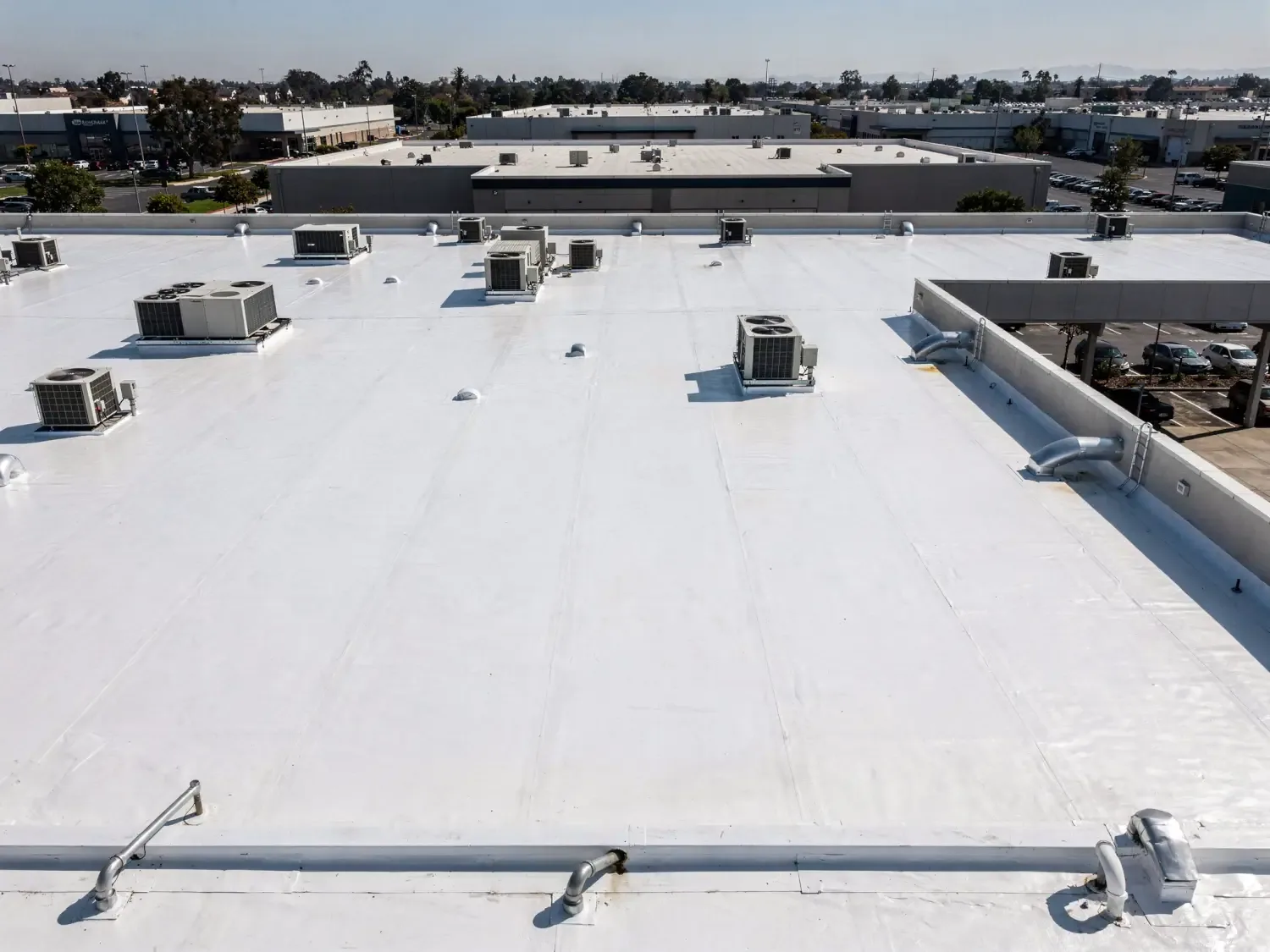
Water inside a building rarely lines up with the hole in the roof. It can travel along a deck, run down a wall cavity, or follow a drainage path far from where it entered. We walk the whole roof, trace the pattern from the inside out when we can, and check the usual suspects: seams, flashing laps, fasteners, penetrations, drains and any rooftop equipment that was installed after the roof was.
Photos go into a written report with each defect located on a roof plan, so you can see what we found and decide with the facts. On large roofs, a full inspection can come first, while an active drip gets leak repair right away so the building stops taking water while the larger plan is built.
Repair Methods: what we do for each kind of failure
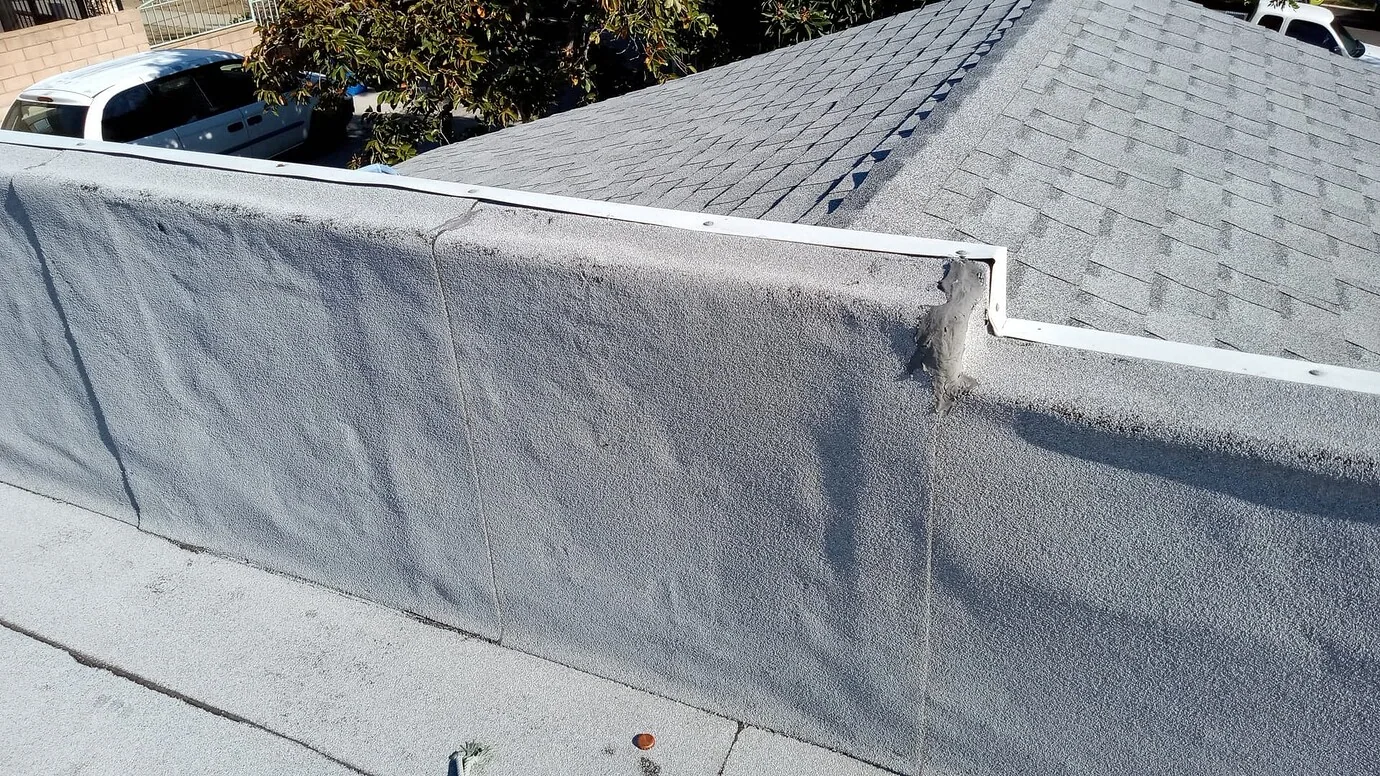
The fix depends on the membrane and the failure. We match materials to what is already on the roof, because the wrong sealant or patch can cause a bigger problem than the original defect. Typical work looks like this:
- Open or weak seams are cleaned and re-welded on thermoplastic roofs, or re-bonded and patched on other systems, after tracing what caused the seam failure in the first place.
- Flashing at walls, curbs, pipes and drains is re-set, re-fastened and re-sealed, with the cause of the flashing failure corrected rather than caulked over.
- Punctures and tears are cut out and patched with a compatible membrane, with a clean weld or bond all the way around.
- Loose fasteners and lifted edge metal are re-secured to hold up against uplift.
- Small areas of wet or crushed insulation are cut out and replaced rather than sealed over.
Salt, Sun and Heat: why materials matter here
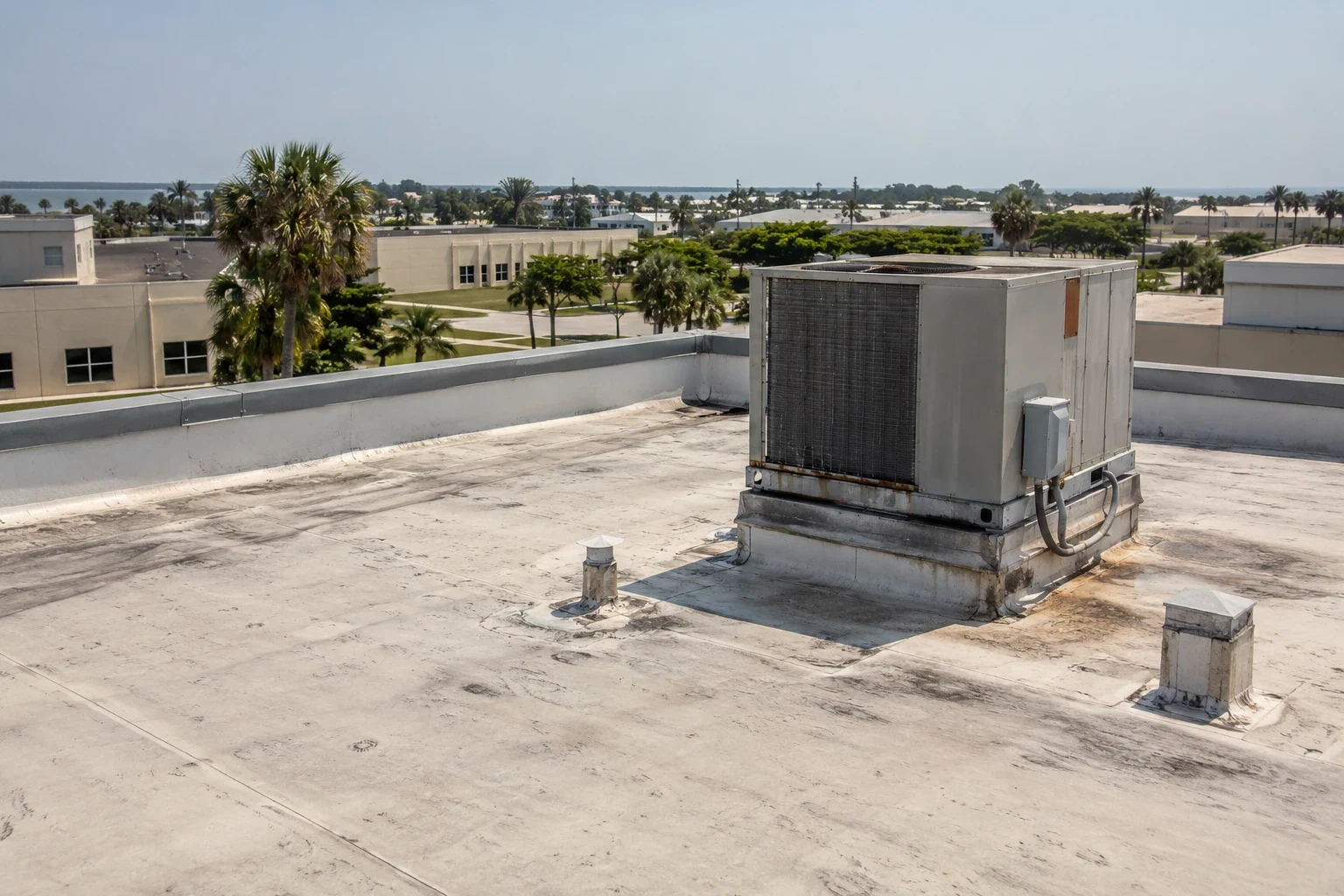
Ultraviolet exposure and heat age every membrane, and the coast adds salt air that corrodes steel fasteners, edge metal and rooftop equipment frames. A repair done with the wrong sealant can crack in a season. A patch glued to dirty membrane can peel off the first time afternoon rain hits it. We clean and prepare surfaces, use materials the membrane manufacturer accepts, and fasten metal with hardware that suits a coastal environment.
Roofs close to the water, such as those near the Fishing Village and the beachfront, see the harshest salt exposure. Roofs inland along Powerline Road and the I-95 industrial corridor deal mostly with heat and ponding. In both places the repair plan should account for what the roof will face over the next several seasons, not just the next leak.
Repair or Replace: where we draw the line
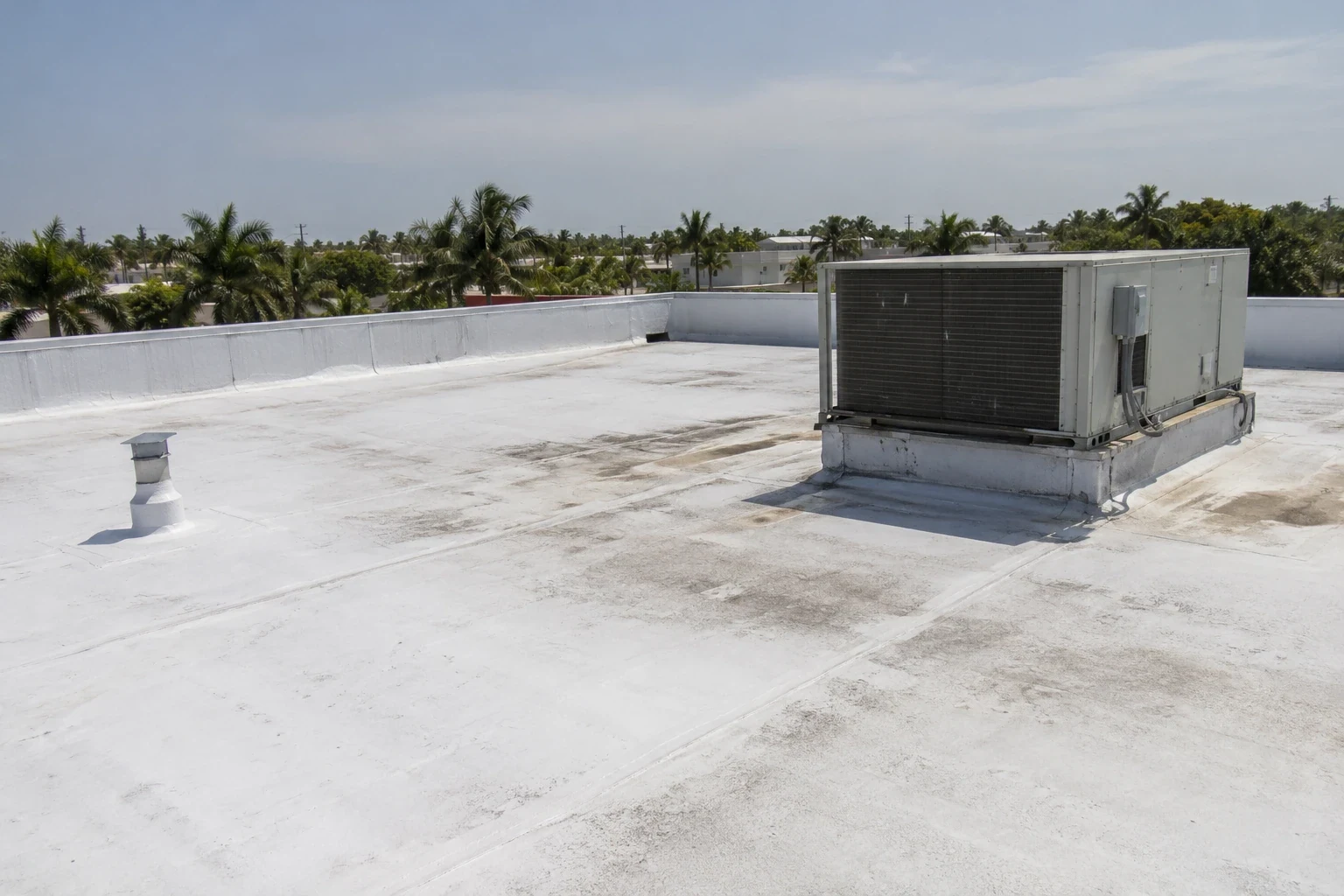
A repair is the right answer when the membrane is mostly sound, the insulation is mostly dry and the problems are limited to specific spots. It is the wrong answer when leaks keep showing up in new places, when moisture surveys show wide wet areas, or when the cost of repairing starts to approach the cost of a new roof. When that happens we say so, and we walk you through a replacement in plain terms.
For owners who want fewer surprises, preventive maintenance catches many of these details early, usually before the first stain shows up on a ceiling tile. A building in Park Central or any of the city's industrial parks gains the most from that kind of cycle, since a missed detail over a dock or a stock room costs more than the repair would have.
Between Storms: scheduling repairs in a wet climate
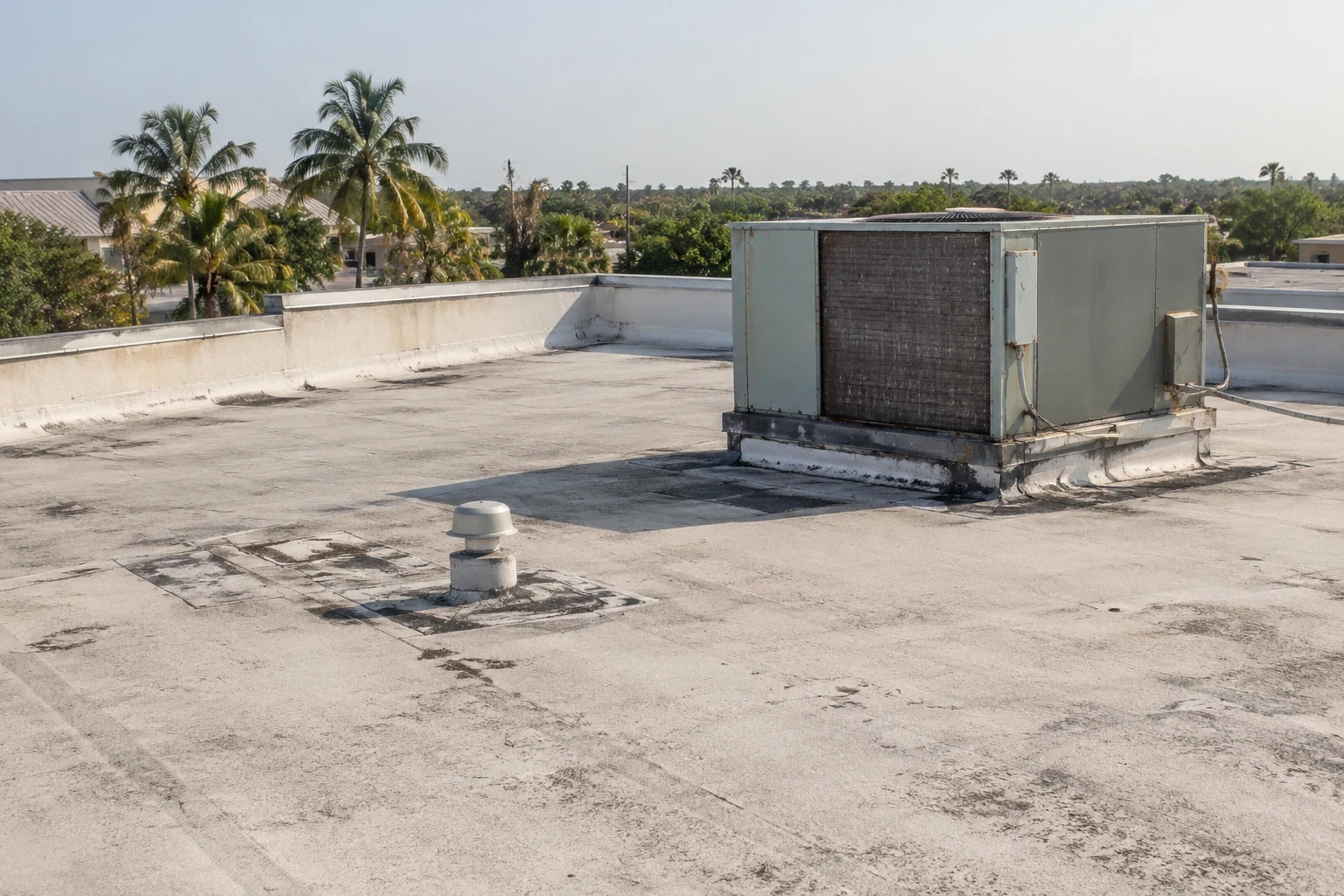
Adhesives, welds and sealants need a dry surface to bond, and in the middle of the wet season that means working in the morning window before the clouds build. We plan repair days around the forecast, stage materials so a crew can finish a detail before the weather turns, and keep temporary protection on hand for any area we cannot close up in time. A repair that is rushed ahead of a storm is a repair that leaks again.
We also coordinate with your site contact so crews know where to park, which stairs or ladders to use, and which rooftop units are sensitive. Noise, odor from adhesives and foot traffic over occupied space get planned around your hours, and we leave the roof clean, with photos of every completed repair sent to you the same day.
Questions We Hear Often
How fast can you get a repair crew out?
Active leaks get priority, and we answer calls day and night. Planned repairs are scheduled around dry weather and your tenants. We will give you a window when you call.
Will a repair stop the leak for good?
If we fix the real cause, yes, for that spot. Roofs keep aging, so we also look for the next weak detail and tell you what we see.
Can you repair any type of roof?
We repair TPO, PVC, EPDM, KEE, modified bitumen, built-up, metal and coated roofs. The method changes with the system, and we match materials to what is already there.
Do I need an inspection first?
Often it helps, especially on large roofs or after several leaks. We can combine the inspection and first repairs in one visit when the situation allows.
What does a repair cost?
The size of the problem, access, materials and the weather window set the price. We give you a written scope after we see the roof.