Commercial Roof Inspection in Pompano Beach, FL
Most flat roofs in Broward look fine from the parking lot, and that is exactly the problem. The trouble sits in places you cannot see from the ground: a seam that has started to lift, flashing that has pulled away from a parapet, a drain that fills with debris, insulation that has quietly gone wet. A commercial roof inspection puts someone with a trained eye and a camera on the surface to find those problems while they are still cheap to deal with.
We inspect commercial roofs across Pompano Beach, FL by walking them, touching them and photographing what we find. You get a plain-English read on the condition of the roof and a short list of what to do about it, in the order it should be done.
Walking the Roof: the whole surface, not just the hatch
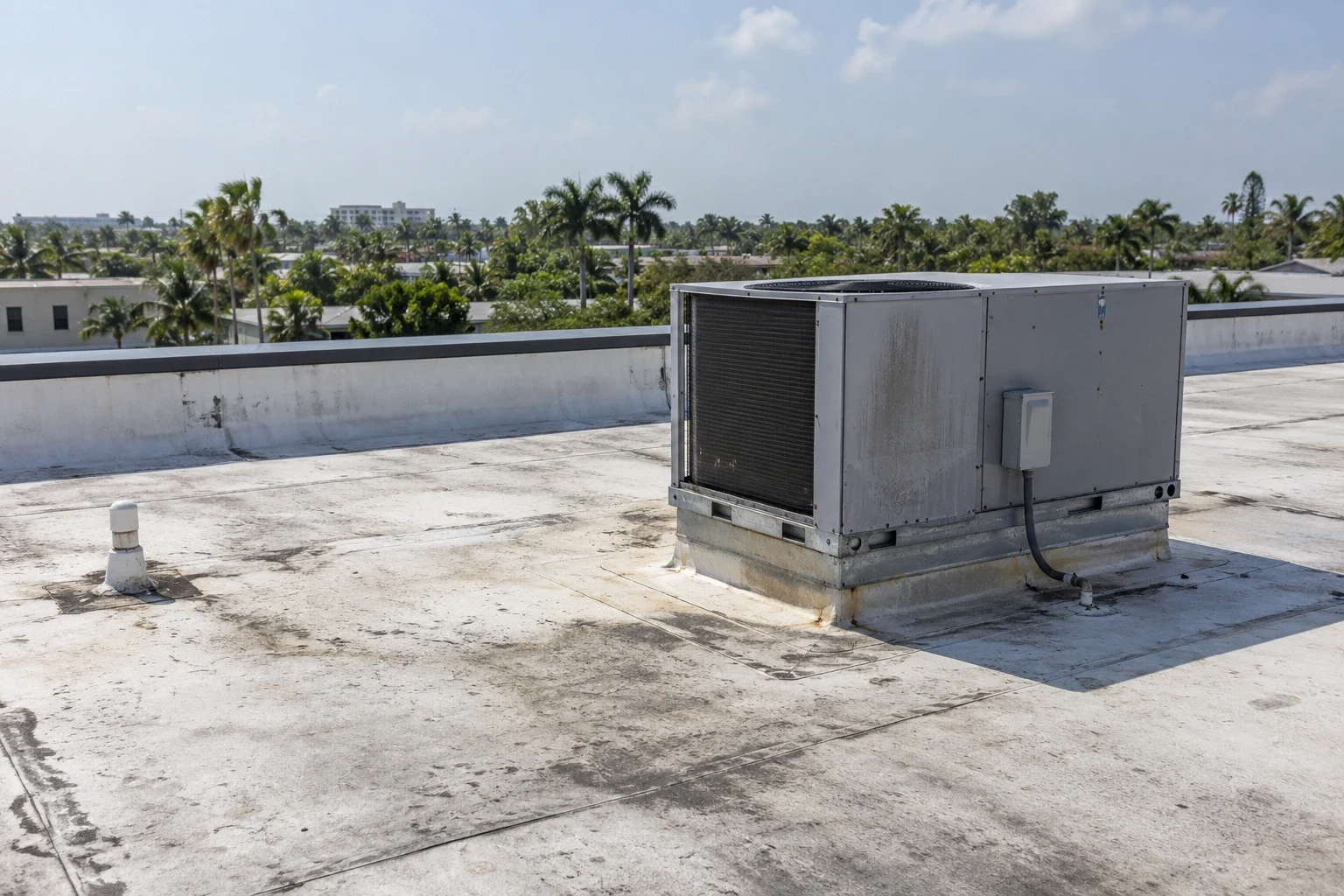
We cover the whole roof, not just the areas near the hatch. That means the membrane field, every seam we can reach, flashing at walls, curbs and penetrations, drains and scuppers, edge metal and coping, rooftop equipment and its supports, and any skylights or hatches. We note ponding, blistering, splits, punctures, fastener backout, sealant failure and signs of earlier patches that did not hold. The owner receives both findings and next steps.
We also look at the roof from underneath when access allows, checking ceiling stains, deck underside and any visible rust. If something needs a closer look, we use moisture meters and may suggest a core-cut and infrared survey to confirm what is hiding under the membrane. The point is to give you evidence, not opinions.
Building type changes the walk. A warehouse in Powerline Industrial Park is mostly open field membrane with a long perimeter to check. A retail center carries rooftop units and tenant-added penetrations. A hangar or maintenance shop at the Air Park gets its own checklist once we know whether the roof is metal panel or membrane. We plan the route and the checklist for the roof in front of us, not a generic form.
An inspection report earns its keep when it lets an owner act on the findings. We group observations by urgency: active openings and wet insulation first, details likely to fail before the next wet season next, and service-life planning after that. Each entry identifies the roof area, the condition, a photograph and a recommended next step. A report can also preserve the system's existing layout, so a future repair crew knows where drains, control joints and concealed transitions were recorded rather than rediscovering them during a storm.
Photographs are labeled by roof zone and direction, so a facilities manager can return to the same seam or drain without guessing.
What We Look For: trouble that shows up in this climate
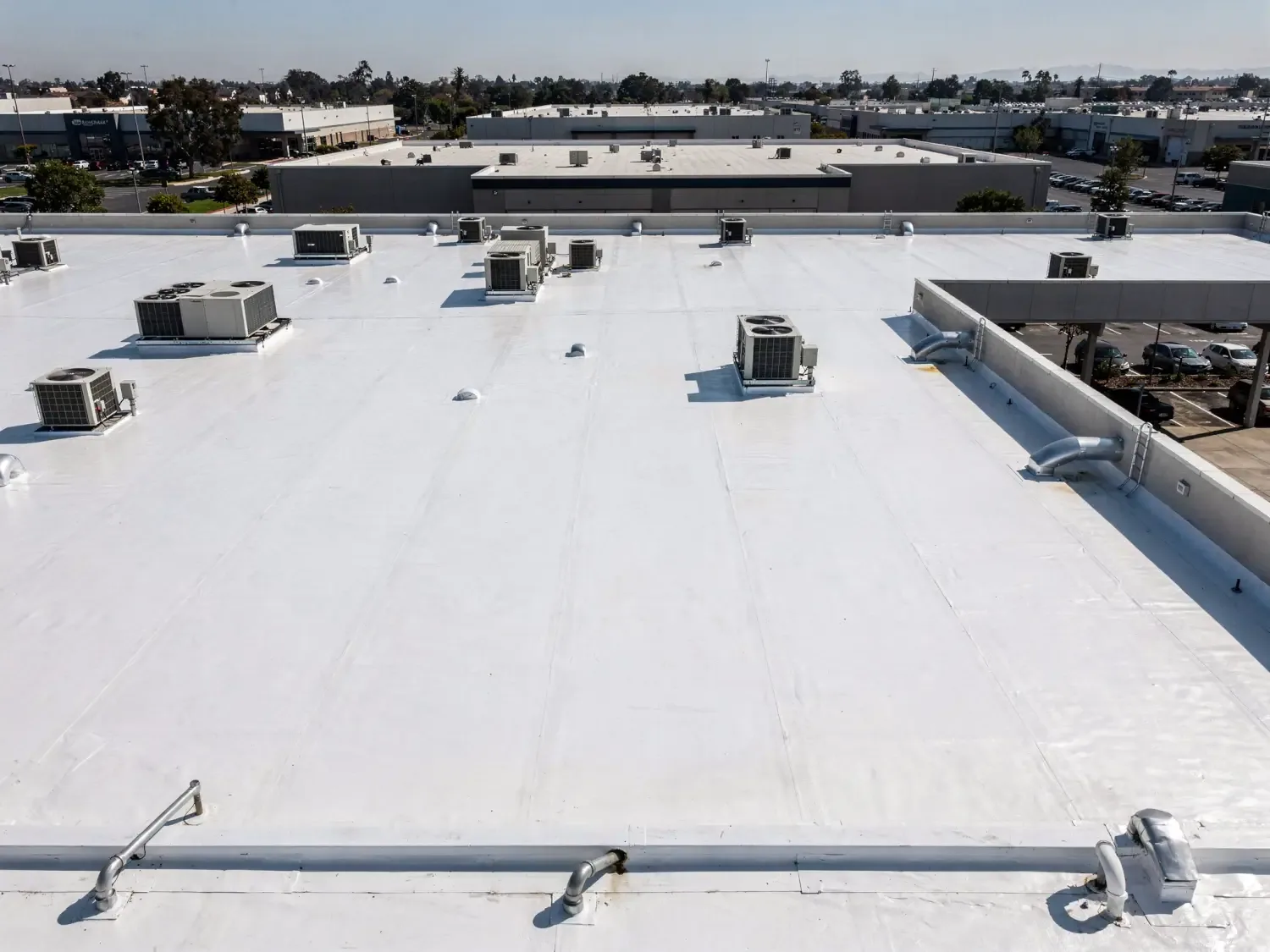
Pompano Beach roofs have a recognizable list of problems, shaped by near-daily summer storms, hot sun, warm nights and salt air near the coast:
- Ponding water that remains after a storm and keeps the membrane under stress.
- Seams and flashings stressed by daily heat cycles and afternoon cooling.
- Corroded edge metal, fasteners and equipment frames near the beachfront.
- Loose coping and perimeter details that wind will target first.
- Blocked or undersized drains and scuppers that cannot handle a heavy downpour.
- Moisture trapped in insulation from small leaks that were patched but never dried out.
The Written Report: photos, findings and priorities
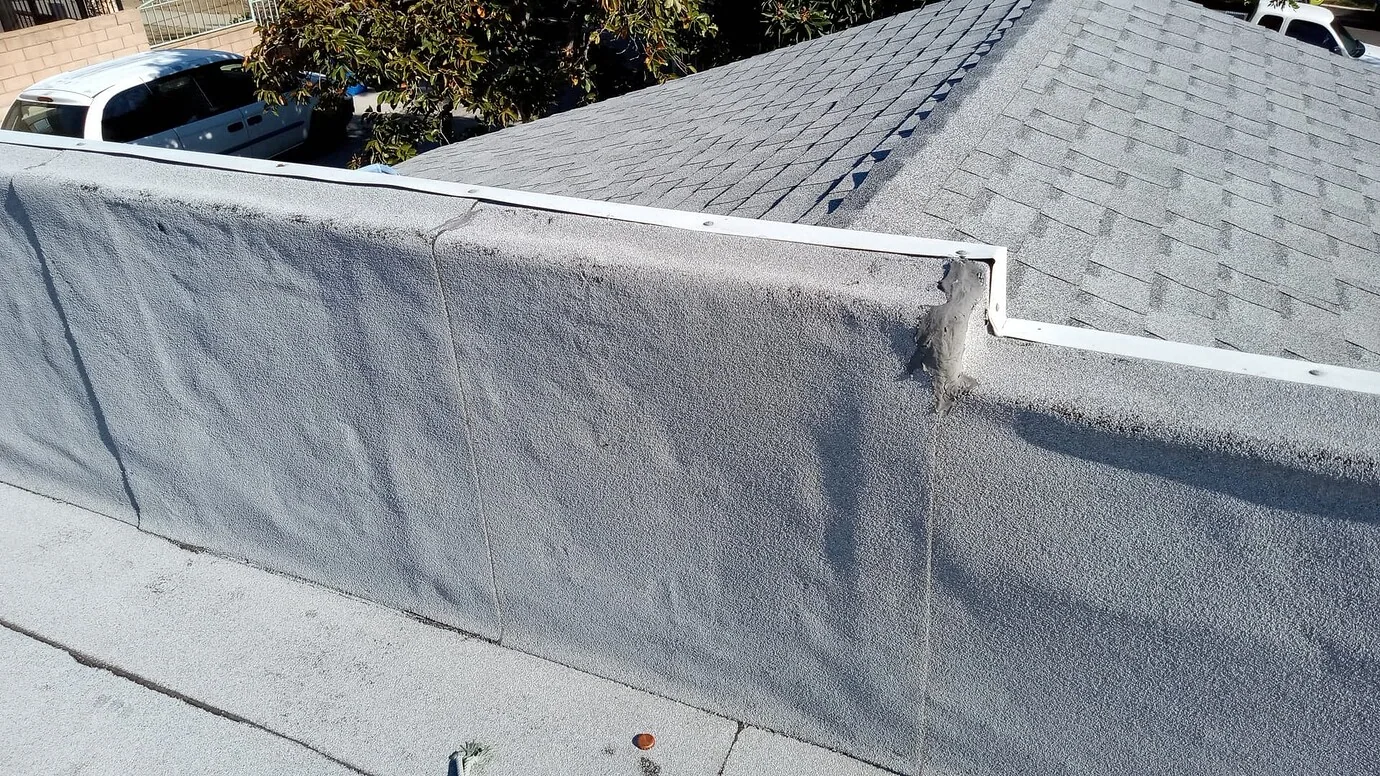
Every inspection ends in a written report. It has a roof plan with each defect marked, photos tied to those marks, a plain description of what is wrong and why, and a ranked list of recommended actions: what needs attention now, what can wait for the next budget, and what to keep watching.
These reports serve budgeting and planning, and some owners hand them to lenders or insurers. If you manage several buildings, roof condition reports in a consistent format make it easy to compare roofs and decide where money goes first.
When to Inspect: before the season, after storms and at a sale
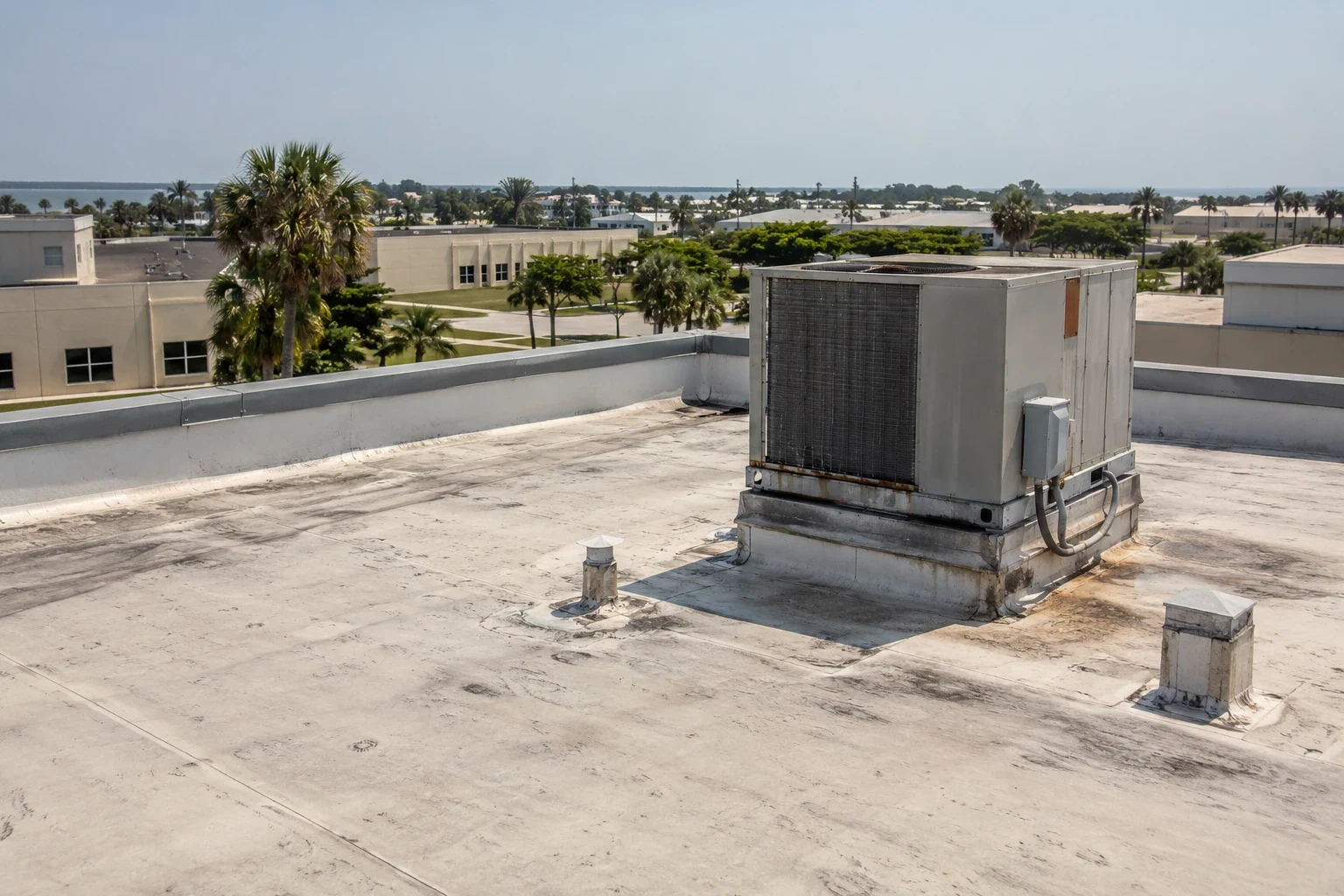
The best time for a routine inspection is the spring, before the wet season starts in mid-May, so problems get fixed before the daily storms arrive. A second look after any named storm makes sense too. Hurricane Irma sent gusts of 80 to 100 mph across most of Broward in 2017, and a roof that came through quietly can still have lifted seams or loosened edges.
Inspections also matter at moments of decision: before you buy a building, as part of due diligence roof surveys, before a lease renewal, or when a manufacturer's coverage is coming up for renewal and you want to understand what shape the roof is in. The findings from the walk feed straight into roof warranty management.
Beyond the Walk: drone and infrared tools
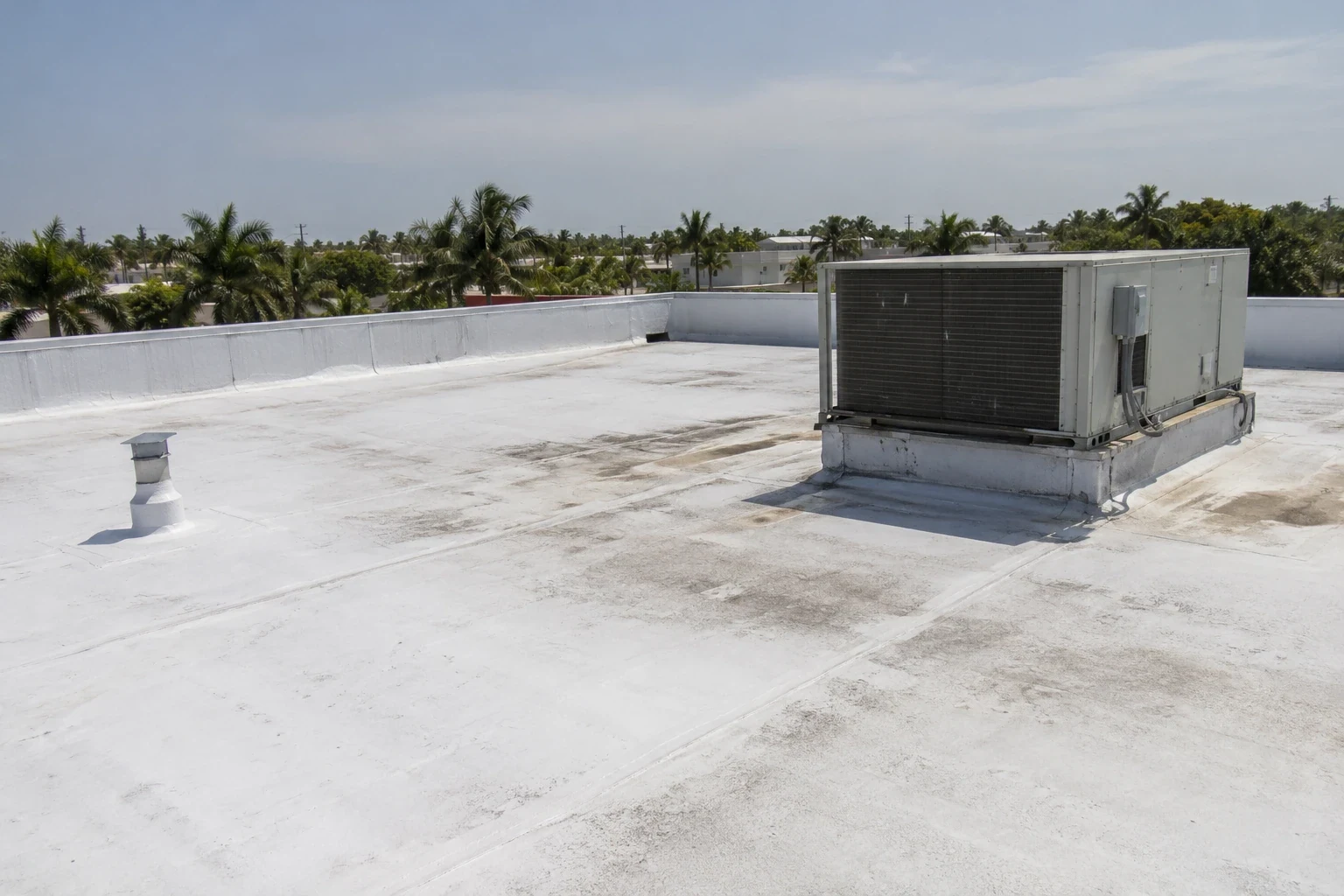
Some roofs are too large, too steep at the edges or too fragile to walk end to end. For those, a drone roof inspection captures the whole surface safely and quickly, and the images feed straight into the report. Infrared scanning at dusk, when wet insulation holds heat longer than dry, shows moisture patterns that no walk-through can see.
On the large-footprint buildings that dominate Pompano Beach's industrial inventory, including those along Andrews Avenue in the South Andrews industrial area, those tools save time and give a more complete picture. We choose the mix for each roof and tell you why.
What You Do With the Findings
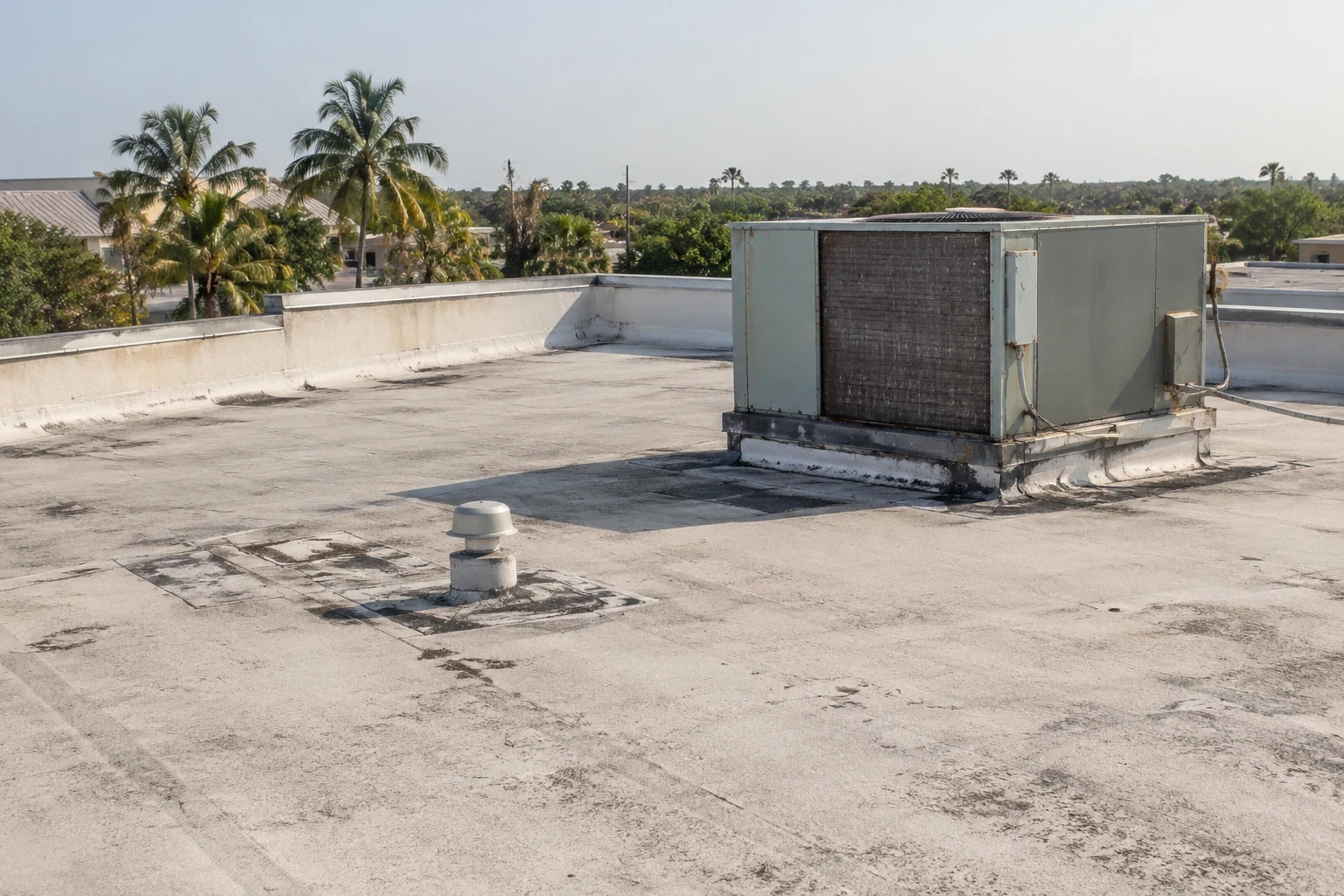
A report is only worth what you do with it. Some findings lead to small repairs we can do the same week. Others feed into a longer plan, such as preventive maintenance visits twice a year, a replacement scheduled for next budget cycle, or a coating project to extend a sound roof. When the roof is fine, we say that too, and you leave with a clean baseline.
Sellers, buyers, lenders and tenants all ask the same question: how much life is left in this roof? A clear report answers it with photographs instead of guesswork, and it gives you a stronger position in any conversation about repairs, leases or price.
Under the High Velocity Hurricane Zone rules and the 2023 Florida Building Code, 8th Edition, many roof projects need permits and product approvals, so the report also shows what to expect before a contractor starts quoting.
Questions We Hear Often
How long does an inspection take?
A typical building takes a few hours on the roof, plus time to build the report. Large or multi-roof properties take longer, and we give you a window when you book.
Do you inspect during the wet season?
When the roof is dry and safe to walk. Rain days get rescheduled, and the morning hours often work before storms build.
Will I get photos and a written report?
Every report includes photos, a roof plan with defects marked, and recommendations in priority order.
Do you inspect occupied buildings without disruption?
Most of the work happens on the roof, with a short check inside for stains and deck conditions. We coordinate access with your site contact and stay out of the way of operations.
What does an inspection leave out?
We cannot see inside sealed assemblies or under a membrane without cutting or scanning. That is why we offer core cuts and infrared surveys when the visible signs point to hidden moisture.
Is spring or fall the better time for a roof walk in Broward?
Spring, before the wet season opens on May 15, so fixes are made ahead of the daily storms. Older roofs benefit from a second check in the fall, after a summer of heat and rain, and any roof deserves a look after a major storm.