Infrared Moisture Survey in Pompano Beach, FL
Wet insulation is the quiet damage that never shows up on a ceiling tile. A roof can leak a little for months, soak the insulation layer, and still look perfectly fine from above. Meanwhile the water sits against the deck, the insulation loses its R-value, and the weight on the structure goes up. In a place where the wet season dumps most of the year's rain, a roof has plenty of chances to take on water it should not hold.
An infrared moisture survey finds that hidden water without tearing the roof apart. We scan the surface with a thermal camera, confirm the findings with core cuts, and hand you a map of where the roof is wet and where it is dry. It is the most direct way to decide between repair, recover and replacement.
What Water Does Down There: the cost of waiting
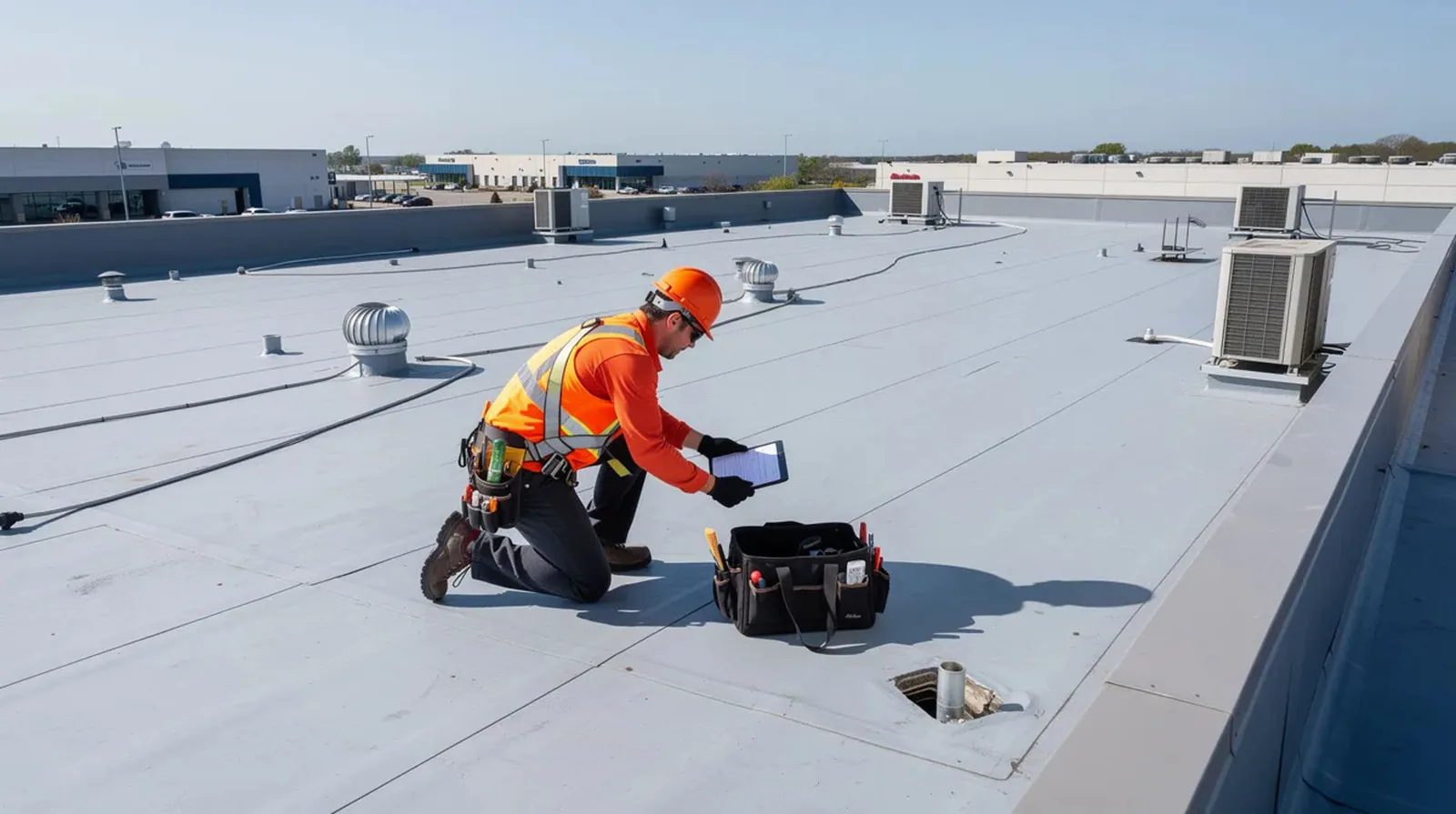
Trapped water is not harmless. It turns insulation into a heavy, soggy sponge that no longer does its job, so cooling costs climb and the building works harder through a Pompano Beach summer. It rusts steel decks from above, rots wood, and can loosen fasteners that hold the roof against wind. It also feeds mold and ceiling damage below, and it makes every new leak harder to trace because the roof keeps releasing old water. Confirmation keeps the repair boundary accurate.
Wet insulation also changes how a roof behaves in a storm. A membrane over soaked insulation is heavier, softer and more likely to blister or tear under uplift. If you have been patching leaks for a season or two, there is a good chance moisture has spread further than the stains suggest, and a scan will show how far.
A thermal scan is most useful when the roof assembly and recent weather are understood. We compare temperature patterns with the roof plan, confirm suspected areas with an appropriate moisture check, and mark the limits before recommending a cut test or repair. Heat signatures can have causes other than trapped water, including equipment, shade and different insulation conditions. The final report separates likely wet zones from locations that need confirmation, so the owner can avoid removing sound material based on color alone.
The written map includes the scan conditions and confirmation points, which helps another inspector reproduce the check on a later visit.
Why Heat Gives It Away: how an infrared scan works
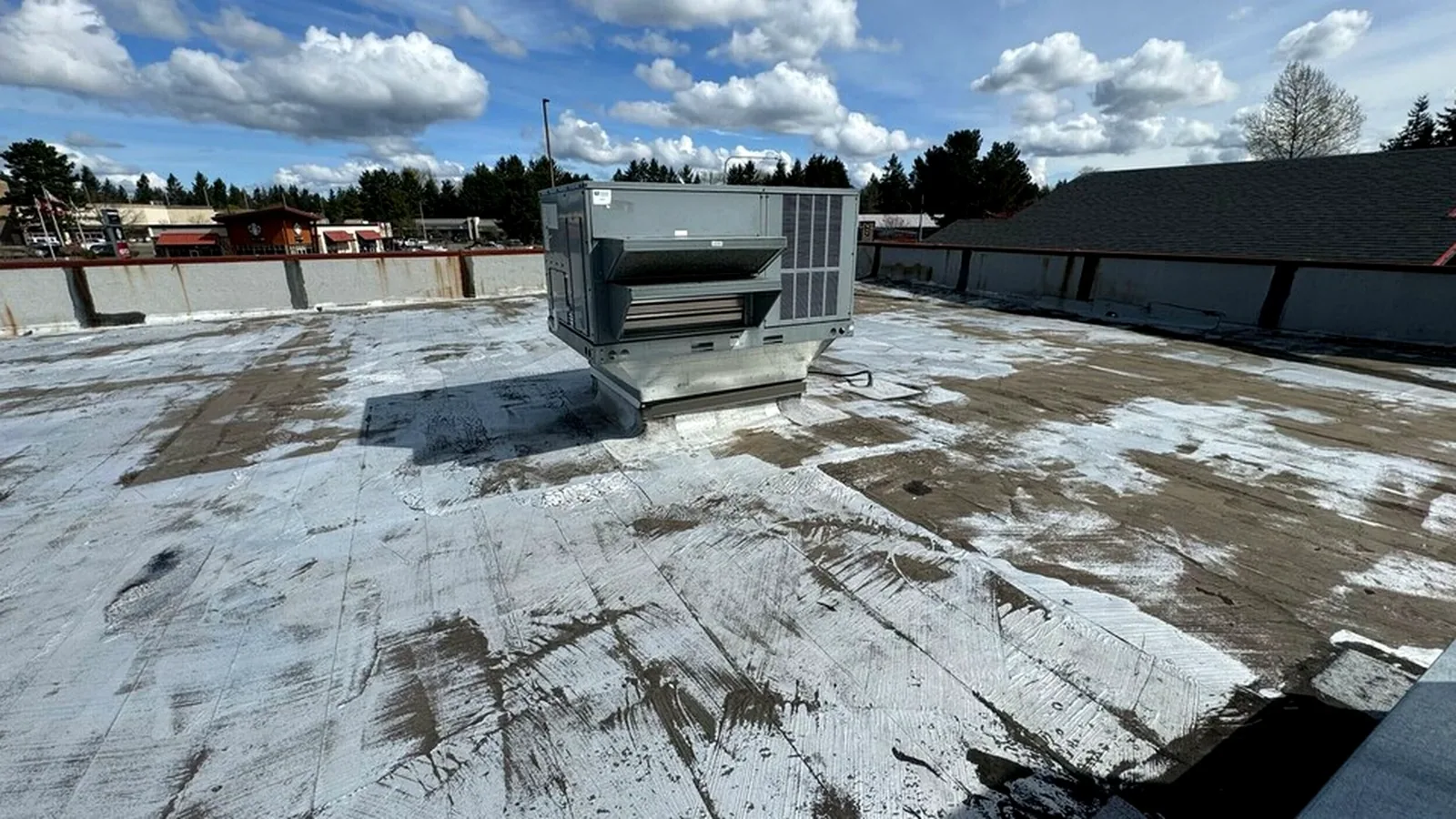
The idea is simple. All day the sun heats the roof, and dry insulation heats up and cools off fairly quickly. Wet insulation holds heat longer because water stores it. After sunset, when the dry areas have cooled, wet areas still glow warmer on a thermal camera. We scan the roof surface in that window, usually in the evening, and mark the warm patches that stand out from their surroundings.
A scan alone does not prove anything, though. Warm spots can also come from different materials, dark patches, ductwork or old repairs. That is why infrared is the first half of the survey, not the whole thing, and why we back it up with samples from the roof itself.
Conditions That Matter: surveys in a wet climate
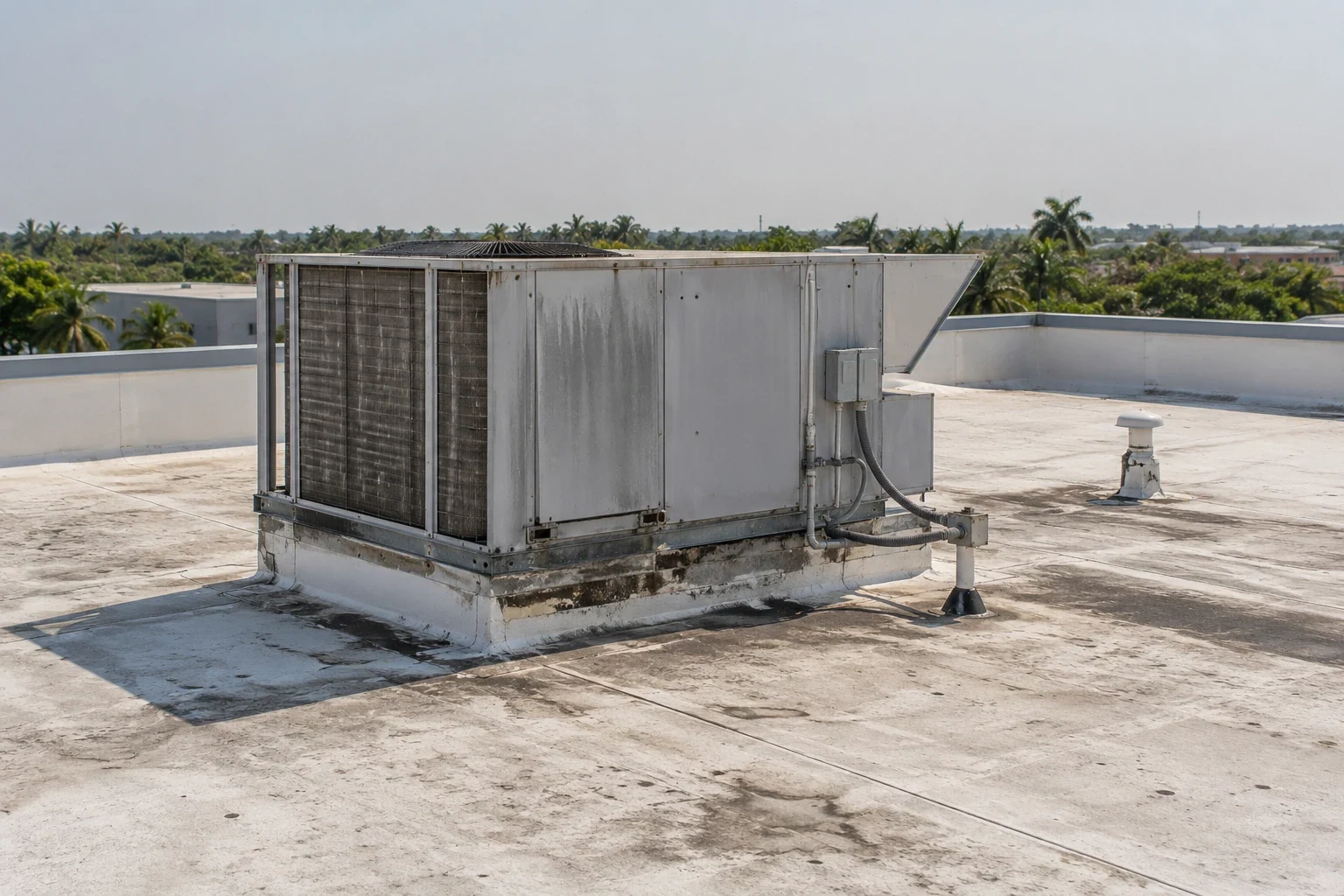
Good scan results need a dry roof and a clear day. Rain, standing water, dew or heavy cloud mutes the temperature differences the camera relies on, and strong wind cools the surface unevenly. In South Florida's wet season, with storms nearly every afternoon from mid-May to mid-October, that means picking windows carefully. We watch the forecast, reschedule when conditions are poor, and often find the best results in the drier months.
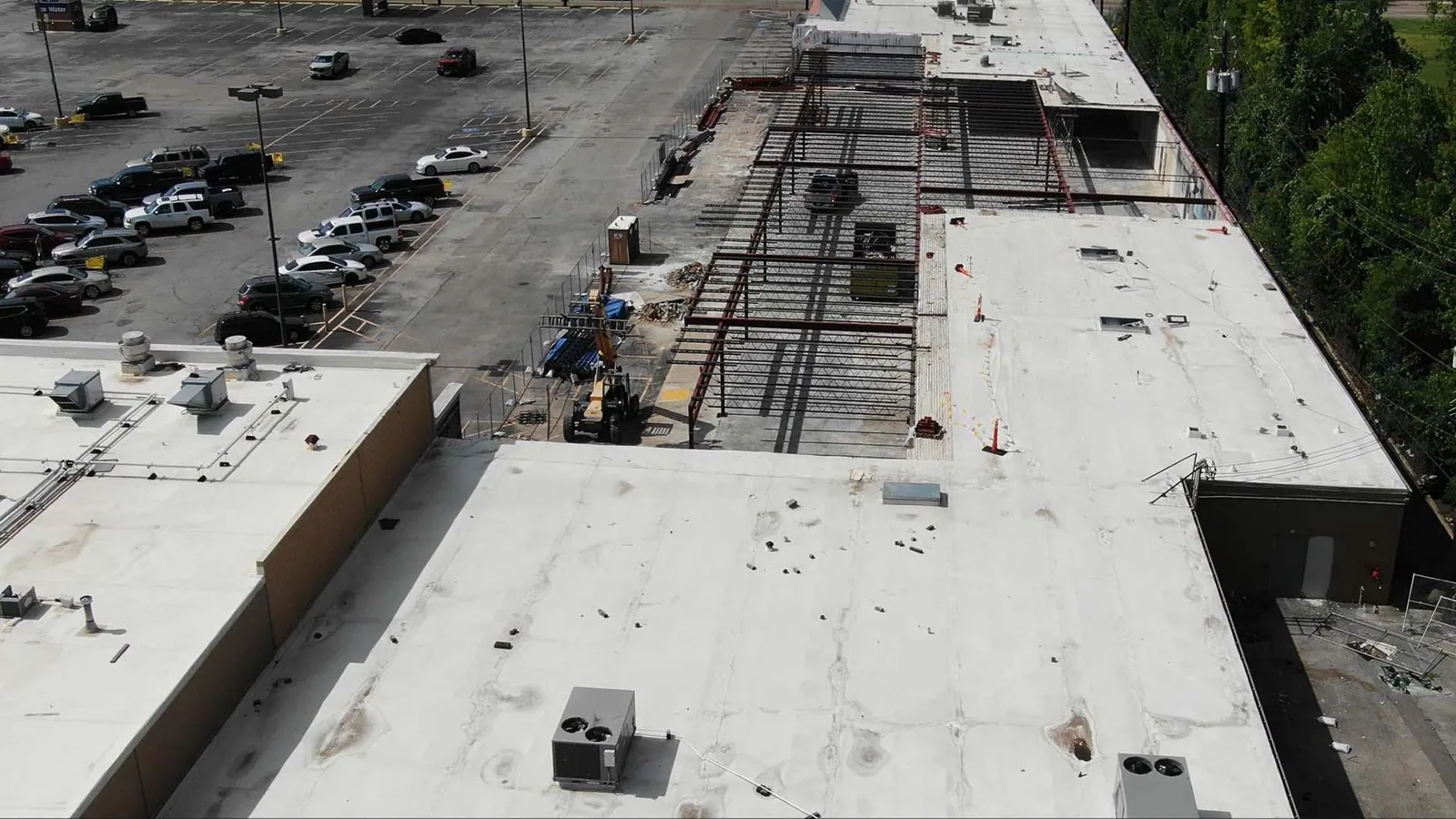
Roof surface matters too. Ballast, heavily reflective membranes, coatings and dark patches can change what the camera sees, and we account for them. Ponded water is flagged separately since it is already visible. On big low-slope roofs, the kind that dominate Pompano Beach's industrial parks, Alpha 250 Industrial Park among them, the scan is planned in sections so the whole surface gets a fair reading.
Core Cuts: proof from under the membrane
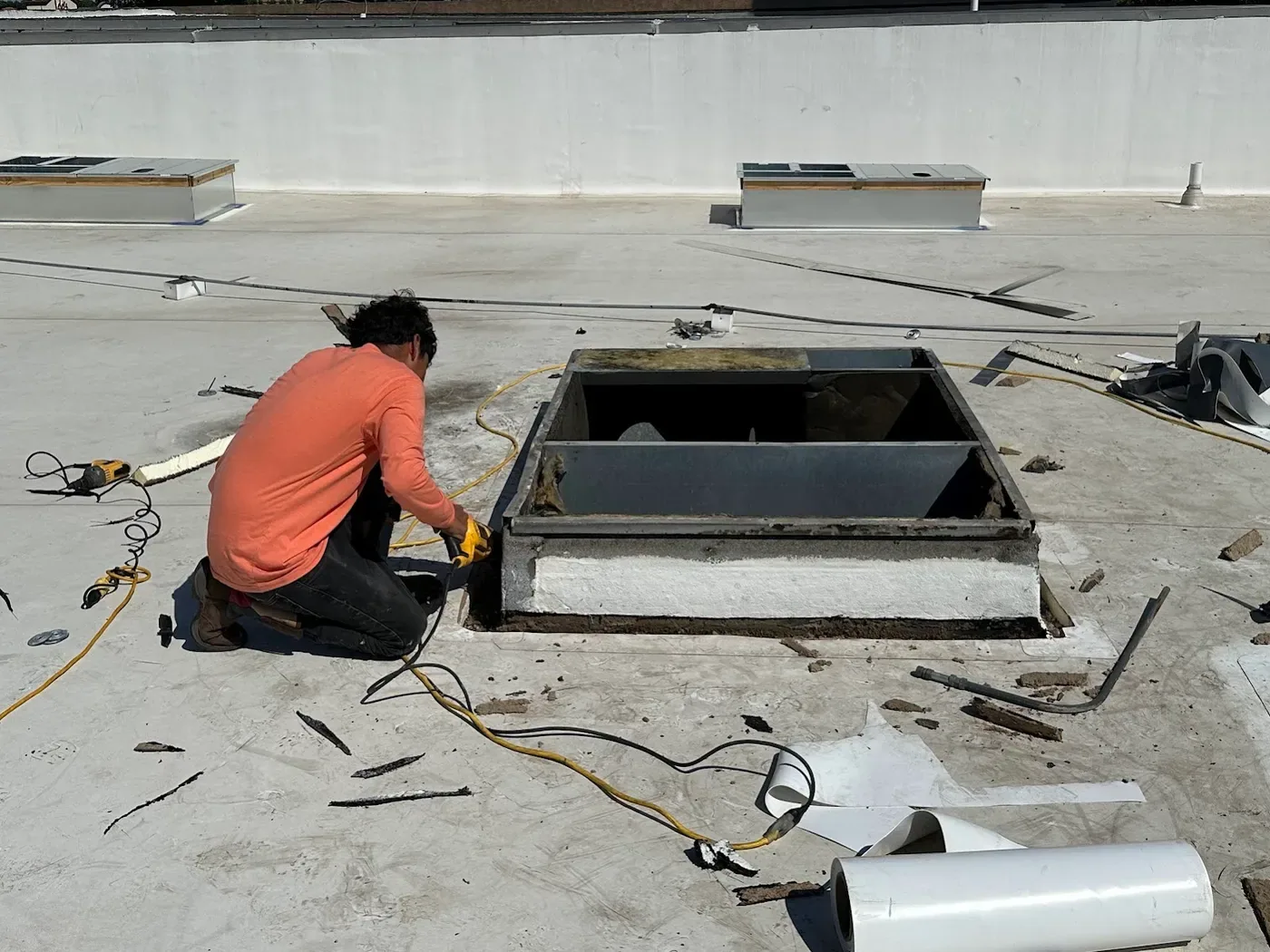
Once the scan marks suspect areas, we cut small test cores through the roof at those spots and at several dry control spots for comparison. Each core shows the layers in the roof, the type and condition of the insulation, whether the deck is steel, concrete or wood, and exactly how wet the material is. We use moisture meters and visual checks on the sample, and we photograph each cut.
Every core hole is patched right away with matching materials and sealed so it does not become a new leak. The cores also give us useful facts about how the roof was built: how many layers it has, what the fastening looks like, and whether a recover would even be allowed under the High Velocity Hurricane Zone rules that apply across Broward.
Reading the Map: what you receive
The result is a roof plan with wet areas outlined, labeled core locations, photos of each core and a short written explanation. We show how much of the roof is affected and what that means. A few small wet pockets near known leaks point to targeted leak repair and insulation replacement. A wide wet area usually means the roof has reached the point where a full replacement makes more sense than another round of patching.
If the cores show dry insulation across most of the roof and the membrane is still sound, a roof recover may be an option. Without the survey, that call is a guess. With it, you can show your board, lender or insurer exactly why you chose the path you did.
Where Surveys Pay Off Most

Surveys earn their cost in several situations: before a recover, when a roof keeps leaking in new places, after a major storm, before buying a building, or when you are deciding how to spend a roof budget. Hurricane Wilma crossed Broward in 2005, and roofs that were damaged then and patched quickly may still hold hidden moisture years later. Fort Lauderdale's 26-inch day in April 2023 is the kind of event that sends water through any small defect.
A buyer or lender running a due diligence roof survey sees the true condition of a roof before money changes hands. On very large buildings, we can begin with a drone roof inspection to plan the scan and focus effort where the roof looks worst.
Questions We Hear Often
What time of day do you scan?
Usually in the evening, after a sunny dry day, when dry areas cool and wet areas stay warm. We adjust to the forecast.
Can you scan during the wet season?
Yes, when the roof is dry and conditions are clear. Rain, wind or heavy cloud will push the scan to another day.
Do core cuts damage the roof?
Each core is small and patched immediately with matching material. The information they provide is worth far more than the patch costs in time.
Does infrared work on every roof type?
It works best on low-slope membrane roofs over insulation. Ballasted, heavily coated or metal roofs need different methods, and we choose the approach after seeing the roof.
Why not just wait for the next leak?
Because the leak you can see is the smallest part of it. Wet insulation spreads damage quietly to the deck and ceilings, and by the time stains appear the wet area is usually much larger.
How soon do I get the results?
You will get a roof plan and written findings after the scan and cores are done. On large buildings we give you a timeline when we book the work.