Manufacturing Plant Roofing in Pompano Beach, FL
Warm summer nights in South Florida have been running a degree or more above the thirty-year normal lately, with dewpoints sitting in the 70s, and a plant that makes heat of its own feels it on the roof first. Exhaust fans pull hot air through the penetrations all day, the sun bakes the surface from above, and the afternoon storm drops cool rain on top of that. A manufacturing roof around here is asked to do more than a plain flat roof ever is.
We repair, recover and replace roofs on manufacturing plants across Pompano Beach, FL, and we plan every job around the production schedule, the fumes and the equipment that make the building different from a warehouse next door.
Heat From Both Sides: process exhaust and a summer sun
A roof over a production floor lives with heat from below as well as above. Hot exhaust, boilers, ovens and compressors warm the underside of the deck, while the sun heats the surface, so the membrane cycles between temperature extremes more often than the roof on a quiet storage building. Seams, flashing and sealants age faster under that kind of cycling, and the first sign is often a hairline gap around a stack or a blistered patch near a vent.
Reflective single-ply membranes help on the surface side, and thicker insulation with a cover board protects the deck from below. We check how hot the exhaust runs and how close it sits to the roof surface before recommending anything, since a vent that throws heat across a flat patch will wear that patch out in a few seasons.
Plant roofs carry more than weather. Exhaust, process piping, make-up air and occasional hot work all compete for space above the production floor. Before a repair, we identify which equipment can shut down, which intakes need protection and whether fumes or odors could reach occupied areas. The membrane patch should be compatible with any oil, chemical residue or heat exposure at the penetration. During replacement, temporary dry-in is coordinated with production so the open roof never sits over a critical line through a storm shift.
Chemistry Up There: grease, vapors and choosing the membrane
Some plants send more than heat out of the roof. Cooking oils, solvents, flavor compounds and cleaning chemicals settle on the membrane and slowly break down materials that were never made to take them. Ordinary single-ply can swell, soften or shrink after a few years of that exposure, and the failure shows up at the seams first.
That is why we look at what the plant makes before we pick a system. PVC and KEE membranes are formulated to resist many oils and chemicals, and they are common choices where exhaust lands on the roof. Pompano Beach has makers of cosmetics, marine products, spices and beverages, and what leaves the stacks of one is not what leaves another. A short list of what leaves the stacks goes a long way.
Stacks, Curbs and Pipes: more holes than any other roof type
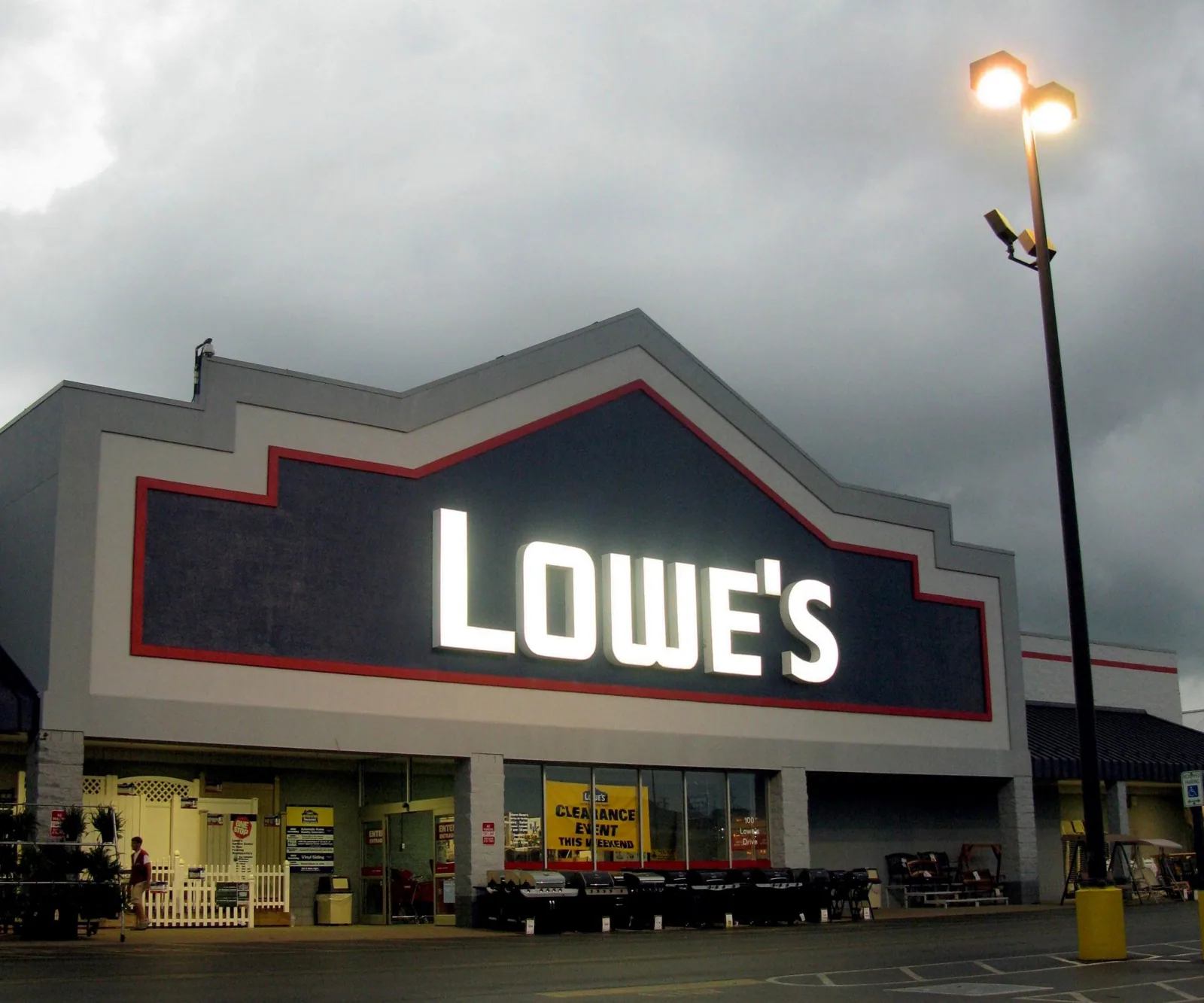
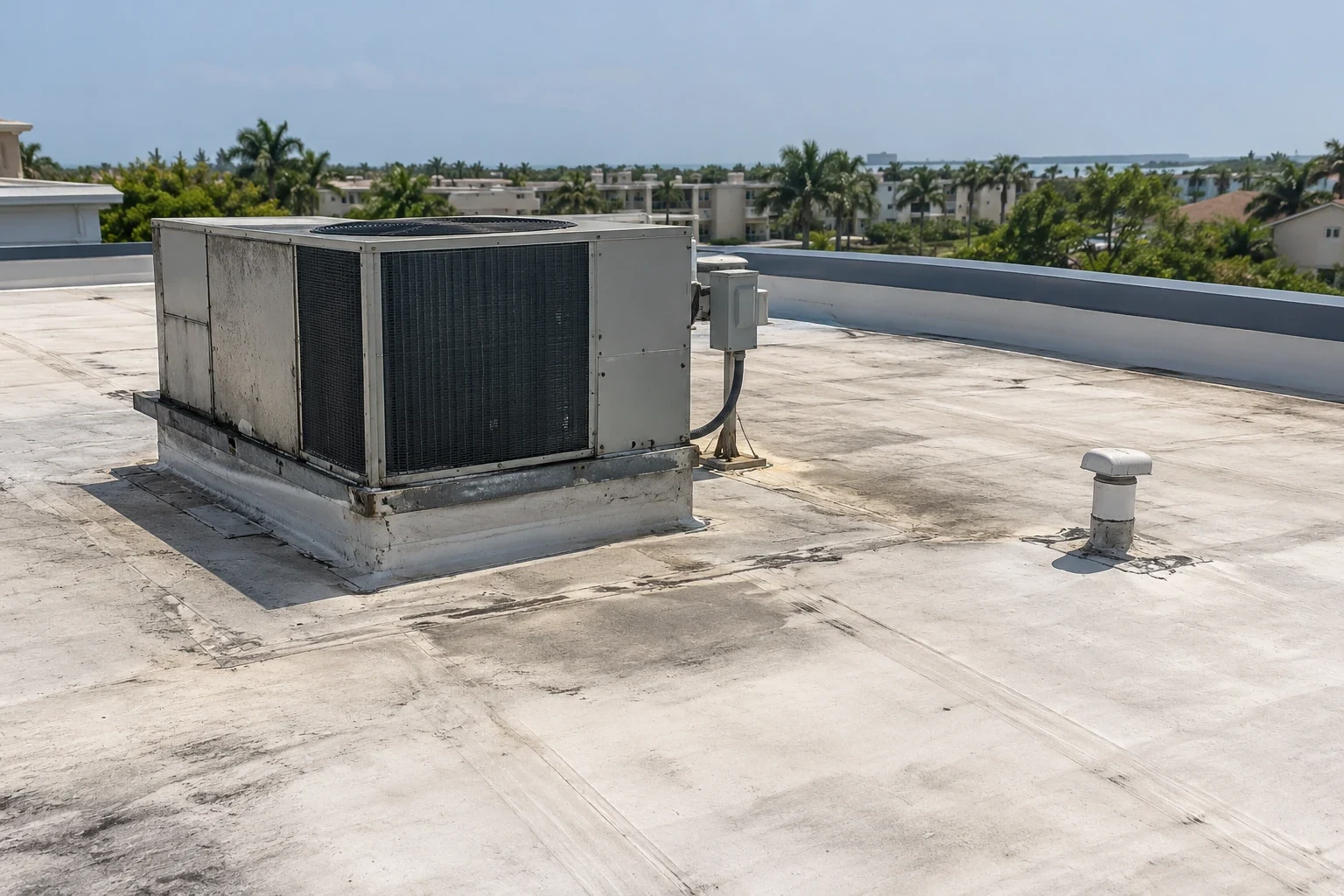
A manufacturing roof can look like a pin cushion from above. Each stack, conduit run, pipe chase and fan curb is a spot where water can get in, and the older the building, the more of them have been added, moved or abandoned in place. Unused curbs with failed flashing are common, and so are patches that were fixed twice and never properly tied in.
We catalog the penetrations and flashing first, then look at equipment curbs and supports for movement, rust and loose fasteners. Removing dead penetrations and sealing the decks beneath is often the quickest way to cut leak risk, and it is far cheaper than finding out about them during a storm.
Production Windows: hot work, fumes and keeping lines running
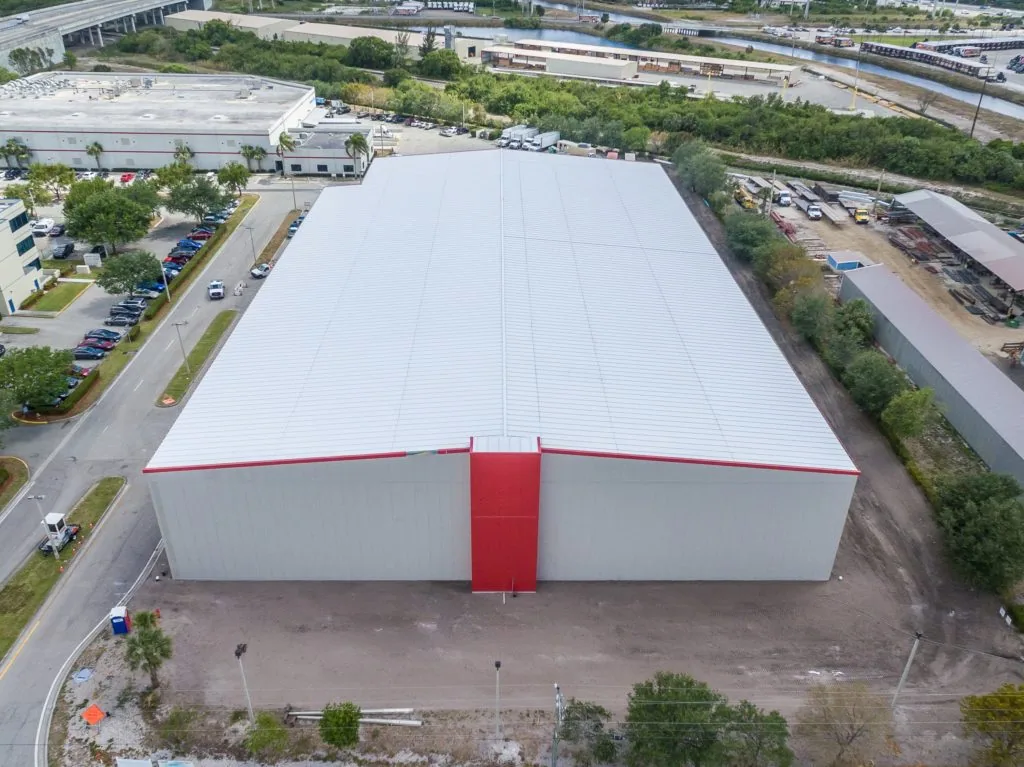
The roof job has to fit around the plant, not the other way around. Torches and hot asphalt cannot be used next to a process that gives off flammable vapor, and some products cannot tolerate dust or odors drifting through the intake. Where fire risk matters we choose cold-applied, mechanically attached or welded systems, and we agree on the shutoff and clearance steps with the plant's safety lead before the first panel lifts.
A planned shutdown or a slow quarter makes a good window, and we aim for those weeks when the plant has them. For plants that cannot stop, we phase the work in sections and talk daily with the shift supervisor. Plants that run on tight manufacturing schedules get the most out of a clear map of the day's work area, posted where the shift supervisor will see it.
Where the Buildings Sit: Atlantic Business Center, Alpha 250 and IDI
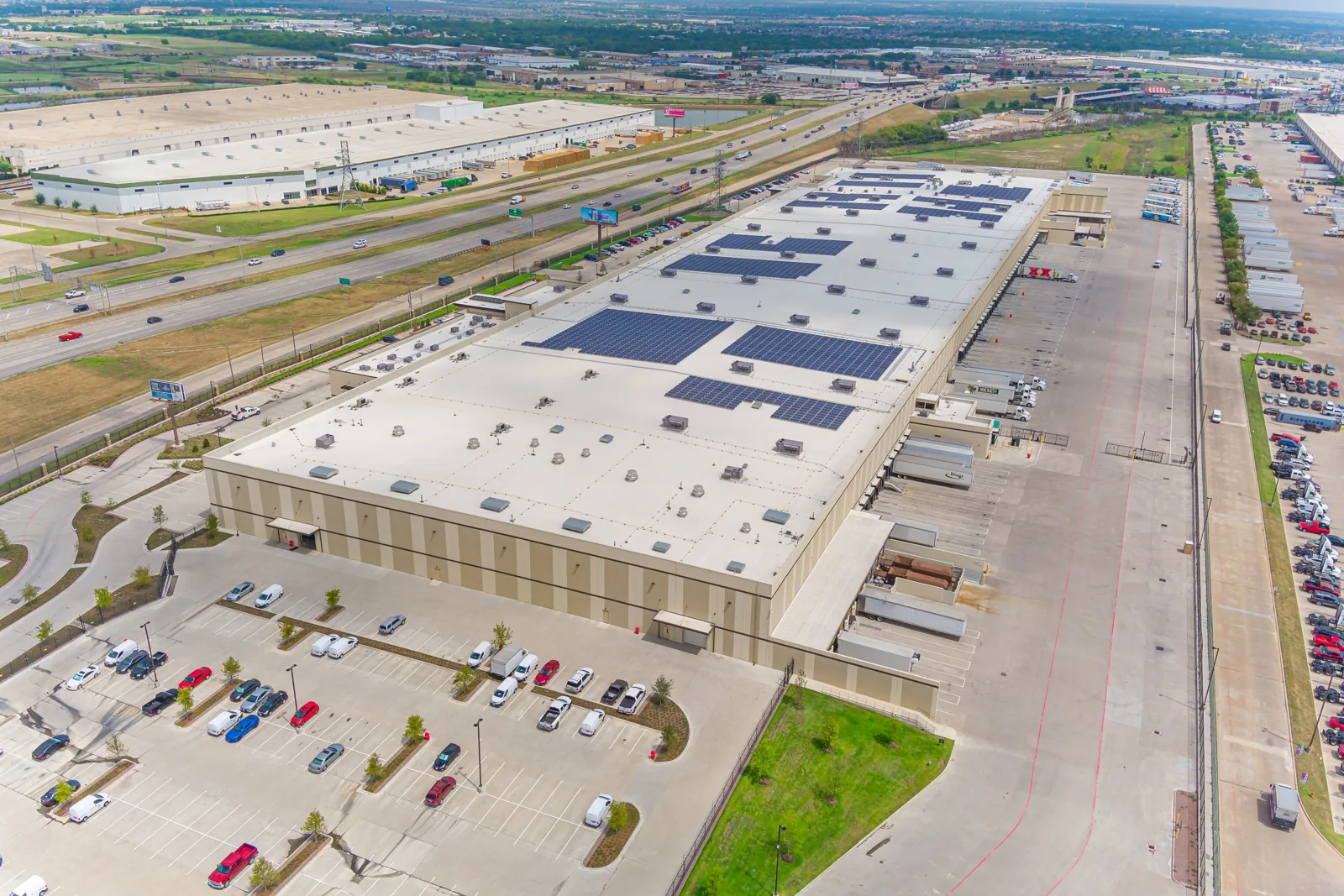
Pompano Beach makes cosmetics, marine products, spices, branded goods and beverages at home, and Point Blank Enterprises and Precision Metal Industries are among Pompano Beach's notable industrial employers. The city reports that its homegrown manufacturers rely on its industrial buildings, the same stock the warehouses occupy. Atlantic Business Center lies along West Atlantic Boulevard in the southwest at about 1.20 million square feet of mapped buildings, and Alpha 250 adds roughly 1.14 million near Lyons Road and Sample Road.
The IDI Pompano Business Center in the west, about 1.31 million square feet, is the third of the mapped parks worth knowing. Whatever a building holds, the wind and rain on its roof are the same, and a production floor adds exhaust and equipment load on top.
Wind and Approvals: a 98 mph gust and a plant roof
Wilma put a 98 mph gust on Pompano Beach in 2005. A plant roof falls under High Velocity Hurricane Zone requirements: the ordinary design wind is 170 mph, and every exterior component on the roof has to hold a Miami-Dade product approval. Heavy rooftop equipment makes the connection details at each curb a wind question as much as a leak question.
Irma followed in 2017, when gusts of 80 to 100 mph swept most of Broward, the kind of wind that works at fan housings and curb caps. We go over those fastenings before hurricane season starts, look at how each unit is tied down, and replace sealants that have cracked in the sun. A plant that loses a fan cover in a gust can lose a production day to the water that follows, so these small checks pay for themselves quickly.
The open roof field and forklift routes overlap with the planning needed for warehouse roofing.
If the plant also stores or ships finished goods, align dock access with the work sequence used for distribution-center roofing.
Questions We Hear Often
Will chemical exhaust damage a new roof?
It can, if the membrane is the wrong type. Tell us what leaves the stacks and where it lands, and we match the membrane to it. Chemical-resistant PVC or KEE is the usual answer where oils or vapors reach the surface.
Can the plant keep running during a re-roof?
Most of the time. We phase the work, protect air intakes, and keep a clear line to your safety lead for shutoffs. Anything involving open flame gets a separate talk before the day begins.
How do you handle roof-mounted process equipment?
Carefully and in sequence. Units stay in place when we can flash around them, and when a curb has to be lifted we coordinate the disconnect with your maintenance team and reset it the same day, with new flashing.
Why do manufacturing roofs leak at penetrations more than others?
There are simply more of them, and they have been altered over the years. Added conduit, abandoned stacks and re-routed pipes each leave a seam. Cataloging every penetration and sealing or removing the dead ones cuts the leak points sharply.
What does a storm do to a plant roof that a warehouse roof escapes?
Weight and openings change the picture. Heavy rooftop units and wide exhaust openings catch wind and rain differently, so we check tie-downs, curb caps and fan housings after a named storm as well as the membrane.