EPDM Roofing in Pompano Beach, FL
The stormy stretch of the wet season starts in mid-May, and it brings lightning, hail and sharp thunderstorm gusts into the same afternoon. A rubber membrane takes that kind of beating better than most roofing materials, and that is the case for EPDM on a Pompano Beach, FL building. It is a vulcanized synthetic rubber sheet, black or white, that does not crack with the sun, does not mind ozone and can be patched by hand without special equipment. Its weakness is not weather. It is the seams, and anything that drips oil or grease on it. We install, repair and maintain EPDM, and we will tell you whether your roof suits it or would be better served by a welded single-ply.
Rubber on the Roof: what EPDM is and why it lasts
EPDM stands for ethylene propylene diene monomer, which is a mouthful for a thick sheet of cured rubber. Because it is a thermoset, it never softens or reflows under heat, and it does not get brittle in the way aging asphalt does. Its resistance to sun and ozone is the reason EPDM roofs turn up on buildings that have not seen attention in a long time. In a climate with this much UV and this many wet, hot days, a membrane that does not change character is worth something.
It is also forgiving to install in large pieces. Wide sheets cover big areas with few seams, and the material is flexible enough to wrap odd curbs, pipes and parapets without hand-built corners everywhere. That cuts down the number of places where water can get in, and fewer seams means fewer spots to probe and maintain after each wet season.
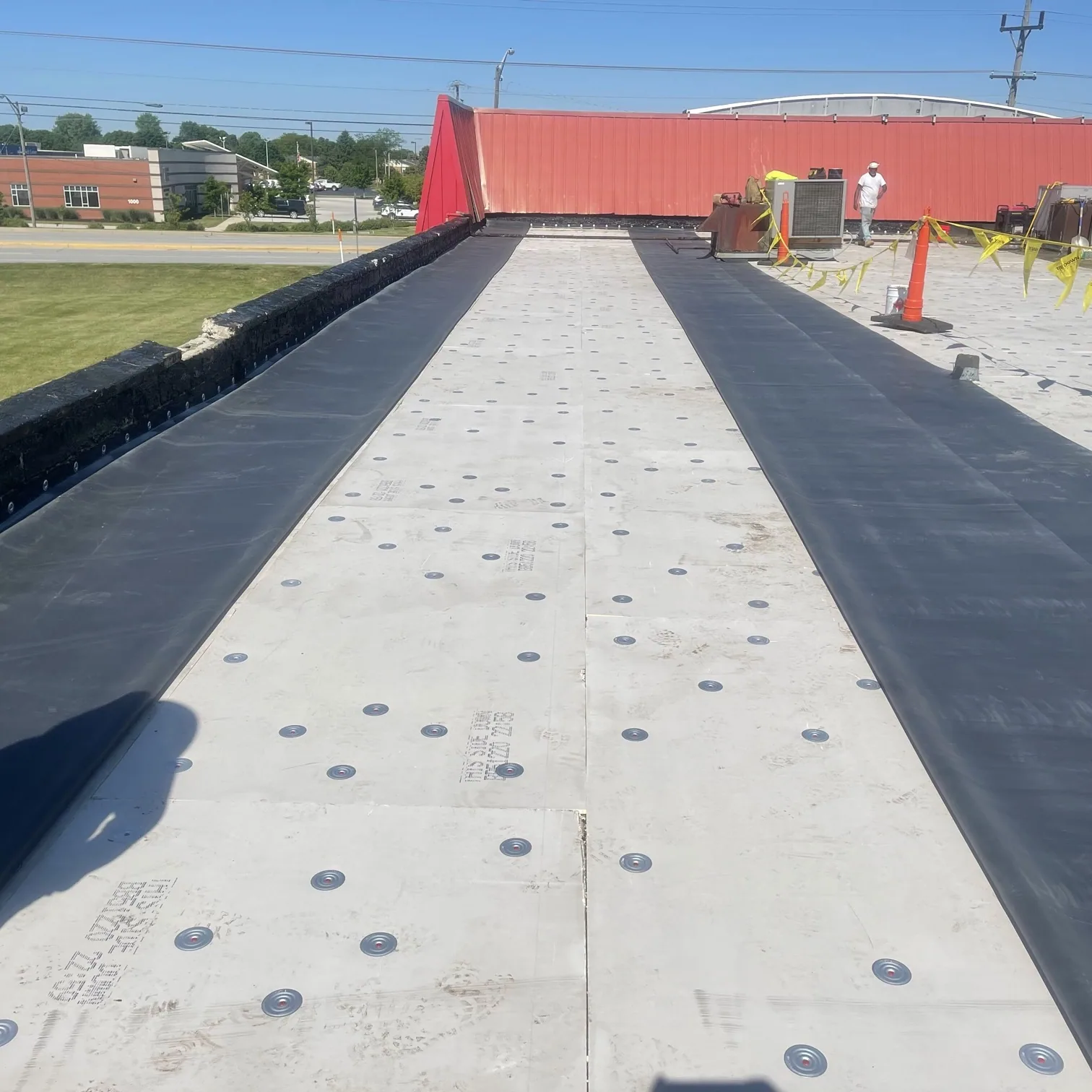
EPDM is a flexible sheet, and its long-term performance depends on the bond at every splice and termination. The surface must be clean and dry before primer and seam tape are applied; dust or moisture caught under the lap can create a path that grows under wind and ponding. At a curb, the membrane needs enough height to turn up and finish beneath a secure counterflashing. A replacement plan should also inspect the old adhesive and insulation, since a new sheet cannot correct a deck that has lost support beneath it.
Black or White: heat gain in a Broward summer
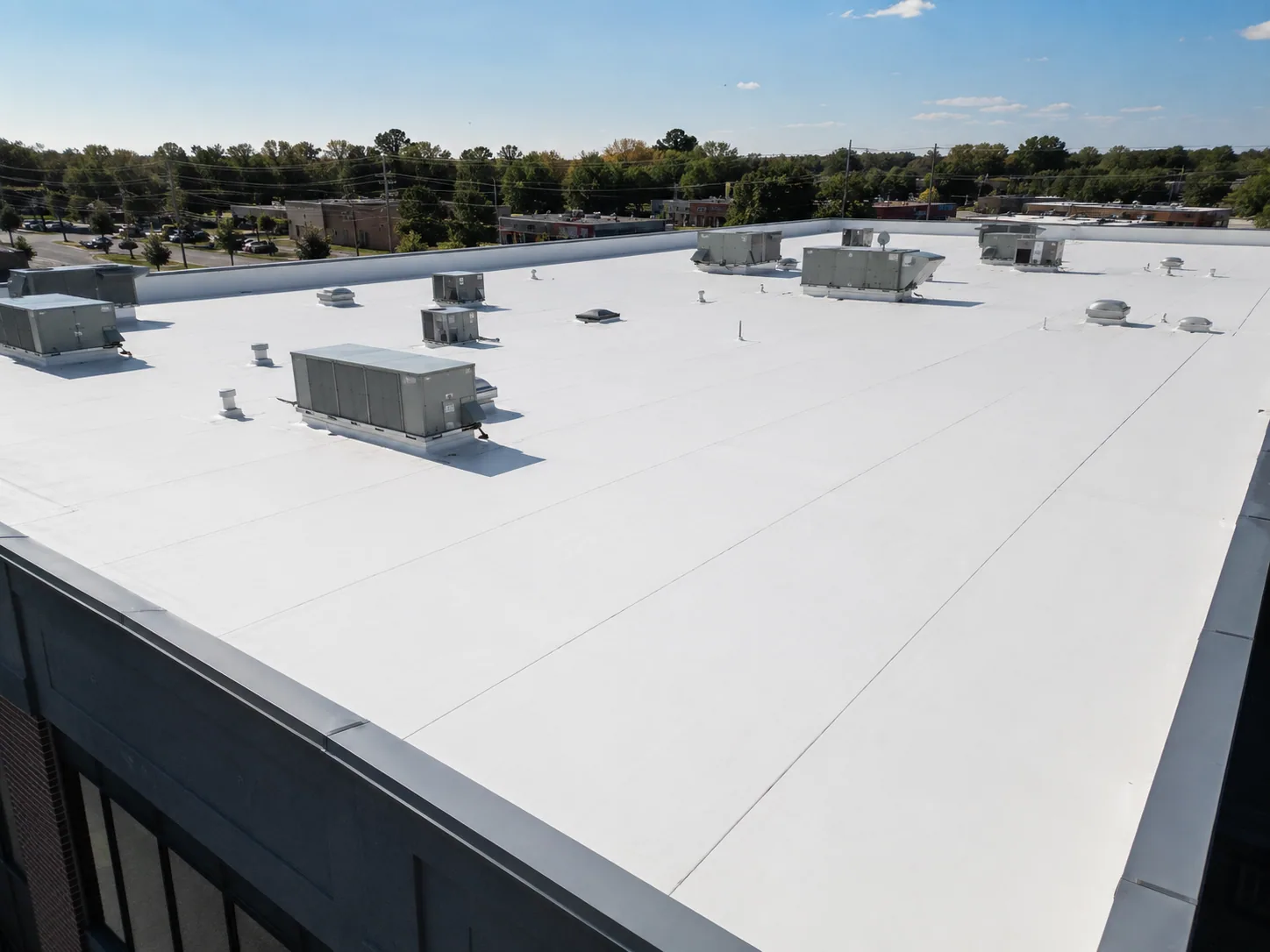
Standard black EPDM absorbs the sun. Over an air-conditioned space in a county with warm nights and dewpoints in the 70s, that heat becomes load on the rooftop units and on the insulation under the sheet. White EPDM carries a reflective surface that behaves more like TPO in the sun, and it is the version we usually suggest for occupied space under a flat roof. Black EPDM still makes sense on buildings with little cooling demand, on roofs with a heavy ballast or paver layer, or where the budget decides the color.
If you are weighing energy savings against purchase price, ask for both options at the same attachment and thickness, then compare.
Seams and Splices: the weak point to watch
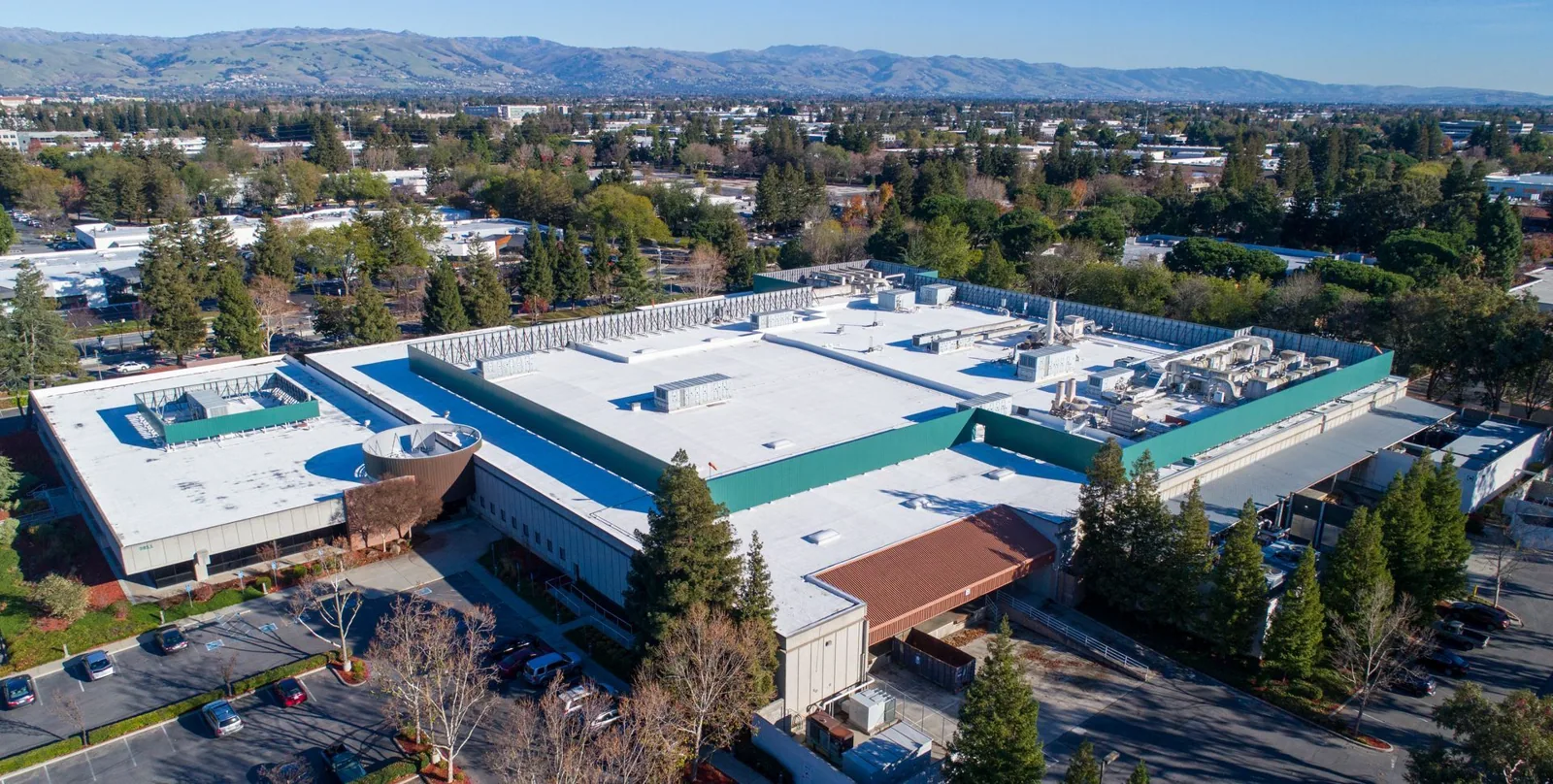
Unlike TPO and PVC, EPDM cannot be heat-welded. Sheets are joined with splice adhesive, seam tape or a combination, and a seam is only as good as the surface it was made on. A film of dust, moisture or old adhesive will let a lap slowly peel, usually at a corner or a tee-joint where three layers meet. That is where we look first on an older rubber roof, and it is a common place for a leak to begin.
Done well, a taped seam is dependable for years. Done in a hurry on a damp morning, it fails in the first season. We clean, prime and roll every splice, finish the tee-joints with cover strips, and walk the lap edges afterward. Where a repair is needed, a clean patch of cured rubber plus primer works better than a smear of sealant. For a roof with failing laps, our commercial roof repair crews start by checking every junction.
Debris and Hail: how rubber handles what falls on it
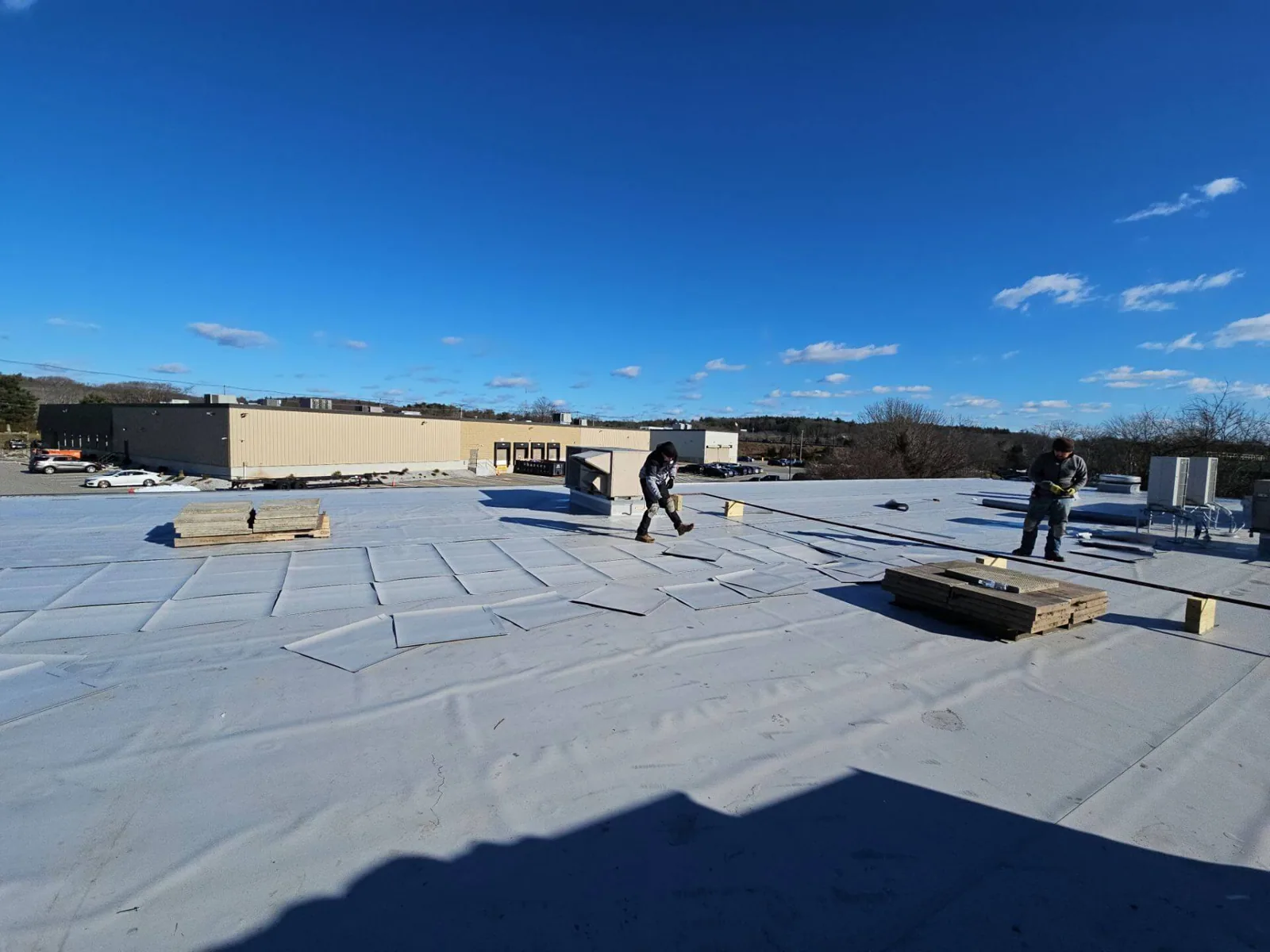
Thick rubber is forgiving of impact. A hailstone that would bruise a thin sheet usually bounces off, and a stray piece of debris is less likely to cut it. Hurricane Irma brought three tornadoes to Broward, including an EF-0 near Oakland Park, and every big wind event scatters branches, loose roof metal and equipment panels across neighboring roofs. A fully adhered EPDM sheet over a cover board takes much of that in stride.
It is not impossible to puncture, though. A sharp piece of flashing driven by wind can slice it, and foot traffic with grit in boot treads wears a path. We lay walkway pads where people service equipment, and our membrane puncture repair work uses patches that bond to cured rubber instead of just sitting on top of it.
Held Down: adhered, fastened and why we avoid loose stone
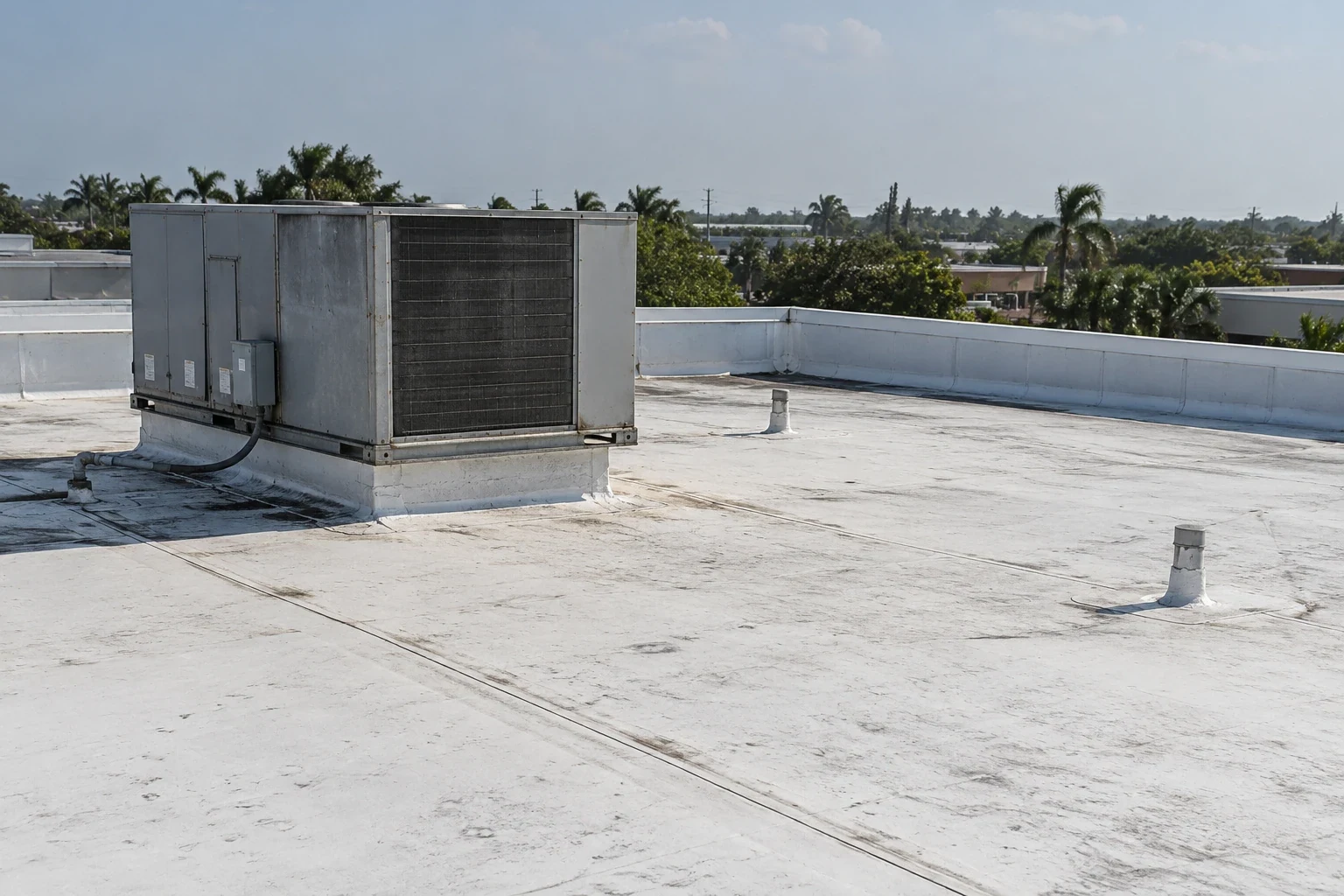
EPDM roofs go down three ways. Fully adhered systems glue the sheet to the substrate and are the most wind-resistant and the best match for hurricane-zone work. Mechanically attached systems run battens or plates through the sheet at a set pattern, and they are quicker but flutter more. Ballasted systems hold the sheet down with loose stone. In Broward, we rarely recommend ballast, because stone becomes a projectile in a hurricane and the structure has to carry the extra weight.
Whatever method goes down, the layers must be listed together under a Miami-Dade Notice of Acceptance, the way the hurricane-zone code expects. In a large industrial district like Park Central, which contains about 1.99 million square feet of buildings, edge zones need secure attachment and properly fastened metal. Rubber manufacturers such as Carlisle publish detailed EPDM assembly specifications that guide the layers we put together.
Where It Fits: and where it does not
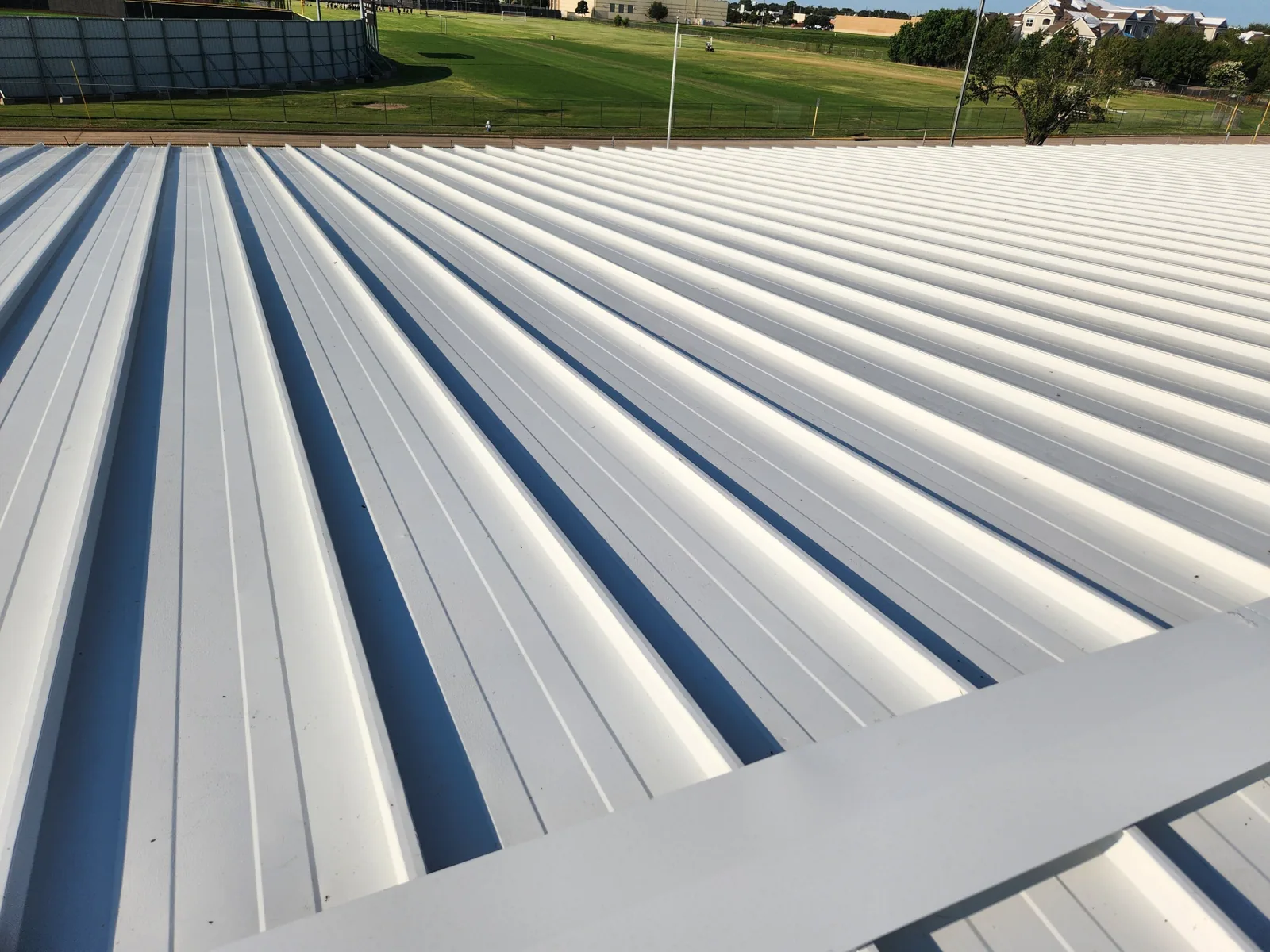
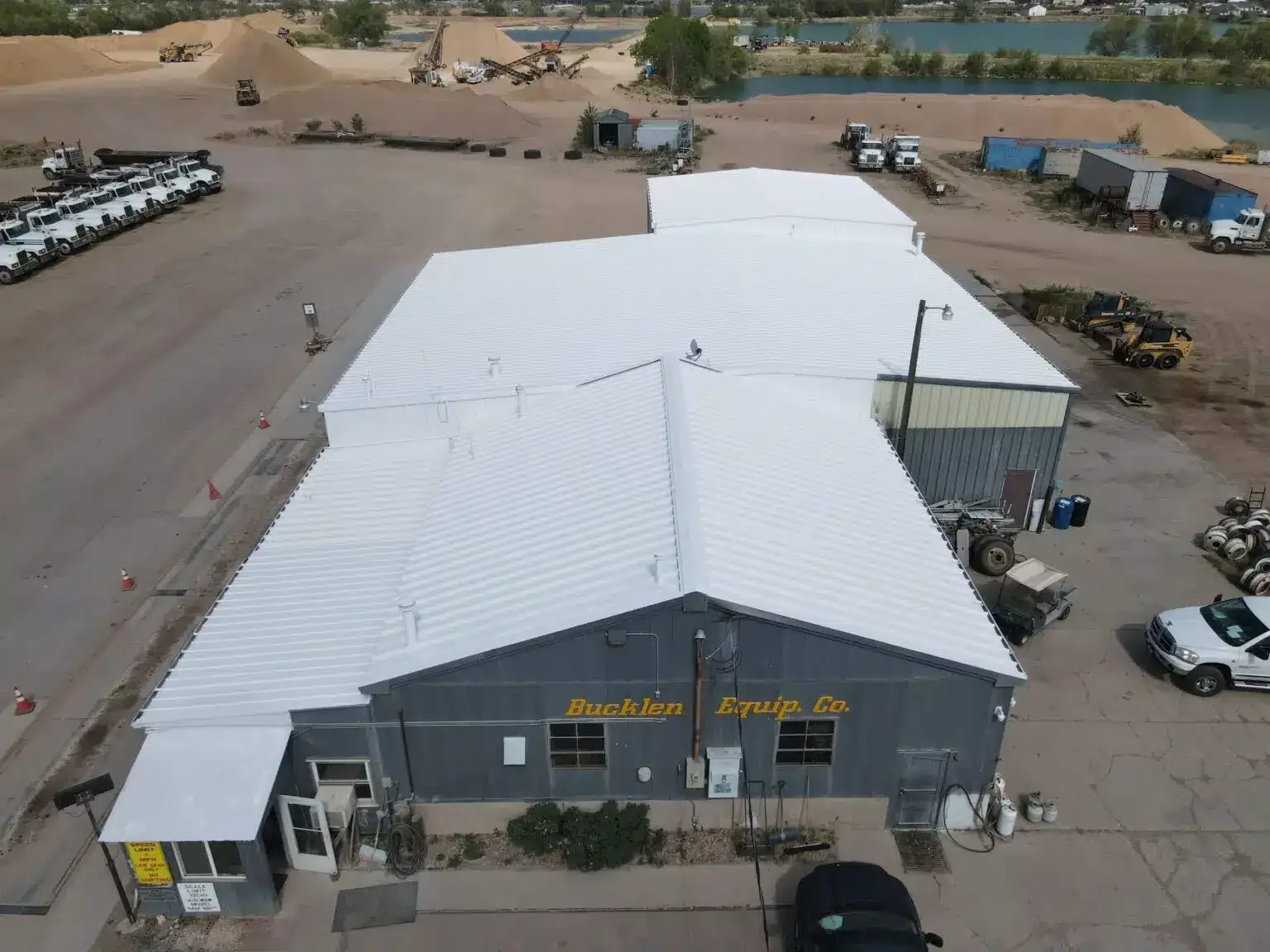
EPDM suits warehouses, schools, offices and light industrial roofs with plenty of open field and modest rooftop clutter. It is a poor choice under kitchen exhaust, because animal fat and petroleum oil swell rubber and soften seams, and it is a weaker match for roofs that see heavy foot traffic from many trades. A building with those conditions belongs under PVC. For roofs that need more layers of redundancy, a modified bitumen system is also worth pricing next to EPDM.
Questions We Hear Often
Does a black EPDM roof make my building hotter?
It adds heat to the roof surface, and over a cooled space that means harder-working rooftop units. White EPDM narrows the gap. If your building is cooled all summer, price the white version first.
How are EPDM seams made without welding?
With splice adhesive or factory seam tape, applied to a cleaned and primed lap, then pressed with a roller. Good seams depend on clean surfaces and dry weather, which is why a wet-season schedule matters so much.
Can EPDM go under kitchen exhaust fans?
Not without trouble. Cooking fat and oil swell and soften rubber, and splices are the first thing to suffer. A PVC membrane or a protected zone around the hood is the safer plan.
Will hail damage an EPDM roof?
Rarely. Thick cured rubber over firm cover board absorbs impact well, and small stones tend to bounce. We still look for bruises and cuts after a big hail event, particularly at seams.
What should I check on an old EPDM roof?
Look at the laps, the corners where three sheets meet, and the flashings at walls and curbs. Shrinkage pulls rubber away from details over time, and that is where water gets in. A walk with a probe tells us the rest.