Carlisle SynTec Roofing in Pompano Beach, FL
Local cloudbursts put seams and transitions under pressure, so attachment, terminations and discharge paths deserve as much attention as the membrane sheet itself. Carlisle SynTec is one of the major membrane makers, and its range gives an owner real choices: Sure-Weld TPO, Sure-Seal EPDM and Sure-Flex PVC, plus fleece-backed sheets for roofs that cannot take fasteners.
We install, repair and maintain Carlisle SynTec systems on commercial roofs in Pompano Beach, FL, from warehouse fields to small retail strips. The brand matters less than how the sheet is attached, how the water leaves the roof and whether the assembly carries the Miami-Dade approval Broward asks for.
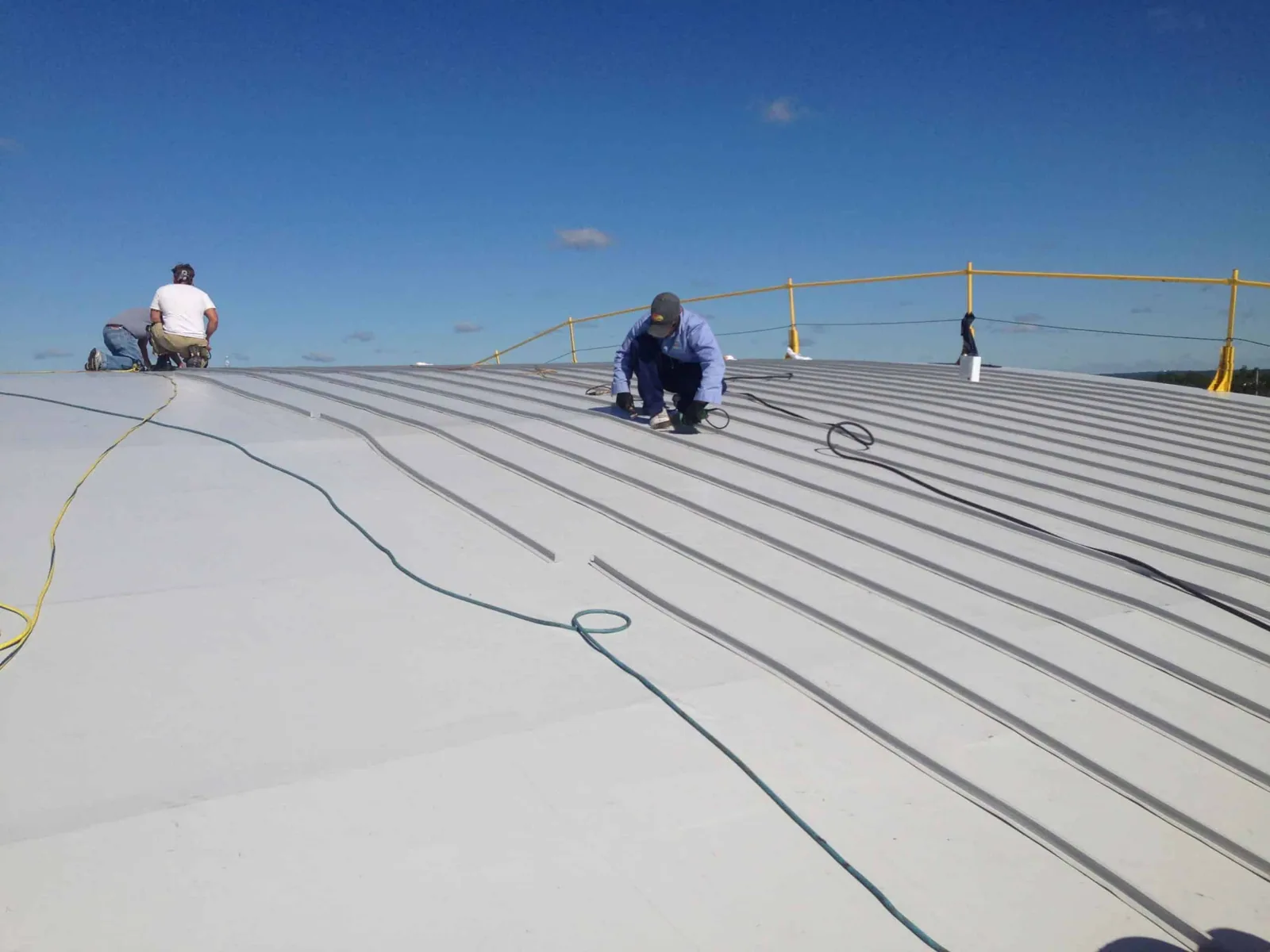
Three Sheets: Sure-Weld, Sure-Seal and Sure-Flex
Sure-Weld is the TPO line, a white thermoplastic sheet fused at the seams with hot air. Sure-Flex is the PVC line, also heat-welded and the tougher option where roof exhaust drops grease and fats on the surface. Sure-Seal is the EPDM line, a cured synthetic rubber that is not welded at all: its laps are joined with primer and seam tape or splice adhesive. Three different materials, three different repair methods, and the wrong patch on the wrong sheet fails quickly.
For a clean warehouse, TPO roofing usually makes sense. Over a restaurant kitchen or a grocer's refrigeration exhaust, PVC roofing tends to earn its extra cost. For a building with many small penetrations and a tight budget, EPDM roofing has a long record. Versico, a sister brand in the Carlisle family, offers a similar spread of TPO and PVC, and owners comparing bids often set these next to RubberGard EPDM from Holcim Elevate. The questions to ask about attachment, approvals and seams are the same across all of them. We tell you which fits before anyone orders a roll.
Whichever sheet wins, Broward's hurricane-zone rules apply to all of it. The membrane, insulation, fasteners and plates are approved together as a tested assembly under a Miami-Dade Notice of Acceptance, with a 170 mph design wind for a Risk Category II building. An EPDM roof held down with the wrong plate pattern, or a TPO sheet over an unlisted board, can be a perfectly good product on an assembly that was never tested. We match the package to the listing and keep the paperwork with the roof.
A Carlisle roof should be evaluated as the specified assembly, not by the membrane label alone. We compare the submittal with the installed sheet, insulation, cover board, plates, fasteners and edge details before choosing a repair. If an earlier service visit used a different sealant or patch sheet, we test compatibility before covering it. During a replacement, documenting the approved assembly and each deviation gives the owner a clear record for future maintenance and any warranty question.
Black and White: how EPDM handles a Broward summer
EPDM is usually black, and black rubber on a flat roof gets hot. Warm nights running a degree or more above normal, with dewpoints in the 70s through the wet season, mean the surface rarely cools all the way before the next sunrise. The sheet is built to take that, but the adhesive, the insulation under it and the rooftop units pay a price. White EPDM exists for owners who want the cooler surface, and a coated or reflective cap can help. Whether the energy savings justify the upgrade is a building-by-building question, and we run the numbers plainly.
Rubber also ages differently from thermoplastic. After years of sun it chalks and stiffens, and old laps can lose their grip. We press on every splice by hand during an inspection and look for edges that have started to lift, because a loose lap on a black roof tells you something long before a ceiling stain does.
FleeceBACK: the sheet with its own bonding layer
FleeceBACK is Carlisle's fleece-laminated membrane, a sheet with a layer of fabric bonded to its underside so it can be glued to the roof below. That makes it a practical option when a deck or substrate will not hold fasteners well, or when an owner wants no punctures through the building. Adhesive-applied sheets also lie flat, which resists flutter at the perimeter.
Adhesive cures badly on damp surfaces. In May through October we plan around the afternoon line, spreading adhesive and setting sheet only on the portion of a roof we can close up before the clouds stack over the Everglades. When the existing roof is dry and sound, a roof recover with a fleece-backed sheet can save tear-off and keep the tenants working. Moisture scanning tells us whether that is possible.
Laps, Curbs and Corners: where a Carlisle roof actually leaks
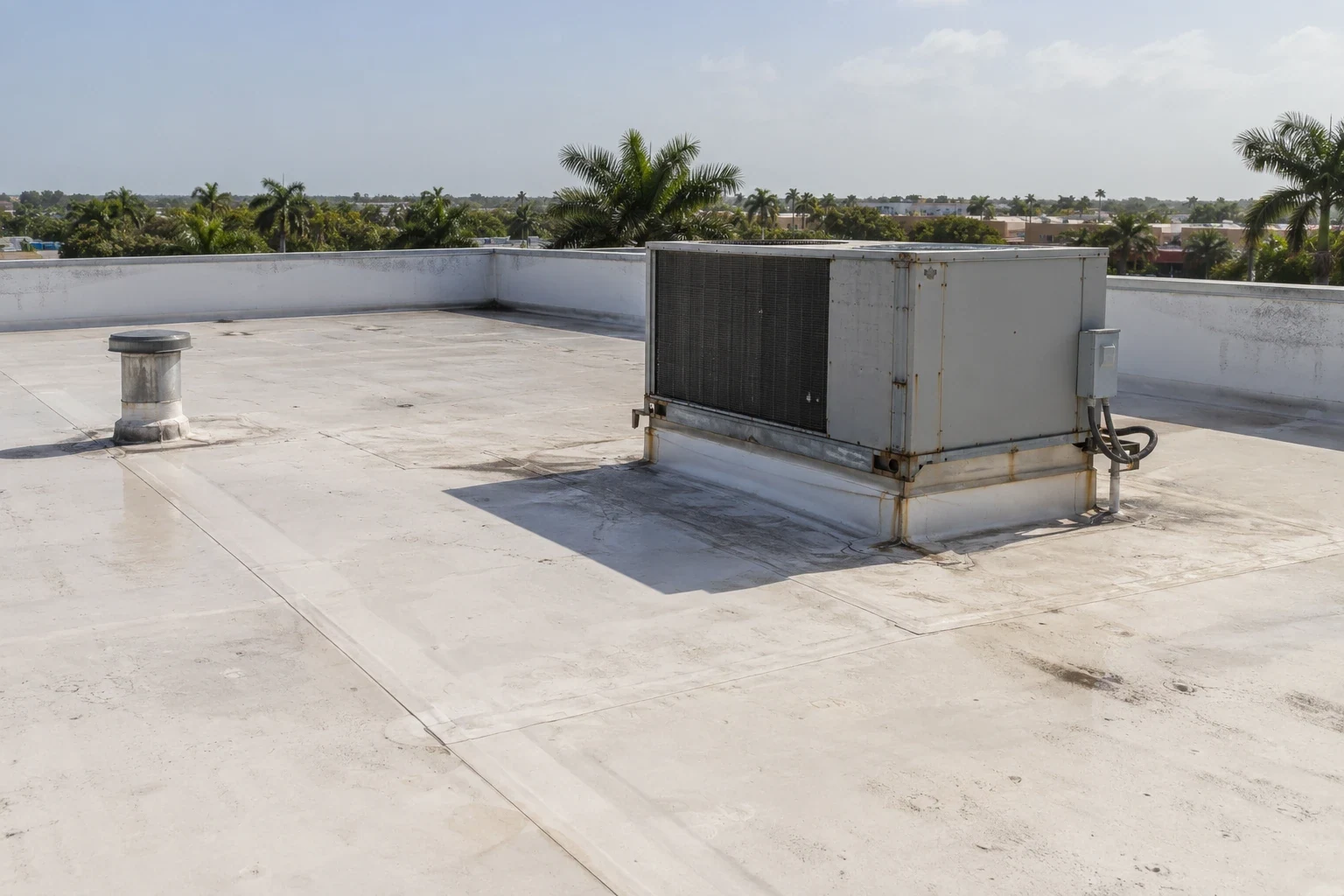
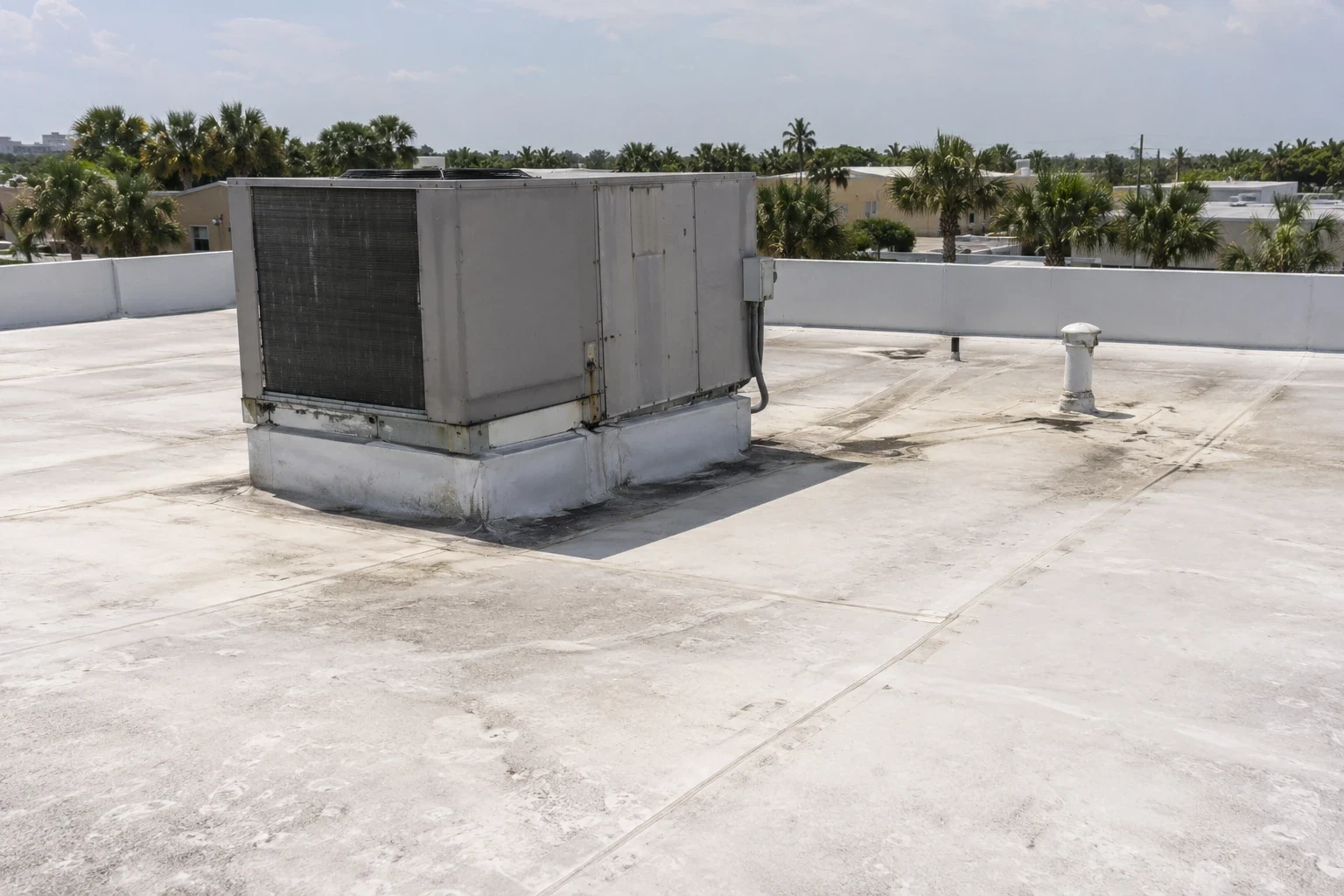
The membrane field rarely fails first. Trouble starts at the details: a pipe boot with a cracked collar, a curb flashing that shrank, a corner patch that was cut instead of formed. On TPO and PVC those are hand-welded, and on EPDM they are bonded with pre-molded accessories and liquid sealants. Each fix has a right sequence, and skipping the cleaning step is the single most common reason a patch lets go.
On industrial roofs in Powerline Industrial and Park Central, as anywhere tenants come and go, rooftop units, exhaust stacks and conduit penetrations multiply. Each addition is a fresh hole someone has to flash. Our crews rework those penetrations as flashing failure repair and rebuild them to match the membrane, instead of smearing mastic over a worn boot and hoping.
Drainage: keep water moving through heavy rain
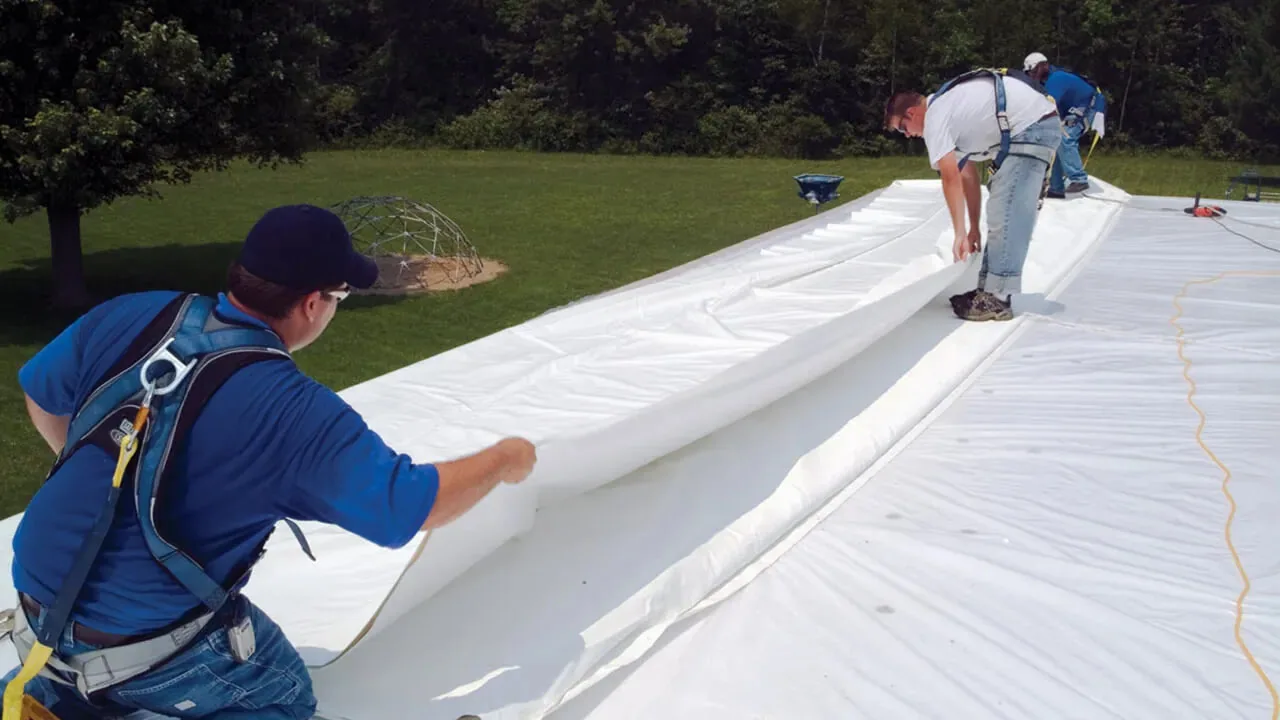
A membrane can stay watertight and still be damaged by water that will not leave. Ponding adds weight, collects dirt, breeds algae and speeds up seam wear. After a major downpour, a roof that holds water can point to clogged scuppers, a sagging deck or settled insulation. We inspect the drains and scuppers on the building in front of us, including roofs in Gateway Lakes, and record how water leaves each roof.
We clean and test roof drains and scuppers as part of any Carlisle job, and we measure where water stops after a storm rather than guessing. Fixing slope with tapered insulation costs more than a patch, but it solves the cause. After a storm like Irma, which brought three tornadoes to Broward, we also check the edge metal and coping, because lifted metal opens the membrane to the next storm.
Questions We Hear Often
Can an older Sure-Seal EPDM roof still be patched?
Often, yes. The sheet has to be cleaned and primed, and the old rubber needs enough life left to take a splice. If it has chalked and cracked, a coating or recover is the better money.
Is a black EPDM roof a problem in Florida heat?
It runs hotter than a white roof, which costs energy and ages the adhesive. A white sheet or a reflective coating helps, and we compare the options for your building.
What is a fleece-backed membrane good for?
Roofs where fasteners are a poor idea or a quiet install matters. The sheet is glued down over a clean, dry substrate, so there are no plates or screw heads to loosen.
Could you put new TPO over my old rubber roof?
Sometimes, with a separation layer and a dry roof underneath. We scan the old insulation first, because trapped moisture shows up as blisters and fast seam failure.
How should a Carlisle roof be looked after between storms?
Keep the drains clear, walk the seams after the stormy stretch of the season, and have the flashing around equipment checked. A short written report each spring beats a surprise in August.