Roof Drains, Scuppers and Ponding Correction in Pompano Beach, FL
Go up on a flat roof forty minutes after one of those summer cloudbursts and you can read the drainage plan like a map. The water that left in the first ten minutes tells you where the roof is working. The puddles still sitting an hour later tell you where it is not. South Florida averages 8 to 10 significant flood events in a single rainy season, so a roof gets plenty of chances to prove which kind it is.
A flat roof is really a shallow pan with a few holes in it. If those holes clog, sag or sit in the wrong place, the pan fills, and everything built on top of it starts working against water that should have been gone. Drains, scuppers and the slope that feeds them are where we put our attention first on commercial buildings in Pompano Beach, FL, because most other roof problems follow from them.
The Drainage System: bowls, leaders, scuppers and overflows
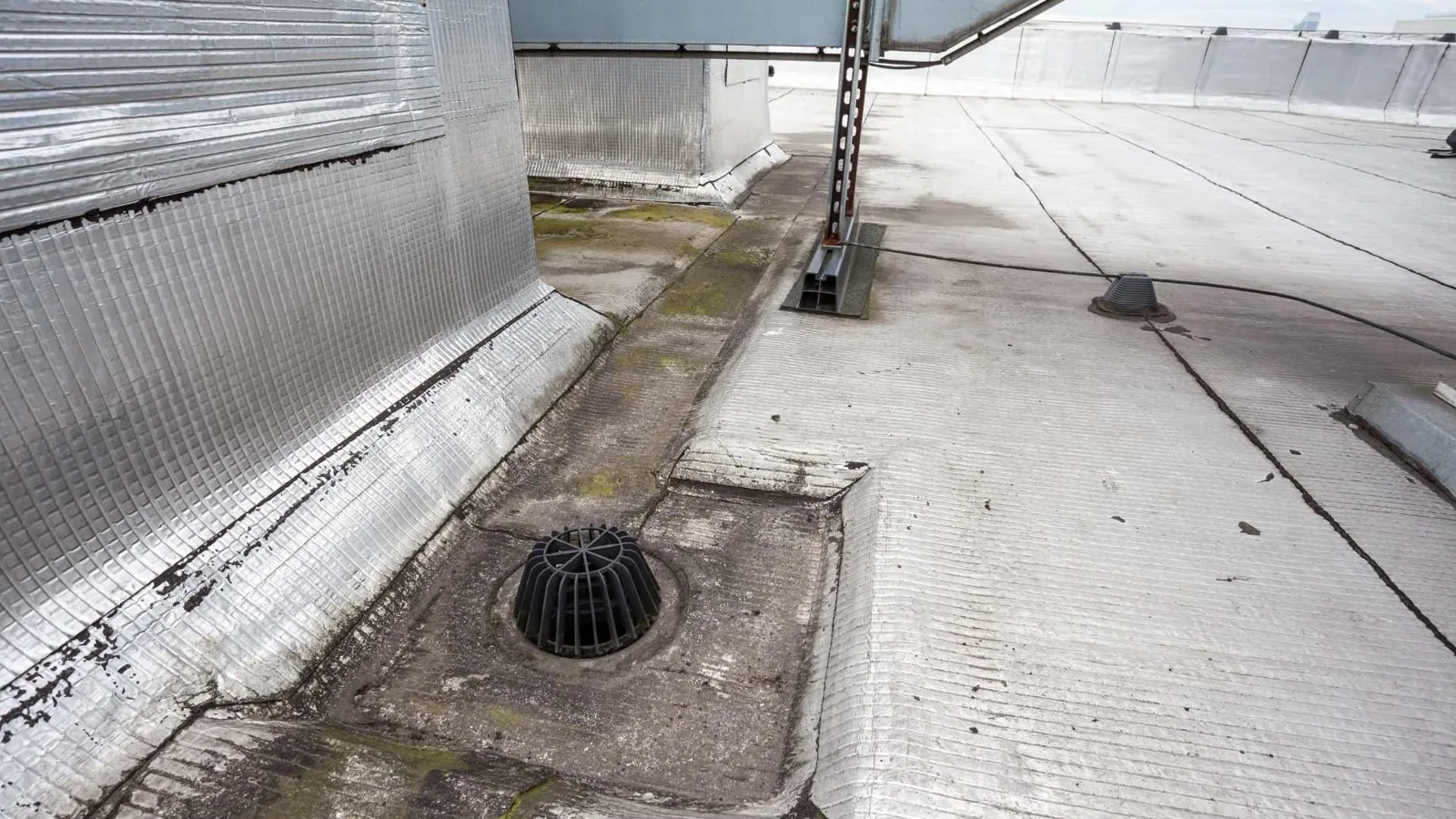
Commercial roofs shed water through a few common arrangements. Interior drains sit in low points and carry water down through pipes inside the building. Scuppers are openings through the parapet wall that let water spill out to the side, often into a collector box and downspout. Gutters and leaders do the same job along an open edge. Most roofs use a mix, and almost every roof with parapets needs a second set of openings set slightly higher to act as overflow.
Each piece has its own way of failing. A drain bowl can crack, a clamping ring can loosen and let water travel under the membrane, a scupper can be set too high to clear the roof's low point, and a downspout can bend or split where it meets a joint. We look at the whole path, not just the opening, because a perfect drain connected to a crushed leader still backs up.
Clogs and Slow Drains: what builds up in a Broward summer
Summer here grows things. Leaves and seed pods from nearby trees, windblown grit, pieces of rooftop insulation and pigeon feathers all find their way to the drain, and the afternoon rain packs them together into a plug. Roofs near construction see drywall dust and gravel too. A drain that is partly clogged looks fine on a dry day and then fails the first time a heavy cell sits overhead.
The cheap fix is regular clearing, and it is among the best uses of money on a flat roof. A scheduled maintenance visit before the wet season and another in the middle of it keeps the bowls open and the strainers in place. After a hurricane watch, we clear them again, because storm debris and torn roofing can show up on a building that had clean drains two days earlier.
Ponding and Why It Matters: water that stays too long

Water that remains after the rain stops and the roof has had time to drain is a sign to investigate slope, blocked outlets and low areas. It is more than a cosmetic problem. Standing water adds weight to a deck, speeds up the aging of the membrane, grows algae and grit that hold more moisture, and puts constant pressure on every seam and flashing it touches. Some membranes tolerate it better than others, and some manufacturers limit warranty coverage when ponding is present.
Ponding has causes we can find. The deck may have deflected, the insulation may have compressed, the drain may be set high, or the original slope may never have been enough. We measure the low spots and watch where water goes after a storm, then decide whether the fix is a new drain, added slope or a different system. That same investigation drives any ponding water repair.
Crickets and Taper: giving water a path to the drain
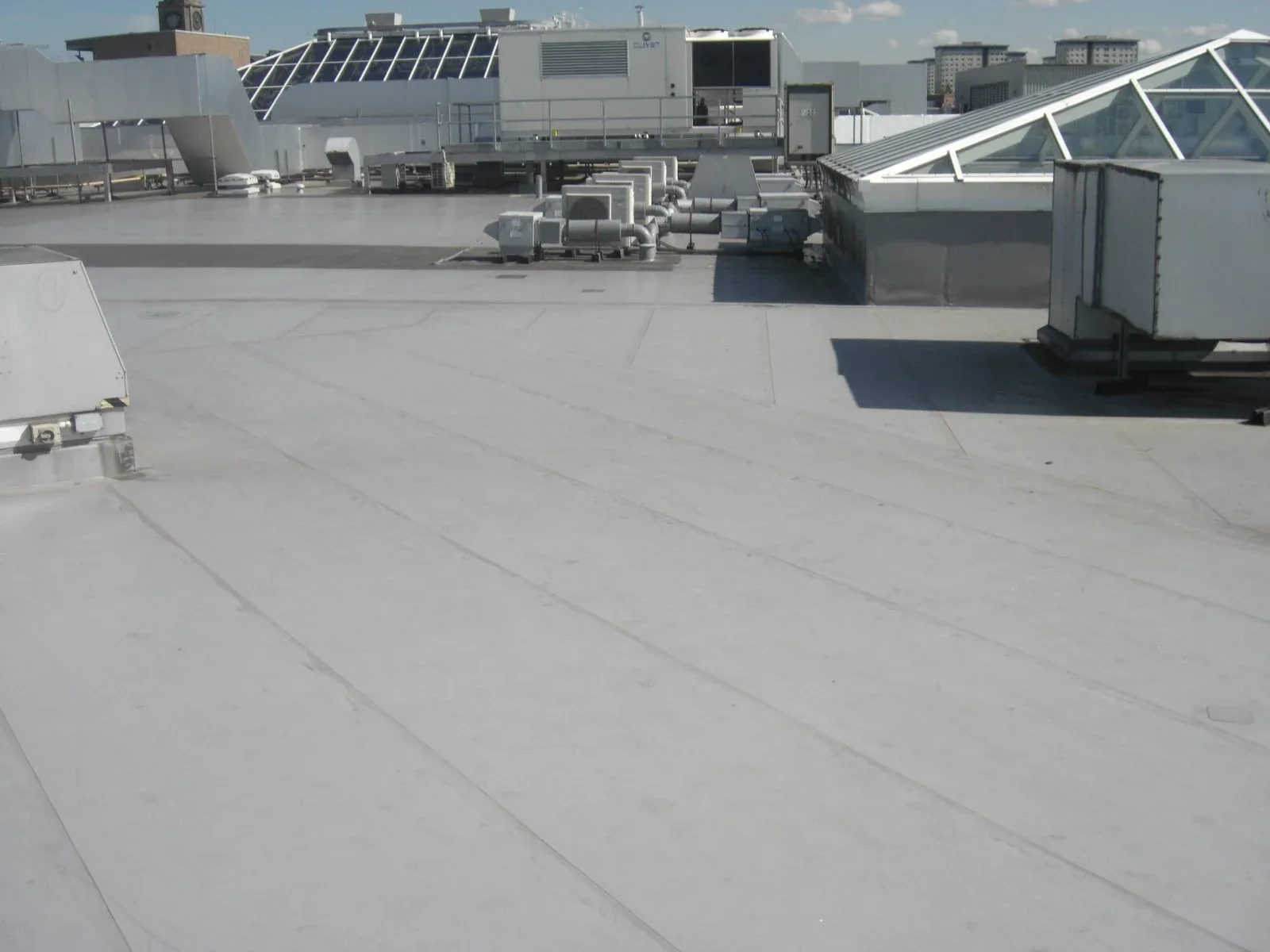
A cricket is a small, sloped saddle built behind a curb or a rooftop unit so water splits around the obstacle instead of stalling against it. Tapered insulation does the same work across a larger area, building slope into the roof so water moves toward drains instead of waiting for them. Both are cost-effective fixes for ponding that comes from design rather than from clogs.
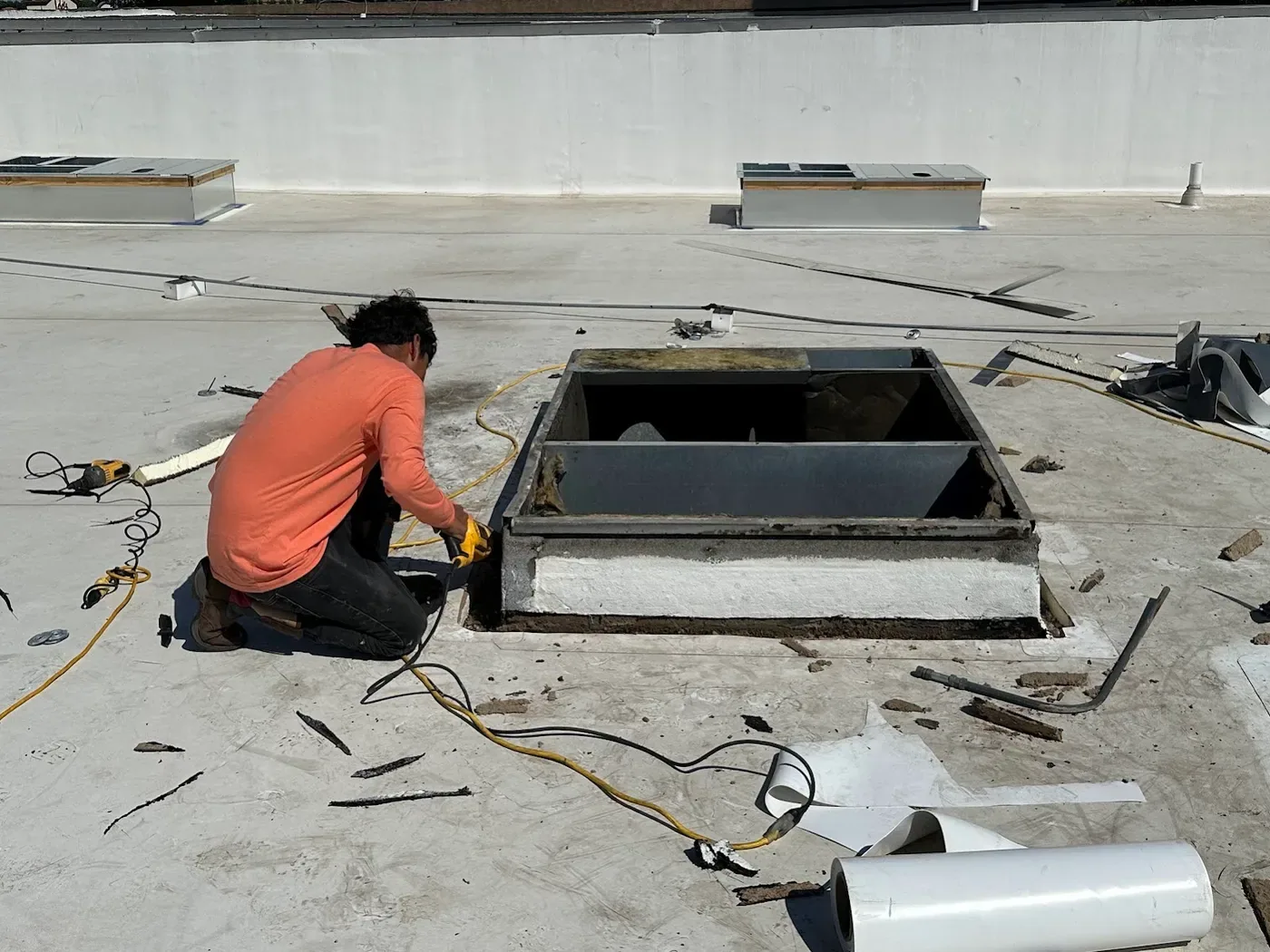
On a replacement or recover, we build the taper plan to match the drain layout, and we can add drains when the existing ones are too few or too far apart. The insulation and cover board choices tie directly into this, since the thickness of the taper affects flashing heights, parapet clearances and the overall load on the building. On older roofs where adding new drains is not practical, a few well-placed crickets and a corrected scupper height can end a long-standing pond.
Overflow and Code: the backup that saves the building
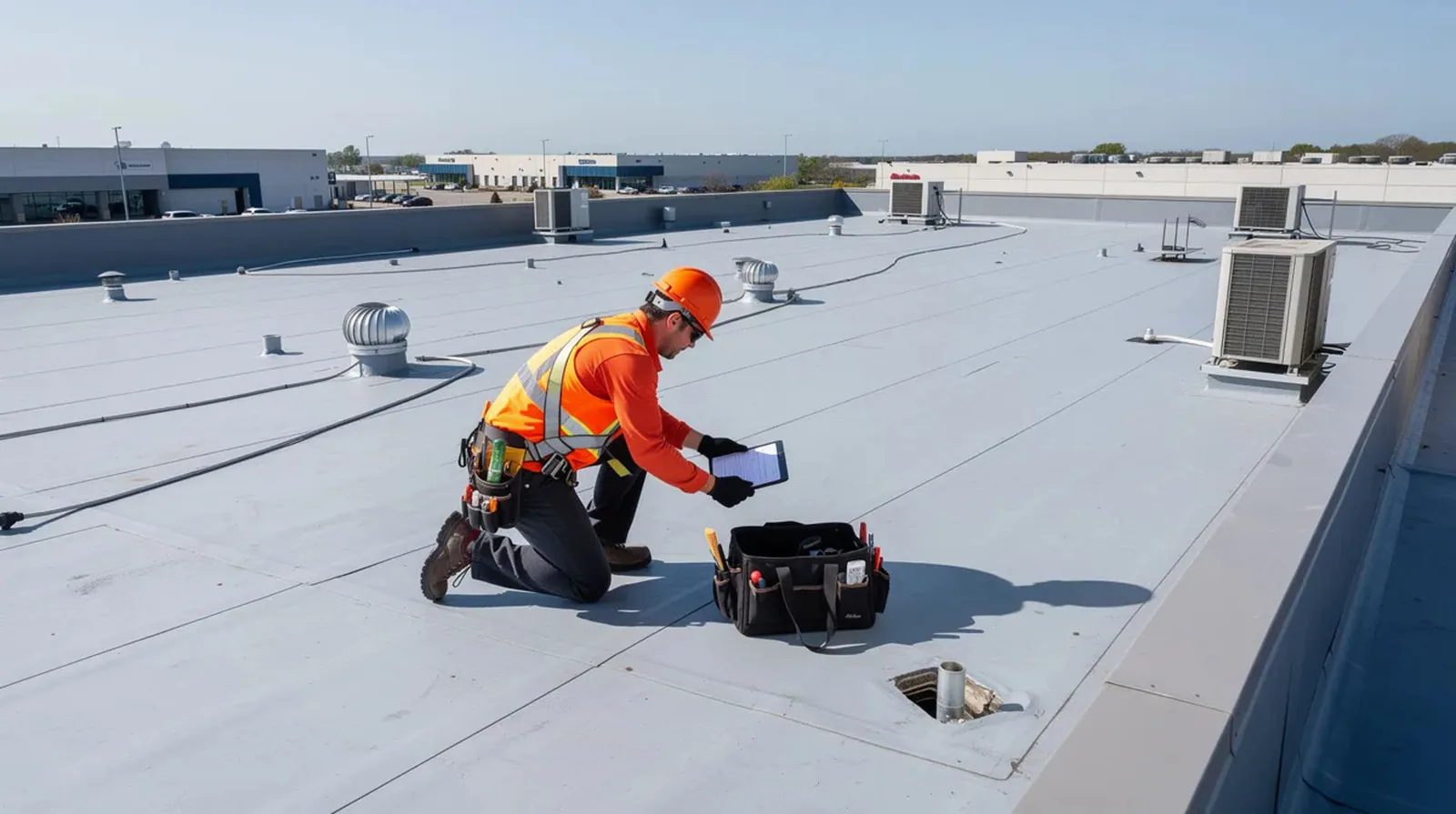
When a primary drain clogs, the overflow is what keeps the roof from turning into a swimming pool. Roofs with parapets are generally required to have secondary drainage, either overflow drains or scuppers set above the main drain height, and the design has to reflect what a Broward rain event can actually deliver. A scupper that is stuffed with a sandbag or taped over for a repair still has to be put back to work.
We check overflow height, size and condition on every roof we visit, and flag any that were blocked, capped or relocated by someone else. The roughly 26 inches that fell on Fort Lauderdale on April 12, 2023 was the kind of day that separates overflows that work from overflows that were an afterthought. Work on drainage in Broward's High Velocity Hurricane Zone follows the same product-approval rules as any other roofing component.
Where Drainage Matters Most: big roofs in the industrial parks
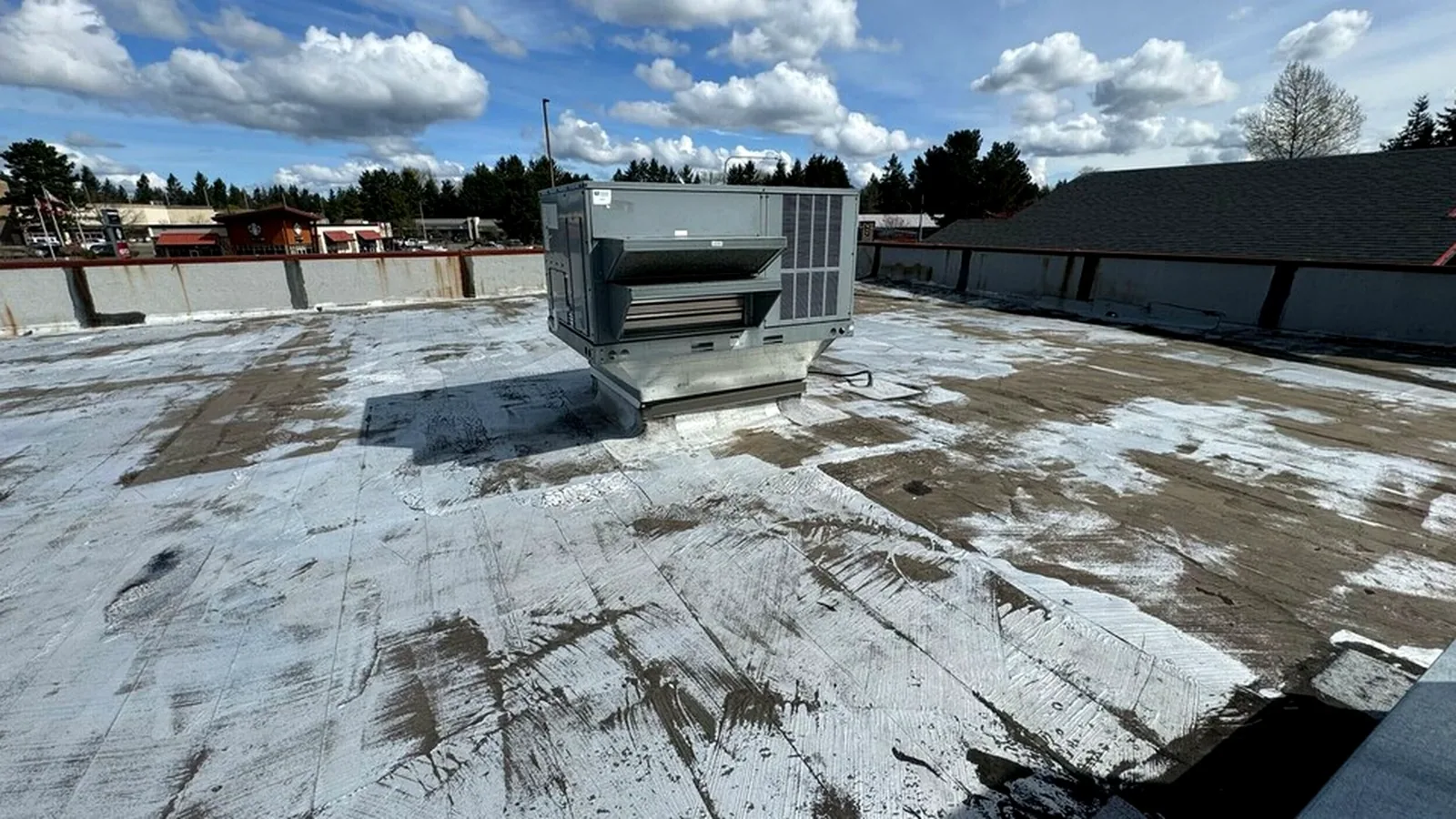
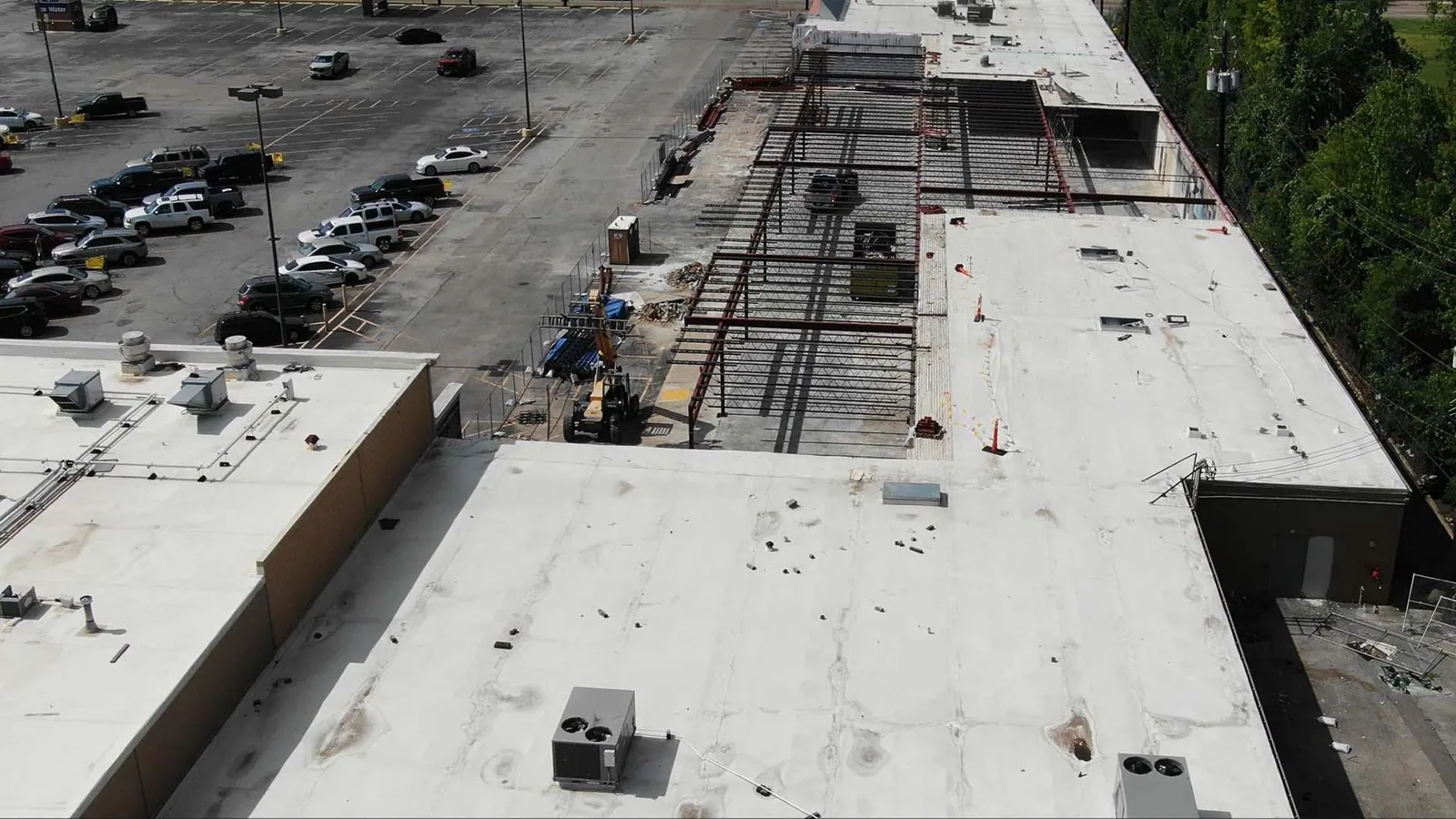
The bigger the roof, the more water it has to move and the more ways the system can fail. South Andrews, the largest mapped industrial area in the city at about 4.86 million square feet of buildings, and Powerline Industrial, at about 3.09 million, sit in a market where large low-slope warehouse roofs dominate. A single clogged drain on a large low-slope building can leave a long stretch of the roof under water.
Drainage work often goes together with a leak investigation, since ponding is a common cause of a leak that seems to have no source. A walk across a building in South Andrews starts with the same question: where does the water go when it rains.
Questions We Hear Often
How often should drains be cleared?
Before the wet season, in the middle of it and after any storm that blows debris around. Roofs under trees or near construction need more. Strainers should stay in place between visits.
Is a little ponding a real problem?
Water gone within a day is normal. Water still standing two days after the rain stops is not, and it wears the membrane and loads the deck. We measure the depth and the area before we say how serious it is.
Can you add drains to an existing roof?
Often, yes. It takes plumbing, a cored deck and new flashing, and the building structure has to allow it. Where it cannot, crickets, taper or a lowered scupper can solve most ponding.
Why is there water on the roof when the drains look clear?
The drain may sit above the low spot, the deck may have sagged or the slope may be too shallow to move water. We trace it with a level and a hose test, then pick a fix.
Do scuppers need to be sealed around the edges?
They do. The membrane has to be flashed into the scupper and the joints sealed, or water runs behind the parapet. We also check that the opening is sized for a heavy downpour, not an ordinary one.
Will a storm clog my drains again after you clear them?
A big storm can. That is why we recommend a quick check after hurricane watches and heavy squall lines, especially on roofs near trees or construction.