Roof Insulation, Tapered Systems and Cover Board in Pompano Beach, FL
With surface dewpoints sitting in the 70s all summer, the air over Pompano Beach is already loaded with water before a single cloud builds. A commercial roof has to keep that humid air and the afternoon rain out of the layer sitting under the membrane, because insulation that gets wet stops insulating and starts holding water against the deck. Most owners think of the membrane as the roof. The insulation under it is what gives the roof its slope, its stiffness and a good part of its energy performance.
That layer deserves more attention than it gets. We design and install insulation, tapered systems and cover board for commercial buildings in Pompano Beach, FL, so that new and recovered roofs drain properly, resist the wind and keep the heat from reaching the people and equipment inside.
What Goes Under the Membrane: choosing the insulation
Polyisocyanurate board is the most common choice on low-slope commercial roofs. It has a high insulating value for its thickness, it is light, and it is available with facers that suit different membranes. Expanded polystyrene is lighter and cheaper, and it is often used for tapered packages. Extruded polystyrene shrugs off moisture better but is used in specific cases. Mineral wool resists fire and holds shape but weighs more, and spray polyurethane foam acts as insulation and roofing in one continuous pass of material.
The right pick depends on the building. Thickness is limited by parapet height, flashing details and the structure. A cold storage building needs more than an office. A roof being recovered over existing insulation needs something that adds value without adding too much weight. We spell out the trade-offs in plain terms before the order goes in.
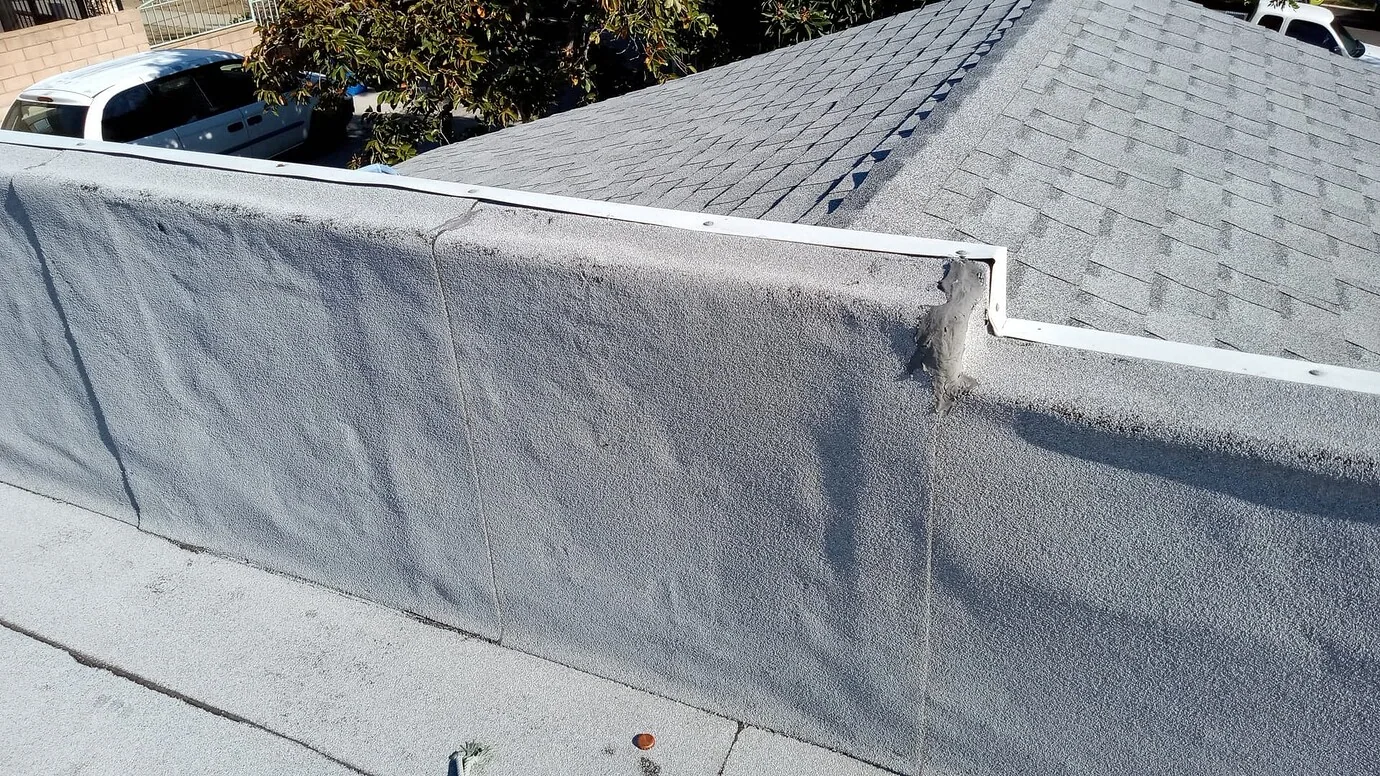
Insulation thickness changes more than thermal performance. It also affects the height of perimeter flashing, the fit of rooftop curbs and the slope available to move water toward drains. Before specifying a new layer, we check elevations at scuppers and door thresholds, then confirm whether tapered panels can correct a low spot without creating a new obstruction. Cover board provides a more durable surface for many membrane assemblies and can improve resistance to foot traffic, but the attachment pattern still has to match the wind design and the deck below.
Heat and Energy: what the insulation does for the building
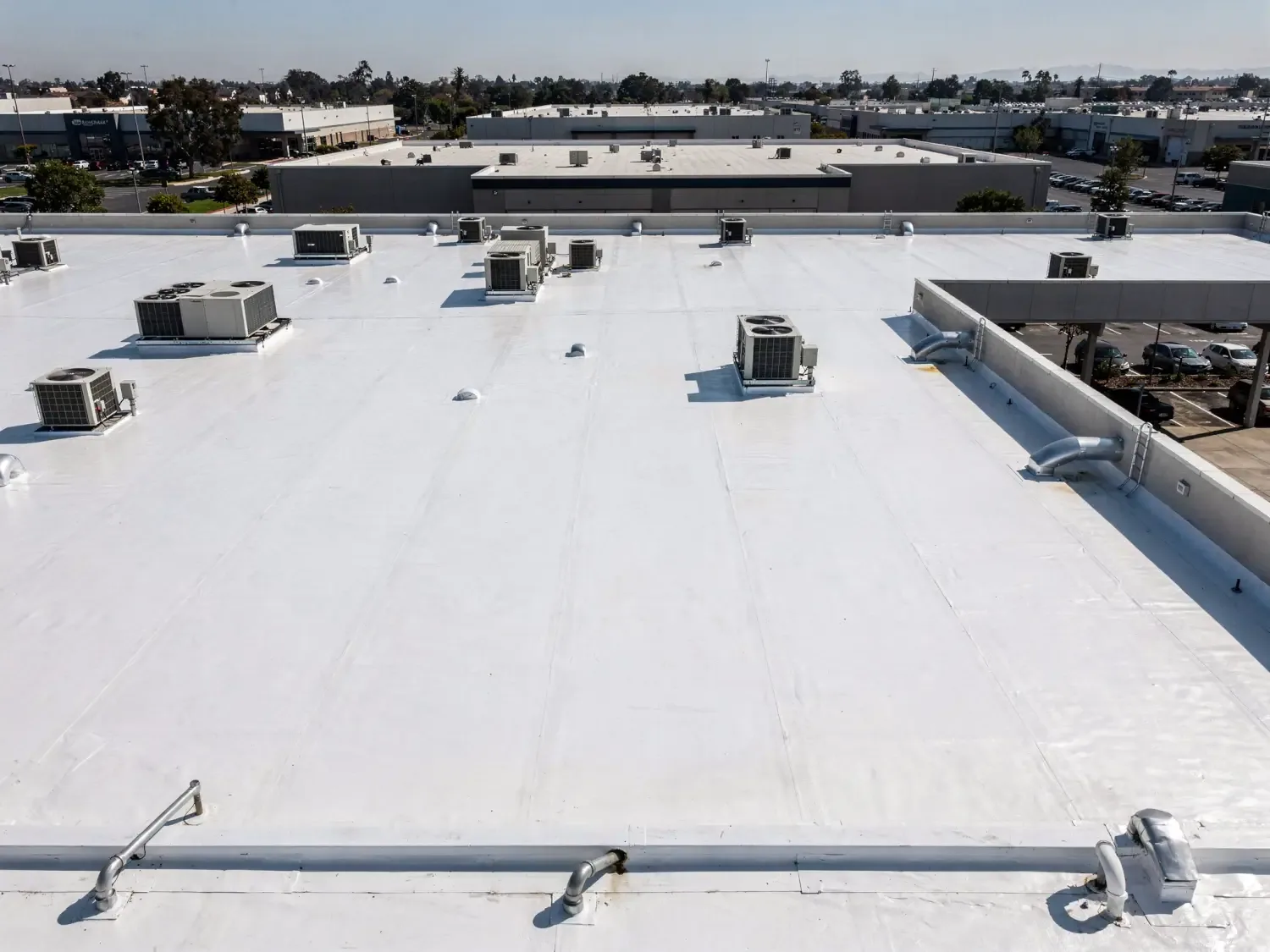
Long, humid summers and warm nights that run a degree or more above the 30-year normal keep air conditioning working through most of the year. Every hour the sun heats a dark roof, some of that energy tries to move into the space below. Insulation slows it down. Thicker or better-rated board cuts the load on rooftop HVAC, and a reflective membrane or coating on top cuts the heat before it reaches the board.
The Florida Building Code sets minimum insulation values for roofs, and permits in Broward are reviewed under the 2023 Florida Building Code, 8th Edition. If you are replacing a roof, the new assembly generally has to meet current requirements, even where the old one did not. Added thickness works against the cooling load for the life of the roof, and it pairs naturally with cool roof installation for buildings with large cooling loads.
Tapered Systems: building the slope the deck never had
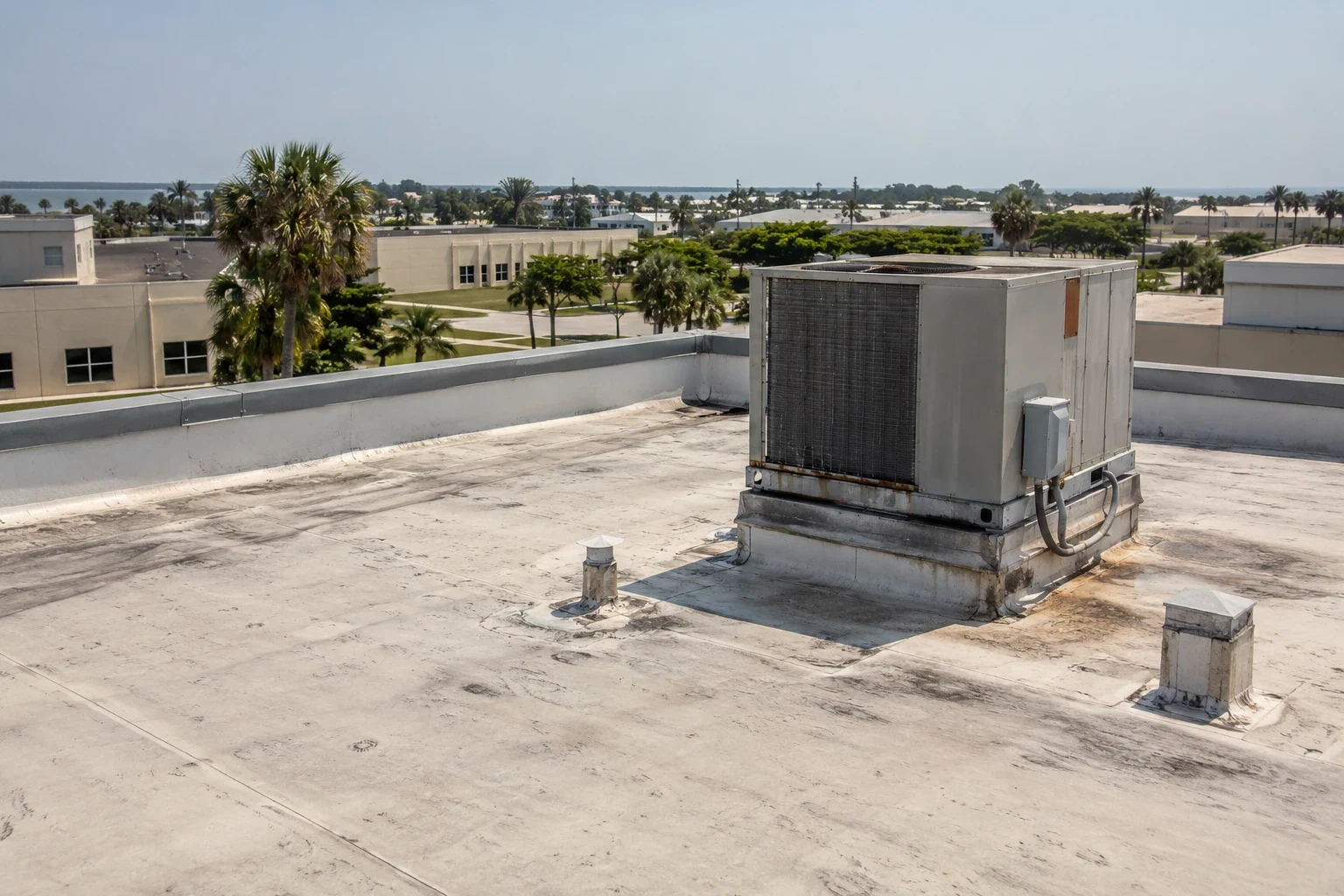
Many flat roofs were built with little or no slope, and deflection, settling and aging make it worse. A tapered insulation system gives the roof a gentle pitch toward its drains, using boards cut in graduated thicknesses. Crickets are added behind equipment and curbs, and saddles carry water around obstructions. The goal is simple: direct water to drains and scuppers instead of leaving persistent standing water.
Designing the taper takes a drainage plan, not guesswork. We lay out where water should flow, locate drains and scuppers, and calculate board thicknesses for each zone. If existing drainage is too limited, new drains or higher-capacity scuppers come first, and the taper works with them. For roofs that already have a history of puddles, ponding water repair often begins here, since adding slope tends to solve the cause instead of managing its symptoms.
Cover Board: the thin layer that protects the rest
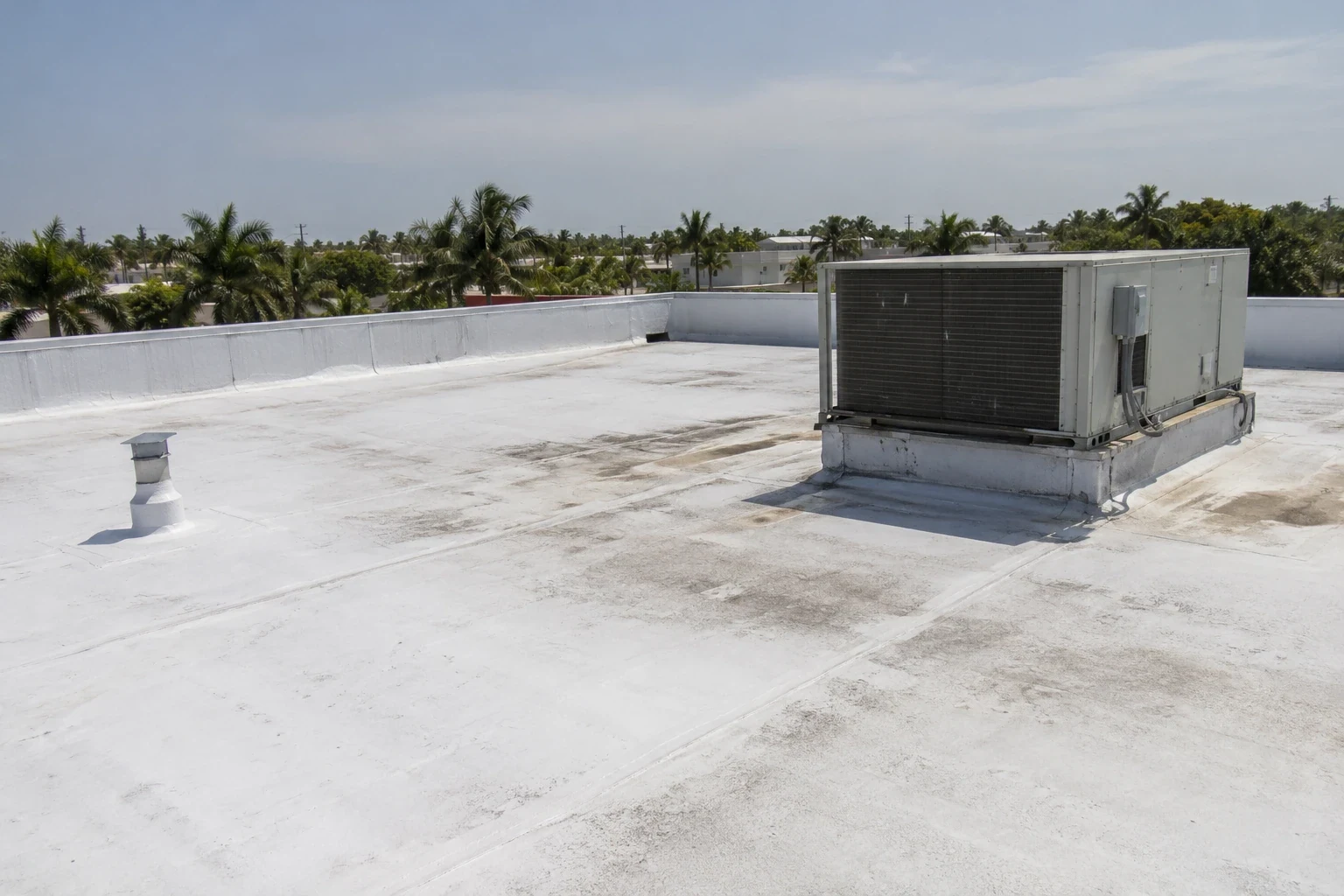
A cover board is a rigid panel installed between the insulation and the membrane. It makes the roof harder to puncture, protects soft foam insulation from foot traffic and hail, adds fire resistance and gives the membrane a flatter, more stable surface to bond to. Common types include gypsum-based boards, high-density polyiso, wood fiber and fiberglass-faced panels.
In Broward, cover board earns its place for another reason. Roof assemblies in the hurricane zone have to pass impact and cyclic pressure testing, and a stronger substrate helps the assembly hold together under pressure. Cover board is also a standard part of a recover, where a new membrane goes over an existing roof, and a roof recover without it asks for trouble. Skipping it saves a little on the order and tends to cost more later in punctures and blisters.
Attachment and Wind: how the layers stay put
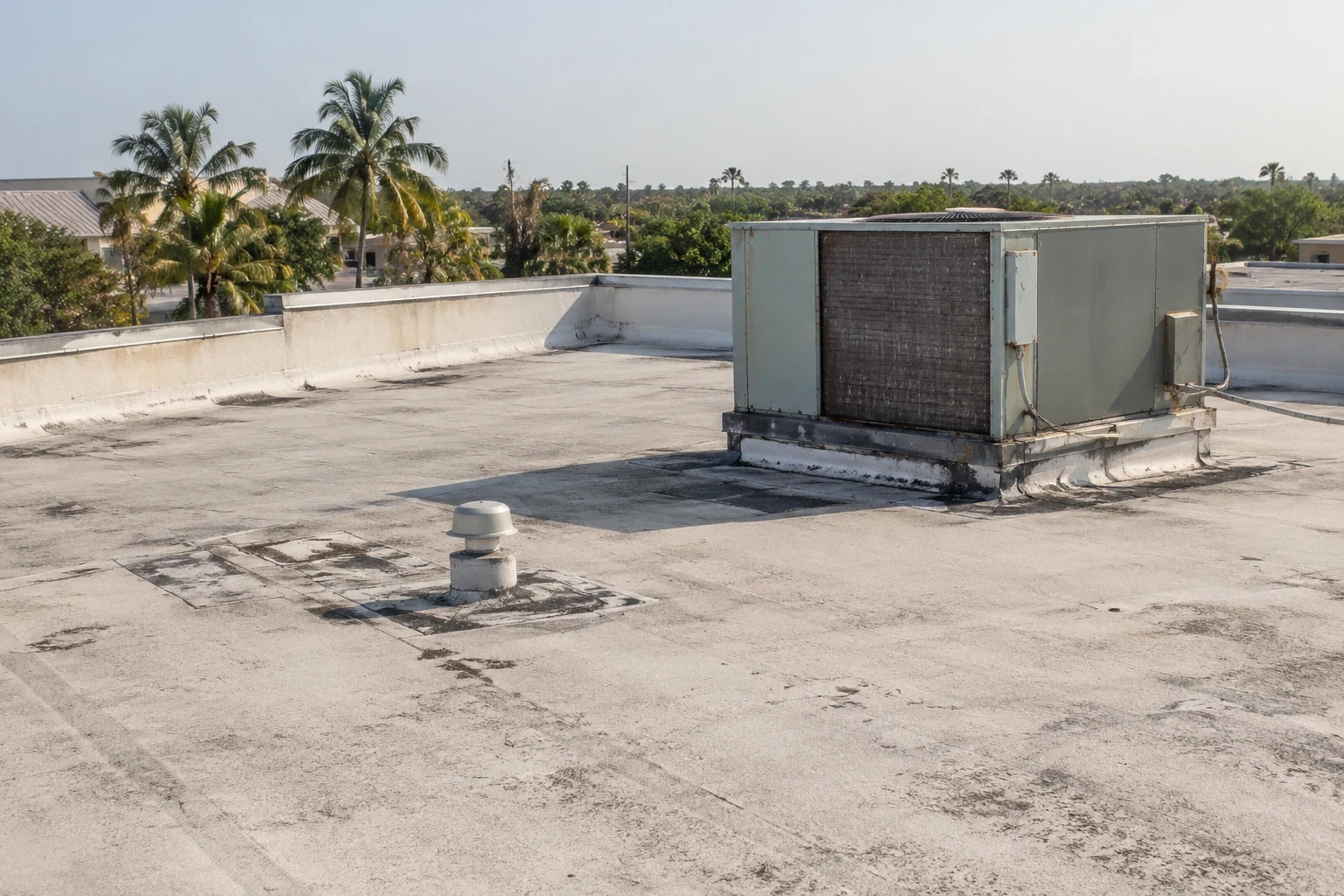
Insulation and cover board are held down by mechanical fasteners, adhesive or a combination of both. How many fasteners, what pattern and which adhesive depend on the tested assembly and the wind zone. The county sits inside Florida's High Velocity Hurricane Zone, where Risk Category II buildings use a 170 mph design wind. Roof components need Miami-Dade Notices of Acceptance backed by TAS 201, 202 and 203 testing.
In plain terms, you cannot swap board, fasteners or adhesive freely. Each combination has to match an approved assembly. Hurricane Wilma's 98 mph gust over Pompano Beach and Hurricane Irma's run of 80 to 100 mph gusts through the county are the reminder that an assembly that holds up in practice, not just on paper, is worth more than a few dollars saved per board. Corners and edges get extra fasteners because that is where the wind pulls hardest.
Wet Insulation: when the old layer has to go
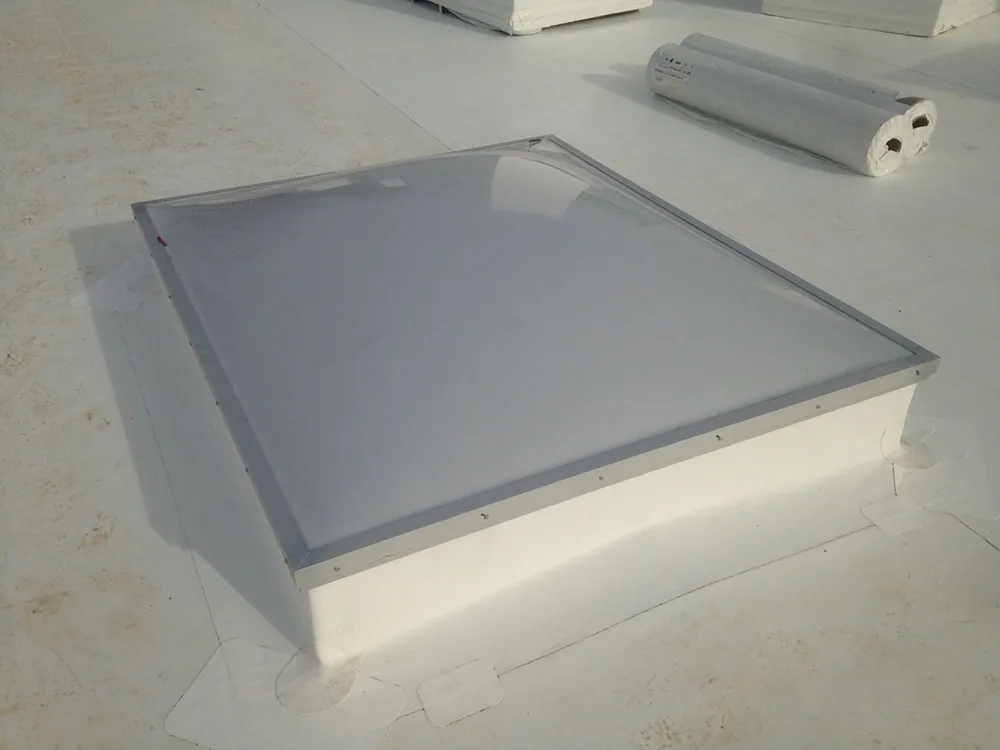
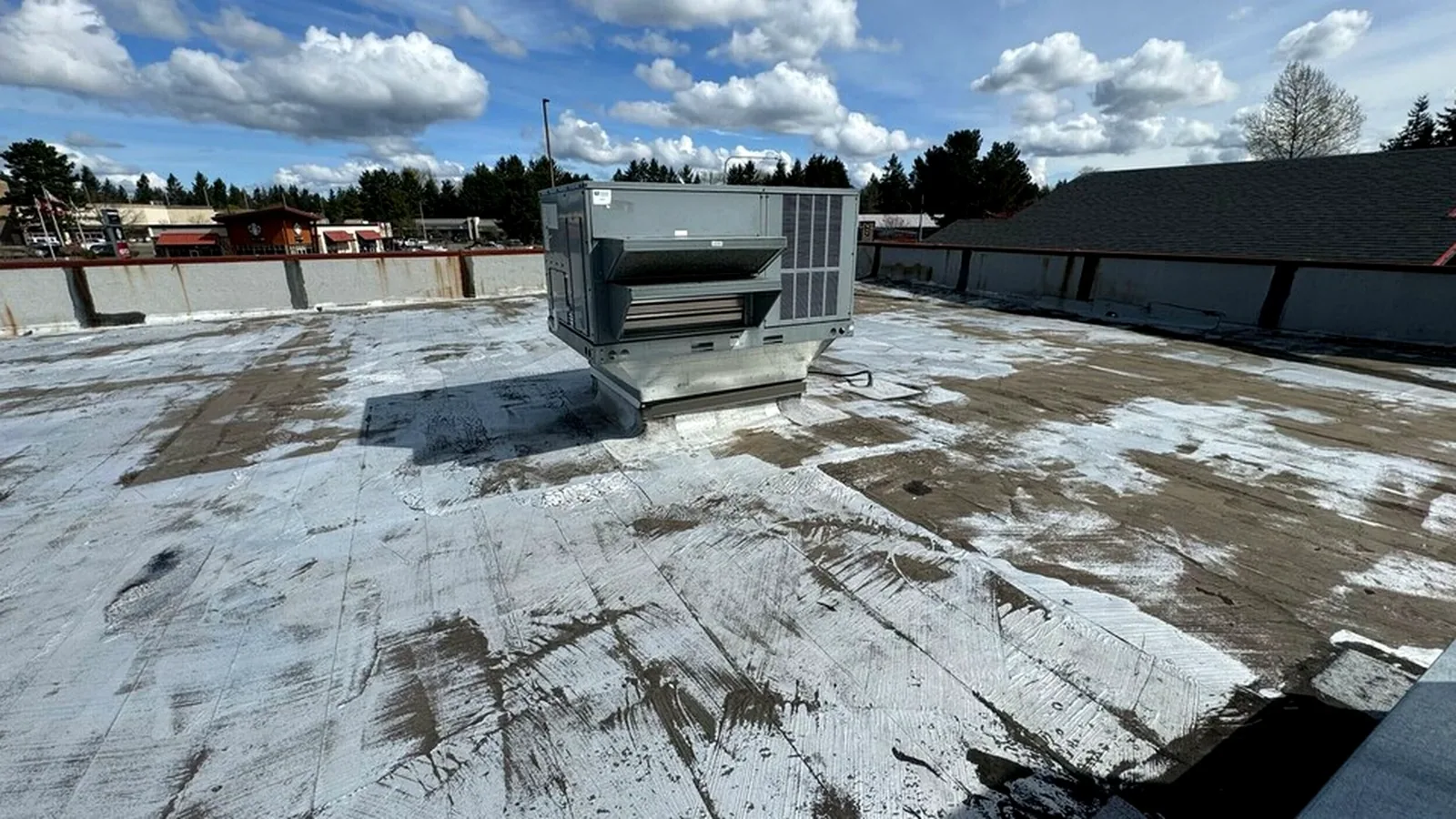
Insulation that has absorbed water loses much of its insulating value, adds weight and can soften enough to let fasteners pull through. It also keeps feeding moisture back to the membrane and the deck. A moisture survey maps where the wet material sits, and core cuts confirm what the scan suggests. Small wet areas can be cut out and patched with new board. Widespread saturation usually means replacing the whole assembly.
A handful of wet patches can hide inside a mostly dry roof, and a low-slope warehouse in the Central 95 industrial area, west of I-95 around Copans Road and Powerline Road, is no exception. Produce and dairy distribution is part of the local economy too, with FreshPoint Produce and Dairy among the city's top ten employers, and any building that keeps product cool puts extra value on a dry, well-insulated roof.
Questions We Hear Often
How thick should the insulation be?
The code sets a minimum for new and replacement roofs, and the building sets the practical limit through parapet height and structure. Within that range, extra thickness pays back in lower cooling loads.
Is cover board really necessary?
On most roofs it is worth the money. It guards soft insulation, helps the membrane bond and strengthens the assembly in a wind test. Some membranes and approvals require it.
Can you fix ponding without replacing the roof?
Sometimes. Added drains, crickets and localized taper can clear low spots on an otherwise sound roof. If the deck has sagged badly, tapered insulation in a full re-roof does a better job.
What does wet insulation look like from inside the building?
Often nothing at all. Ceilings stay clean while the layer above soaks. Infrared scans and core cuts are how we find it, usually before the first stain appears.
Will thicker insulation raise my roof edges?
It can. More thickness means taller flashing, higher edge metal and sometimes new curbs. We check clearances during the design so nothing ends up too short.