Commercial Roofing at Powerline Industrial Park, Pompano Beach, FL
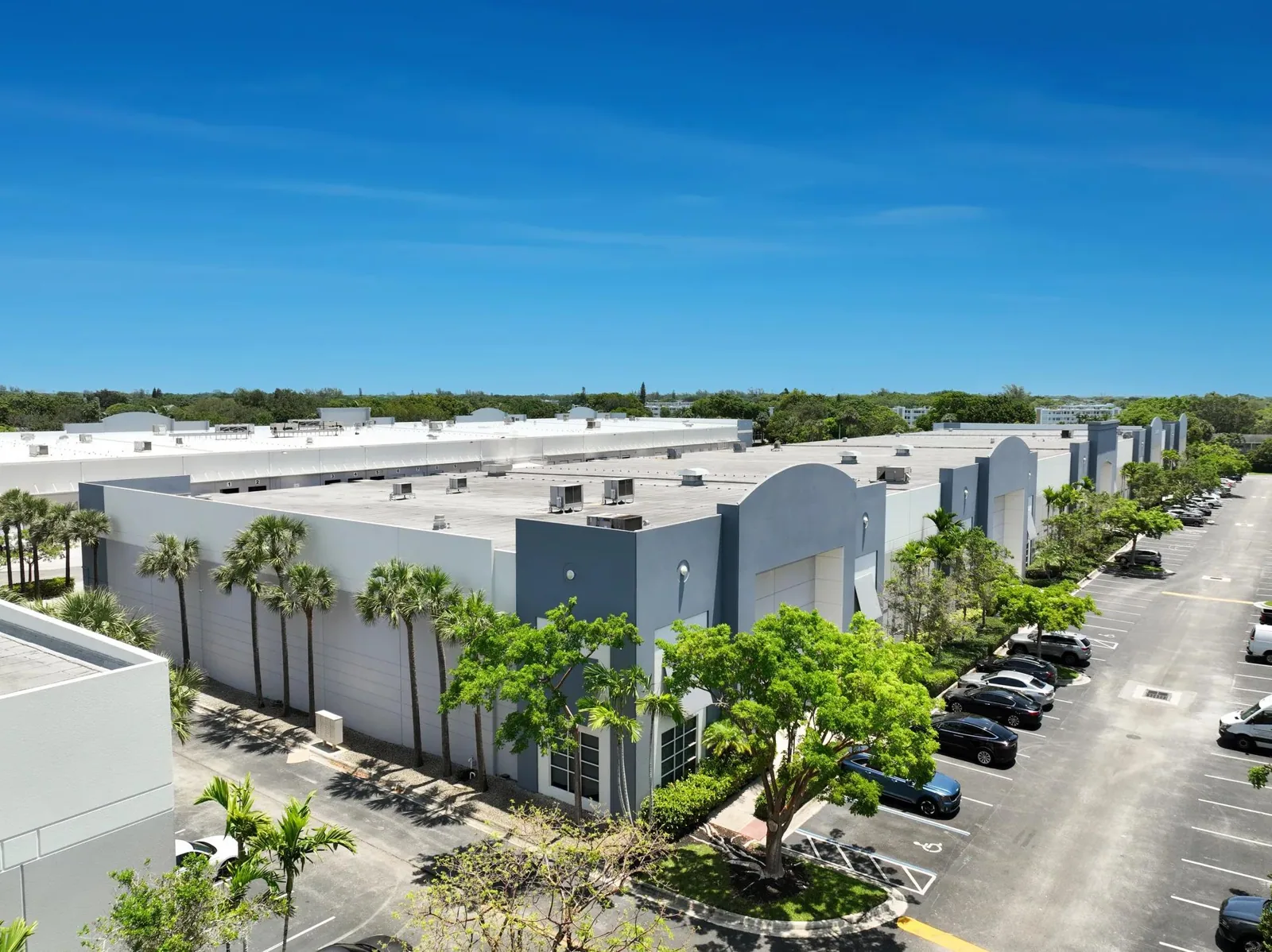
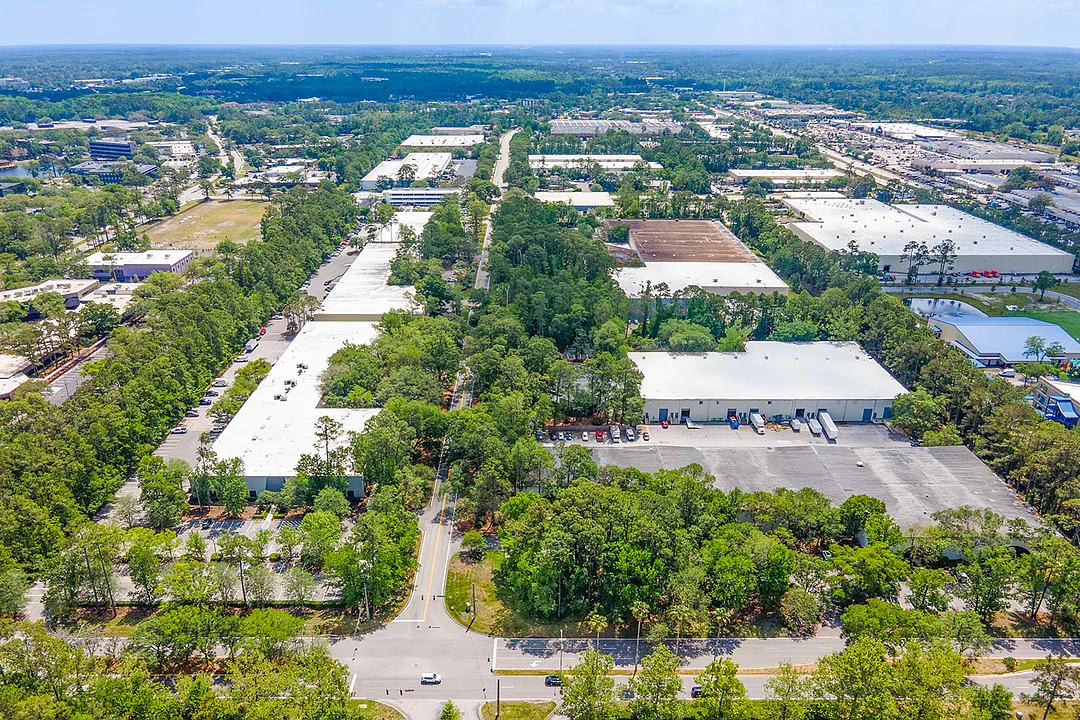
The roofs over Powerline Industrial Park face repeated rain, heat and dry-out cycles once the wet season begins. Industrial buildings in Powerline cover about 3.09 million square feet, placing the district among Pompano Beach's largest. It extends along the western side of the city near Coconut Creek Parkway. Warehouses dominate this local roofing market.
Low-slope and metal roofs on industrial buildings in Powerline get repaired, recovered, coated or replaced by us, and storm calls here are answered at any hour of the day or night. A warehouse roof out here has three jobs to survive: the daily storms, the hurricane wind rules every Broward re-roof must meet, and the long stretches between the days anyone climbs up to look at it.
Afternoon Storms: what May through early July does to a flat roof
Mid-May to early July is when the wet season turns stormiest: thunderstorm winds strong enough to do damage, tornadoes, lightning, hail and flooding all become likely. On a Powerline warehouse that shows up as plain, ordinary roof trouble, all arriving together. Gust fronts go looking for loose edge metal. Downpours test every drain before the spring debris has been cleared out of them. Hail and lightning leave small punctures in a membrane that stay invisible until the next soaking finds them.
Surface dewpoints stay in the 70s and the nights run warm, so a membrane never gets a real chance to cool. Seams flex in the afternoon heat and shrink in the evening rain, day after day. We like to see a Powerline roof in late April, with the drains running clear, the edge metal tight and the lap seams probed with a seam tool. A lifted lap caught in dry weather is a small repair, but after two weeks of storms it usually comes with wet insulation underneath.
Big Footprints: why the shape of the building drives the work
Powerline's 3.09 million square feet of buildings are part of an industrial and warehouse inventory that tops 28 million square feet across the city, distribution buildings included. Pompano Beach calls itself Broward County's largest submarket for that kind of building. The pattern is plain enough: wide, low-slope buildings with long runs of membrane, many seams and a lot of perimeter.
That shape puts the roof's weak points in a few predictable places. Slow drains leave water standing in the low corners, which we treat as ponding water long before it becomes a leak. Long edge runs give a gust a lot of metal to pull on. Penetrations and rooftop units multiply with every dock door and every tenant. We map all of it on a roof plan first, because on a roof this wide a good repair plan is a map, not a guess.
Next Door: Contractor's Business Park and IDI Pompano
Powerline Industrial sits beside Contractor's Business Park, with about 135,000 square feet of buildings, and near the IDI Pompano Business Center, with roughly 1.31 million, around Blount Road and Coconut Creek Parkway. Three different scales of property sit within reach of each other, and the roof questions change with the scale. Central 95, at about 3.4 million square feet in all, puts the same question on a larger scale.
An owner with a single building can fix, recoat or replace on a schedule that suits one tenant. An owner holding several buildings in the western end of Pompano Beach has more to work with. Roofs can be ranked by condition and tackled in order rather than whichever one leaks first, crews can be staged once, and the membrane and metal can be ordered in one run. That is how a multi-site roof program works.
Rated Roofs: 170 mph and the Notice of Acceptance
Every re-roof in Powerline falls under the High Velocity Hurricane Zone rules that cover all of Broward. Buildings in Risk Category II are designed for 170 mph, and each exterior roofing component, from the membrane to the fastener plate to the edge metal, has to carry a valid Miami-Dade Notice of Acceptance. Those approvals rest on TAS 201 missile impact, TAS 202 cyclic pressure and TAS 203 water-after-impact testing.
Permits applied for now fall under the 8th Edition Florida Building Code, which took effect on December 31, 2023. The 9th Edition is expected to follow by the end of 2026, so owners planning a job across that date should watch when the application goes in. For a roof system, the practical result is that we price and detail assemblies like TPO or modified bitumen only with the approved components that belong together, never a mix of convenient parts that nobody tested as one system.
Walking the Roof: drains, edges, seams and soft spots
We start at the drains and scuppers, since water that cannot leave is the root of most flat-roof problems around here. Then we walk the perimeter, checking edge metal and coping for loose cleats, open laps and fasteners backing out. After that come seams, flashings at walls and penetrations, equipment curbs, and any spot where the surface feels soft underfoot.
Soft spots and stained ceilings get a closer look with an infrared moisture survey, which shows where wet insulation is hiding under a dry-looking surface. You get a written report with photos and a short list sorted by urgency. Sometimes the answer is a handful of repairs, sometimes a restoration coating makes sense, and sometimes the insulation has taken on too much water and the right answer is a replacement.
Choosing the Fix: what moves cost and schedule
What the roof is made of, how much of the insulation is wet and how far the building can be disrupted are the three things that move cost and schedule most. A sound membrane with local damage is a repair job. A membrane with good insulation under it but worn surfaces can often take a coating. A roof that is dry underneath but near the end of its life may be a candidate for a recover. Wet insulation changes all of that and pushes the job toward tear-off.
Timing in Broward is mostly about weather. Roofing wants dry mornings and a clear sky, and the wet season hands out neither reliably. Owners who start planning in the cooler, drier months get better scheduling than owners who wait for the first storm to prove the point. Staging and truck access get planned around the people working in the building, and owners across the city's other industrial parks, such as South Andrews, face the same trade-offs.
Questions We Hear Often
How do I know whether my Powerline warehouse roof needs a repair or a full replacement?
Look at what is under the membrane before you look at the membrane itself. If the insulation is dry, repairs or a coating usually carry the roof for years. If a moisture survey finds wet insulation across a large share of the roof, replacement starts to cost less than chasing leaks one at a time.
Do I need a new permit every time we repair a section of roof?
Small repairs often fall under a different permit rule than a re-roof, and the building department decides where that line sits. Anything that replaces roofing components in the High Velocity Hurricane Zone has to use products with a Miami-Dade Notice of Acceptance, whatever the size of the repair.
What does a coating do for a roof in this heat?
A reflective coating sheds some of the afternoon sun load and seals small seam and fastener weak points, which helps a roof that is still sound underneath. It does not fix wet insulation or open seams that have already failed, so we survey first and coat second.
Can you work around tenants who run late shifts?
We schedule roof work around dock activity, truck traffic and shift changes, and we mark safe zones for forklifts and pedestrians. Noisy tear-off can be sequenced for off-peak hours, and we agree on that with the property manager before the first day.
What should an owner do right after a storm blows through?
Once the lightning has passed, check ceilings and dock doors for new stains, then call us. We can get a crew on the roof the same day to tarp or dry-in the weak spot, take photos for the insurer and keep the next afternoon's rain out of the building.