KEE Roofing in Pompano Beach, FL
The wet season hands a flat roof about five months of near-daily soakings, and a busy plant or kitchen can add its own exhaust on top. Water sits, chemicals settle, and the sun bakes both into the membrane before the next storm arrives. That double load is what KEE was made for. It is a PVC-alloy sheet, welded at the seams like ordinary PVC, but blended with a ketone ethylene ester that keeps it flexible and resists the slow chemical aging that wears out lesser membranes. For a Pompano Beach, FL building with process exhaust, heavy oils or standing water, KEE is worth a conversation. For a plain office roof, it may be more than you need, and we will say so.
Soaked and Cooked: what the wet season does to a roof
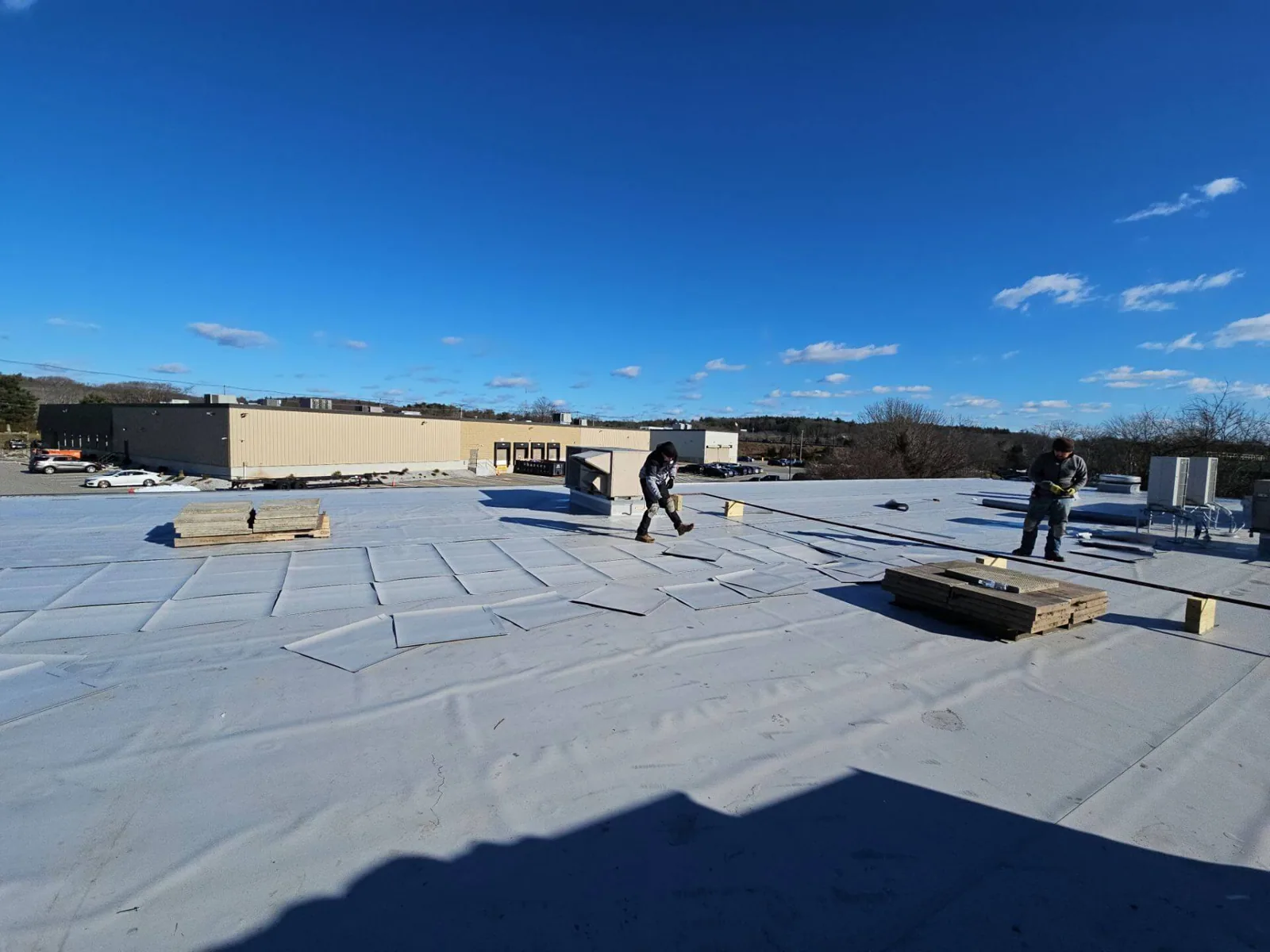
Between May 15 and October 15, a Broward roof takes most of its yearly rain, with the stormiest stretch running from mid-May to early July. Add dewpoints in the 70s and nights that run warmer than normal, and a membrane spends months wet, hot and flexing. Drains clog with leaves and debris, scuppers back up, and water lingers in the low spots. Many membranes tolerate that for a season or two. The ones that last are the ones that do not lose their plasticizer to the heat and water. KEE is formulated to keep its flexibility through exactly that kind of cycle, which is why it appears on roofs where ponding is a known problem.
The practical lesson is to look at the roof after a storm passes, not during it. Walk to the low corners an hour after the rain stops and see where the water still stands. If it is still there the next morning, the drainage is part of your membrane decision, and we will tell you whether tapered insulation, a new drain or a different sheet is the right fix.
What KEE Is: a PVC alloy with a tougher recipe
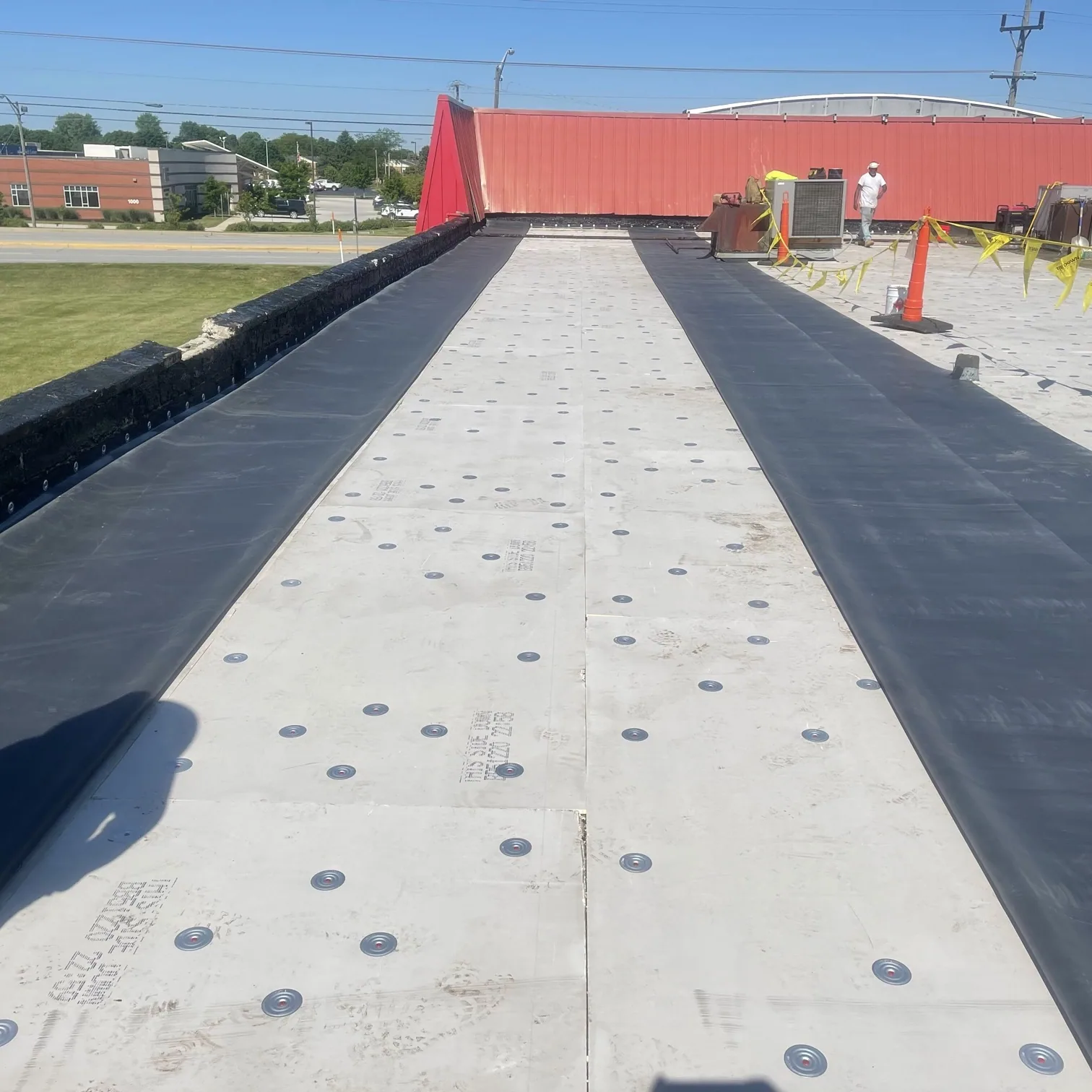
Standard PVC stays soft because of plasticizers mixed into the vinyl. Over years of heat, those plasticizers can migrate out of the sheet, leaving it stiff and shrinking at the seams and flashings. KEE swaps part of that recipe for a ketone ethylene ester, a polymer that stays locked in the membrane, so the sheet holds its flexibility and size for longer. Like PVC, it is reinforced with polyester scrim, and its seams are fused with a hot-air welder into a single piece.
Compared with conventional PVC, KEE is the more demanding specification and usually the more expensive. We install it when the building's exposures justify that, not as a default.
The sheet is thicker and heavier than many single-ply options, which helps with foot traffic and with the small punctures that come from service visits. It is also less forgiving of sloppy welding, so we keep our seams clean and probe every one. A weld that is perfect on a dry afternoon and contaminated on a damp one is the usual way a good membrane ends up leaking.
Plant Exhaust: oil, grease and chemicals on the membrane
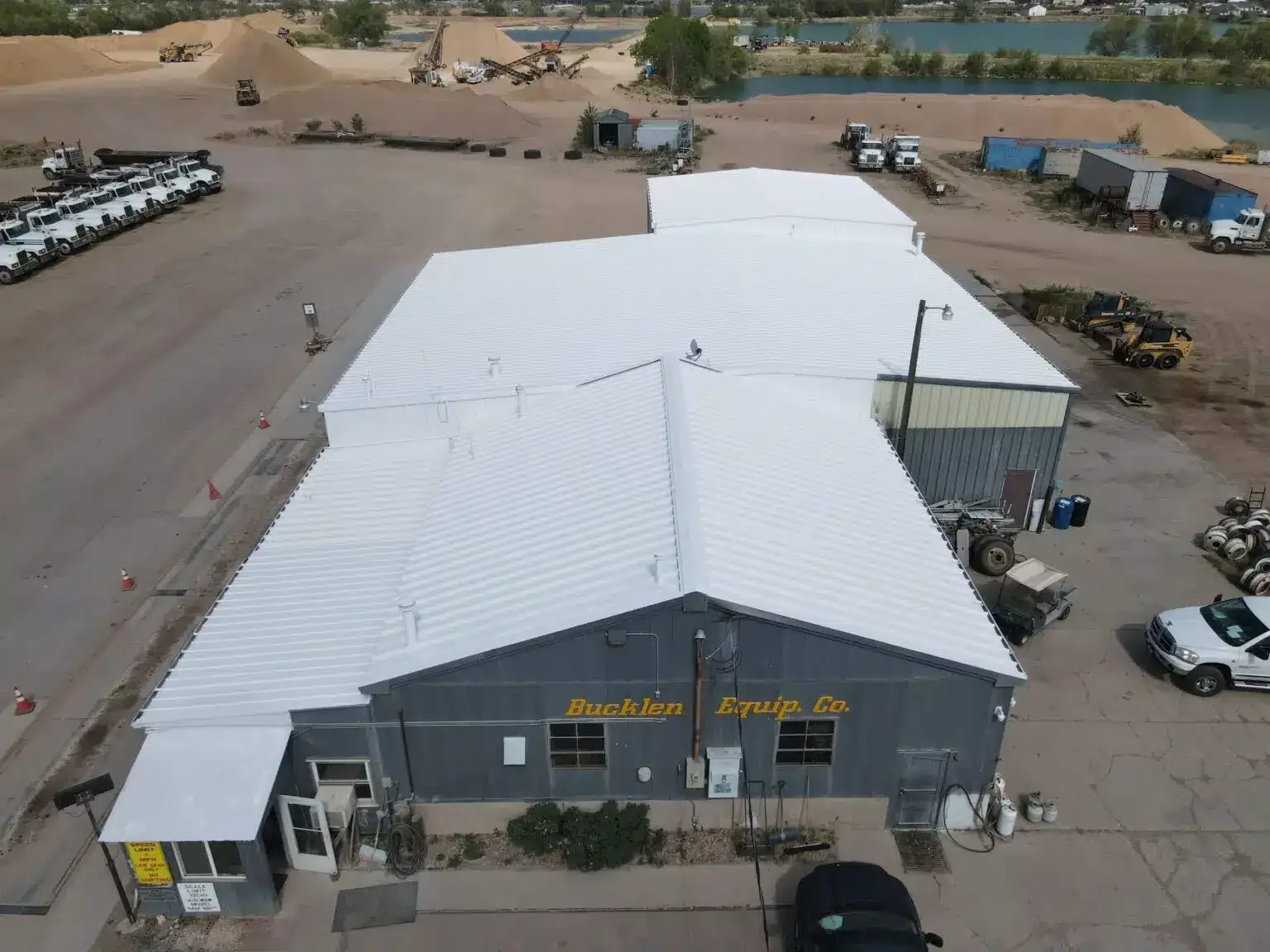
Local makers range from cosmetics and marine products to spices and beverages, and Pompano Beach's industrial parks serve defense contractors and distribution centers. Exhaust from process equipment, refrigeration plants and food handling lands on the roof, and what it contains matters. Oils, solvents and fats can attack many membranes, swell them and loosen seams. KEE is made to resist a wide range of those exposures, which is why it comes up for manufacturing plant roofing.
Before we recommend any membrane, we ask what vents onto the roof and where. We also protect the zones around exhaust with walkway pads and sacrificial layers so that service techs are not grinding residue into the sheet. When exposure is unknown, we ask your facility team or your supplier for details.
Distribution and Cold Storage: the Central 95 side of town
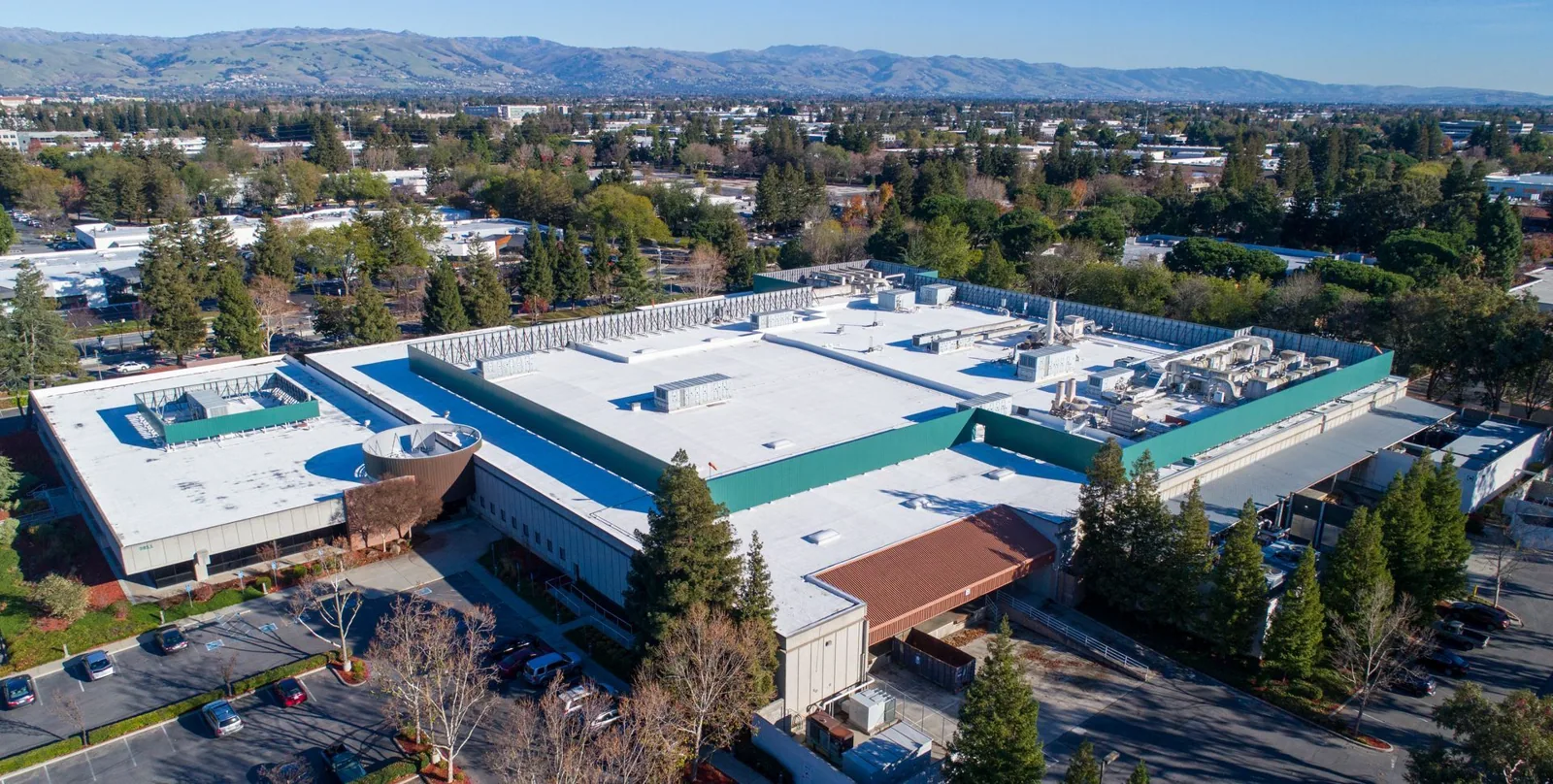
The Central 95 corridor, on the west side of I-95 near Copans and Powerline Roads, is a heavy truck and warehouse zone, and the grocery distributor Associated Grocers and FreshPoint Produce and Dairy are among the city's top employers with distribution operations. Buildings that handle food often run compressors, condensers and refrigeration exhaust across the roof, and the area around them stays damp and greasy. The same goes for the cold side of the business. A cold storage roof has to cope with the vapor and temperature differences that make condensation a roof problem.
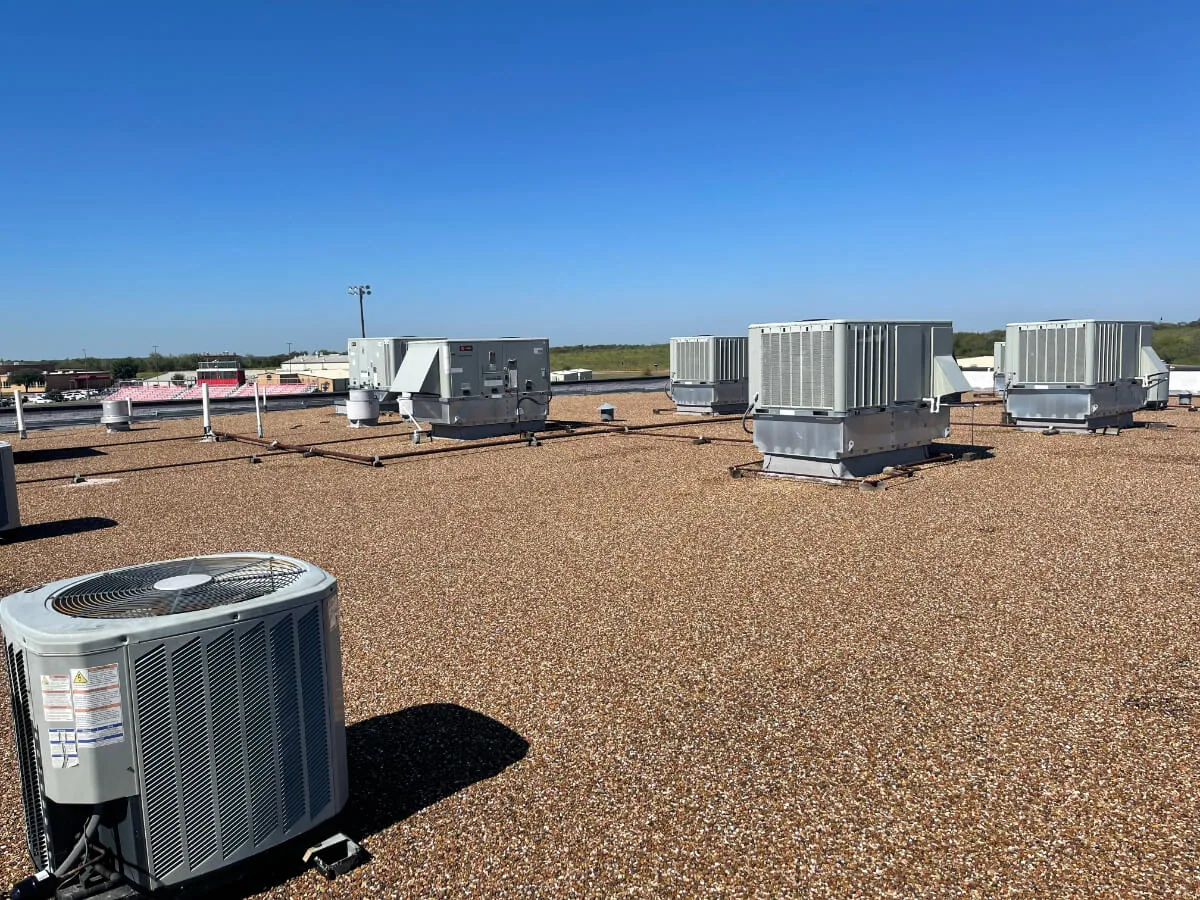
For a building in the Central 95 industrial area, we look at the rooftop equipment before a membrane is picked, since equipment placement drives a lot of the decision.
Hurricane Rules: tested assemblies and tied-down edges
KEE follows the same hurricane-zone rules as every other roof in Broward: membrane, insulation, fasteners and plates must be a tested, listed system with a valid Miami-Dade Notice of Acceptance. A 98 mph gust at Pompano Beach during Hurricane Wilma in 2005 is a fair picture of what that listing is for. We attach to the approved pattern and tighten it at the edges and corners, where uplift peaks. Details around rooftop equipment curbs and supports get extra attention, because loose equipment is a hazard in a storm.
Is KEE Overkill? Matching the membrane to the building
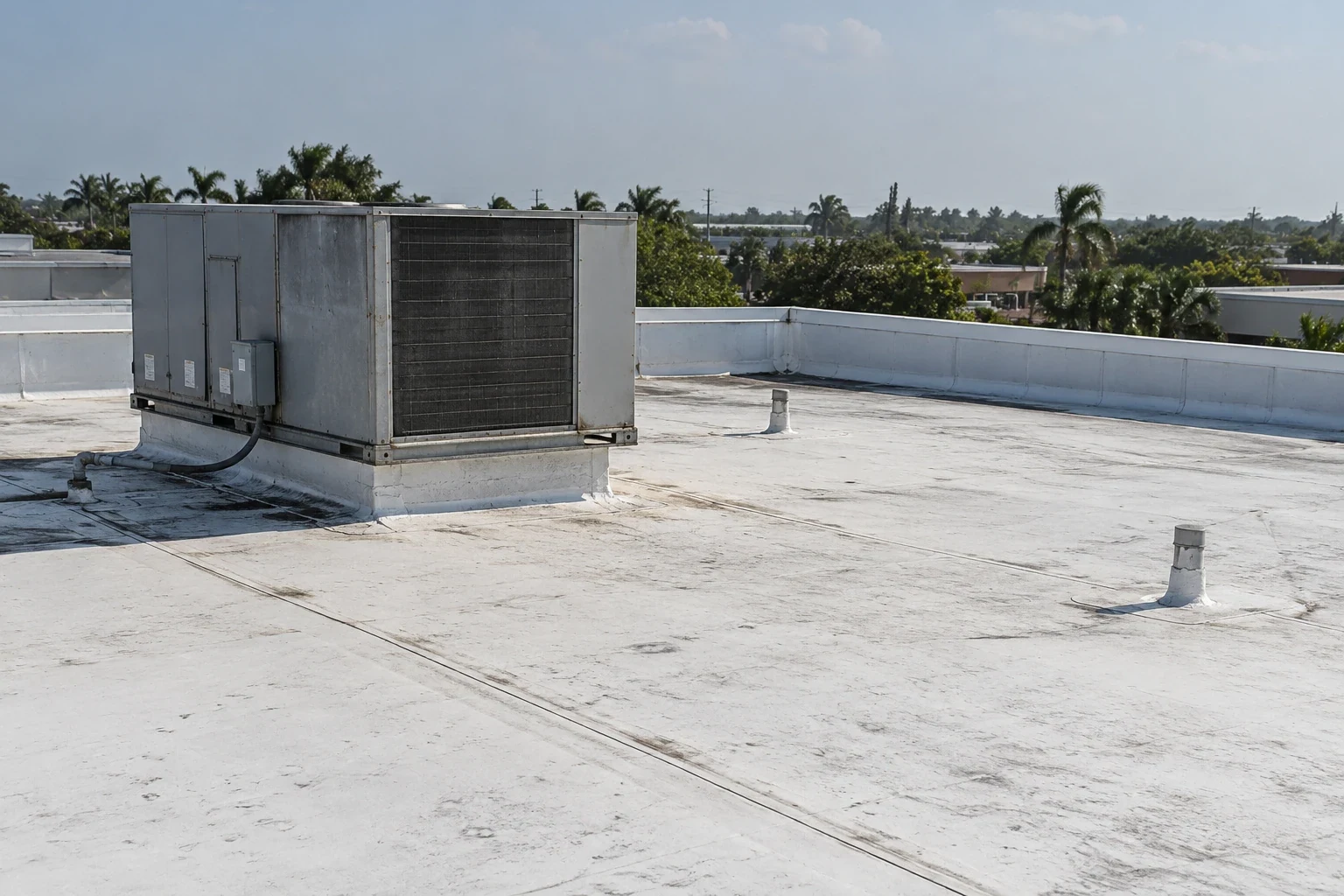
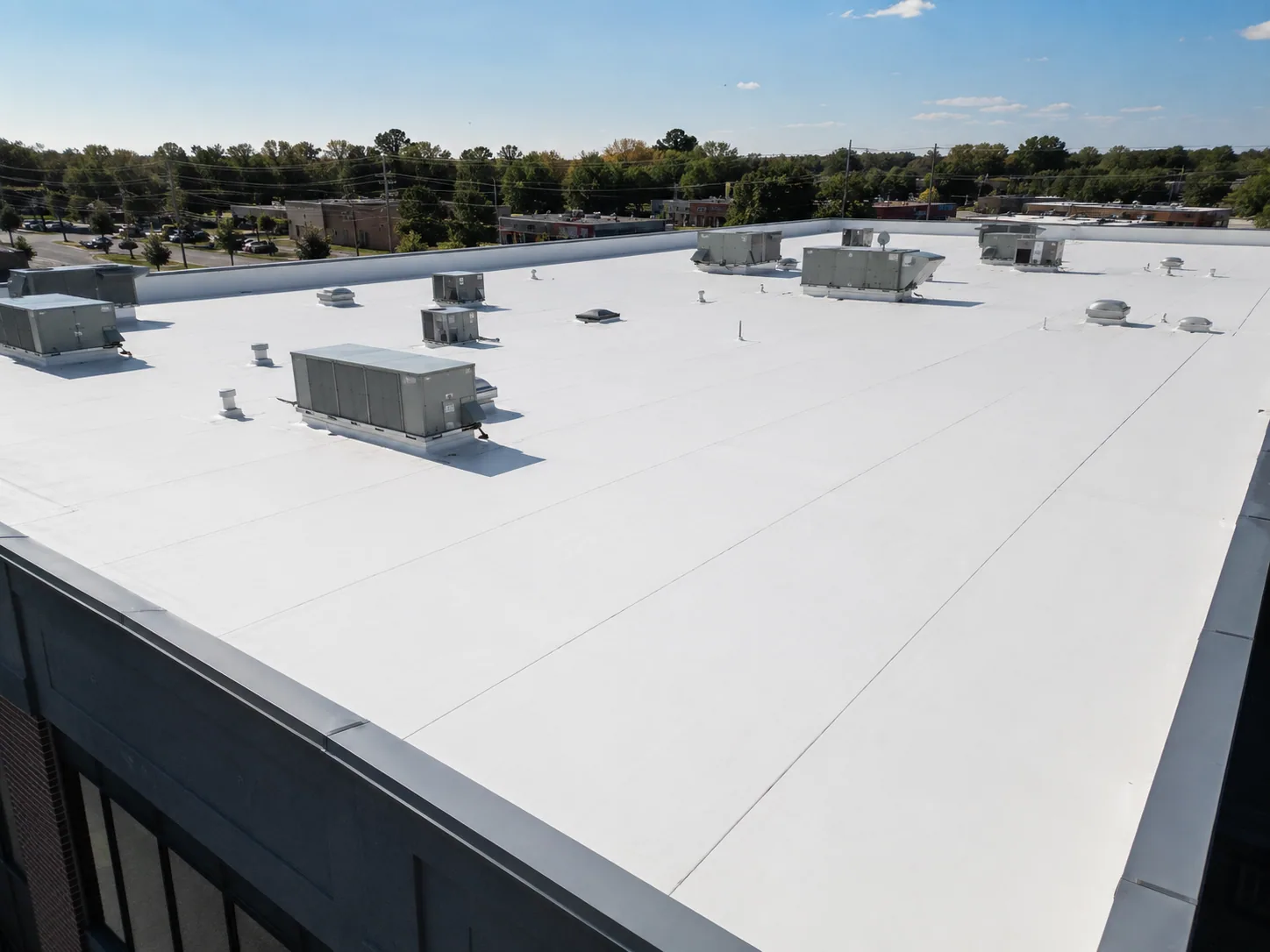
If the roof has little equipment, no heavy exhaust and decent drainage, a TPO membrane may do the job for less. If water sits and chemicals fall, KEE earns its price. A building in the Atlantic Business Center, one of the larger industrial areas mapped along West Atlantic Boulevard, could land on either side of that line, so we look at each roof on its own and let its exposures pick the membrane.
The comparison comes down to cost against exposure. KEE costs more to buy and takes the same careful labor to install as other welded single-ply, so the extra money has to buy something the building will use: resistance to what vents onto it, tolerance for water that lingers, or a sheet that stays supple through hard summers. If none of those apply, we will not push it.
Questions We Hear Often
What makes KEE different from PVC?
The recipe. KEE replaces part of the plasticizer with a polymer that stays in the sheet, so the membrane keeps its flexibility and shape as it ages. The welding and installation look the same, but the chemistry holds up longer under hard exposure.
Do I need KEE on a food distribution roof?
Not always. Roofs with refrigeration exhaust, kitchens or greasy vents benefit most, and a quiet dry-goods warehouse may not. We check what vents onto your roof first.
Will KEE handle ponding water?
Better than many membranes, yes, because it resists water and keeps its plasticizer. Still, standing water adds weight and dirt, so we fix drains and slope where we can.
Can KEE go over an existing roof?
In many cases, if the roof below is dry and the code allows another layer. A separation sheet protects the membrane from old asphalt. We test for moisture before saying yes.
How do you repair a KEE membrane that has been damaged?
We clean the area, cut a patch from matching material and weld it with hot air. A roof that has been exposed to oil may need a larger section replaced, since contaminated sheet will not weld.
Does a KEE roof need special maintenance?
Mostly the same care as any welded single-ply: clear the drains, keep foot traffic on pads and look at the seams after hurricane season. Wipe up spills near exhaust before they bake in.