
Flashing Failure Repair in Pompano Beach, FL
Walk a roof edge at seven in the morning and again at three in the afternoon, and everything up there has moved more than you would guess. Metal grows in the heat and shrinks back overnight. The wall shifts a hair on its own schedule, and the membrane tries to keep up with both. Flashing is the part of the roof that has to bridge all that motion, which is why it is usually the first thing to give out on a Broward roof, long before the open field of the membrane shows any wear.
A failed flashing is a gap at a wall, a curb, a pipe or a drain where water has found a way past the membrane. In Pompano Beach, FL, with a thunderstorm in the forecast most afternoons from May to October, a gap like that gets tested again and again. We find the failed joint, work out why it failed, and rebuild it so it can handle the movement instead of fighting it.
Moving Metal: what daily heat does to a joint
Flashing lives where two different materials meet, and they do not move at the same rate. Sheet metal expands and contracts far more than a masonry wall does. Membrane stretches and relaxes with the temperature too. Over thousands of cycles the sealant at the joint pulls away from one side, or the fasteners that hold the metal work themselves loose, and a hairline opens that nobody can see from the ground.
Near the coast it gets worse. Salt in the air attacks exposed fasteners and thin metal, so a flashing that would last a long time inland can show rust at the screws in a few seasons. A gust can finish the job, and wind damage on a roof usually starts at a weak termination. Hurricane Wilma's 2005 gusts reached 98 mph at Pompano Beach, and terminations that are already tired are the details that peel first when wind like that pulls on a wall line.
Walls, Curbs and Pipes: the joints that leak first
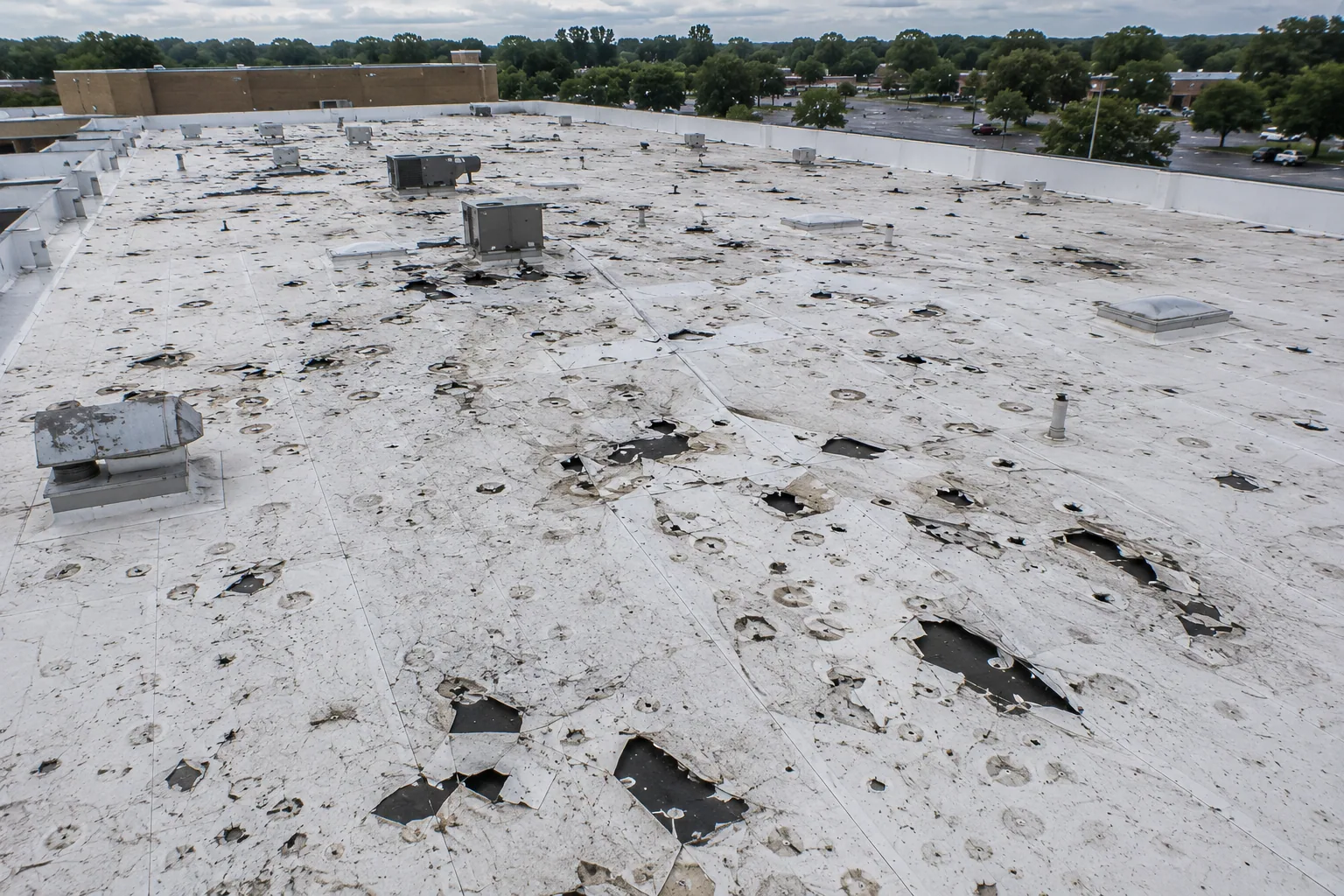
Any place the roof stops being flat is a flashing job, and every one of those places has its own way of failing. The details we find most often are:
- Base flashing along parapet and wall lines, where the termination bar has loosened or the counterflashing above it has opened up
- Curbs around rooftop units, where corners split because they were folded instead of formed
- Pipe boots and vent stacks, where the rubber has cracked in the sun and no longer grips the pipe
- Drain bowls and scupper openings, where the membrane has pulled away from the metal
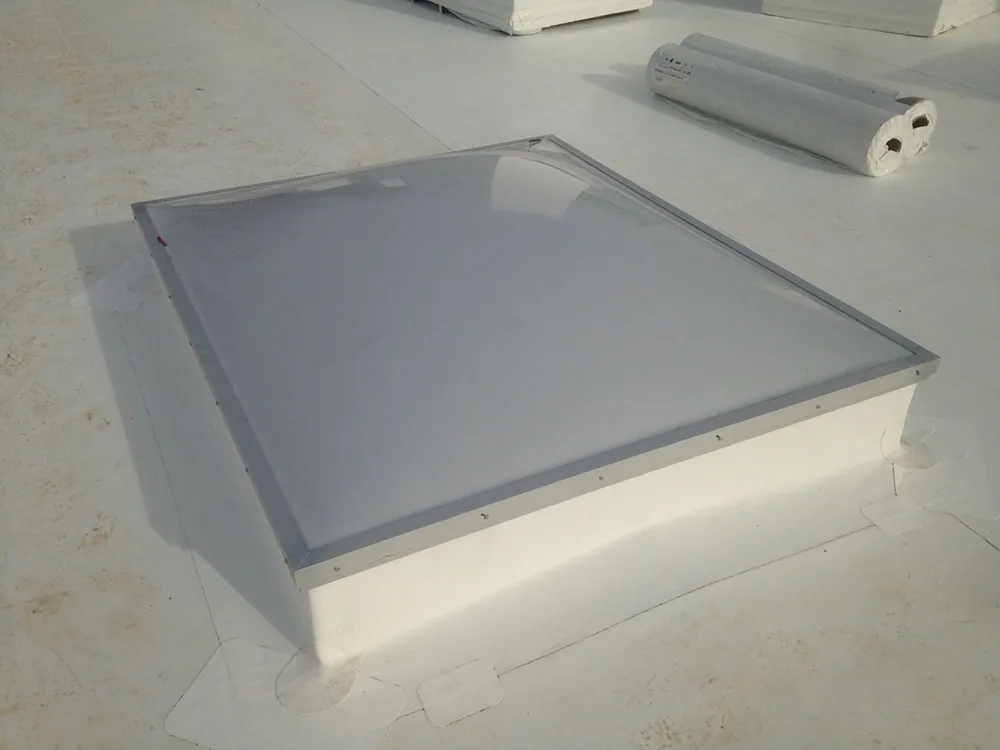
- Skylight and hatch curbs, where the flashing was never tied cleanly into the field
Each of these is a detail that is hard to build well and easy to damage later, which is why skylight and penetration flashing and equipment curb repairs get the closest work on the roof.
Why Caulk Fails: the quick fix that is not a repair
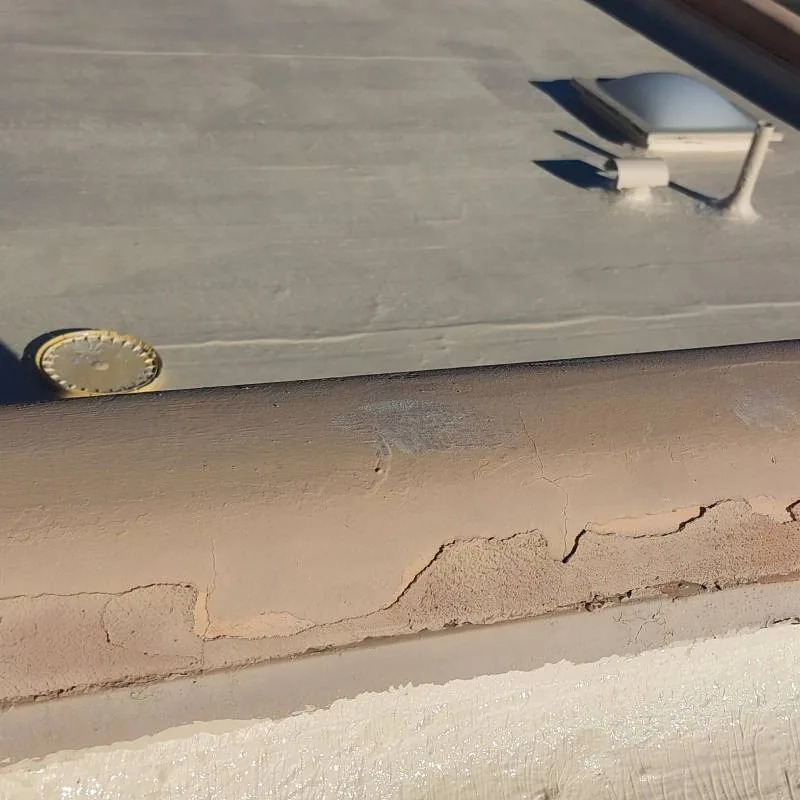
The usual first response to a leaking flashing is a bead of sealant, and it often works for a few weeks. Then the sun cooks it, the movement stretches it past what it can take, and a new crack opens right next to the old one. Sun is hard on it too, and the same heat and UV exposure that ages membrane ages sealant faster. Sealant that sits over dirt or old sealant never sticks well, and sealant laid over a joint that still holds moisture can trap water inside the wall line instead of keeping it out.
There is a place for sealant on a roof, as a maintenance item that gets renewed on a schedule. It is not a substitute for a flashing that has pulled loose, corroded or been built wrong.
Tracing the Water: from the ceiling stain back to the joint
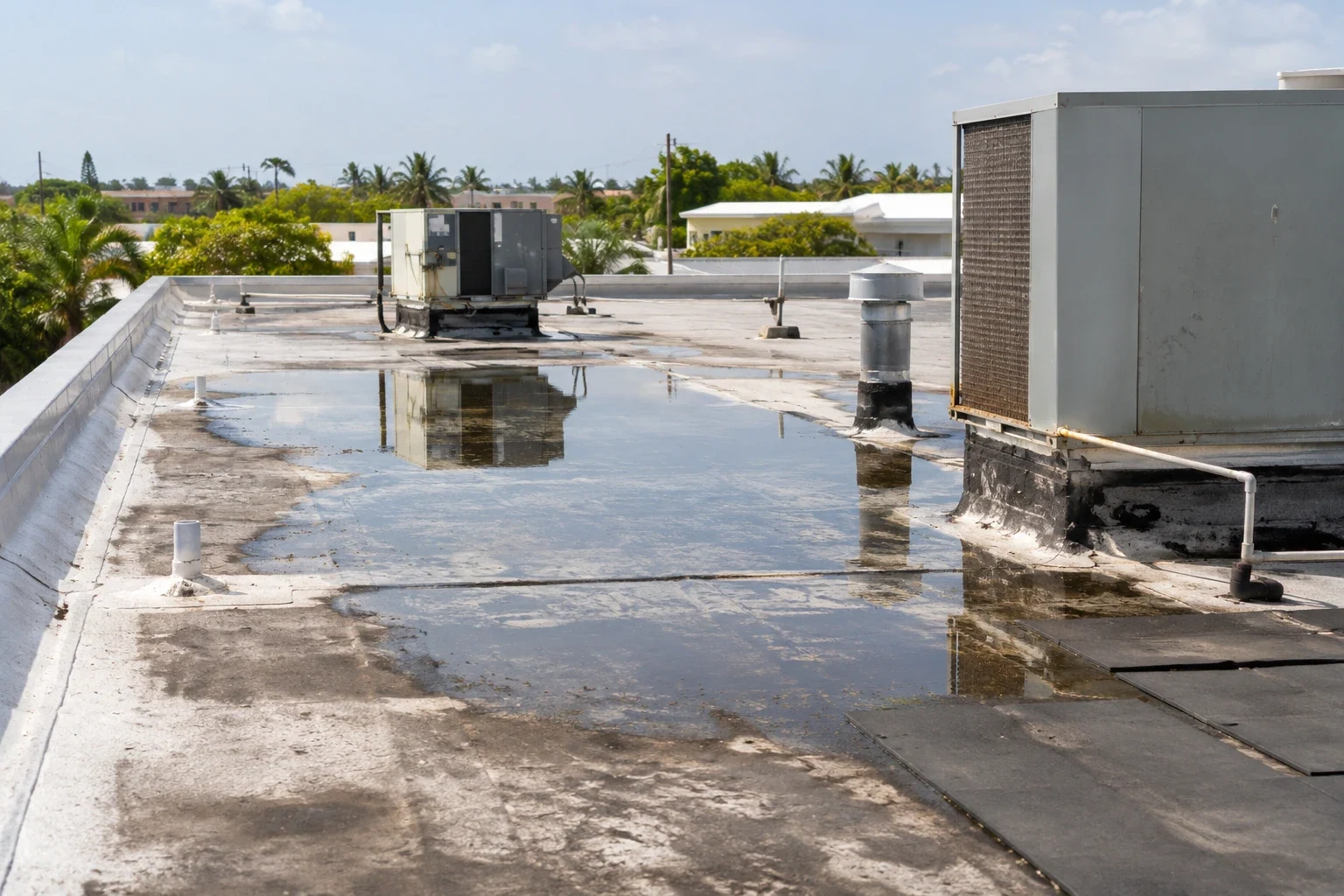
Water does not stay where it enters. It follows the deck, runs along a purlin or soaks into insulation before it drips, so the spot on the ceiling and the failed joint can be well apart. We start inside with the stain and work out toward the nearest wall, curb or penetration, then climb up and test that detail. A hose test, run in sections from the lowest point upward, can prove which joint is letting water through before anyone tears out good material.
Timing helps the diagnosis. Leaks that only show up with wind-driven rain, the kind that blows sideways ahead of a squall line, usually point to a vertical termination or a wall joint. Leaks that follow any heavy rain often point to a horizontal detail like a curb or drain.
Rebuilding the Joint: re-flash, reinforce or replace
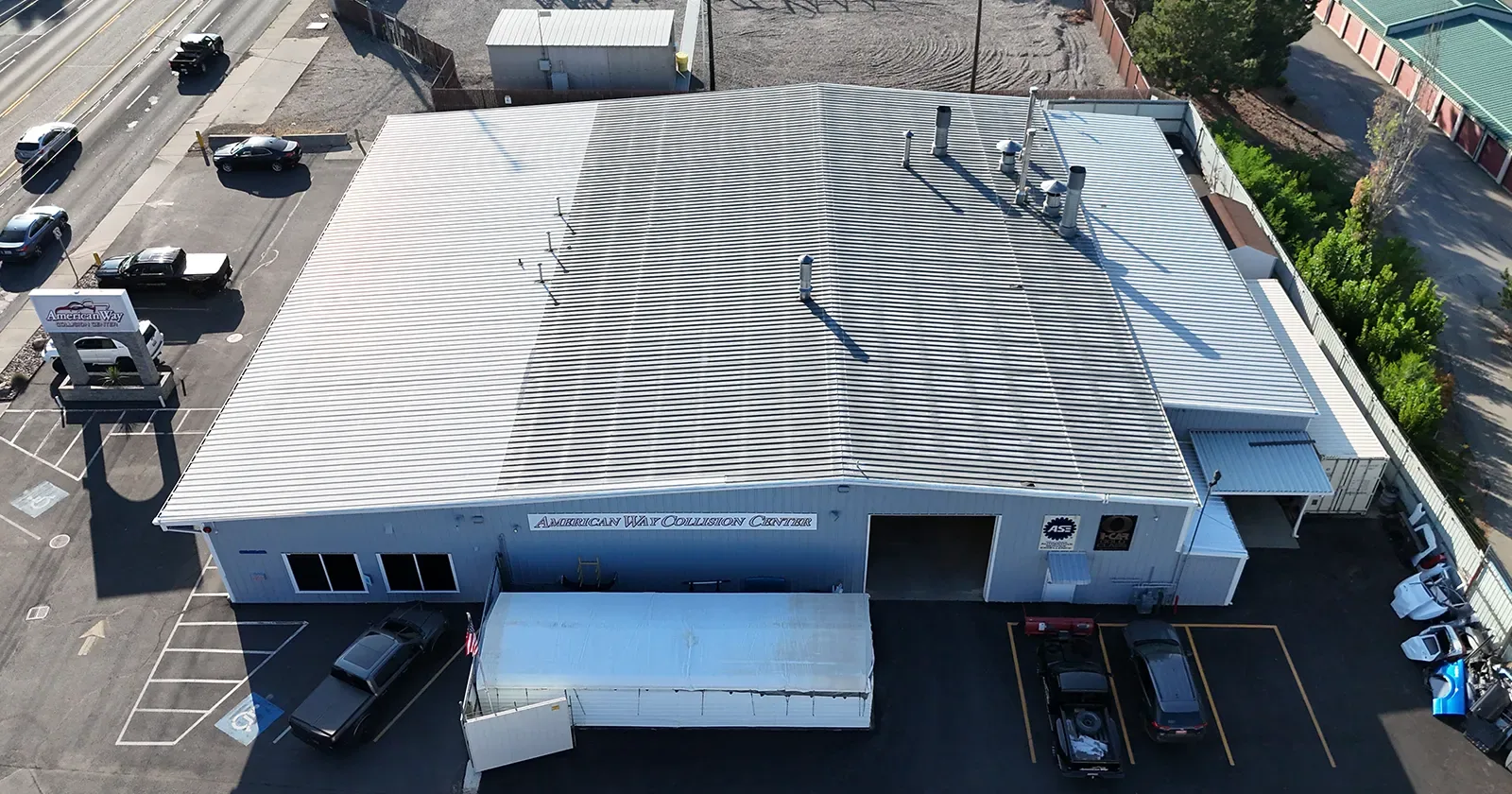
The repair depends on what failed. A split corner on a curb may only need a preformed corner piece and a welded or adhered patch that suits the membrane. A loose termination calls for new fasteners, a new bar and a fresh counterflashing set into the wall. Where old flashing has cracked beyond saving, the whole detail comes off and gets rebuilt with the membrane and metal the roof is made of. A liquid-applied flashing resin can handle awkward shapes such as clustered pipes and odd-shaped penetrations that sheet material cannot wrap neatly.
Cost follows the number of joints, the access, and how much surrounding material has to come back out because it is wet. A single curb is a small repair. A long wall line or a roof with dozens of penetrations is a bigger job, and we say so up front. Where water is already coming in, leak repair comes first to dry the building in, and the permanent fix follows.
Old Meets New: Pompano Citi Centre and the Fishing Village shore
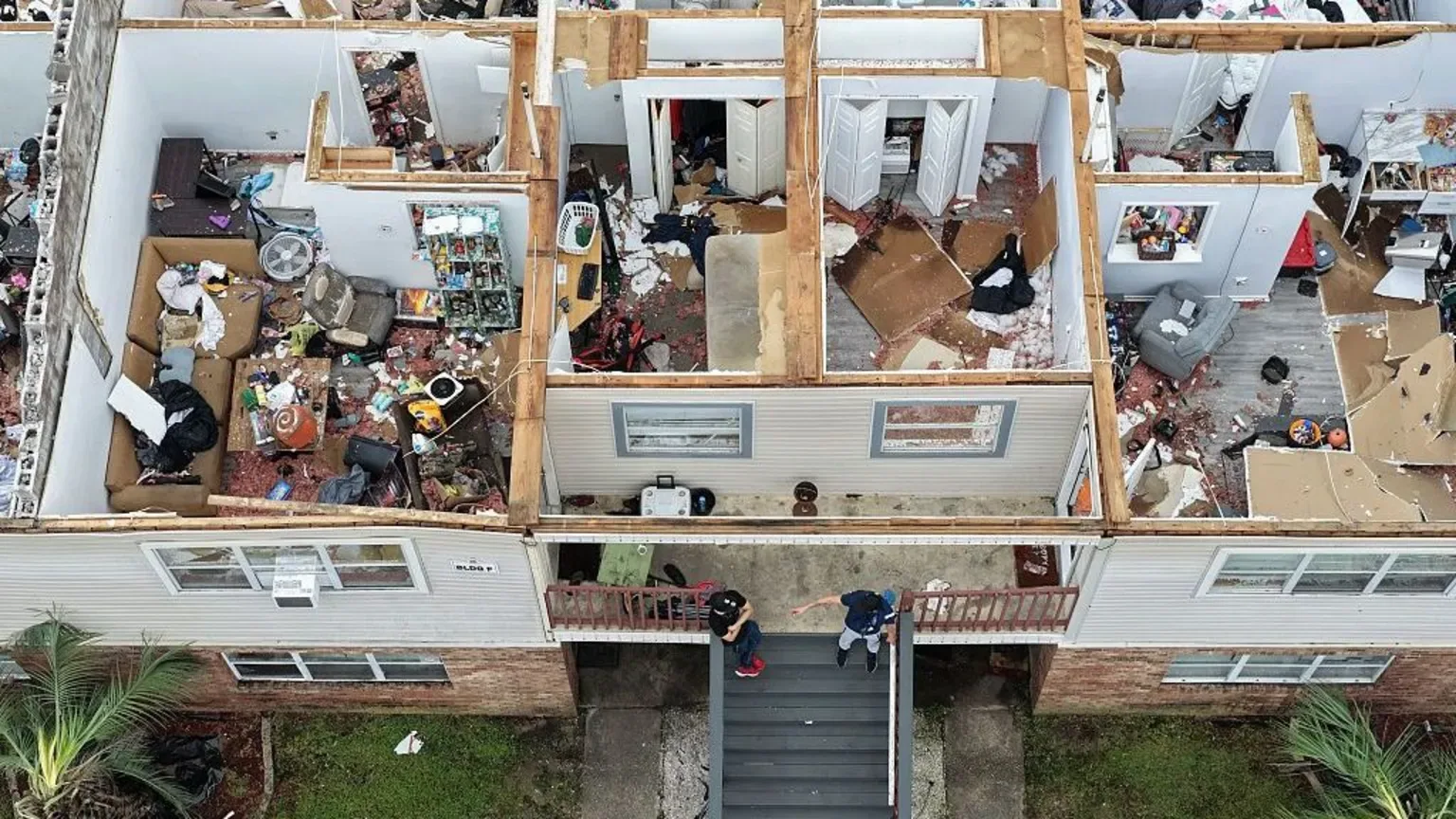
Buildings that have been added to or redeveloped tend to have flashing from more than one period, and the tie-in where old meets new is the place to look first. Pompano Citi Centre is an open-air retail center; where a roof spans spaces altered over time, the joints between older and newer work deserve a close inspection. The same goes for retail along Federal Highway, where tenants change and rooftop units come and go.
Oceanfront buildings face the salt problem directly. The city has about three miles of beach, and structures near the A1A Ocean Boulevard Corridor and its pier take salt air all year. Exposed fasteners there rust faster, so stainless or coated hardware is a better choice for the edge and wall details. Where the edge is in trouble as well, the edge metal and coping usually needs attention in the same visit.
Questions We Hear Often
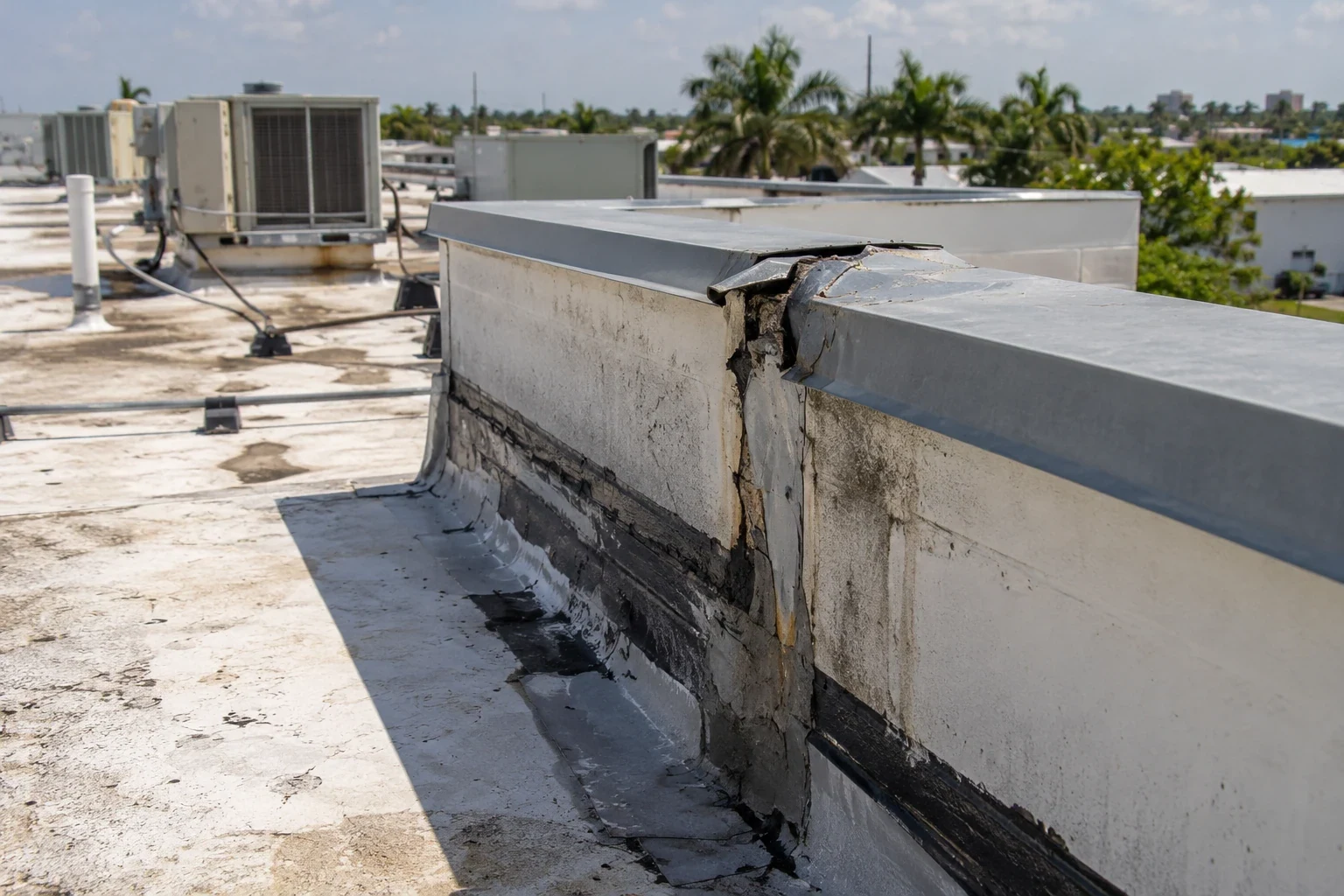
Can flashing be repaired without redoing the whole roof?
In most cases the answer is a local repair. Flashing is a detail, and it can be rebuilt at one curb or one wall line while the field membrane stays in place, as long as the membrane near the joint is dry and sound.
Why does the leak return after I sealed the joint?
Sealant only covers the symptom. If the metal has pulled away from the wall, the fasteners are loose or the membrane behind the joint has split, the bead cracks again with the next heat cycle. The repair has to reach the metal and the membrane.
How do I know the leak is at the flashing and not the membrane?
Look at where it starts. A leak that lines up with a wall, a unit or a pipe, and that gets worse in wind-driven rain, usually comes from the flashing. A hose test confirms it by wetting one detail at a time.
Does adding a new rooftop unit change the flashing?
Every new curb is a new set of flashing joints, and a unit moved from one spot to another leaves its old opening to close. We build the new curb into the roof system properly and patch the old opening so the roof ends up tight in both places.
What makes flashing repair cost more on some roofs?
The count of joints, how hard each one is to reach, and whether water has soaked the material around them. Long wall lines and roofs crowded with penetrations take more time than a single curb, and wet insulation adds work.