
Skylight and Penetration Flashing in Pompano Beach, FL
Every pipe, vent, hatch and skylight that pokes through a flat roof is a hole that somebody had to close again, and from May through October the Broward weather tests each of those closures nearly every afternoon. Sun cooks the sealant by noon. A line of storms drops cool rain on it by three. The metal and rubber around it expand and shrink on that daily clock, and one summer later a joint that looked perfect has a hairline gap that nobody can see from the ground.
Those gaps are where many commercial roof leaks begin in Pompano Beach, FL, because the membrane in the middle of a roof is simple and the details are not. We repair, rebuild and flash penetrations of every size, from a plumbing vent to a multi-pane skylight, so the openings in your roof stay closed through the wet season.
Small Penetrations: pipes, vents and conduit
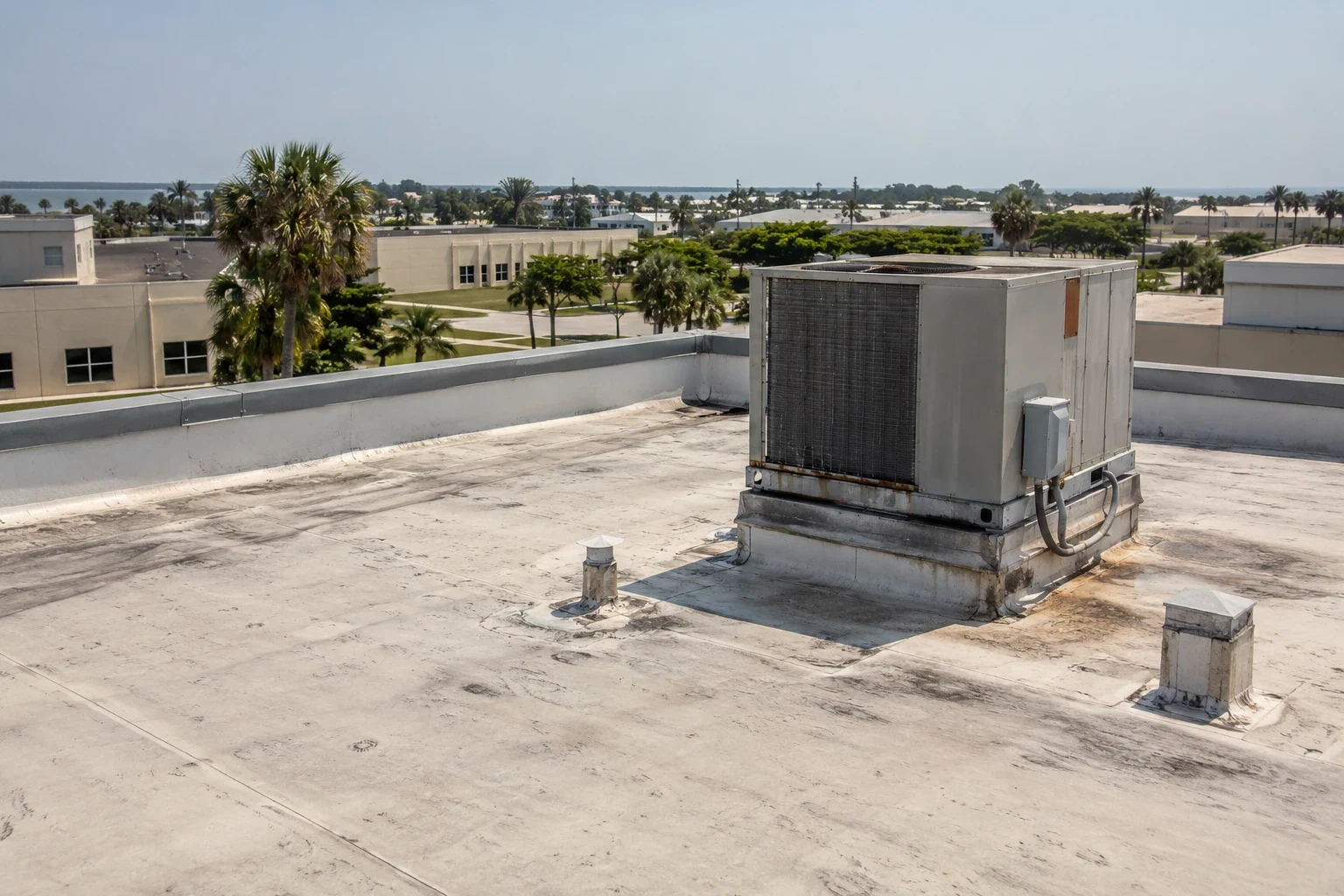
The smallest openings cause some of the most persistent leaks. Plumbing vents, refrigerant lines, gas pipes, electrical conduit and exhaust stacks all pass through the membrane, and each needs a flashing that fits the pipe, bonds to the roof and tolerates movement. Rubber boots crack in the sun. Old pitch pans, the open metal cups filled with sealant that older roofs used, shrink and pull away from the pipe as the filler ages.
We replace failed boots with prefabricated flashings sized to the pipe, or build up a molded flashing using a liquid-applied resin and fabric where the shapes are awkward. Clustered penetrations, where several lines run together, are sealed as one detail rather than as separate patches. Because contractors add rooftop lines over the years without calling the roofer, we look carefully at which openings are original and which came later.
Across Powerline Industrial Park and Atlantic Business Center, broad industrial roofs carry rows of equipment and service penetrations, making consistent flashing details important during both maintenance and retrofit work. We map each curb, pipe and skylight before a membrane repair begins, then check the up-slope side where runoff can collect. A skylight frame needs a continuous curb flashing with corners formed to shed water; exposed sealant alone is not a durable transition. When a unit or skylight is replaced, the opening should be measured against the new frame before the old membrane is cut.
Skylights and Domes: sun, impact and failing seals
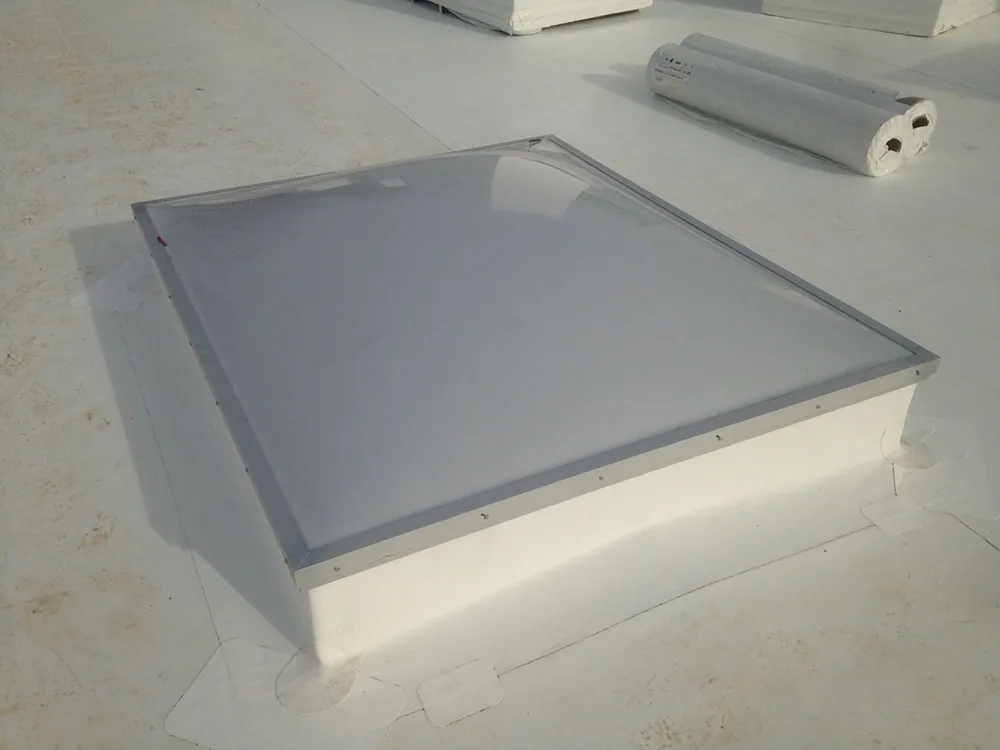
Skylights take a beating that most of the roof does not. Acrylic and polycarbonate domes yellow and craze under constant ultraviolet exposure, and the gaskets and sealants around the frame dry out. Condensation forms on cooler glazing in a humid climate and drips where it should not. A cracked dome or a failed seal leaks directly onto whatever sits below, which in a store or office is usually ceiling tile and merchandise.
Skylights also change the safety picture on a roof. A skylight in a walking area is a fall hazard unless it has a guard or screen, so we flag any that are unprotected. When a skylight reaches the end of its life, we replace the unit, rebuild the curb flashing and tie it into the membrane. In some cases the better answer is to remove the skylight and close the opening with a proper roof panel, and we will say so when it makes sense.
Curbs and Hatches: bigger openings, bigger consequences
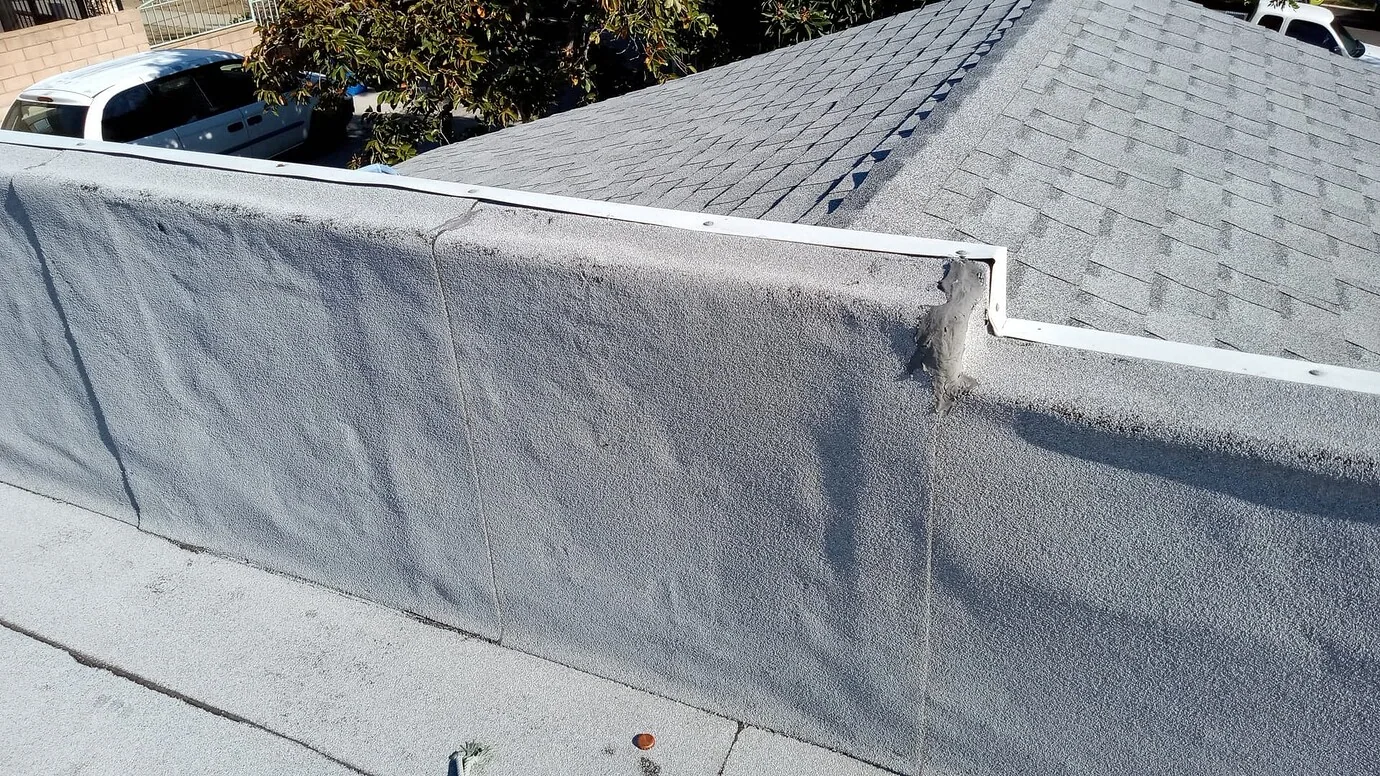
Roof hatches, exhaust fans and smoke vents sit on curbs, and the curb flashing is where the membrane turns up the wall and ends under a metal cap or counterflashing. Corners are the weakest part. A membrane stretched around a corner with no relief will tear along the fold within a few seasons, and a counterflashing that has pulled loose lets water run behind the base flashing.
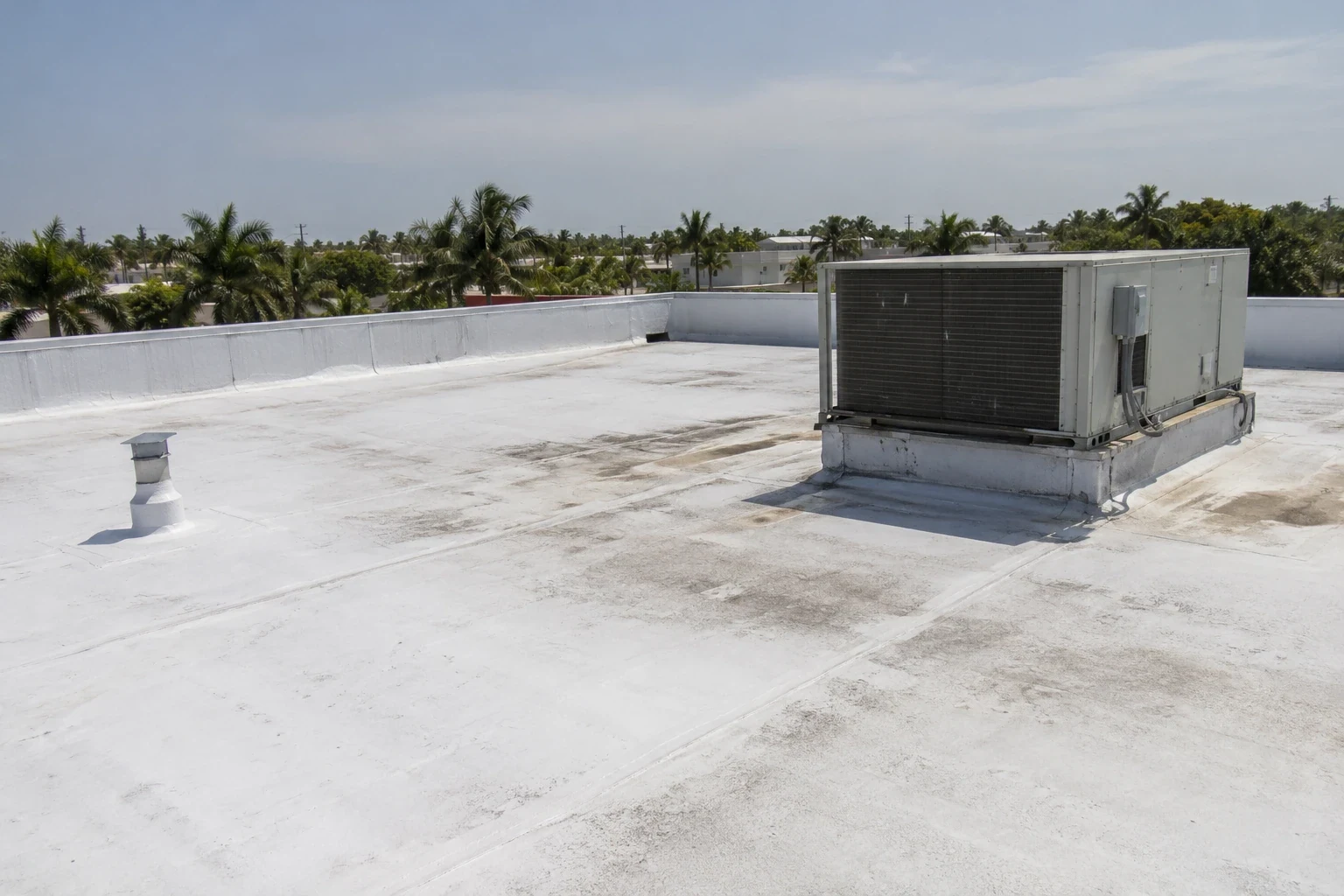
Our crews inspect every curb for height, condition of the corner flashing, cap fastening and sealant. Larger rooftop equipment curbs and supports carry units above the roof and follow the same flashing principles at a bigger scale: a tall, sound upstand, a continuous bond and a metal cap that sheds water instead of trapping it.
Flashing Materials: boots, wraps and liquid resin
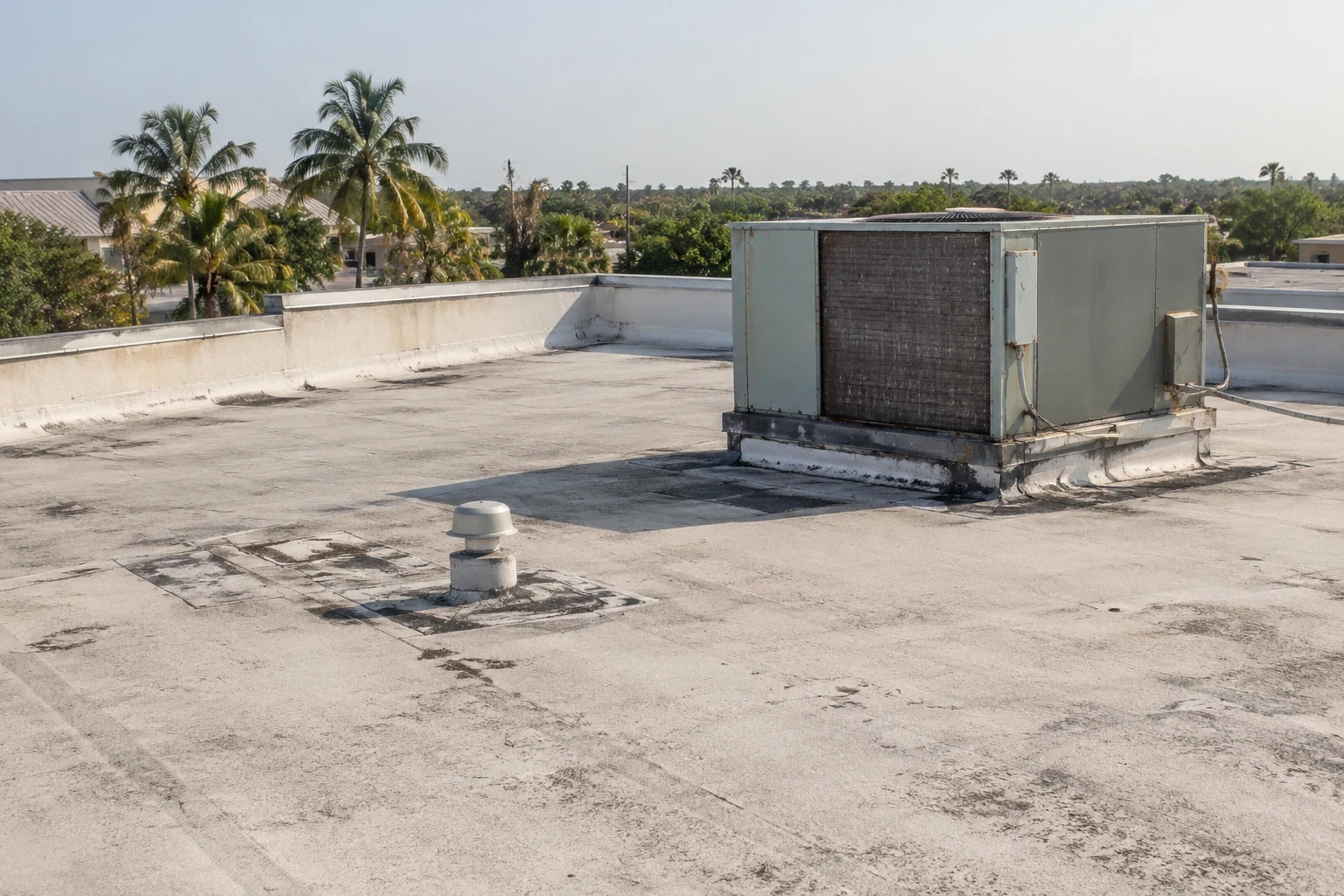
The right flashing depends on the roof it goes into. Thermoplastic roofs such as TPO and PVC take heat-welded flashings that fuse to the membrane. EPDM roofs use cured or uncured rubber flashing with adhesives and tape. Modified bitumen and built-up roofs take torch-applied or cold-applied flashing sheets. Liquid-applied flashing resin bridges odd shapes on almost any substrate when prepared correctly.
The mistake we see is a mismatch, where a caulk-only repair or the wrong sealant gets smeared over a failed joint on the theory that something is better than nothing. It seldom is. A bad repair traps water and hides the real defect, which is why flashing failure repair begins with examining the failed joint before any new material goes on.
Wind Zone Rules: what Broward expects of the details
Broward's hurricane zone rules set a high bar for anything bolted to or cut into a roof. Skylights, curb assemblies and flashing systems each need a Miami-Dade Notice of Acceptance, and the design wind they are measured against is 170 mph. New work or a replacement has to use approved products installed the way their approvals describe.
Large new projects fall under the same rules. Pompano Beach’s South Dixie Highway target area spans SW 2nd Street to Copans Road. The separate, planned 223-acre Pomp around Harrah’s Pompano Beach includes hotel, retail, residential and office uses; roofs on those buildings also need approvals for the local wind design. On an existing building, in Park Central or anywhere else, we look for older skylights and boots that predate current requirements and flag the ones most likely to give way in a storm like Irma, which put gusts of 80 to 100 mph across most of Broward.
Finding the Leak: tracing water back to a penetration
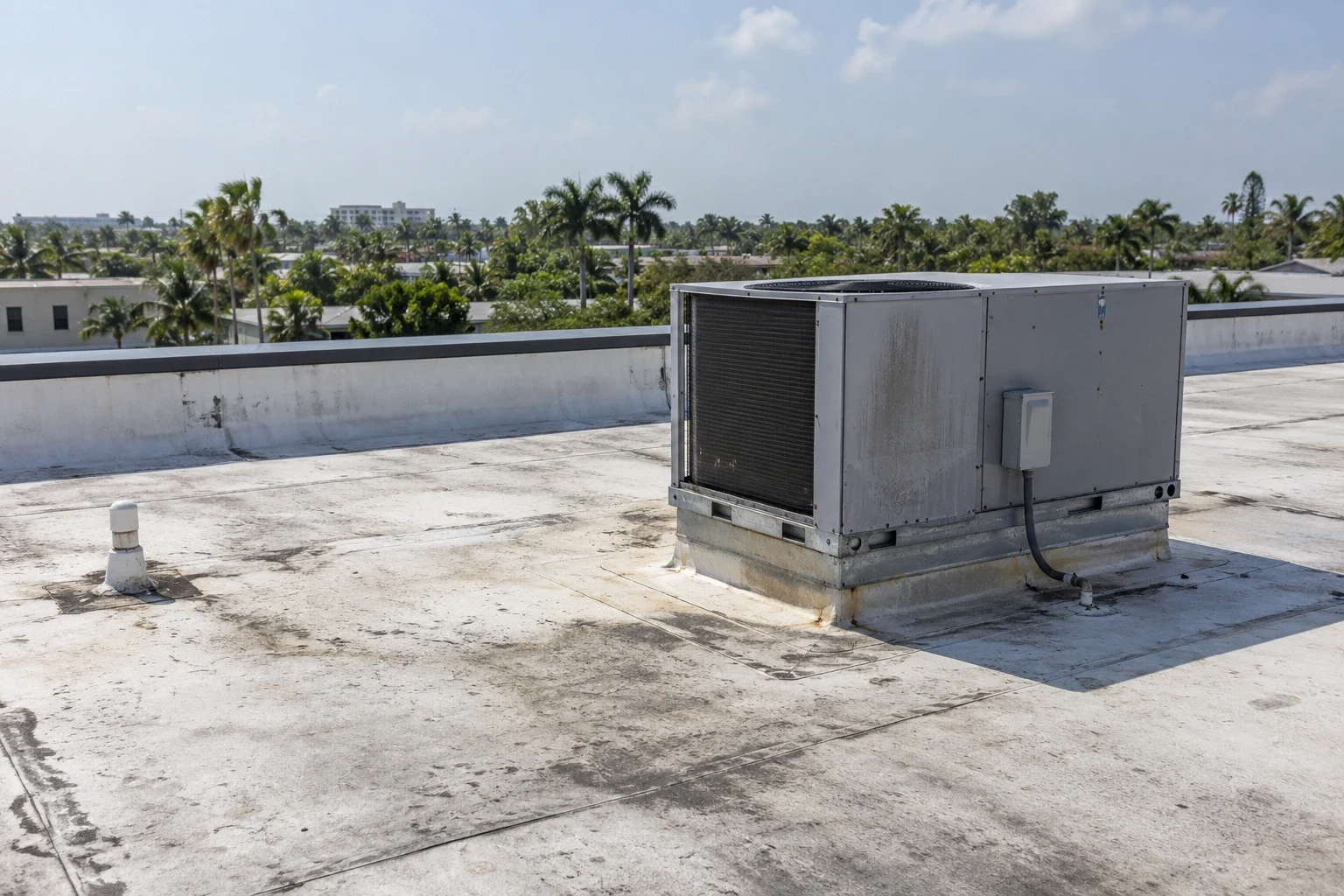
When a ceiling stain appears under a penetration, the leak is often at a different opening upslope, because water travels along the deck and the insulation before it drips. We check every penetration in the area, test with a controlled water source where it is safe, and use a moisture scan when the path is unclear. The search for a roof leak very often ends at one of these openings.
Once the opening is found, the repair is straightforward and quick. The slower job is deciding whether the surrounding insulation is wet and needs to come out. We make that call before the flashing goes on, since a new boot over wet insulation just moves the leak to the next seam.
Questions We Hear Often
Can a skylight be repaired or does it need replacing?
Reseal and re-flash when the dome and frame are sound. Replace when the dome is crazed, cracked or yellowed, the frame is bent or the unit leaks again after a repair.
Why does the same pipe boot keep leaking?
Usually the boot has cracked in the sun or the pipe is moving inside it. A new sleeve fixes the first. A pipe that shifts needs a different flashing or a support, which we look at on the walk.
Do old pitch pans have to come out?
Not always, but they are one of the most common leak points on older roofs. Replacing the pan with a modern flashing is cheaper than chasing its leaks every summer.
Will adding solar or new rooftop equipment affect my flashing?
Every new support, conduit run or stanchion is another opening in the membrane. Having them flashed by the roofer at install keeps the new holes from becoming the next leak. Projects headed for solar-ready roofing plan those openings in advance.
Are skylights rated for hurricane wind in Broward?
They need to carry a Miami-Dade Notice of Acceptance for the zone. Units installed before the current requirements may not, and we flag those when we walk a roof.