Wind Damage Roof Repair in Pompano Beach, FL
A gust front out of a Broward thunderstorm can reach a building five minutes ahead of the rain, and it does not need long. A few seconds of hard wind is enough to find a loose length of edge metal, a lifted corner of membrane or a rooftop unit cover that was never fully latched. Most owners learn about it later, from a stained ceiling tile or a puddle by the loading door. Wind damage on a flat commercial roof is usually small at the start and expensive if it sits through the next few afternoons of rain.
Pompano Beach, FL deals with that pattern from mid-May to mid-October, and every so often a named storm turns the same pattern into something much bigger, which is its own kind of hurricane damage. We repair storm damage on low-slope and metal roofs, get the building watertight first, and then fix the weak spot that let the wind in, so the next gust meets something stronger.
Gust Fronts: how a quick storm tears at a roof
Hurricanes get the attention, but plenty of wind damage around here comes from ordinary afternoon storms. NWS Miami lists damaging thunderstorm winds and the occasional tornado among the hazards of the stormiest stretch of the wet season, from mid-May to early July. A downburst does not push on a roof evenly. It swirls, and the swirl grabs hardest at corners, parapets and anything that stands up above the deck.
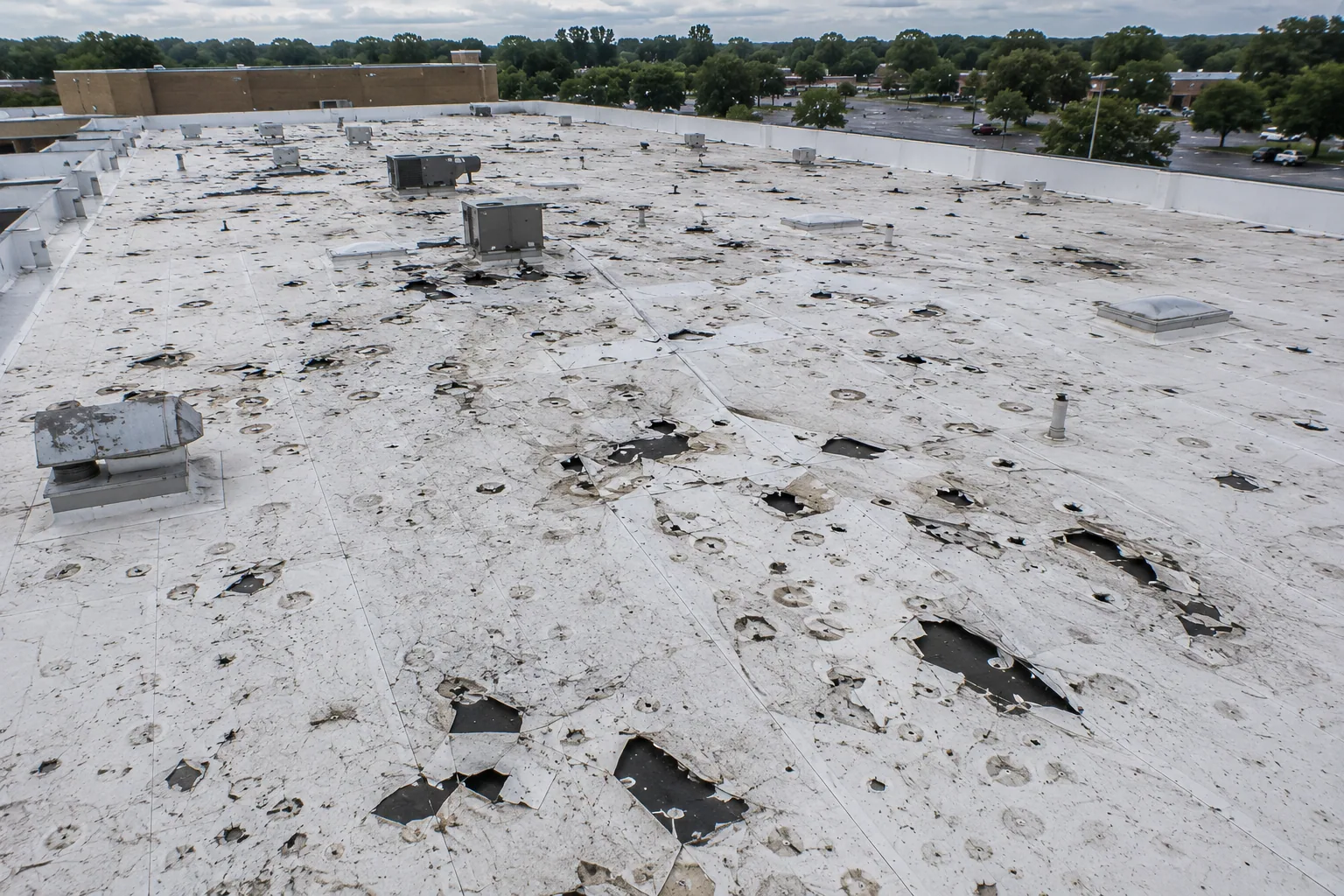
That is how a roof can lose one section of coping and nothing else. The membrane in the middle of the field looks untouched while a corner twenty feet away has lifted and settled back down. Membrane that lies flat again still lets water run underneath it, and the next storm is working against a roof that has already been loosened.
Edges and Corners: where the wind gets its grip
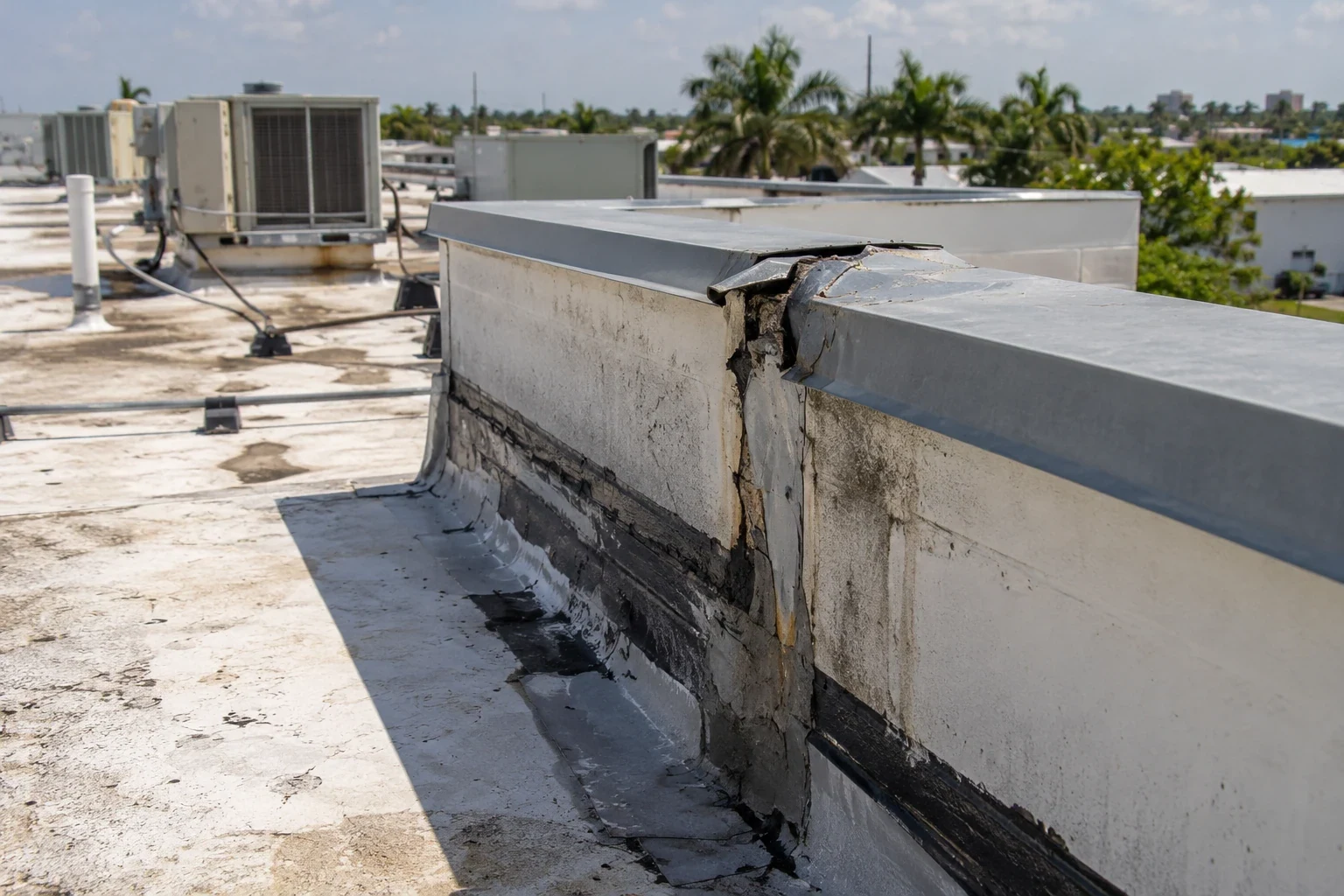
Air that hits the side of a building has to go somewhere, and it goes up and over the roof edge. That is where pressure drops and the roof gets pulled instead of pushed. The perimeter and the corners carry the most load, so a weak fastener or a tired seal along the edge is the first thing to let go. Salt air near the coast makes it worse, because screws and cleats that have been rusting for years do not hold the way they did when they were new.
After a windy storm these are the spots that tell the story:
- Coping caps and fascia metal that are bent, peeled back or missing altogether
- Membrane flapping or wrinkled along the perimeter where fasteners have pulled through their plates
- Curb covers and access panels on rooftop units that are loose, dented or lying on the roof
- Pipe boots, vent caps and small penetrations that shifted when something struck them
Walking the Damage: what we look at once the sky clears
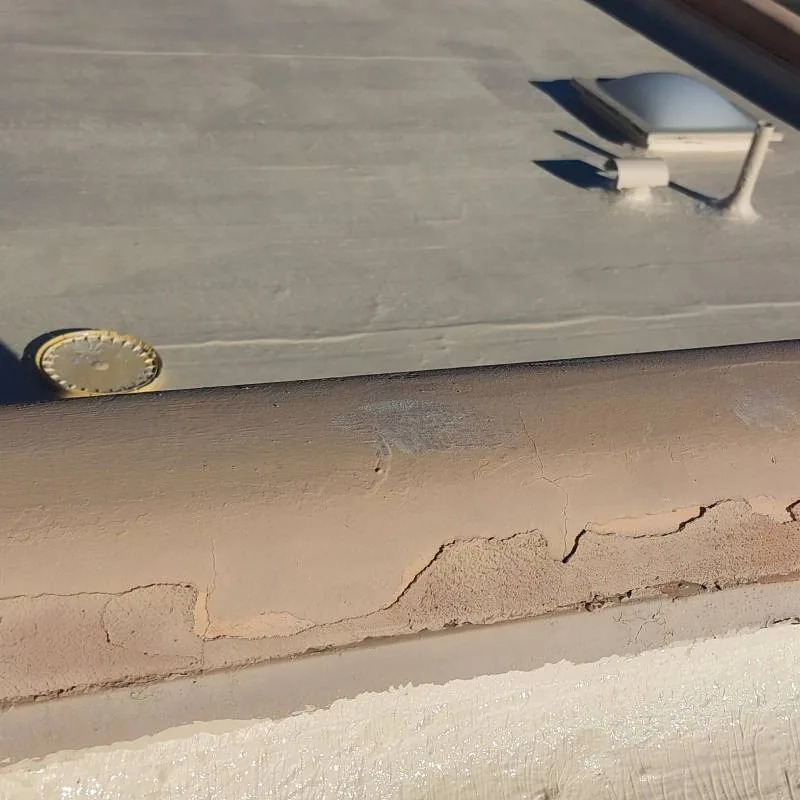
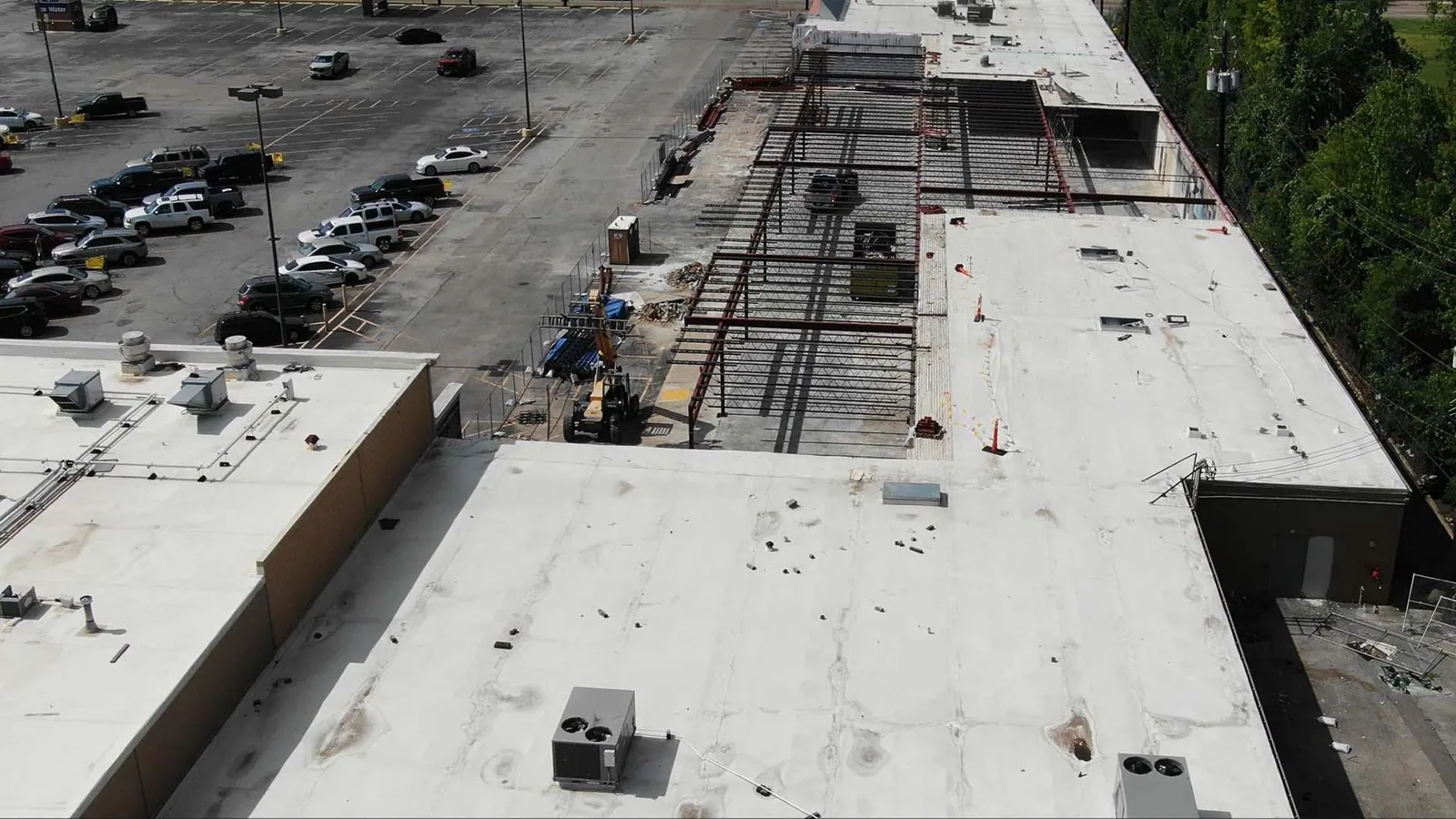
We wait for the lightning to clear and the roof to dry enough for solid footing, then work from the outside in. The perimeter goes first, since that is where wind damage starts. After that we check the field of the roof for blisters, creases and fresh tears, and then every unit and curb that something could have knocked loose. On a wide roof we can fly a drone before anyone steps on it, which keeps people off wet membrane and shows us the whole roof in one pass.
Wind can also open a path for water that never shows up as a visible tear. When the membrane lifted and the insulation underneath took on rain, an infrared moisture survey maps the wet area so the repair covers all of it. Photos and measurements go into a written report for the insurance claim.
Repairs That Hold: matching the fix to the failure
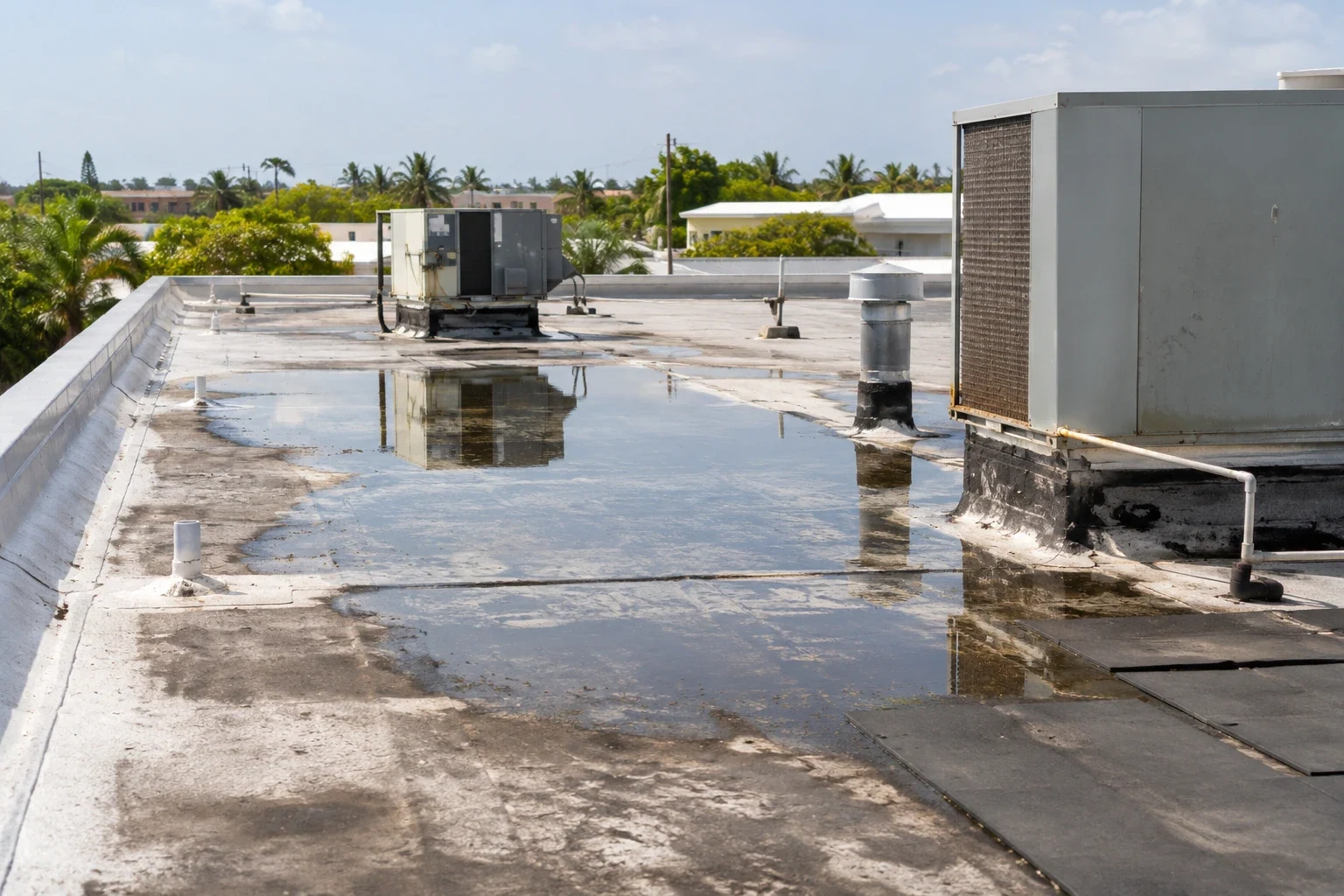
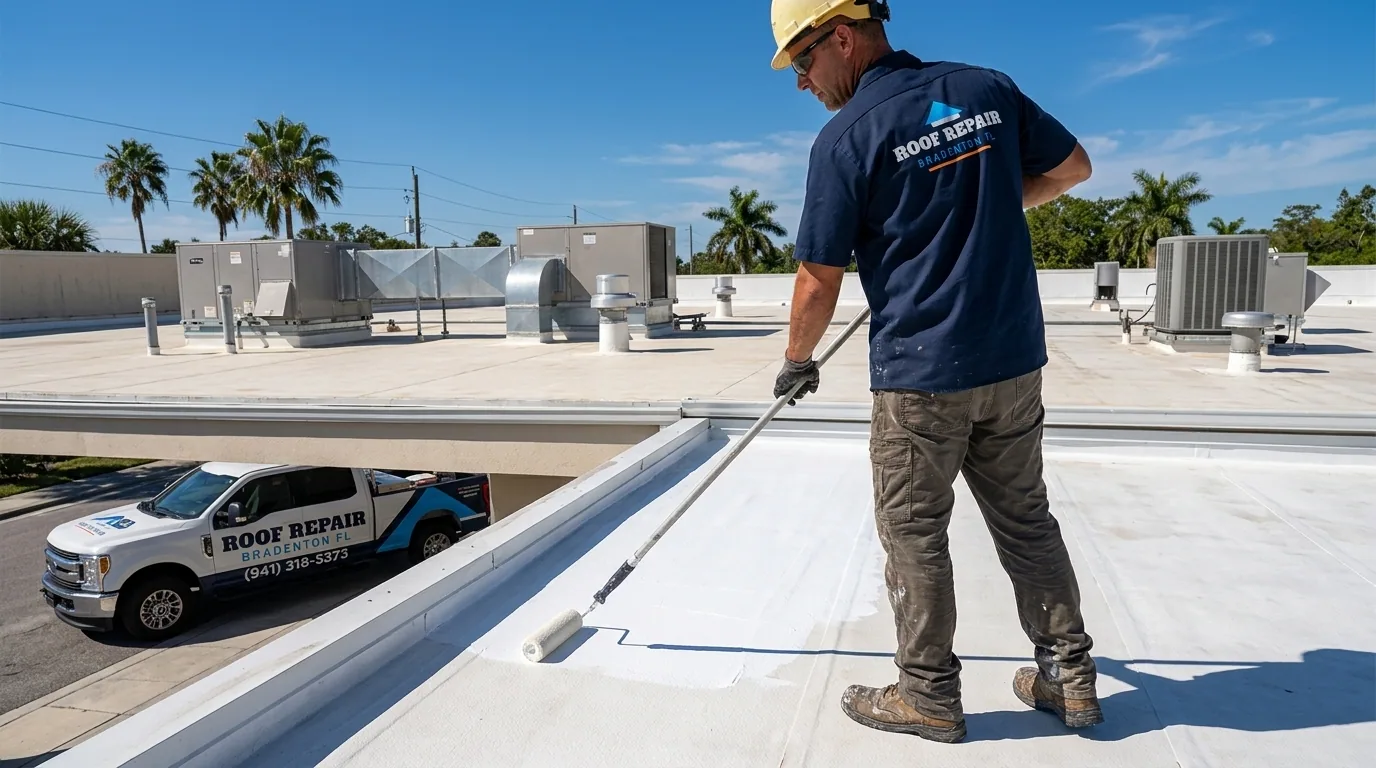
A good wind repair goes after the reason the roof let go, not just the hole it left behind. Missing edge metal gets replaced with new cleats and sealed laps, not a bead of caulk over the old fasteners. Lifted membrane is re-secured or cut out and replaced with a patch that suits the system, whether that is a heat-welded TPO sheet, a reinforced flashing or a liquid-applied detail. Where the deck or the plates underneath have been compromised, those get fixed before anything goes on top.
What moves the price is easy to describe. The length of damaged perimeter, how high the crew has to reach, whether the insulation is wet and needs to come out, and how much of the roof must be tied back into sound material all count. When the building cannot wait, an emergency dry-in goes on first and the permanent work follows once the weather and materials allow.
Rated for the Zone: why a patch has to match the code
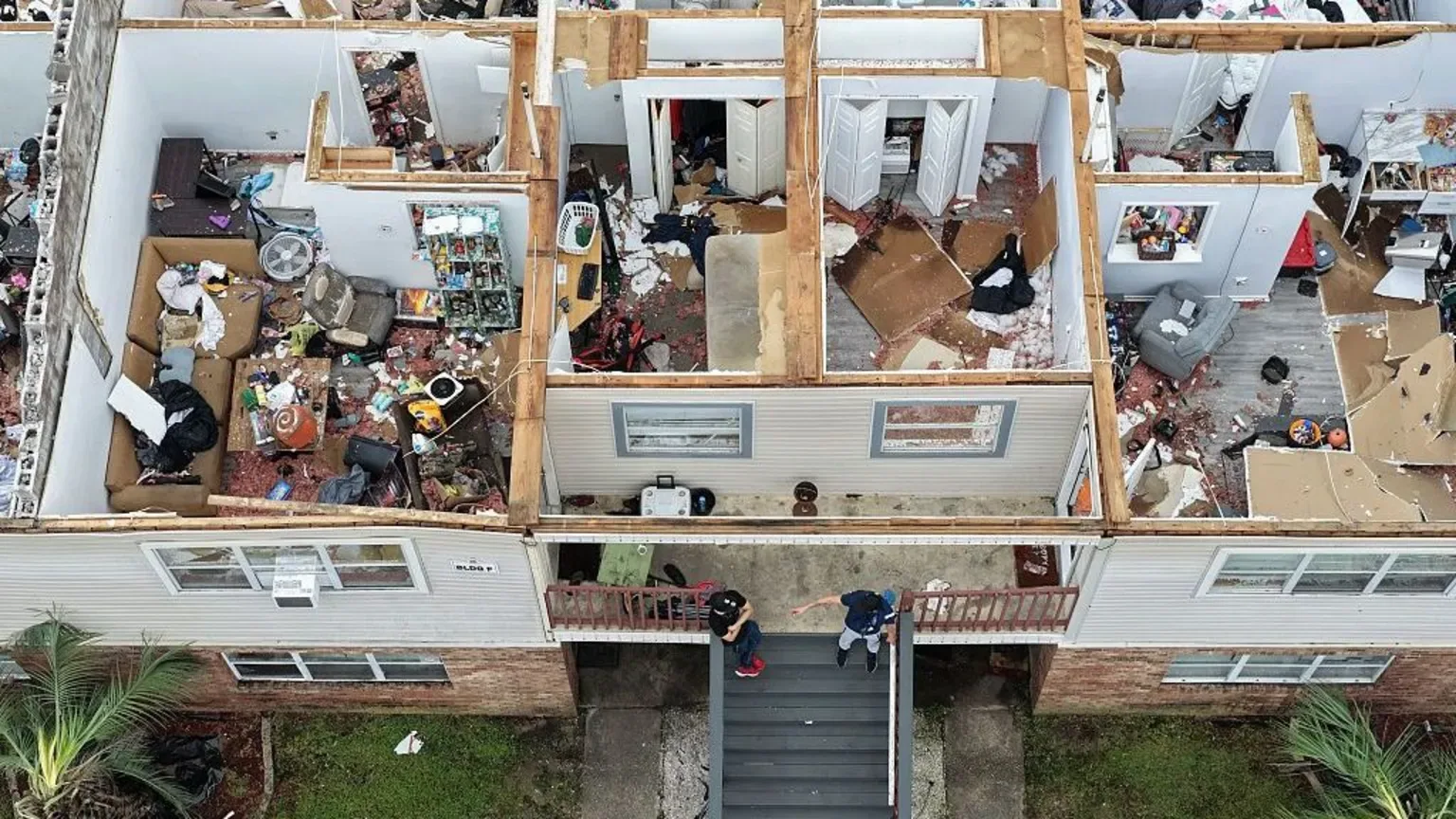
Broward sits in Florida's High Velocity Hurricane Zone, with a 170 mph design wind for Risk Category II buildings. Roofing parts sold into that region need a Miami-Dade product approval, and earning one means passing flying-debris, pressure-cycling and wet-weather tests. A repair that uses mismatched parts can weaken the assembly it is attached to, so we pick edge metal, fasteners and membrane that belong together instead of whatever fits.
Permit requirements depend on how much of the roof is touched, and we sort that out before work starts. Repairs also go in under the 2023 Florida Building Code, 8th Edition, which now governs roofing here. Tie-downs and perimeter details get the most attention because they are what the wind tests first.
Long Edges: Park Central, Alpha 250 and the Air Park
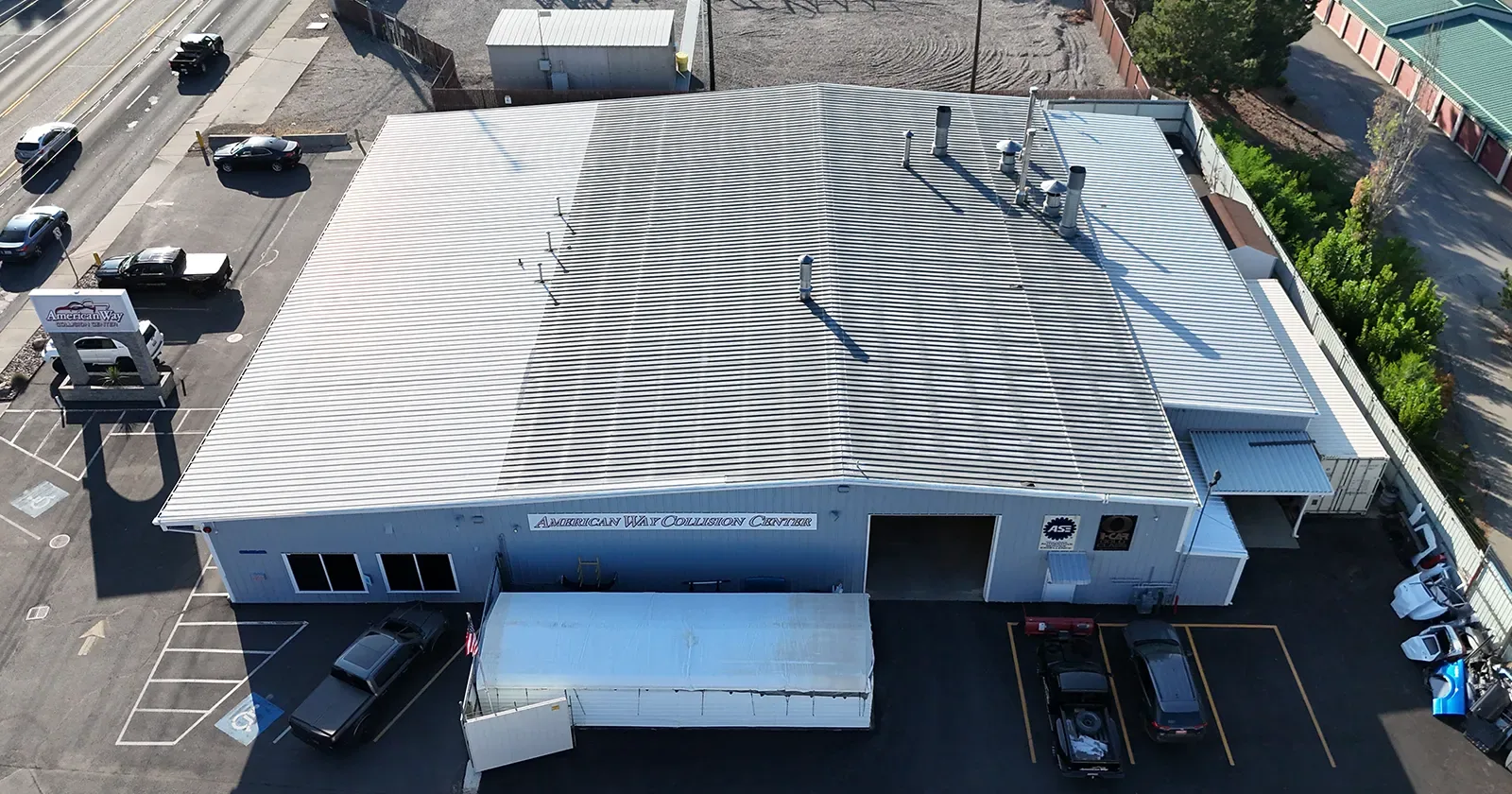
The more perimeter a building has, the more edge there is for the wind to work on. Park Central, between the Turnpike and I-95, and Alpha 250 near Lyons Road and Sample Road contain large-footprint warehouse buildings, whose long roof perimeters make coping and wall flashing important inspection points after a storm. Alpha 250 sits inland, but in 2005 Wilma gusted to 98 mph at Pompano Beach, so distance from the water is no reason to skip a check.
Hangars at the Pompano Beach Air Park have their own wind story, because big door openings change how pressure builds inside the building. Whatever the building, the follow-up is the same: walk the edges, check the equipment, fix what moved, and photograph all of it. The neighbors who do that after every big blow tend to catch the small tears before they become wet insulation.
Questions We Hear Often
How soon after a windstorm should someone look at the roof?
Right after the lightning clears, once the surface is dry enough to walk safely. Waiting for a stain to appear means waiting for the next rain to push water into the insulation, and wet insulation is a bigger repair than a lifted corner.
Can wind damage be fixed without replacing the whole roof?
Often it can. Torn seams, lifted perimeter membrane and missing metal are routine repairs. A roof that has lost large sections of membrane or has wet insulation across much of its area leads to a different conversation, and we lay out both paths with photos.
How can I tell wind damage from ordinary wear?
Wind leaves a direction. Torn pieces point the same way, metal is bent at a fresh crease with bright edges, and debris collects against walls and curbs. Wear looks dull, chalky and spread across the whole roof instead of one corner.
Does insurance cover wind damage to a commercial roof?
Policies word wind and named-storm coverage differently, and some carry separate deductibles, so read yours before the season. We photograph and measure the damage and write it up in plain terms the adjuster can use, and the carrier makes the coverage decision.
What makes one wind repair cost more than another?
Mostly how much edge is damaged, how hard the roof is to reach, and whether water got into the insulation. Matching approved parts for the hurricane zone also adds to the scope. We give a written price after the roof has been walked, not before.