
Roof Seam Failure Repair in Pompano Beach, FL
Think about what one seam goes through in a single wet-season day. It sits soaked in dew at dawn, bakes by noon, takes a hard downpour around three and cools off fast when the rain ends. Do that for months, then add a tropical storm with winds that flutter every loose edge on the roof, and the narrow strip that joins two sheets of membrane is carrying a lot of the roof's weatherproofing on a few inches of bond.
Seam failure means that strip has opened, split or lost its grip. It begins as a hairline you cannot see from the roof hatch and grows into a channel that feeds water straight into the insulation. A post-storm walk can catch a seam opening before water travels through the insulation and appears as a ceiling stain. We find the open seams, work out why they let go, and repair them so they hold through the next season.
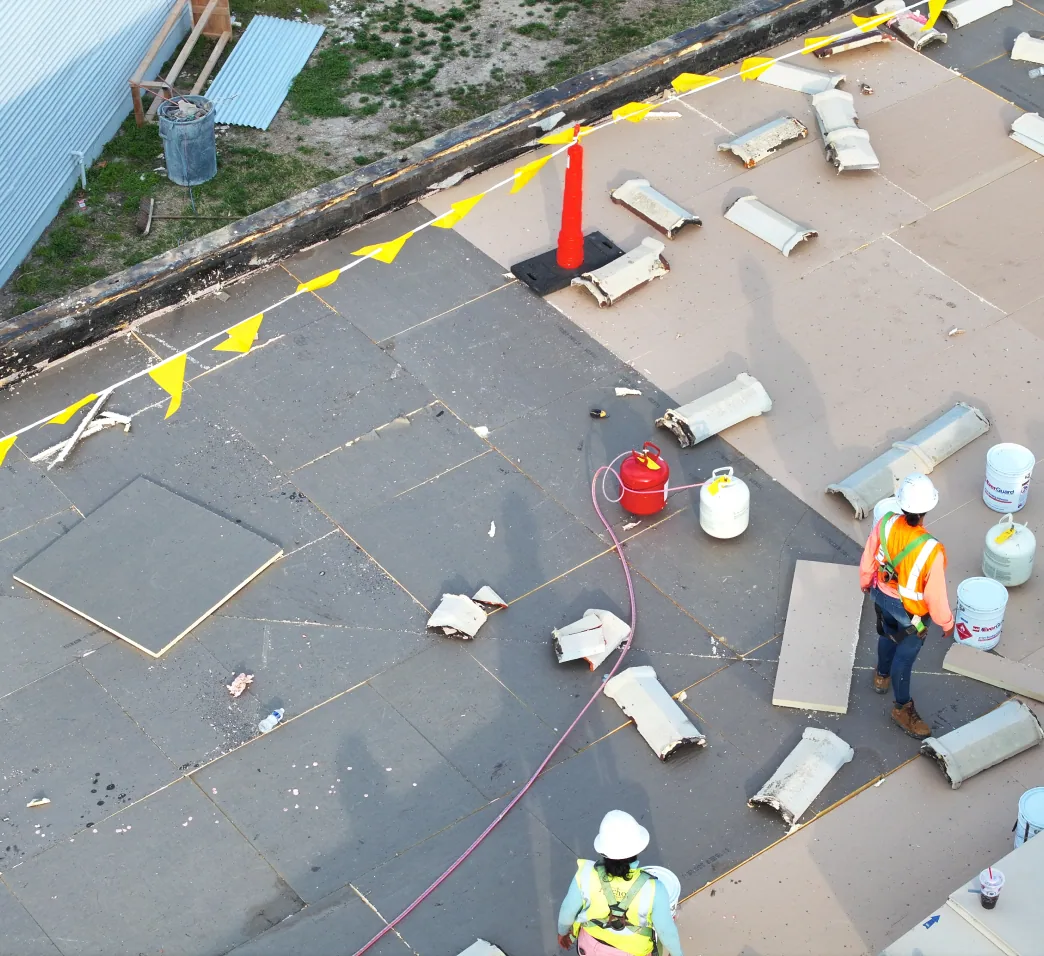
Welded or Glued: how seams hold in the first place
Every roof system joins its sheets a different way, and the repair has to respect that. Thermoplastic membranes such as TPO and PVC are joined with hot air, which melts the two surfaces into one piece. EPDM rubber relies on seam tape or splice adhesive, a chemical bond that behaves differently when the membrane has aged. Modified bitumen laps are heated or glued together, and metal roofs depend on fastened laps with sealant, or on mechanically seamed panels.
A seam holds only as well as the surface beneath it was prepared. Dirt, moisture or a film of residue at the time of installation leaves a weak bond that can look fine for a couple of seasons and then open the first time the weather turns. That is why we ask when the roof went on, who did it, and what the weather was like that week.
Reading the Laps: signs a seam is opening
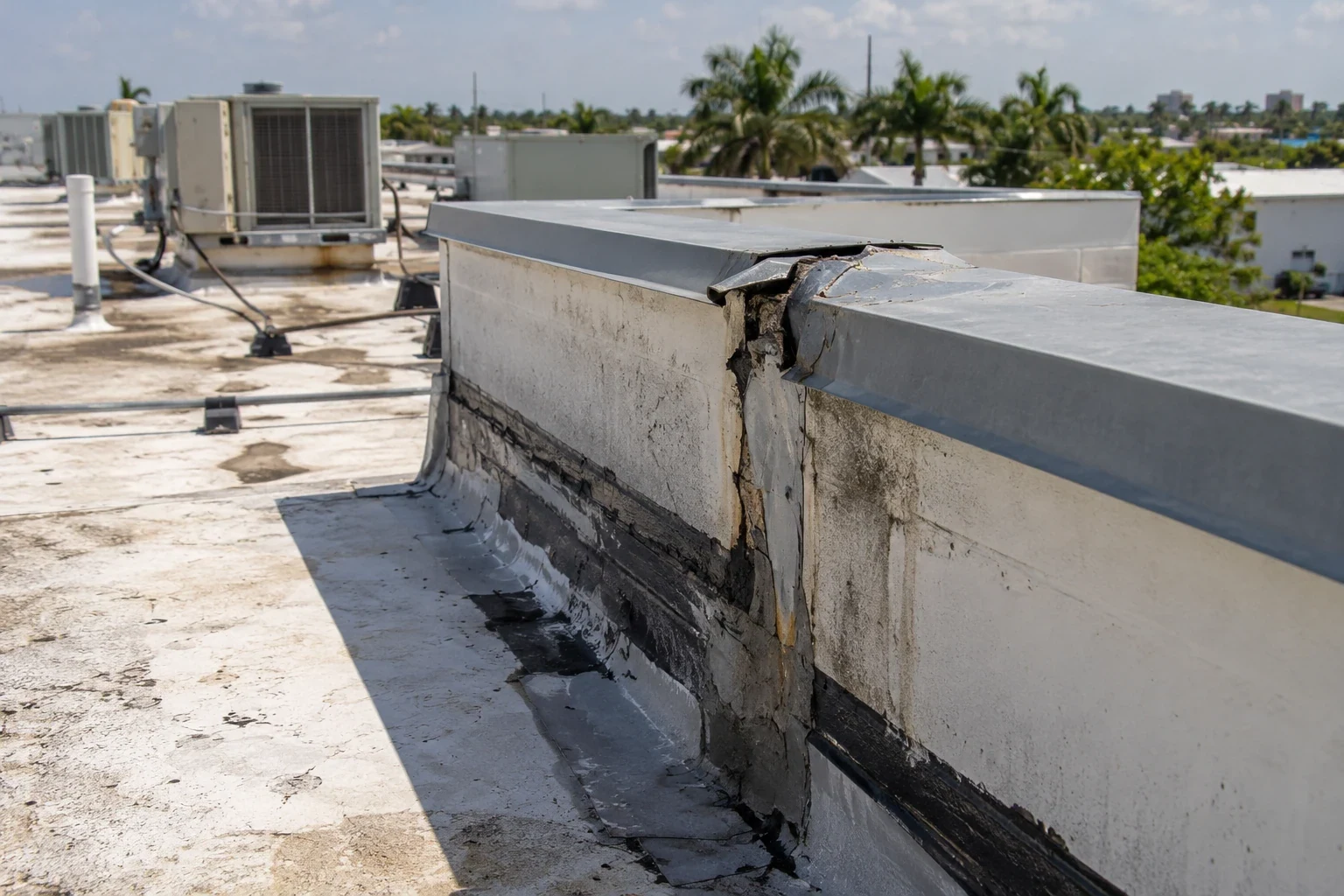
Most seam failures announce themselves if you know where to look. Along a lap line, an edge that has lifted so a pen tip slides underneath is a seam that has stopped bonding. Fish-mouths, small open pockets along the edge of a sheet, are common on membranes that shrink slightly with age. Dark lines of dirt tracing a seam show where water has been running into it. On metal roofs, a seam sealant that has cracked or rolled out of the lap tells the same story.
Blisters and wrinkles along a seam are warnings too, because they mean air or water has gotten in between layers. When we survey a roof after storms, we walk every seam line that is within reach of an edge, a curb or a drain, since those are the places where movement and water concentrate. A drone helps on wide roofs, but a seam gets proven with a probe, not a photograph.
Heat and Wet Cycles: why seams loosen around here
South Florida summers give a seam very little rest. Nights have been running 1 to 1.5 F warmer than normal in recent summers, and with dewpoints in the 70s the membrane stays warm and damp well after dark. That means less cooling between cycles, more time for plasticizer and adhesive to age, and more stress on a lap that was already marginal. Thermal movement pulls at a seam daily, and the wet season adds water to each of those cycles.
Wind adds another layer. During Hurricane Irma in 2017 winds over most of Broward held at 65 to 70 mph with gusts of 80 to 100 mph, and a membrane that flutters in gusts works its seams like a hinge. A seam that has lost part of its bond fails first in those conditions. We look at the long-term pattern as well, since heat and UV wear often explains why a roof starts to open up in several places at once.
Probing and Patching: how we test and repair a seam
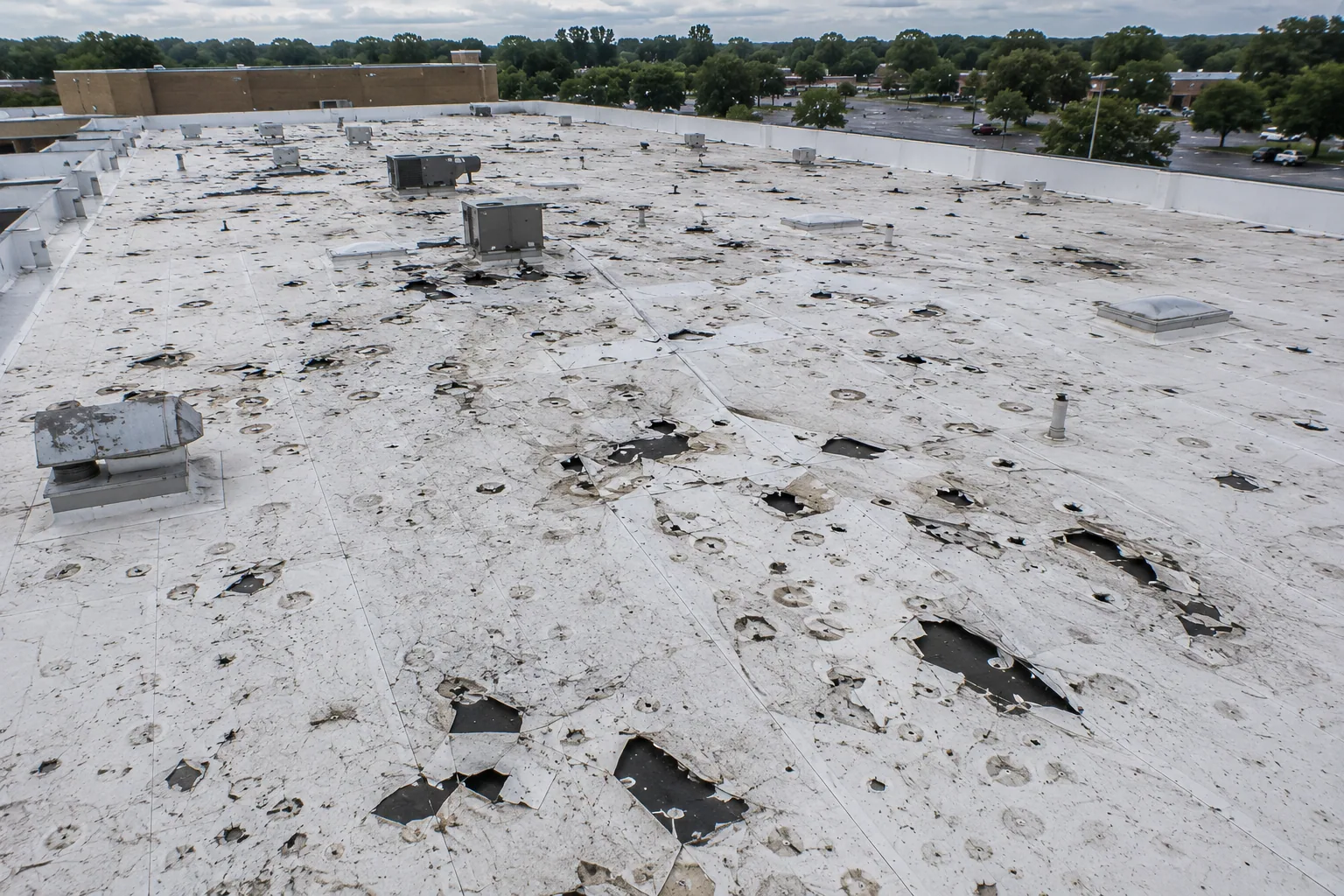
We run a blunt probe along the lap, pressing lightly to find any place it slides in. Marked spots get cleaned, and the repair method depends on the system. A weld that has opened on a thermoplastic roof is cleaned and re-welded with a hot-air gun and a hand roller, or covered with a welded cover strip when the old surface is too weathered to bond. EPDM seams get primed and re-taped, or capped with a new strip. Modified bitumen laps are re-heated or re-glued, and metal lap seams are cleaned and resealed or refastened.
Some seams cannot be saved by touching them. If the membrane has shrunk, turned brittle or picked up too much contamination, a patch bonds poorly and the nearby seams will go next. We say so plainly and walk through the option of a wider repair before it becomes a bigger leak. Testing the finished repair with the probe before we leave the area is standard.
Repair or Retire: when seams point to a larger problem
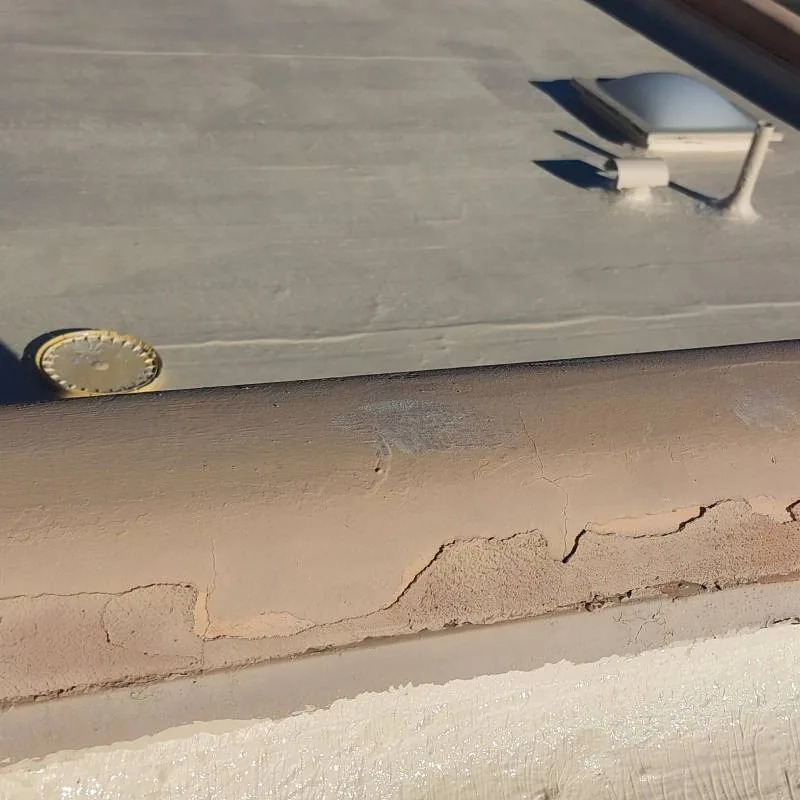
One open seam is a repair. A dozen of them across the same roof, in different directions and different parts of the field, means the membrane itself is reaching the end of its service life. The question for the owner becomes whether to keep patching, to restore the roof with a coating, or to plan for a replacement. We give the numbers and the photographs and let the owner decide, with a clear idea of what each path costs now and later.
Cost drivers are straightforward: the total length of seam to repair, how clean and sound the old membrane is, how hard the roof is to reach, and whether wet insulation turns up along the way. A preventive maintenance visit each spring and fall catches the small openings while they are still short and dry, and that is the cheapest time to fix a seam.
Long Runs: Powerline, Central 95 and the distribution belt
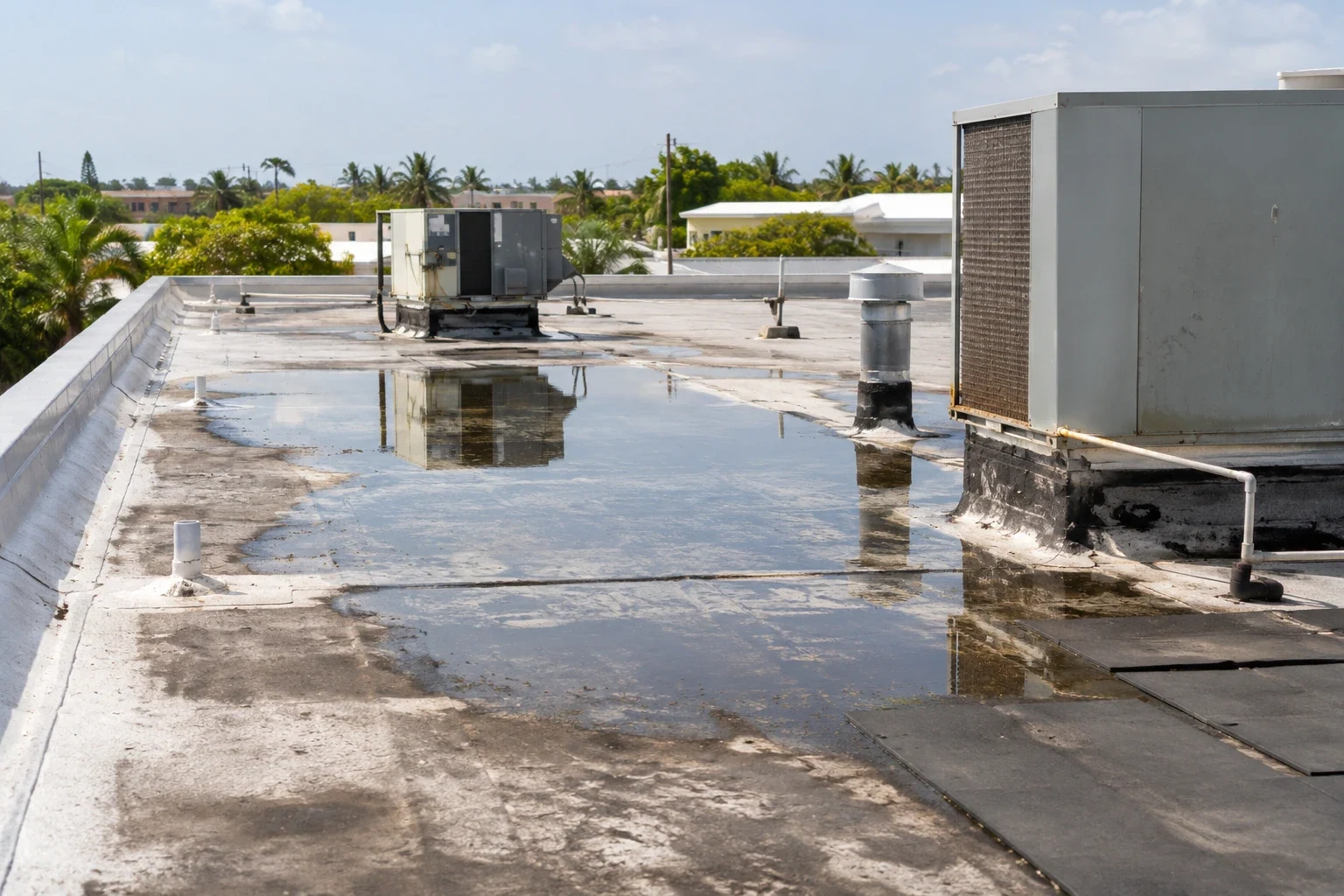
Pompano Beach's industrial districts are full of large low-slope buildings, and a wide roof has a lot of seam to look after. Powerline Industrial Park contains about 3.09 million square feet of buildings. The Central 95 corridor, around Copans Road and Powerline Road just west of the interstate, adds roughly 3.4 million. Associated Grocers and FreshPoint are among the city’s top-ten employers with distribution operations. Over a distribution floor, an open seam can put stored goods and work areas at risk.
If you own or manage space in Powerline Industrial or the Central 95 area, walk the seams near the dock walls and curbs after the first big storm of the wet season. Foot traffic wears seams along the same routes where punctures happen, so the paths to rooftop units are worth checking first.
Questions We Hear Often
Can an open seam be fixed without replacing the membrane?
Usually, as long as the membrane around the seam is clean, flexible and dry. We reweld, retape or cap the seam depending on the system. If the sheet is brittle or shrunken, patches will not hold, and we tell you that up front.
What does a failing seam look like from the roof?
An edge that lifts when you press near it, small open pockets along a lap, a dark line of dirt tracing the seam, or a ridge where the sheets used to lie flat. Standing at the hatch, none of it is easy to spot, which is why walking the seams matters.
Why did the seams open when the rest of the roof looks fine?
Seams carry the most movement and are only as strong as the surface they were made on. Dirt at the time of installation, aging adhesive or repeated flutter in wind can leave a lap weak while the field of the membrane looks healthy.
How long does a seam repair last?
A properly cleaned and welded or taped repair on sound membrane can serve for years. Longevity depends on the condition of the surrounding material, so a fresh patch on a worn roof ends up lasting as long as that roof does and no longer.
Do I need an infrared scan after finding open seams?
If the seam has been open through several storms, it is a good idea. Water that slipped under the sheet may have wetted insulation well beyond the seam, and a scan maps it before we repair over a wet area.