
Membrane Puncture Repair in Pompano Beach, FL
The technician who services a rooftop unit on a July morning is not trying to hurt the roof. He sets a toolbox down, drags a hose across the membrane, drops a screw, and goes back down the ladder. By three that afternoon the storm line is rolling in, and the screw sits on the membrane just where he stepped. Most punctures on commercial roofs come from ordinary work like that, and they are small enough that nobody notices until the first heavy rain finds them.
Membrane damage is among the most preventable kinds of roof damage. In Pompano Beach, FL, where it can rain most afternoons for months, a small hole does not stay small for long. We find punctures, tears and worn paths, dry out what the water reached, and patch the roof with materials that suit what is already up there.
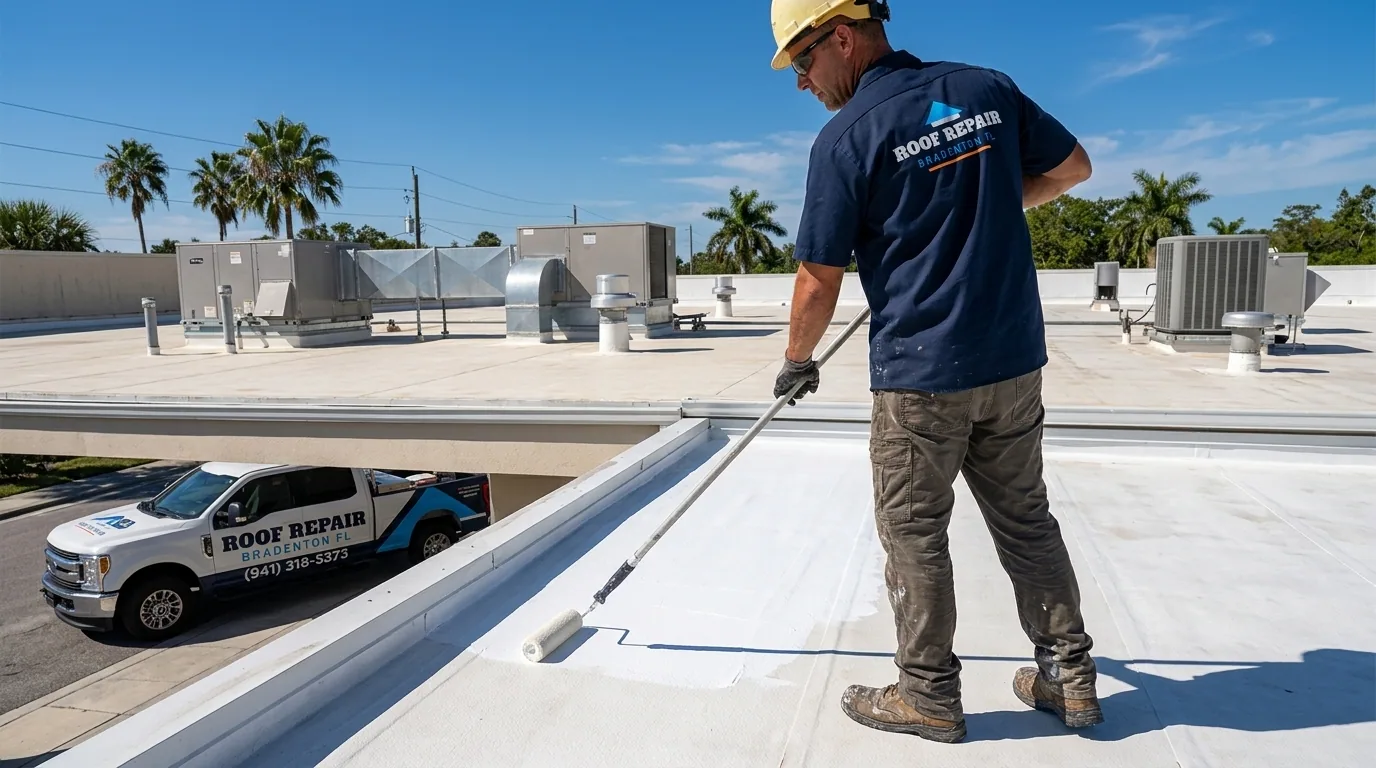
Who Walks Up There: trades, tools and traffic
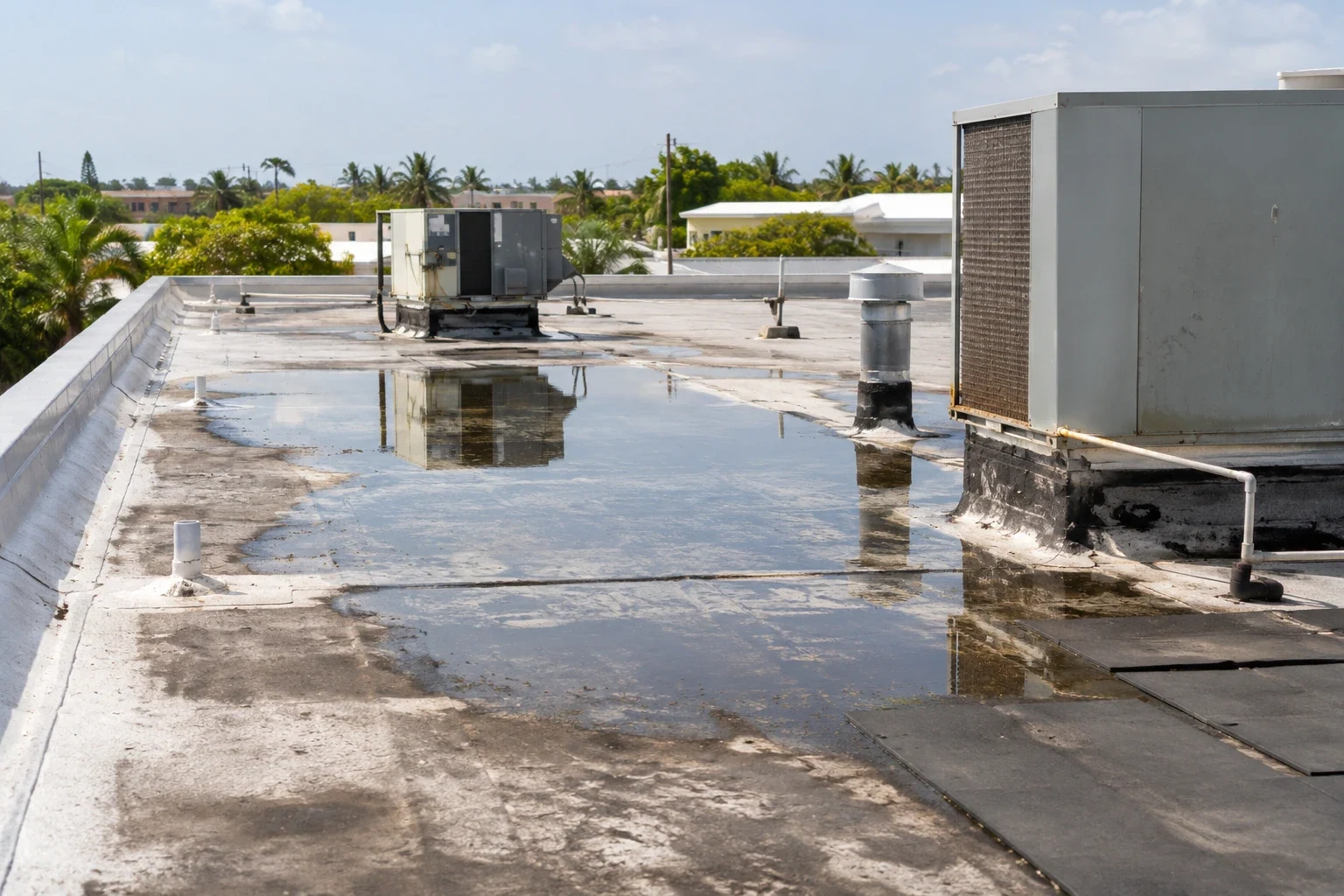
A commercial roof is a working platform, and a lot of people use it. HVAC technicians, refrigeration crews, roofers on other jobs, sign installers, window washers, antenna and security contractors, and sometimes tenants all end up crossing the membrane. Every one of them carries something that can cut, gouge or scrape: ladders, panels, hand tools, fasteners, even the grit stuck to their boot soles. Over a season, those paths wear into a visible track between the access hatch and the equipment.
Punctures also come from above and from below. A tree limb, blown debris or a dropped tool can slash a membrane in a second. On a roof with many units, the paths between them see the most punishment. Anyone managing a building with regular service visits should assume the membrane is being walked on right now.
Small Hole, Wet Season: how a scratch becomes a leak
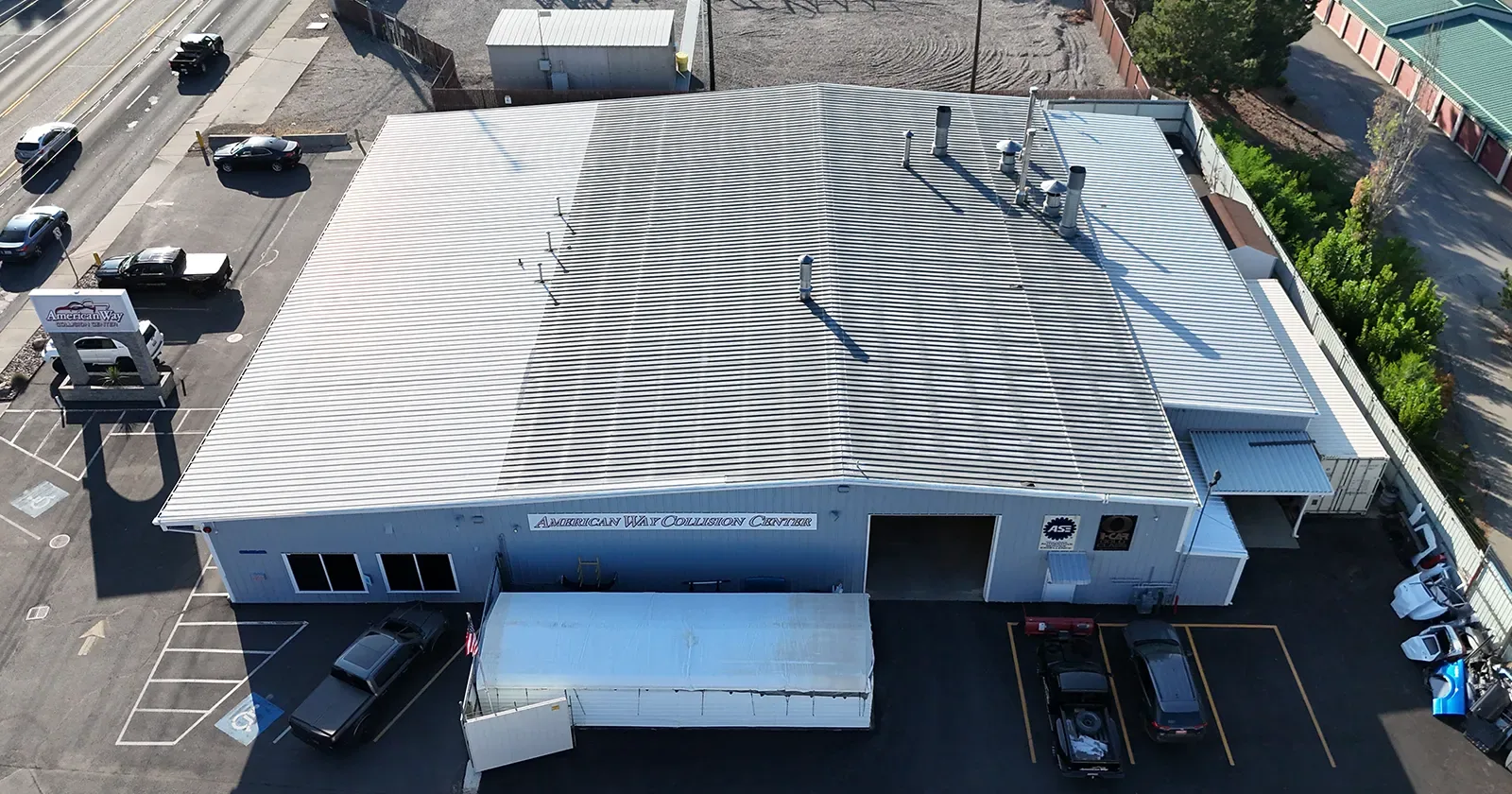
A puncture lets water into the insulation, and insulation behaves like a sponge. Water works its way sideways beneath the membrane, away from the hole, and finds seams, fasteners and the underside of the deck. By the time it shows up as a stain, the wet area under the roof can be much bigger than the hole above it. Warm, humid conditions let moisture hang around in that insulation, since it has nowhere to dry out.
The timing matters. The stormiest stretch of the wet season, mid-May to early July, brings near-daily soakings, and every one pushes more water through any opening. A hole repaired in April is a ten-minute patch. The same hole found in July can mean cutting out wet insulation, a bigger repair, and a ceiling to fix inside. Where water is already in the roof, an infrared moisture survey shows how far it has traveled.
Falling Damage: hail, debris and storm strikes

Tropical weather throws things at a roof. Early in the wet season the thunderstorms around here can bring damaging winds, lightning and hail, and a strong one breaks limbs and lifts loose items off the ground. Hurricane Wilma in 2005 damaged roofs across Broward, and Irma in 2017 brought gusts of 80 to 100 mph over most of the county. Flying debris is one of the ways a membrane gets cut in weather like.
Impact damage is not always a clean hole. Hail and debris can bruise a membrane, crush the insulation underneath without breaking the surface, or fracture the top layer of a coating. These show up as soft spots, small circular marks or craters. We press on suspect areas, look at them in low light, and mark every one, because a bruise that has not leaked yet will leak after the next hit. Storm-related findings are written up for the claim file.
Finding the Hole: probing, lighting and moisture checks
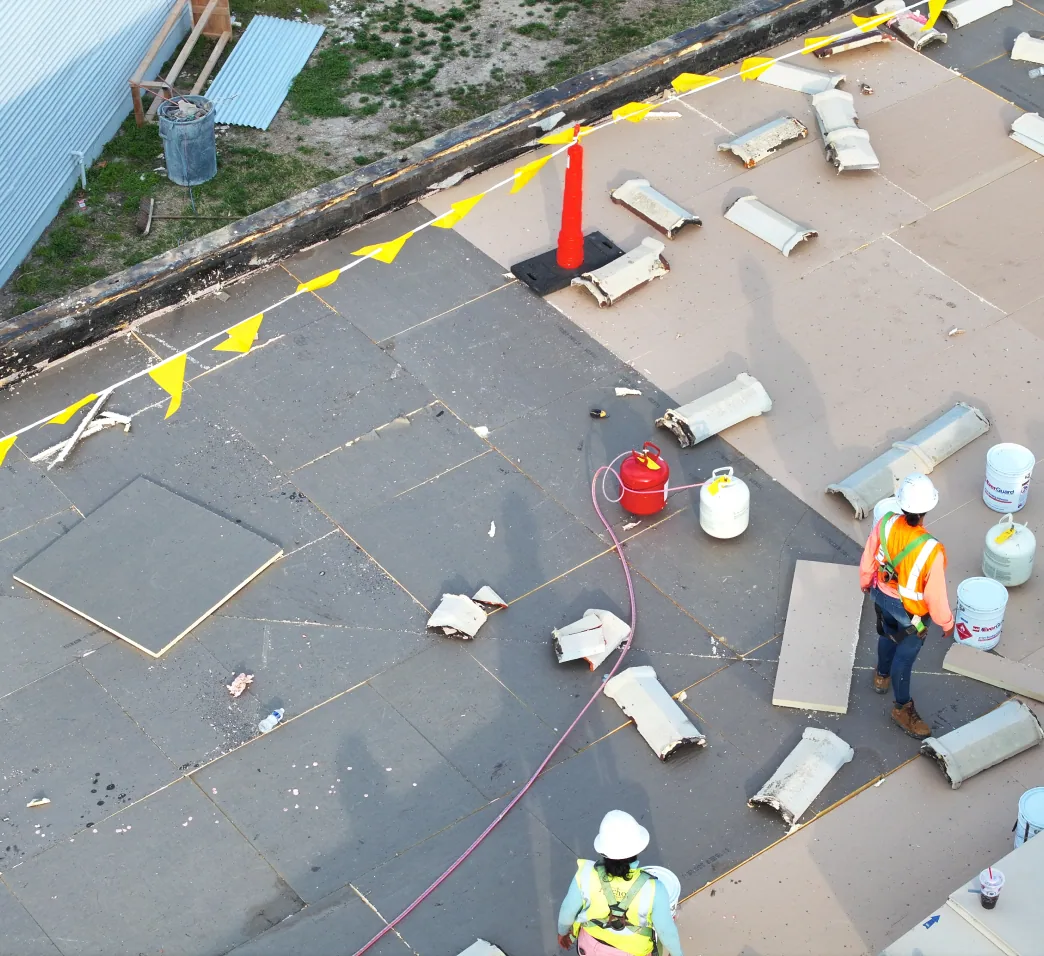
Visible damage is only part of the story, so we search methodically. A crew works in a grid across the field, probing seams and soft spots, checking around every curb and path, and looking low across the surface so the light catches scratches and gouges. Walkways between equipment get extra attention. Around every suspect area we check for moisture with a meter or, on larger roofs, with infrared imaging, so the fix reaches the wet material as well as the opening.
If the hole has been open for a while, a small core cut can prove whether insulation underneath is wet. We patch the core hole immediately and photograph everything. That record stays with the roof, so the next time someone asks when the damage happened, the file has an answer.
Patch, Plug or Cover: repairs by roof system
The patch has to be made from material that bonds to what is already on the roof. Thermoplastic membranes get a heat-welded patch with rounded corners, which shed water better than sharp ones. EPDM gets a primed, cured-rubber patch or a flashing-grade tape. Modified bitumen and built-up roofs take a bitumen patch set in adhesive or heat, and coated roofs and foam roofs get the damaged layer cut out, rebuilt and recoated. A square of the wrong material stuck over a hole is the quickest way to create a second leak.
If the insulation below is wet, it comes out and gets replaced before the patch goes on. Cost follows the number of holes, the amount of wet material, and how easy the roof is to reach. A scheduled roof repair visit, bundled with a seam check, usually costs less than reacting to a string of emergency calls.
Busy Roofs: Pompano Citi Centre, Federal Highway and the Air Park
The more equipment on a roof, the more people have a reason to be up there. A retail center with many tenants usually has many rooftop units, and each unit means a service route across the membrane. A multi-tenant commercial property along Federal Highway can have many service visits, contractors and roof paths to manage. The owner needs a record of where technicians walk and which details they pass.
At the Pompano Beach Air Park, aircraft-maintenance and avionics businesses use rooftops for exhaust and equipment. Those service routes make walk pads and a record of roof visits especially useful. The cure is a plan: walk pads on the heavy paths, a sign-in sheet or a photo check before and after service visits, and a roof inspection every spring. We can set that up as part of a maintenance program.
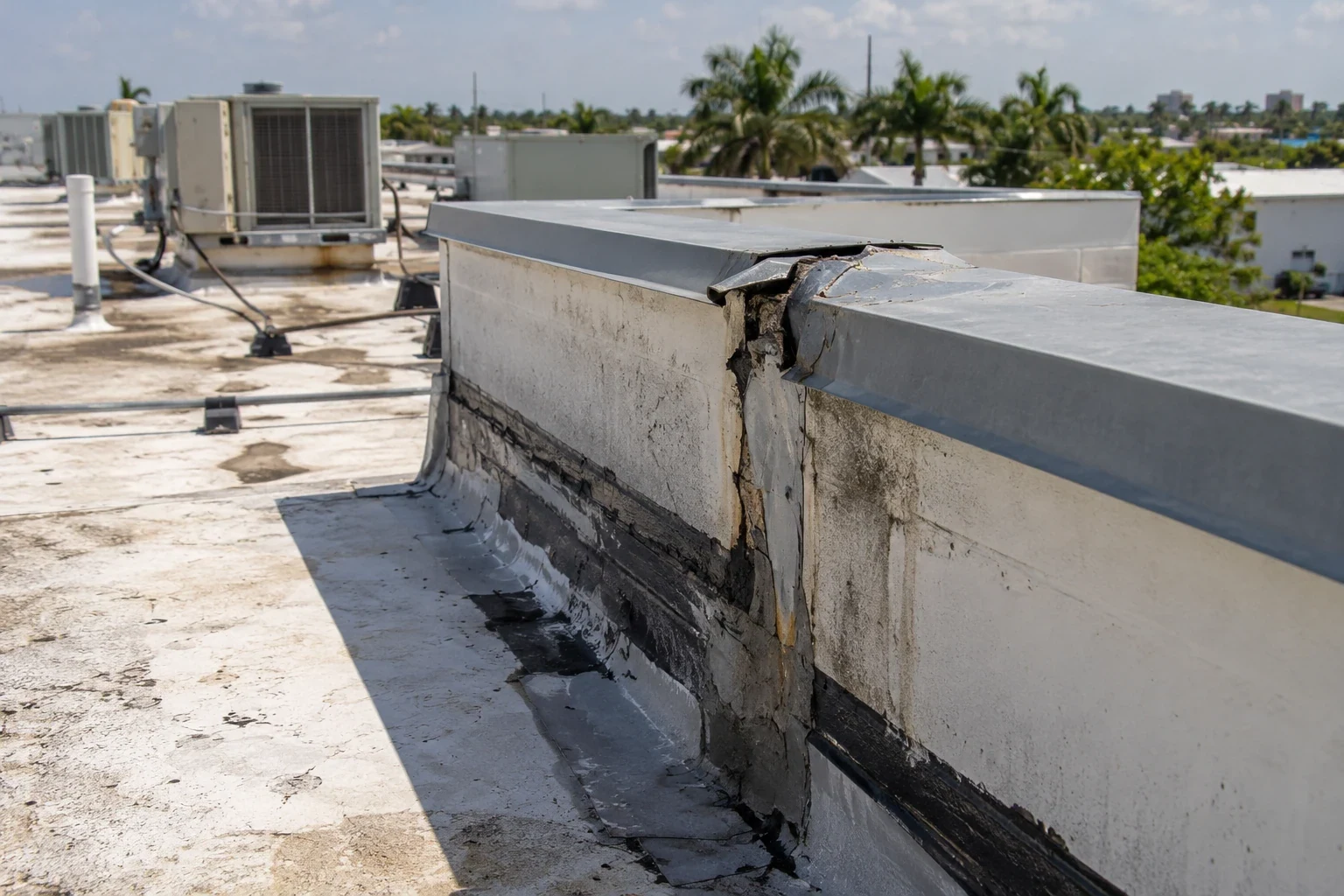
A cut near a wall or curb needs a separate check of the flashing detail. If that seam has pulled away, flashing failure addresses the roof-to-wall transition.
Questions We Hear Often
How can I tell whether a puncture is causing my leak?
Look at the roof directly above the stain and along the path from the nearest equipment or access point. A visible tear, a soft spot or a bright scratch in the membrane near a worn walkway is a strong suspect, and a moisture scan confirms how far the water has spread.
Is a small puncture worth fixing right away?
In wet season, yes. A hole the size of a screw lets in water every time the afternoon storm passes, and insulation soaks up what gets through. Waiting turns a patch into a repair that includes new insulation and interior drywall.
Who pays when a service technician damages the roof?
The lease and the service contract settle that, and we leave the legal question to you. What helps is proof, so we photograph the roof before and after visits when asked, and we document the cause of the damage in the report.
Can a patch be installed over wet insulation?
Not safely. A patch can bond perfectly and still sit on top of a wet pocket that keeps spreading. We cut out the wet material, let the deck dry, replace the insulation, and then patch the membrane so the repair stays sealed.
Do walk pads really protect a membrane?
They give foot traffic a defined path and add a layer that takes the wear. They do not stop a dropped tool, but they keep ordinary service trips from grinding grit into the membrane along the same line every month.