
Military Hangar and Maintenance Facility Roofing in Pompano Beach, FL
Wilma's 98 mph gust at Pompano Beach in 2005 crossed a county full of buildings, and a hangar is among the hardest of them to design for wind. A hangar has the largest single opening of almost any commercial structure, and once wind gets inside, it pushes up on the roof from below while pulling on it from above.
For a crew based in Pompano Beach, FL, Coast Guard hangars and flight-line maintenance buildings at Air Station Miami in Opa-locka are about 25 miles south-southwest. Hangars and maintenance buildings get roofed differently from warehouses in this weather, and a military installation adds its own layer of rules on top. We plan the work around the aircraft, the fuel and the flight schedule.
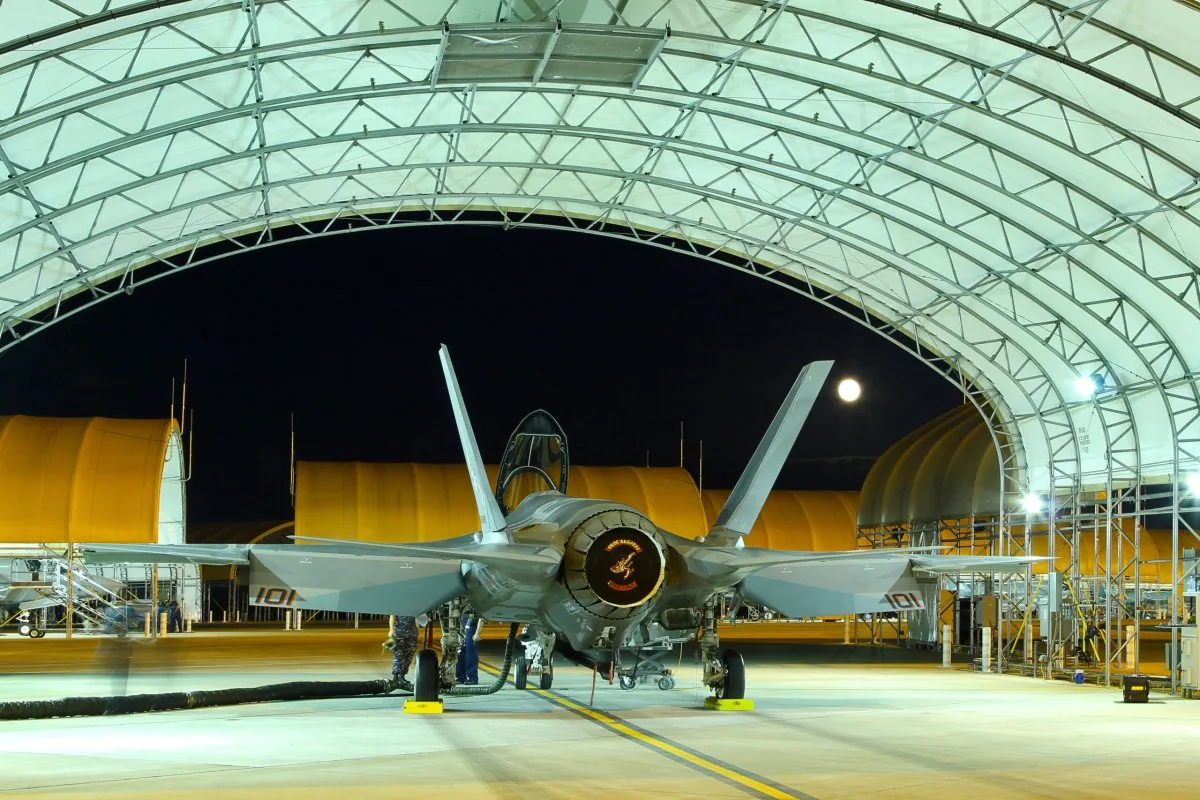
Door Walls and Pressure: why a hangar roof fails from both sides
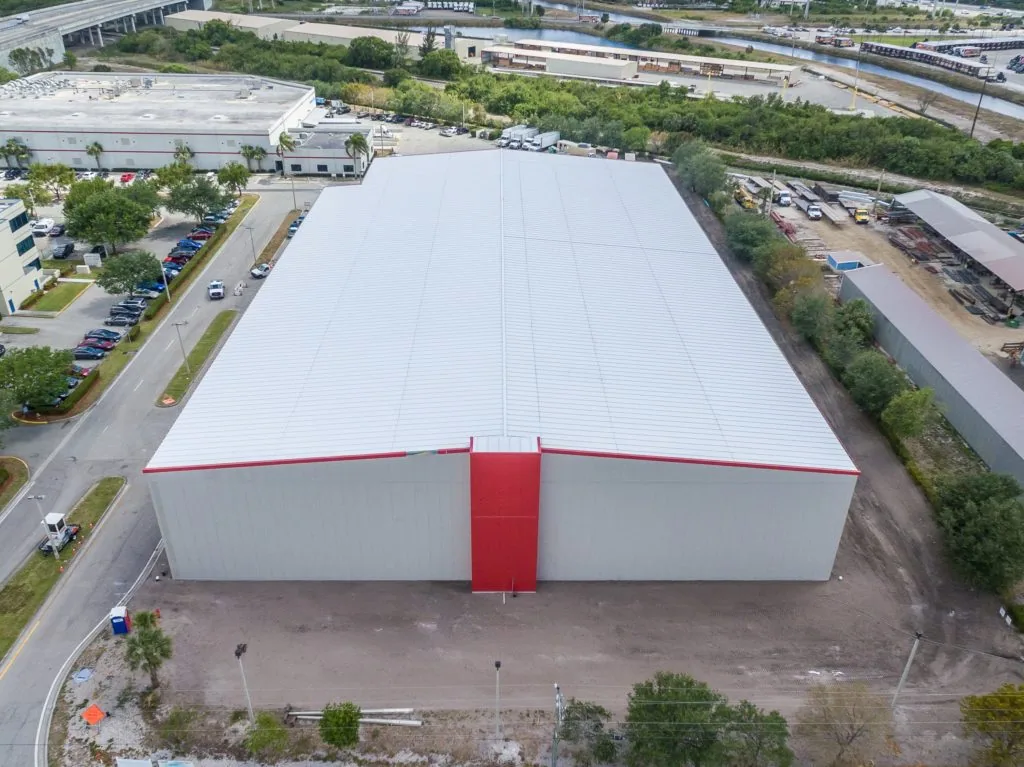
A closed building holds wind out. A hangar whose big doors are struck by debris or blown open lets wind in, and the air inside builds pressure that lifts against the roof deck. Combined with the suction wind creates over the roof, that internal pressure raises the load at the edges and corners well beyond what the same roof would see on a closed building. It is why hangar roofs and hangar doors have to be thought of as one system.
Broward's hurricane zone sets a 170 mph design wind for Risk Category II buildings and refuses any exterior roofing product that lacks a Miami-Dade approval. Irma, in 2017, brought gusts of 80 to 100 mph across most of Broward and three tornadoes to the county. When we inspect a hangar roof, we start at the perimeter and along the door wall, checking edge metal, fastener patterns and the flashing where roof meets wall. A hangar's long roof edge also gives wind a lot of surface to work on, so a loose coping cap or a lifted corner is never a small finding.
The Flight Line at Opa-locka: what Air Station Miami operates
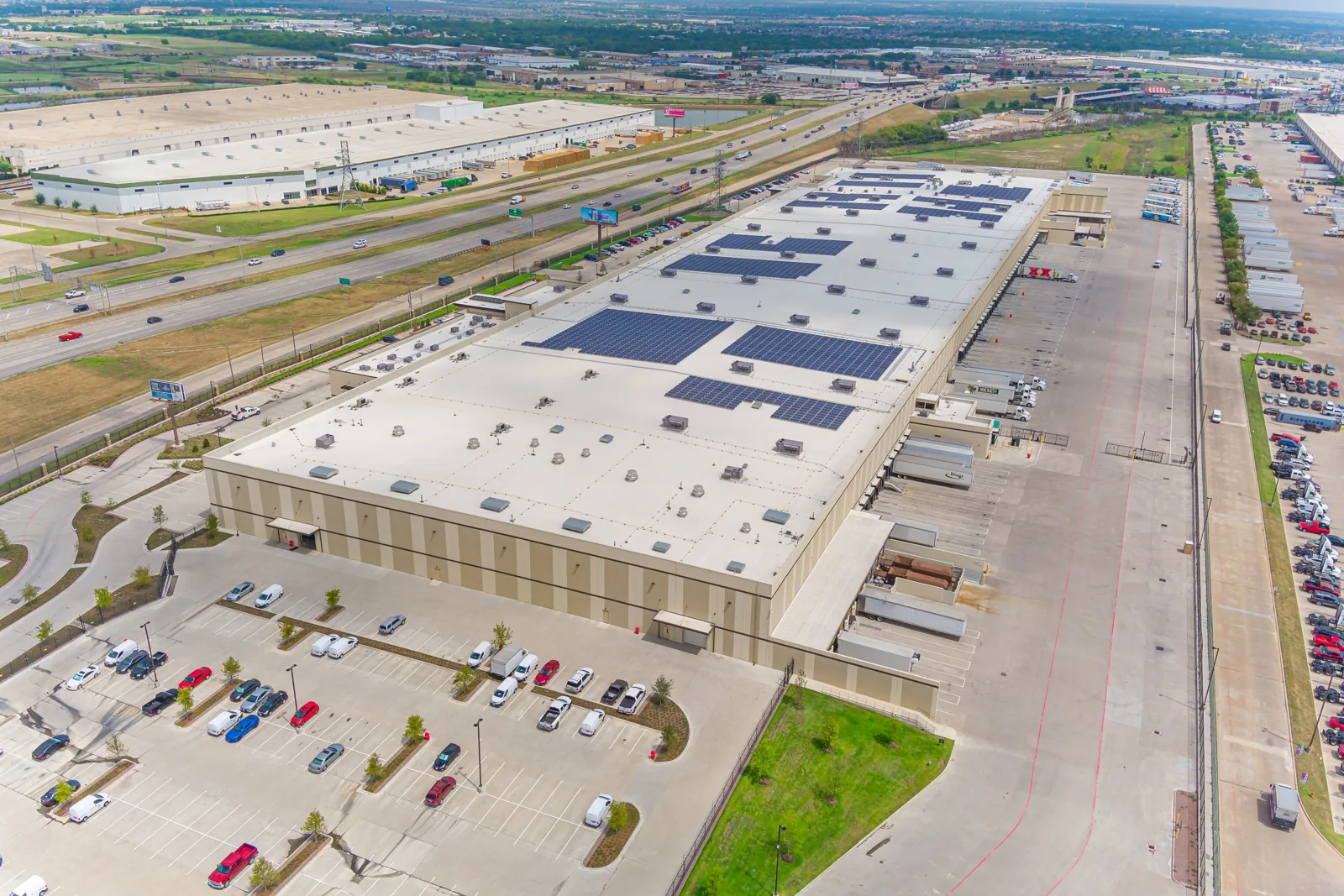
Coast Guard Air Station Miami operates from Opa-locka Executive Airport. The site began as a Navy training base in 1932, became Naval Air Station Miami in 1940, and transferred to the Coast Guard in 1965. Its hangars and flight-line maintenance buildings support a mix of about five HC-144A Ocean Sentry aircraft and five MH-65 Dolphin helicopters. A Coast Guard station in Fort Lauderdale or at Lake Worth Inlet presents a different access and roof-planning picture.
Hangar bays and maintenance shops can have different decks, insulation and roof conditions. We survey each building separately, using moisture scans and core cuts where needed, before recommending a recover or a full replacement.
Aircraft Below: protecting what sits under the roof
Nobody wants a pallet of insulation or a bucket of sealant falling toward a rotor blade. Before roof work begins above aircraft, the plan has to address what happens to the aircraft: whether they are towed out, covered, or kept in other bays while a given section is open. Debris control is a serious matter, because even a small fastener on a hangar floor is a hazard to an engine.
We work in sections, with overhead protection and sweeping at the end of every shift, and with tools and fasteners counted and tethered on the roof. Fire protection systems and lighting hang from the underside of many hangar roofs, so penetrations, attachment points and tear-off sequences have to respect them. If a section cannot be dried in before the afternoon line of storms arrives, it stays closed. Rain on an open hangar roof goes straight onto aircraft and floor, and a wet-season forecast with storms building by mid-afternoon sets the daily cutoff for how much roof is open at once. Each morning starts with a weather check and a short walk of the plan with whoever is responsible for the aircraft below. The daily sequence also accounts for lift staging, safe access and which bay must stay clear.
Fuel, Fumes and Fire: what changes the work method
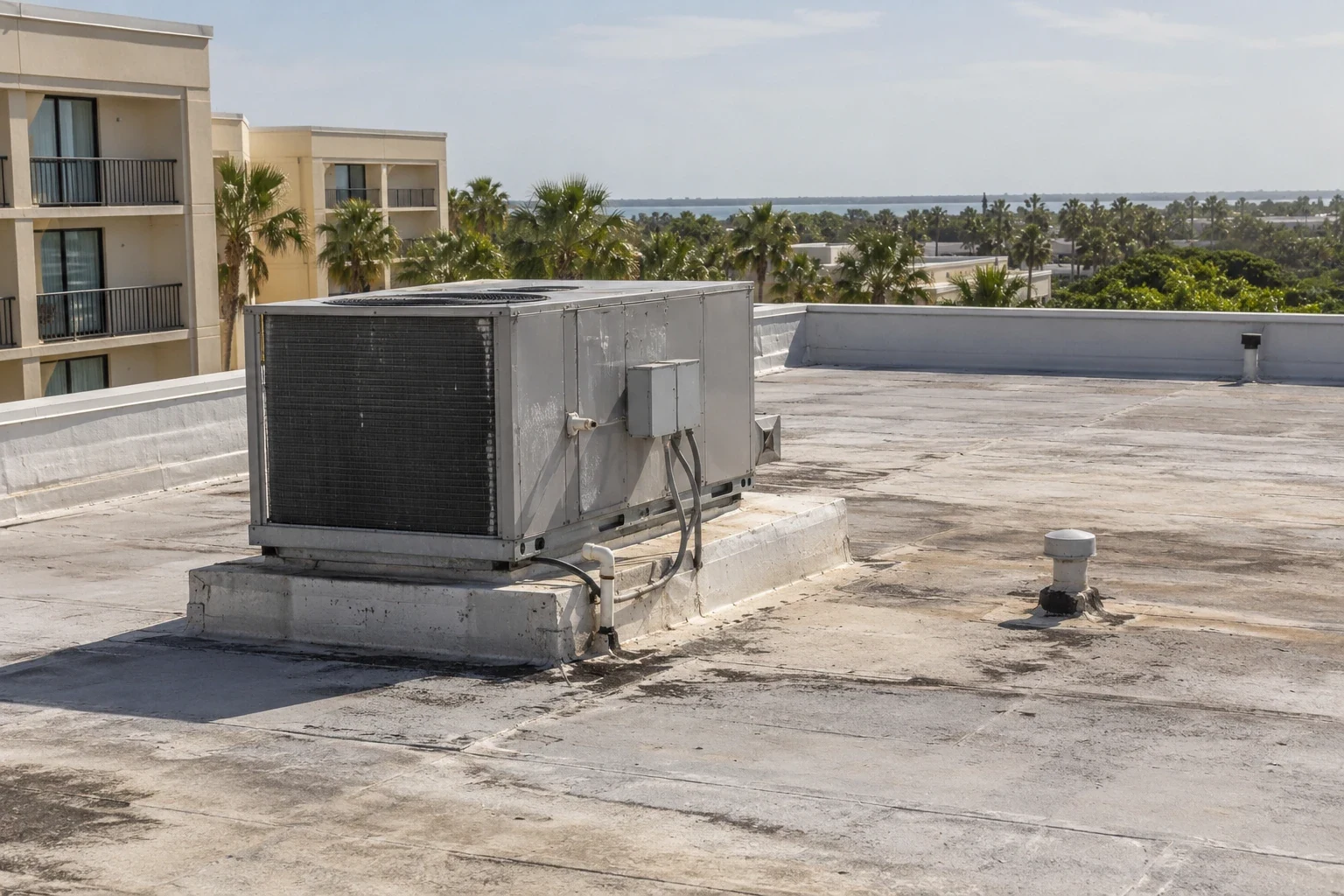
Fuel storage, aircraft fueling and fire-suppression systems all affect how a hangar or maintenance building can be worked on. Open-flame and torch-applied roofing is often restricted near flammable vapors, and a hot-work permit may be required for anything involving heat. Cold-applied adhesives, mechanically attached membranes and heat-welded single-ply systems are chosen with that in mind, and fumes are kept away from air intakes and open bay doors.
Maintenance buildings frequently carry exhaust fans, vents, compressed air equipment and paint or cleaning booths, and every one of those penetrations is a place where a roof can leak. We map each penetration, flash it with the right detail, and check the curbs and equipment supports for rust and loose fasteners. A fumes-heavy roof also changes what membrane lasts, so we ask what vents onto it before we recommend a system.
Compared to Home: the Air Park and Executive Airport
The Pompano Beach Air Park is a 650-acre, three-runway city airport with more than 200 based aircraft, maintenance and avionics shops, hangars and the Goodyear blimp base. The airfield supports more than 20 businesses, including aircraft maintenance and avionics work. On a hangar project, we check door clearances, roof edges and equipment penetrations before setting a material or lift plan.
Those are civilian fields, not military ones, but the roofing questions travel: wide doors, long spans, wind exposure, aircraft below and tight schedules. Roofing a civilian aircraft hangar carries over to a military building, with the extra layer of base access, badging, escorts and Unified Facilities Criteria (UFC) roofing specifications that any installation brings. On a base, the rules of military installation roofing fill in the rest: crew lists in advance, inspected deliveries, and work windows set by the mission.
Questions We Hear Often

Why do hangar roofs see higher wind loads than other buildings?
The door wall. If doors fail or blow open, air fills the building and pushes up on the roof from inside while wind pulls on it from outside. That is why edges, corners and the door wall get the closest attention on every hangar inspection.
What military hangars are near Pompano Beach?
Air Station Miami, the Coast Guard's field at Opa-locka, about 25 miles south-southwest, is the one in reach. Civilian hangars sit nearer, at Pompano Beach Air Park and Fort Lauderdale Executive Airport.
Can a hangar roof be replaced while aircraft are inside?
Sometimes, with the right protection. Aircraft may be towed out of the affected bay, covered or relocated, and the roof is opened one section at a time with overhead protection in place. The aircraft owner and the facility set the limits, and we plan within them.
How does fuel on site change the roofing method?
It limits heat and ignition sources. Torch-applied work is often restricted, so we lean on cold-applied adhesives, mechanical attachment and heat-welded single-ply where allowed. Hot-work permits, if required, are arranged before anyone lights anything.
Do older hangar sites need a roof survey before a quote?
They do. A site that has changed hands across decades can hold different decks and different insulation under neighboring roofs. We scan for moisture, cut a few test cores, and write up each building separately so the quote matches what is actually there.
What do you check on a hangar roof after a hurricane?
Edges and corners first, then the field of the roof for lifted seams or torn sheet, and finally the door wall and anything mounted on top. Water inside is traced back up through the deck. Photos and measurements go into a report the facility can use for repairs and funding requests.