Sika Sarnafil Roofing in Pompano Beach, FL
Coastal Broward took about three feet of storm surge from Hurricane Irma in 2017, and the buildings closest to that water deal with salt, spray and wind every week of the year, not only when a named storm is on the map. Roofs there age differently. Fasteners rust, edge metal pits, and a membrane that is perfectly happy inland has to put up with a harsher neighbor.
Sika Sarnafil is best known for PVC roofing membranes, welded at the seams with hot air into one waterproof sheet. We install, repair and maintain Sarnafil systems on commercial roofs in Pompano Beach, FL, especially on buildings near the beach, the Intracoastal and Hillsboro Inlet, and on food-service roofs where grease and exhaust do their own kind of damage. On the coast the membrane does its part, and the metal, fasteners and details around it decide how long the roof lasts.
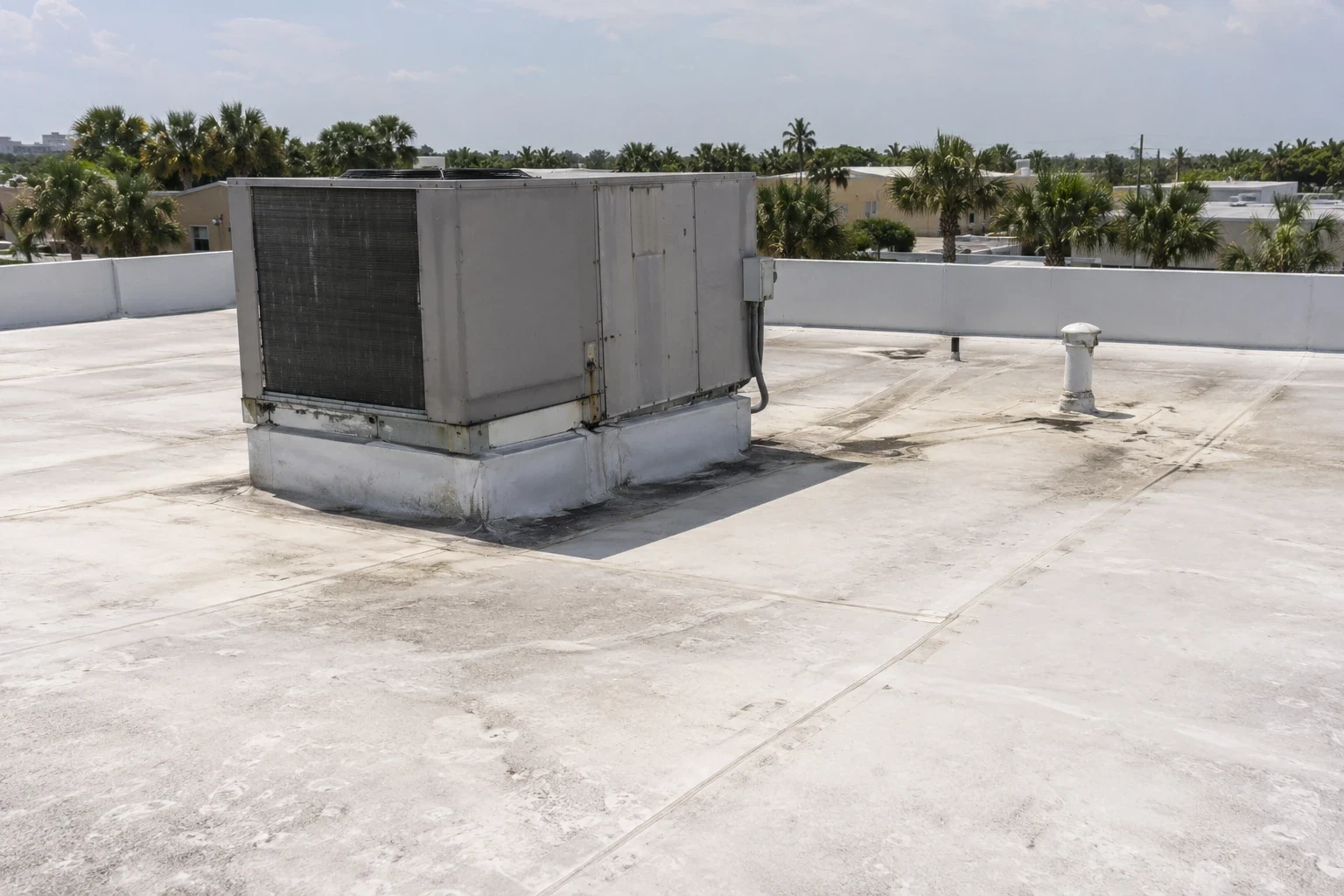
Welded PVC: a polymer sheet with a reinforcing layer inside
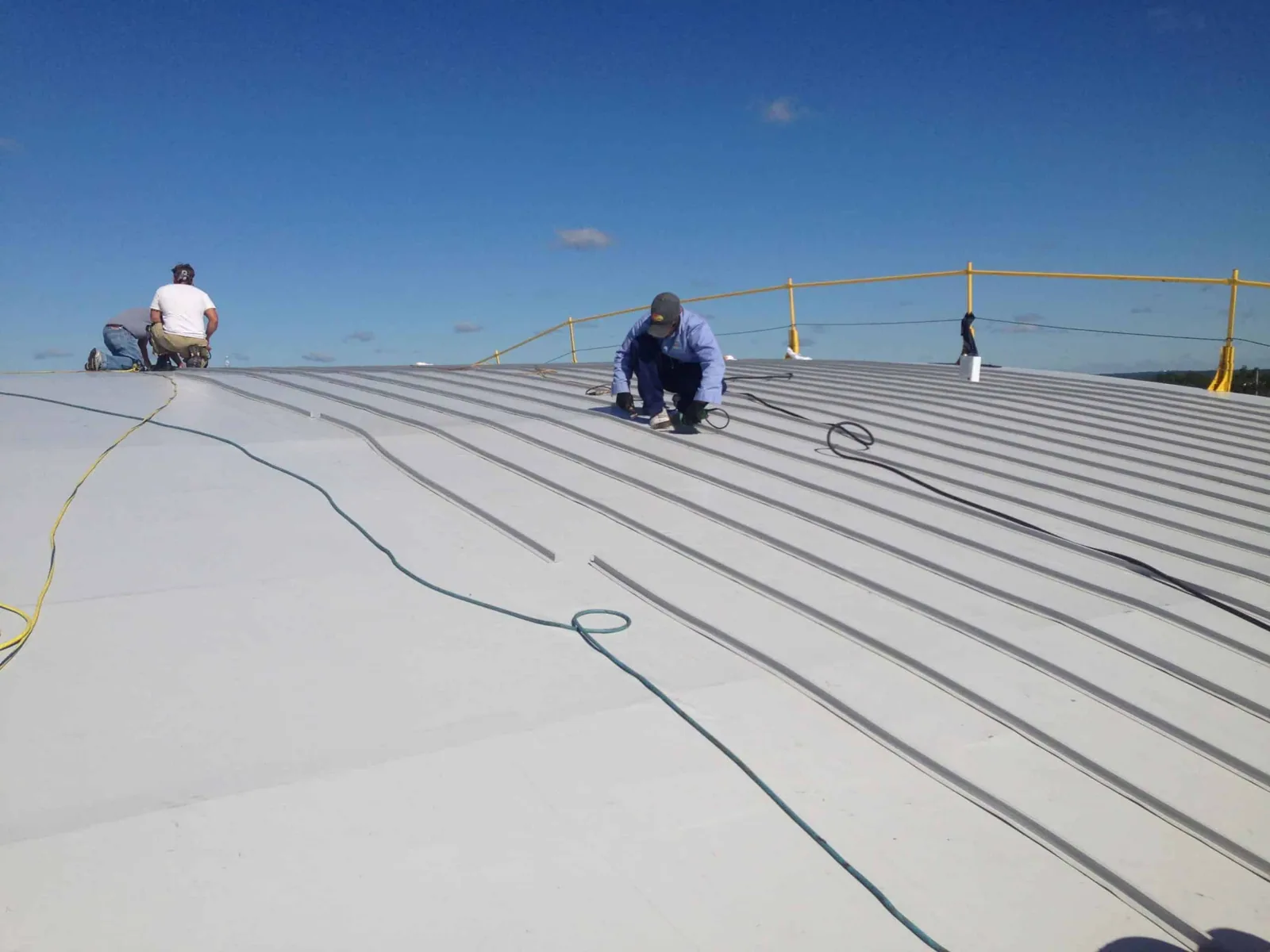
A Sarnafil sheet is a layer of reinforcement set between plies of flexible PVC. The reinforcement holds its shape, the surface layers resist sun and chemicals, and the hot-air weld between sheets turns the overlap into a single continuous piece. A good weld is stronger than the sheet around it. A bad one looks identical from a ladder, which is why every seam gets probed by hand along its edge.
PVC is flame resistant, tolerates standing water better than many membranes and shrugs off the fats and oils a restaurant vent drops on the roof. It costs more than some alternatives, so we look for the places where that cost pays back. Sarnafil is one of the best-known names in PVC roofing, and the same weld rules apply to every sheet in that family.
At a PVC seam, the installer controls the overlap, temperature, speed and pressure of the hot-air weld. A quick visual pass can miss a weak edge, so we probe the cooled seam and repair any void before water tests it. At curbs and inside corners, prefabricated pieces or carefully formed patches have to follow the same material and weld process as the field membrane. The roof record notes where work was done and whether the surrounding sheet remains firmly attached.
Salt Spray: what the sheet shrugs off and what it does not
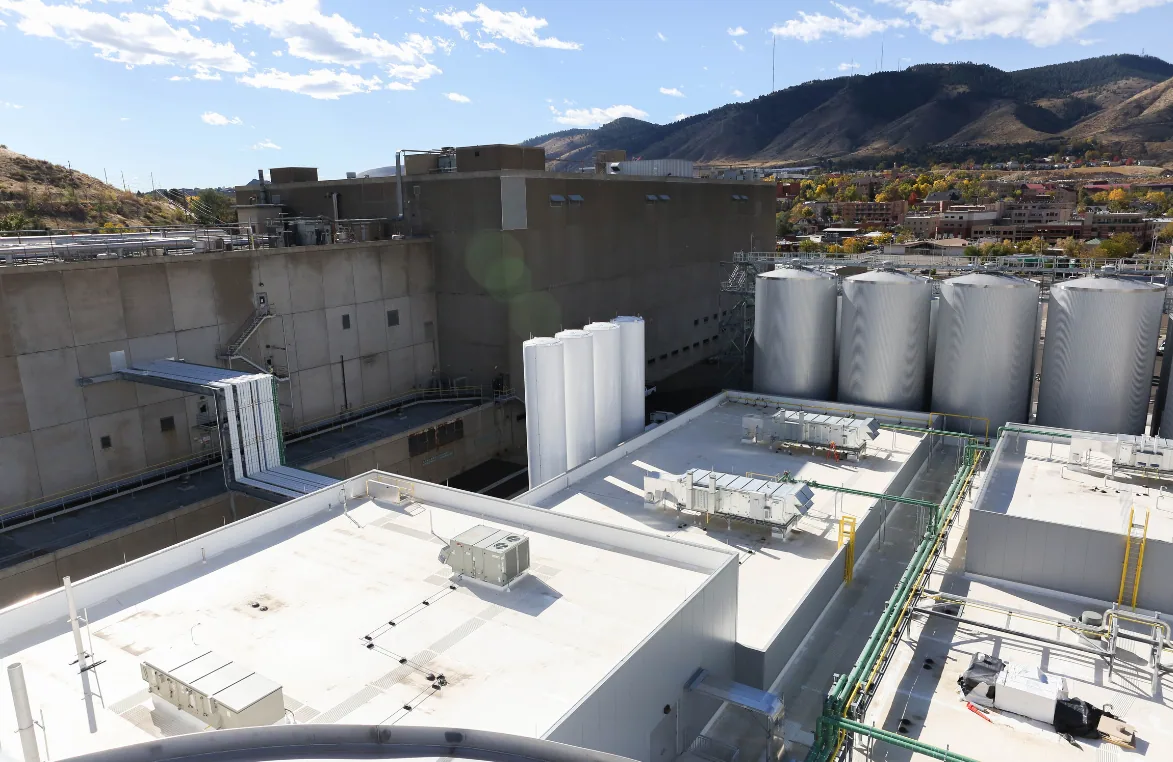
PVC itself does not rust, and salt does not bother it much. Everything attached to it does. Fasteners, plates, edge metal, curb straps and rooftop-unit frames are all candidates for corrosion, and when a plate rusts through, the sheet loses its grip right where it is under tension. Along the Atlantic Boulevard bridge and the beach, we specify stainless or coated fasteners and metal that was finished for coastal exposure.
Edges get extra attention. Wind catches them first, and salt eats the cheaper metal first. A bare steel coping can flash red within a couple of seasons, and a loose cleat lets the perimeter flutter. We look at edge metal, coping and gutters as part of any Sarnafil job because the best membrane on the roof cannot fix a flashing that has rusted off its fasteners.
Humid Mornings and Hot Welds: getting a clean seam in the wet season
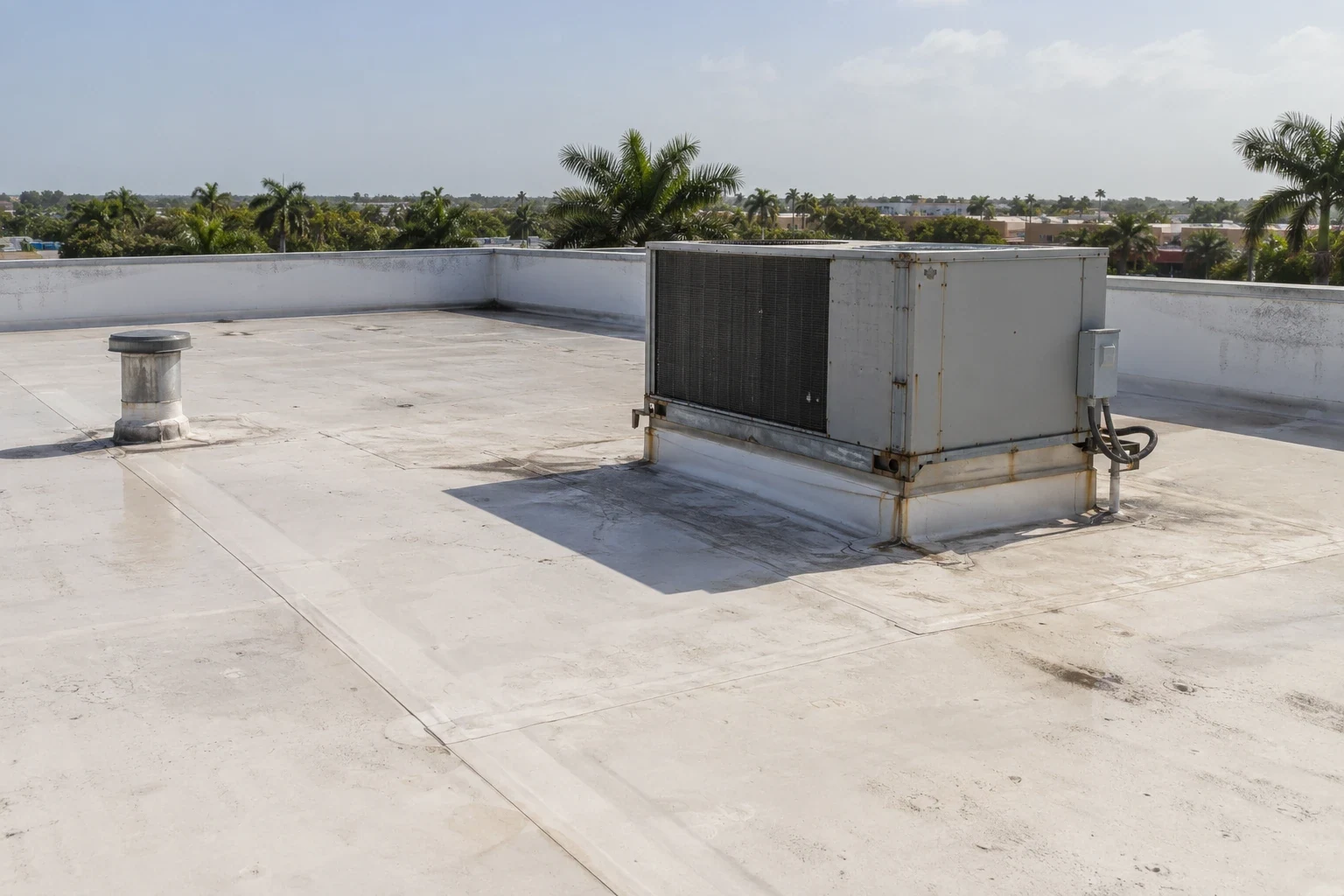
Hot-air welding is sensitive to moisture and dirt. A damp overlap steams under the nozzle, and a dusty one traps contamination in the seam. Wet-season mornings in Pompano Beach, FL start with dew and dewpoints in the 70s, so we hold off until the sheet is dry, test the welder settings on scrap and cut sample strips to check the weld before we start the production seams. Pulling a test weld costs a few minutes and tells us a lot.
Welding also has a weather limit. Once afternoon cells build over the Everglades, the sheet comes off the table, loose edges get sealed and the roof is closed for the night. That means smaller sections and a longer calendar, but it keeps the building dry. Schedules that ignore the radar are how a nice new roof turns into a flooded stockroom.
Liquid-Applied Details: resins for curbs, drains and odd shapes
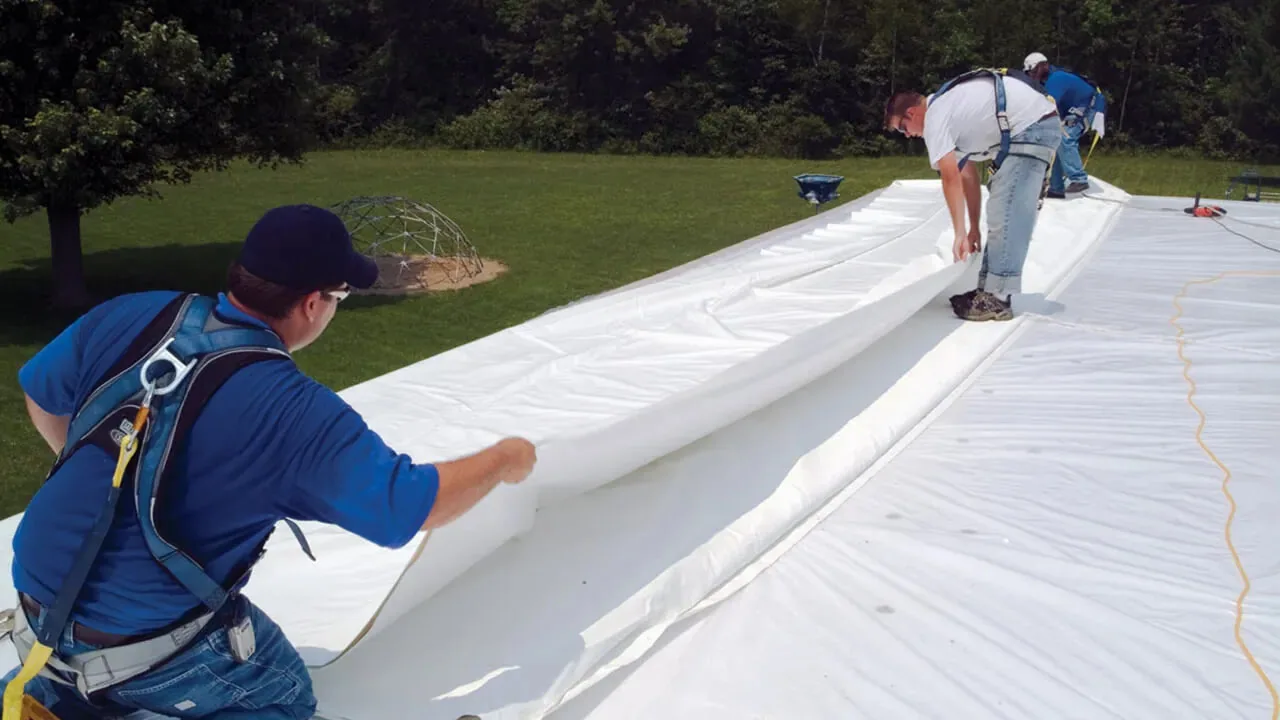
Not every detail can be made with a welded boot. Odd pipe clusters, uneven masonry, tight drain sumps and old metal flashing often call for a liquid-applied resin that cures into a reinforced layer. Sika makes liquid systems for this kind of work alongside its membranes, and we use resin flashing where a formed part would leave a gap. Done well, it ties the sheet to a hard-to-reach detail without a gap.
The prep decides success. The substrate has to be clean, dry and sound, and the primer has to match. When a rooftop-unit curb fails, we often rebuild with a new curb flashing and support instead of dabbing sealant on a cracked corner. Each penetration is a place the roof can leak, and every one gets treated as such.
Listed Assemblies: why a PVC sheet still needs the right company around it
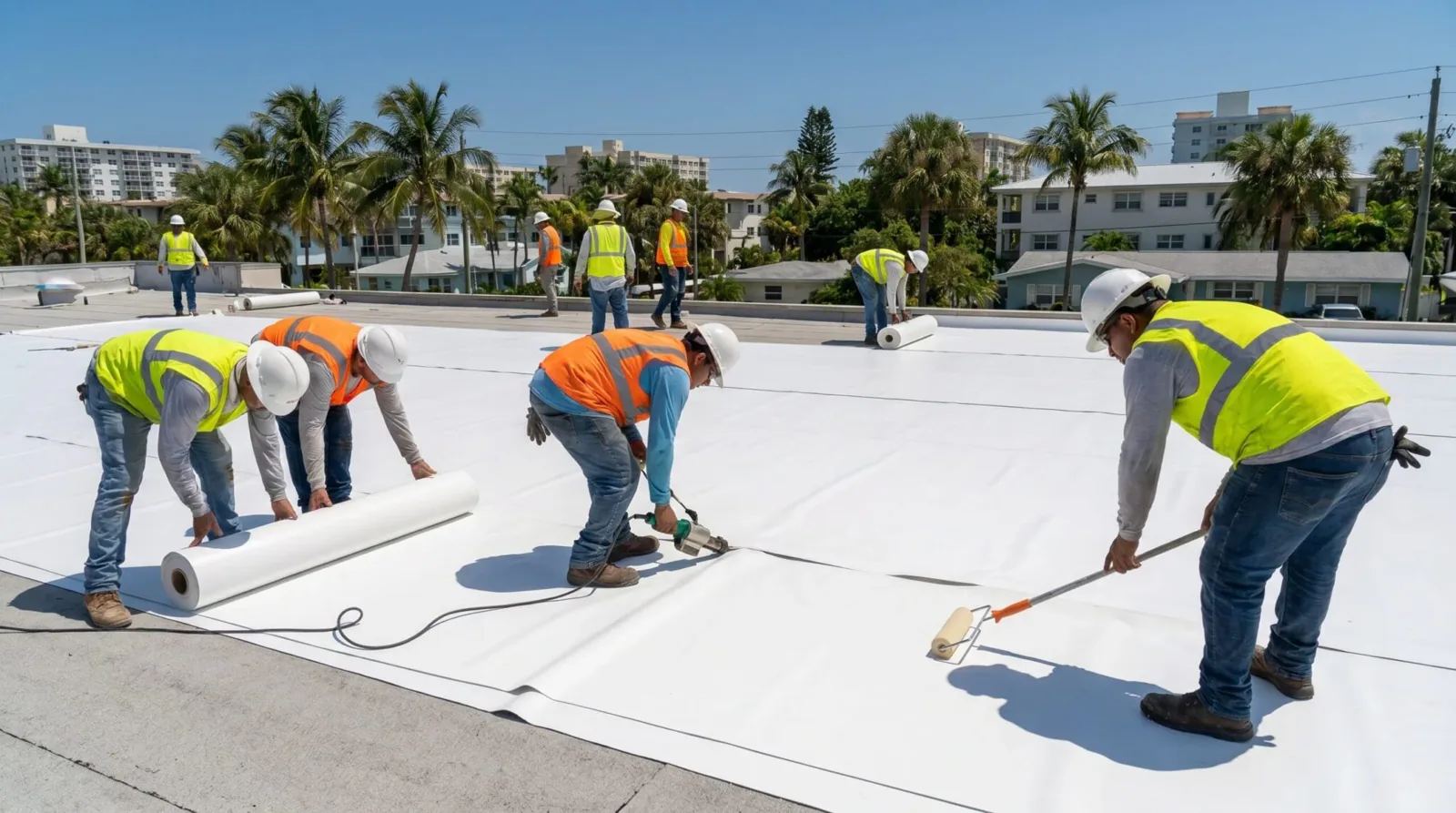
Broward County sits in the High Velocity Hurricane Zone, and the design wind speed for an ordinary Risk Category II building is 170 mph. Every exterior roofing component needs a Miami-Dade Notice of Acceptance, and the testing behind it covers missile impact, cyclic pressure and water-after-impact. In plain terms, the membrane, insulation, fasteners and plates are approved as a package. A PVC sheet from one maker over a board from another is not automatically the tested roof.
That is true of any brand, and it is why we check the listing before the order goes in. It also explains why owners comparing a Sarnafil bid against Carlisle SynTec PVC should ask each bidder which approval number the proposed roof is being built to. The answer tells you whether the price on paper is for a roof that will pass its inspection. Wilma's 98 mph gust at Pompano Beach in 2005 is a good reminder of why that paperwork exists.
Marinas, Piers and Shops: roofs near the water
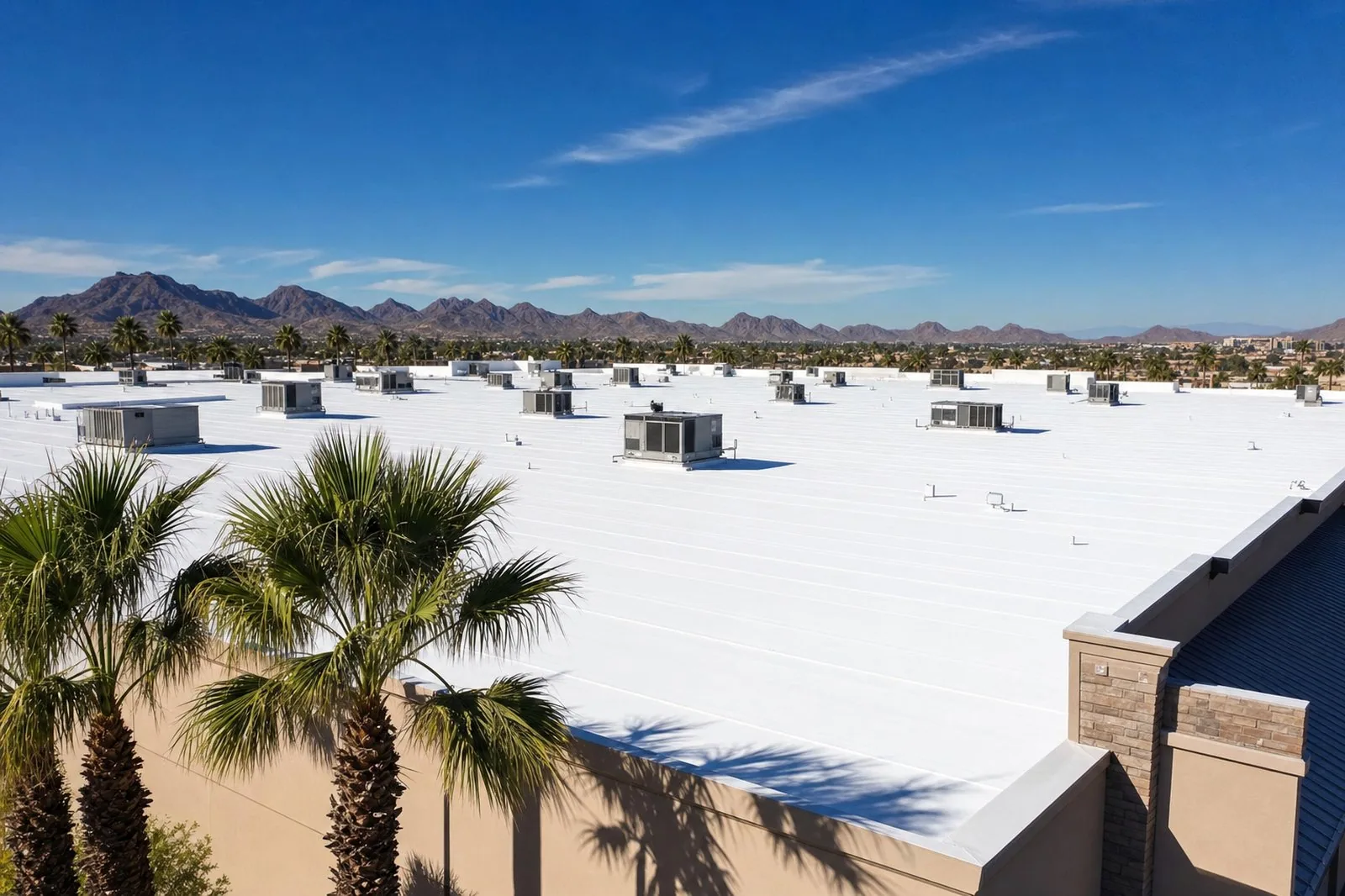
Hillsboro Inlet is part of the Atlantic Intracoastal Waterway and supports marine businesses along the Pompano Beach coast. In the A1A Ocean Boulevard Corridor, around the Fisher Family Pier and the Atlantic Boulevard bridge, oceanfront roofs face salt air and direct wind exposure. Nearby, Lighthouse Point has boating and marina businesses that face salt air daily, and Lauderdale-by-the-Sea has shops and restaurants along A1A on a narrow barrier island.
A small roof with a lot of equipment, vents and signage tied into it gets the most from a thorough preventive maintenance visit each spring, before the stormy stretch of the wet season, which finds the corroded strap or the cracked sealant before water does. A PVC roof in good shape often needs little more than.
Questions We Hear Often
Does salt air shorten the life of a Sarnafil roof?
The sheet is not much bothered by it. The fasteners, plates and metal around the sheet are the weak links, so we specify corrosion-resistant parts and inspect them on a schedule.
Can new PVC be welded to an older Sarnafil sheet?
Often, after the old surface is cleaned and tested. Very old or contaminated PVC can lose its weldability, in which case we use a mechanical termination or a different detail.
How does PVC compare with a prefabricated PVC roof?
Both are welded thermoplastics. A field-welded Sarnafil sheet is custom cut on site, while Duro-Last builds panels in a factory to your measurements.
Will a kitchen exhaust fan hurt my PVC roof?
PVC resists grease and fats better than most single-ply sheets. We still add walk pads and grease containment where the fan drips onto the surface.
What does a coastal roof inspection look at first?
Fasteners, plates and edge metal, because that is where salt works first. Then the seams, the drain sumps and whatever has been added to the roof since it was built.