Big-Box Retail Roofing in Pompano Beach, FL
Under a big-box roof, the weather is somebody else's problem until the first bucket shows up on the sales floor. Then it is everyone's. A Broward thunderstorm in July can drop a lot of water in a single afternoon, and a wide, low store built to hold shelving and customers has only a few drains and edges to send it away. When one of them backs up, the water goes into the store.
We repair, recover and replace roofs on big-box retail stores in Pompano Beach, FL and the towns around it. The buildings are wide and the roofs are busy, with units and vents all across them. The stores stay open while we work, and the people who run them want to hear what is happening on the roof before a customer notices.
Wide and Flat: where the afternoon rain goes
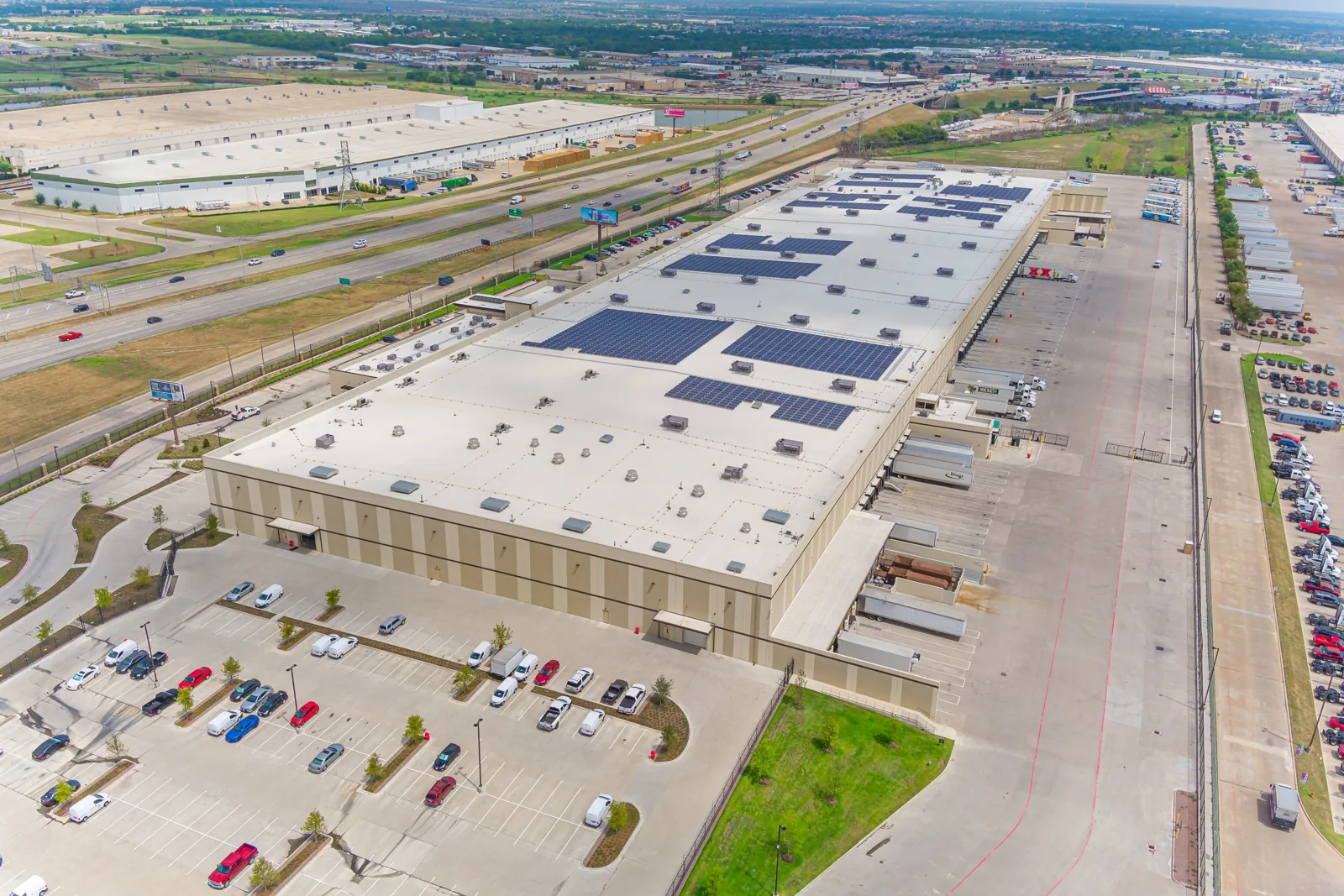
A big-box store is basically a wide, low box with a flat or nearly flat roof, and everything on that roof depends on drainage. Rain travels to interior drains, scuppers or gutters, and any spot where the deck sags slightly can hold a puddle for days. Standing water cooks in the sun, loads the structure and works at every seam under it. A store with the same stain on the ceiling every July is telling you where the low spot is.
Before tear-off, we confirm the loading area and roof access point can support the equipment and material. Large stores may have separate receiving, customer and emergency routes, and they should not be blocked by a dumpster or staging pallet. The project plan notes which entrances stay open, where debris is handled and how each roof section will be dried in if rain moves closer.
The April 2023 storm that dropped roughly 26 inches of rain on Fort Lauderdale in a single day gave Broward owners reason to look again at their drains and scuppers. We clear drain bowls, check that the overflow openings are open, and measure how long water takes to leave after a rain. Adding drains or tapered insulation is sometimes the real fix, since a patch cannot cure a roof that does not drain.
Open Sales Floor: working above customers and stock
Most big retailers cannot close for a roof job, and they should not have to. We plan the work in sections, open a strip at a time and close it before evening, and coordinate with the store manager on the aisles beneath each zone. Stock in that strip is shifted or draped the evening ahead, and ceiling areas below the work are protected. Noisy steps like tear-off happen early in the day, ahead of the busiest hours.
Stocking schedules matter as well. A store that receives deliveries overnight needs the loading area kept clear and the dock roof dry, and our crew works with the receiving staff on timing. We keep trucks and lifts out of the main customer lanes and the fire lanes along the front of the building, and we leave the pavement free of loose fasteners. A shopping center with several tenants brings its own set of schedules to the same planning.
Boxes on the Roof: refrigeration, rooftop units and everything else
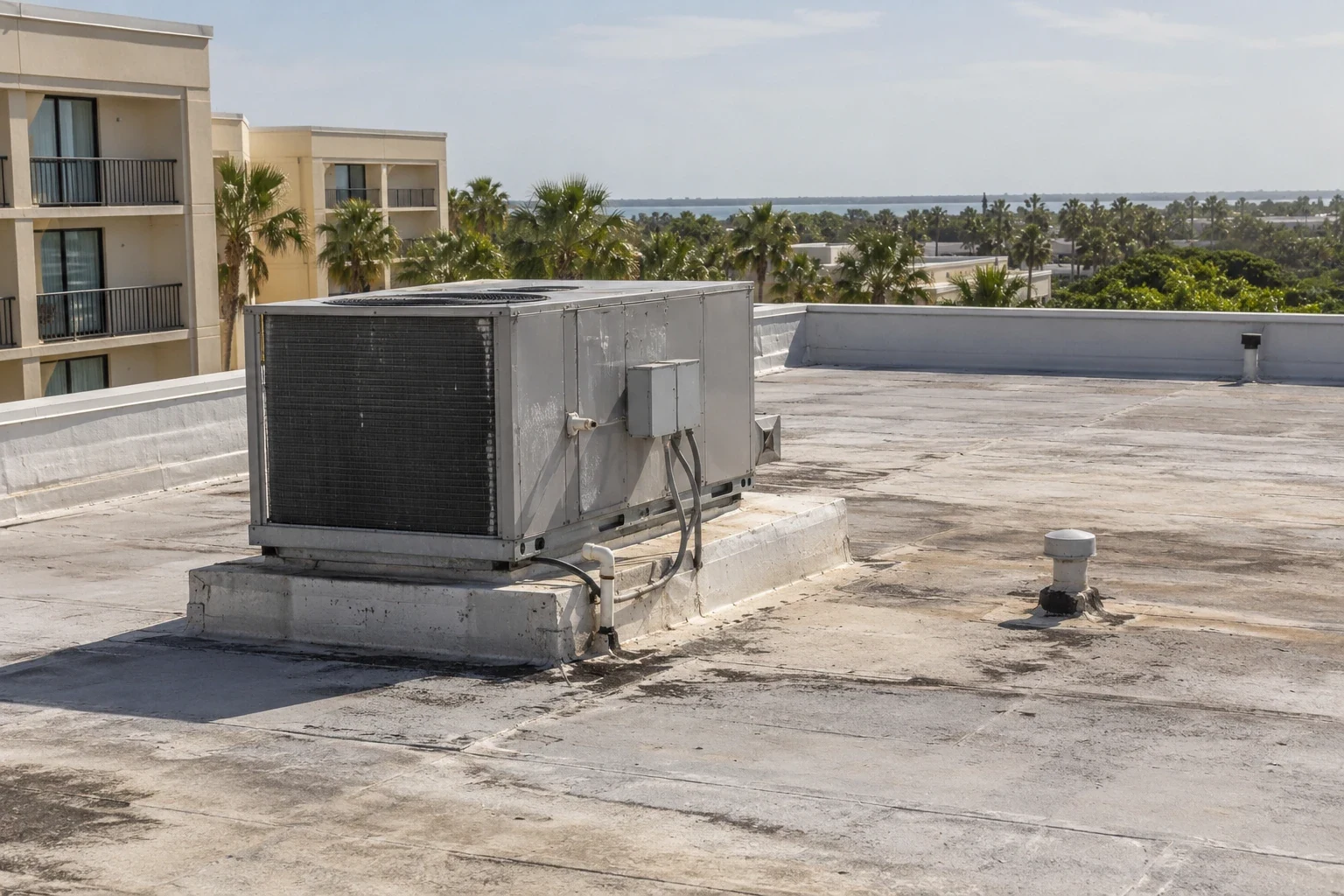
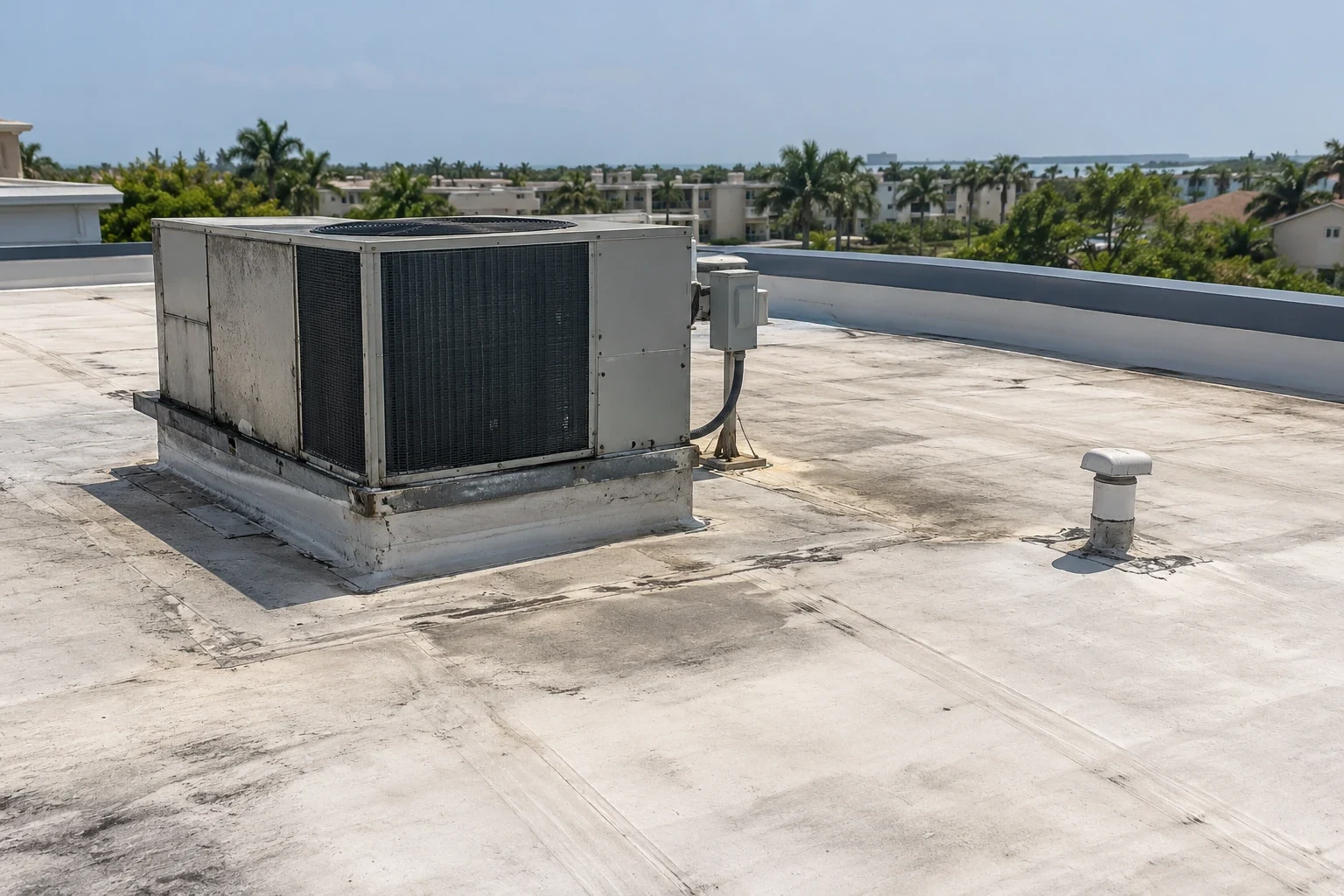
The roof of a big store is a mechanical yard. Rooftop air handlers, refrigeration condensers, exhaust fans, vent pipes and conduit runs crowd the field, and every curb is a place where flashing can fail. Heat and sun in a Broward summer, with warm nights running a degree or more above normal in recent years, keep that equipment working hard and keep the roof around it hot.
Foot traffic is the quiet damage. Technicians walk the same routes to the same units all year, and a membrane without walk pads wears through along those paths. We add pads where the traffic is, look at curb flashing and tie-downs at each unit, and set up a way for the mechanical contractor and the roofer to work in order so that a unit swap does not undo a roof repair. In a hurricane the units are the heaviest things that can move, which is why their tie-downs deserve real attention before June.
National Spec, Local Code: when corporate standards meet Broward

A chain often arrives with its own roofing specification, written for stores in many states. In Broward that specification still has to pass through the county's hurricane-zone rules. The building is designed for 170 mph wind, each exterior roofing product needs Miami-Dade approval, and the assemblies behind that approval were tested by firing debris at them and cycling pressure on them. A permit pulled today goes through plan review under the Florida Building Code's 2023 edition.
Where a corporate spec and the local code disagree, the code wins, and we help the facilities team find the version of the spec that satisfies both. That conversation goes faster with the right documents in hand, and for retailers with many locations a multi-site roof program keeps standards consistent from store to store. Retail and restaurant chains that run many stores tend to value that predictability more than almost anything else.
Federal and Atlantic: where the big stores sit
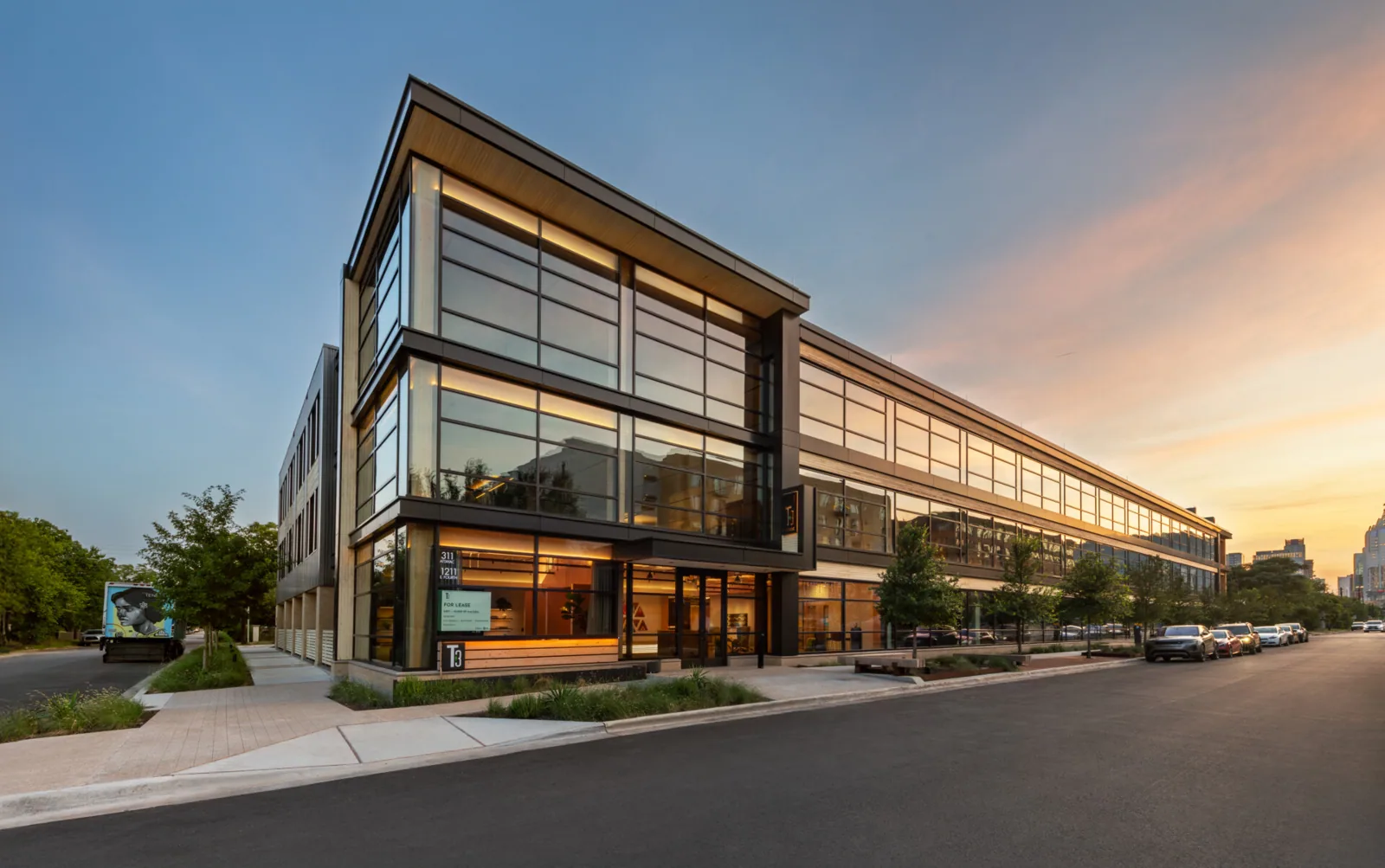
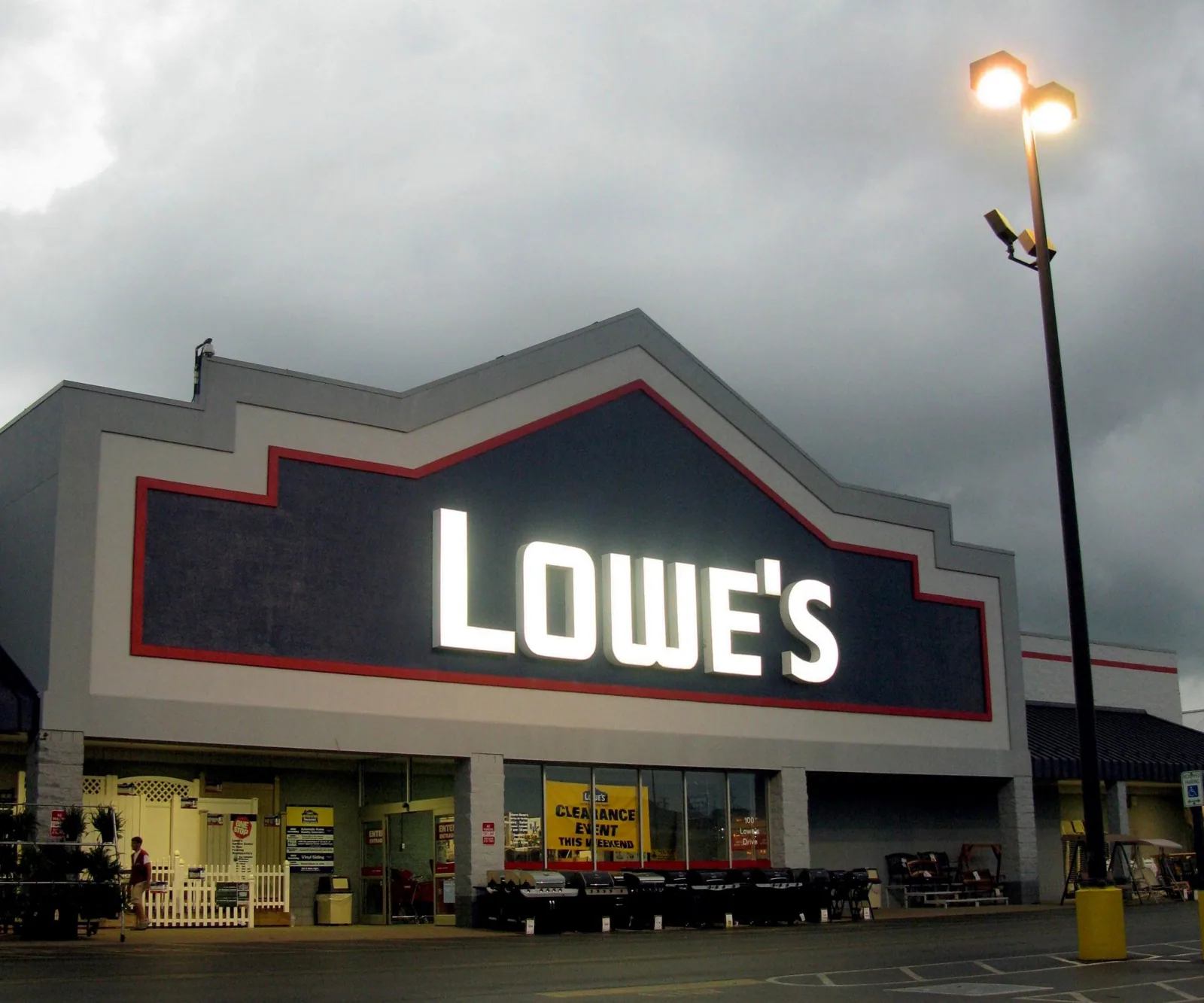
Pompano Beach's big stores gather along the north-south run of Federal Highway and the east-west length of Atlantic Boulevard. Pompano Citi Centre lists JCPenney, Lowe's, Ross Dress for Less, PetSmart and Nordstrom Rack among its major tenants, and Walmart, with 702 employees, is one of the city's largest employers. That is a lot of large-format retail in a coastal city, where salt air works at fasteners and metal edges along with the heat.
Federal Highway Corridor shows the pattern for a redeveloped open-air center, while Westfield Broward in Plantation, with about a million square feet, adds a mall of that size to the regional mix. Whatever the property, we start by finding out what is under the top layer. Core cuts and an infrared scan tell us if the insulation is dry before anyone promises a recover in place of a tear-off.
A big retail roof shares long open fields and dock-side access concerns with warehouse roofing, though customer entrances add another work zone.
Questions We Hear Often
How do you roof over a store that stays open?
In sections. We open a strip, replace it and dry it in before evening, then move on. Product below is covered or moved the night before, and noisy work happens early, before the doors are busy.
Does our corporate roof spec override the local code?
The county's hurricane-zone rules come first. Each component needs Miami-Dade approval, and the full assembly has to meet the 170 mph wind design. We help adapt the spec so it passes plan review.
Why does the same spot leak every summer?
Usually water is sitting there. A sagging deck, a drain set too high or a clogged scupper holds a puddle that works on a seam or flashing until it gives. Fixing the low spot matters more than patching the leak.
How soon should a big-box roof be checked after a hurricane?
As soon as it is safe to get on it. Look at units, edge metal, drains and seams near the perimeter while the water marks are fresh, and photograph everything for the insurance file.
Can a recover go over our existing roof?
Sometimes. The insulation under the old membrane has to test dry, and code limits what can be added over what is already there. A moisture survey and a few core cuts answer the question before a plan is written.