Roofing for Retail and Restaurant Chains in Pompano Beach, FL
Shoppers sprint across the lot when the afternoon sky opens over Pompano Beach, FL, and the manager inside is already looking up at the ceiling tiles. Wet-season storms here arrive on a nearly daily schedule from mid-May through mid-October, and a storefront roof gets its hardest test at exactly the hour the parking lot is fullest. A drip over a register or a stain above a dining room costs more than the repair, because it costs customers.
Retail centers, free-standing stores, restaurants and the pad buildings around them are where we repair, recover and replace roofs, and we work with brands that run many locations and cannot afford a different roofing story at each one. That means consistent reports, honest rankings, work scheduled around trading hours and a crew that answers the phone at any hour of the night, since a storm does not wait for the store to close.
Open Doors: a leak over the sales floor
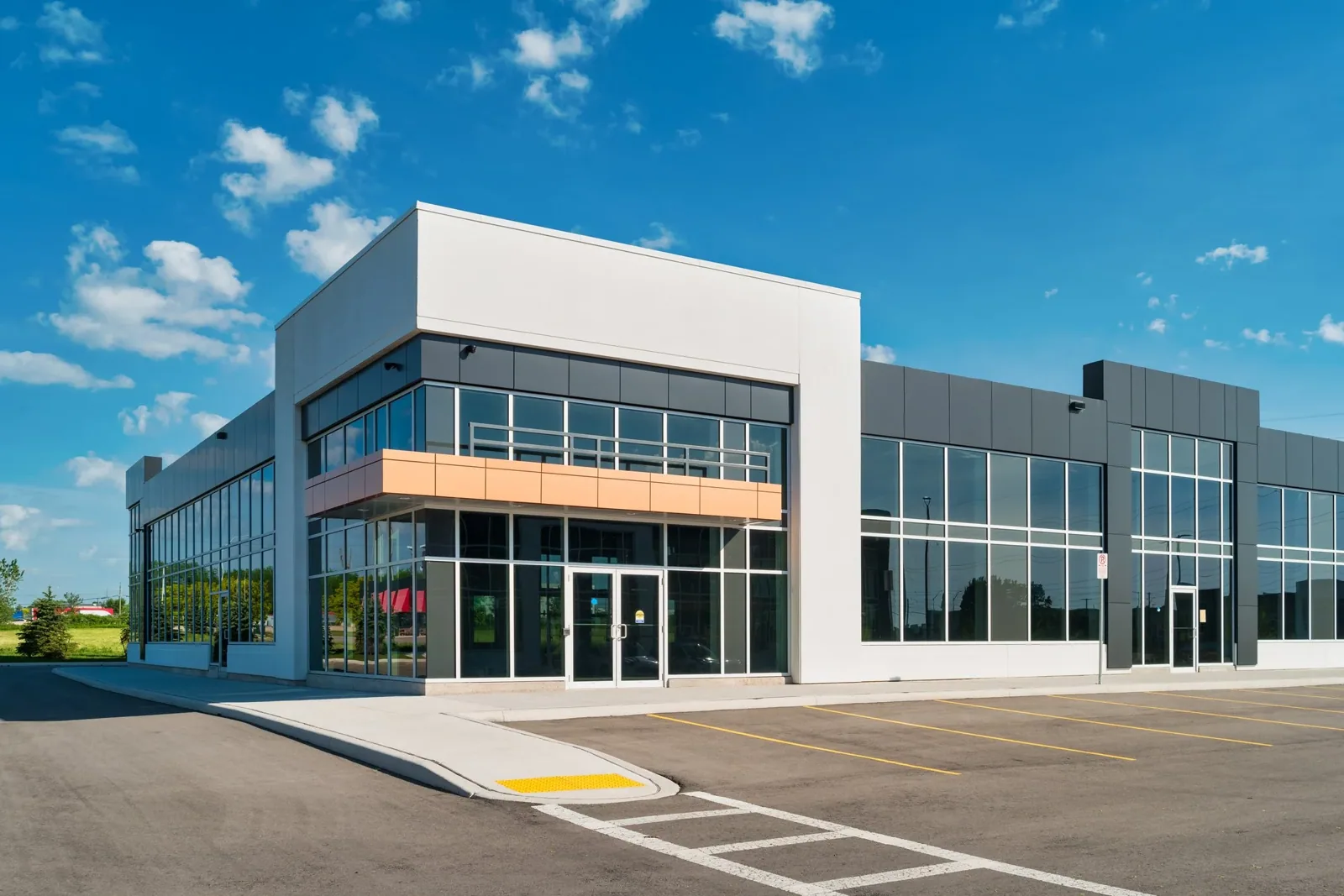
When a store takes on water, the first problem is safety and the second is image. A wet floor invites a fall, and a bucket in an aisle tells every customer what is going on. We respond by finding the entry point, protecting the space below, posting signage, and getting the opening closed in the same visit if the weather allows. The photographs we take before touching anything help with the landlord, the insurer and the regional manager.
For a chain with several locations, compare repairs by condition rather than using one standard scope everywhere. A roof with dry insulation and secure edges may need a seam repair, while another site may need drainage correction before the next storm. Separate records let the facilities team prioritize the failure that threatens inventory or customer areas first.
Leaks also run well away from their cause. Water entering at a seam near a parapet can travel along the deck and drip over a stockroom door or a menu board far from the opening. We trace it from both directions, inside and out, and use an infrared scan after sunset when we need to see how far the wet insulation reaches. Quick action on a small patch tends to head off a bigger interruption later.
Grease and Exhaust: what a restaurant roof lives with
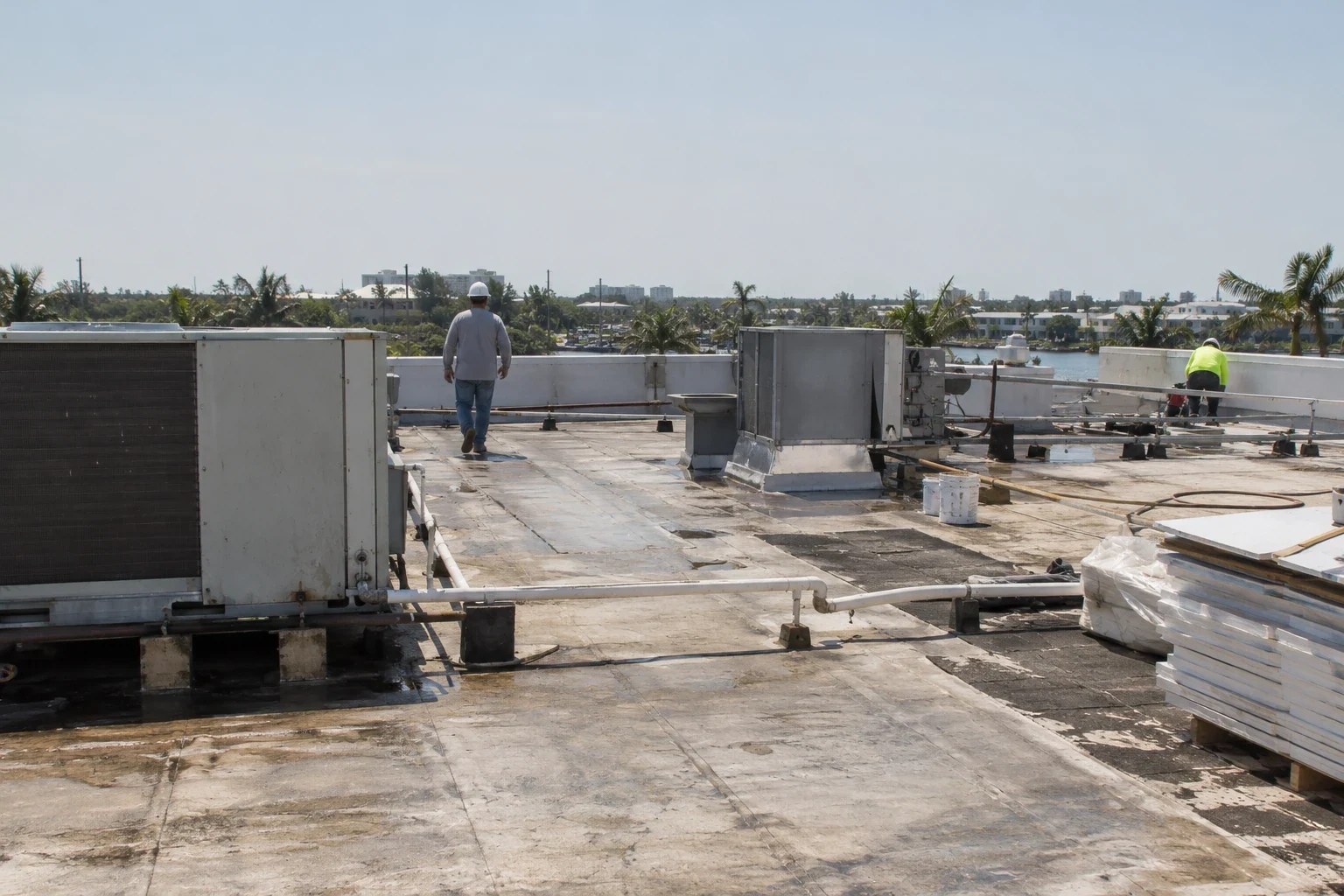
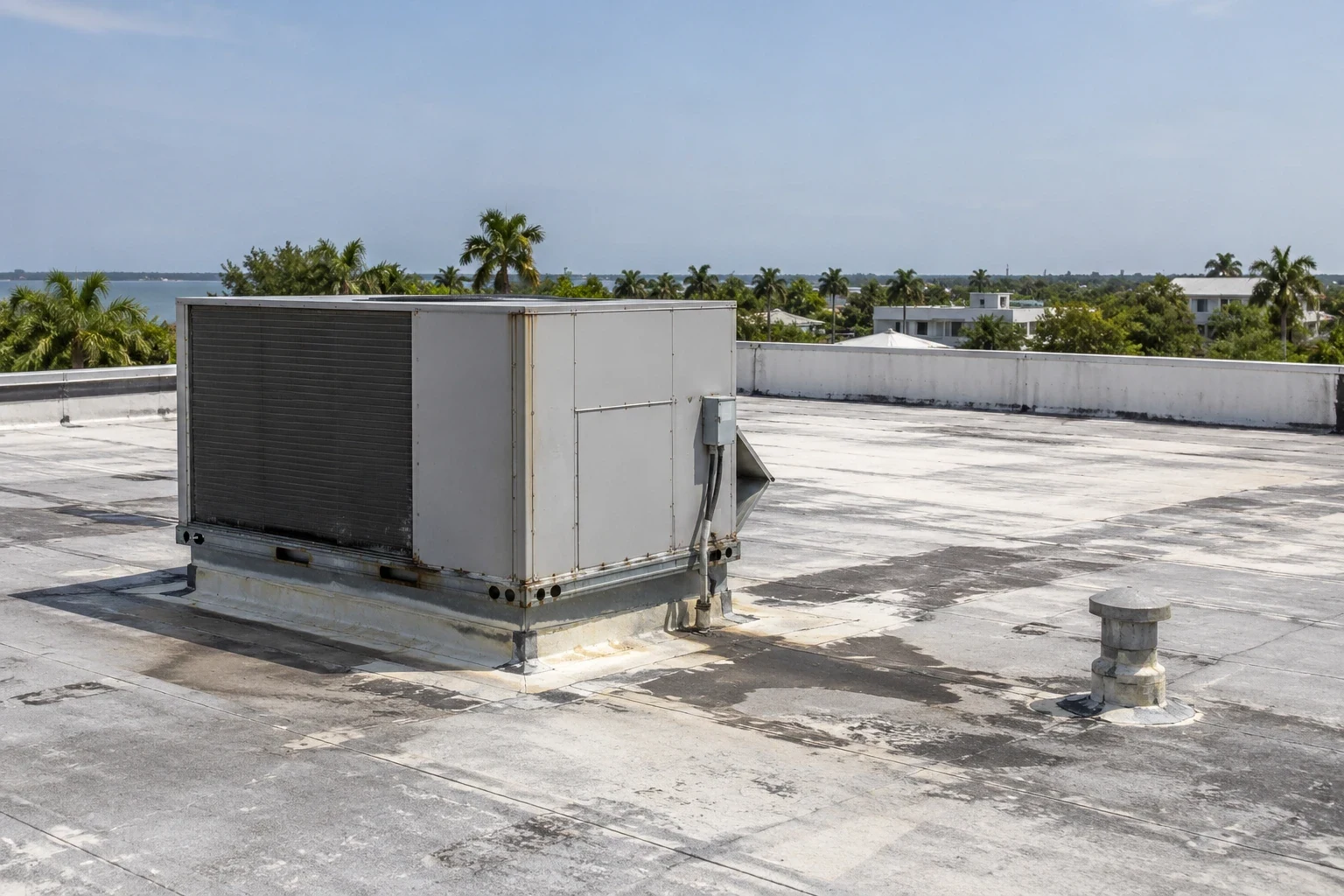
A restaurant roof carries kitchen exhaust fans, makeup air units and sometimes walk-in cooler condensers, and the fans spit grease. Over time that film settles on the membrane, softens some materials and turns walking surfaces slick. A roof that looks the same as its neighbor's from the street can be breaking down much faster under the exhaust.
Membrane choice helps. Systems such as KEE roofing are made to resist fats and oils, and grease containment pans under fan outlets protect any membrane. Detailing around curbs and fan bases gets extra attention, because that is where grease and water meet. On a restaurant roof we also plan hot-work safety near exhaust, with fire watch and careful staging so the kitchen can stay on schedule.
Strips, Malls and Pads: the retail mix along Federal Highway
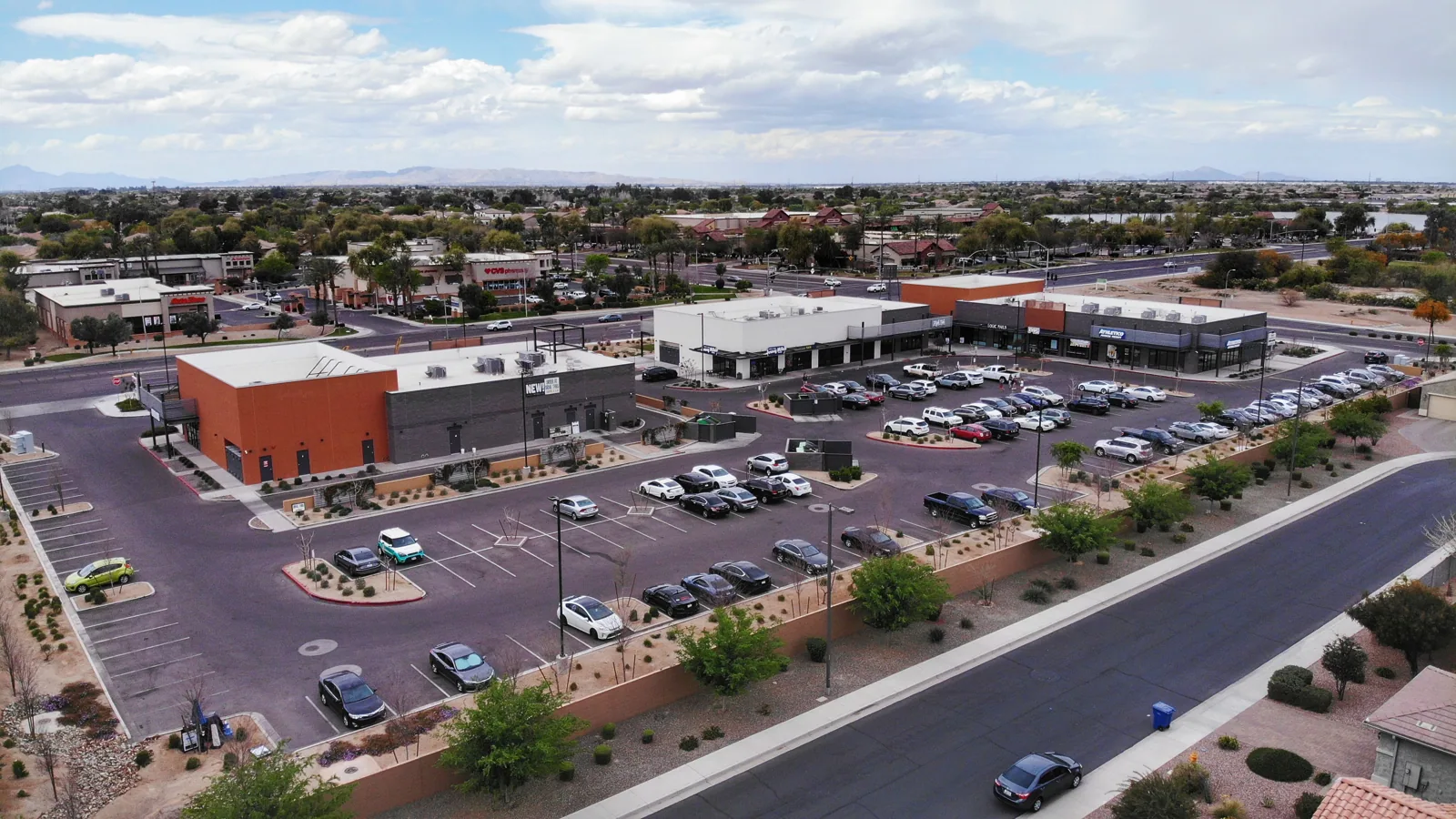
Retail in Pompano Beach runs from corner pads to large centers. Pompano Citi Centre is mostly open-air; it opened in 1970 and was redeveloped in 2006. Its roster runs from JCPenney and Lowe's to Ross Dress for Less, PetSmart and Nordstrom Rack, and the former Sears space was set for Burlington, TJ Maxx and Five Below. Festival Flea Market Mall is another large retail building in the city, and Walmart and Publix both sit among the city's top employers.
Regional names make the point from a distance: Sawgrass Mills in Sunrise has about 2.37 million square feet, and Coconut Creek Promenade is a 23-acre open-air shopping and restaurant center. A brand with stores in several of these needs a plan that fits each building's age and ownership. For Federal Highway Corridor, a redeveloped center, that starts with learning which sections of roof date from which period.
One Spec, Many Stores: a roof program for a brand
A chain with ten locations has ten roofs that happen to share a logo. They differ in age, landlord, membrane and leak history. We survey each, record the findings in one report layout, and rank the stores so a regional facilities manager can see at a glance which roof is urgent, which can wait and which needs a conversation with the landlord.
Our multi-site roof programs then set a calendar by season, tie repair spending to the rankings and keep the files in one place. Franchise groups use the same approach to give each owner a clear picture. And since owners of the centers themselves, such as the property managers who run them, often handle the landlord side of the lease, we can work with both parties from the same report.
Between Rushes: working around trading hours
A store has quiet hours, and a roof crew works best in them. Early mornings before opening are the usual window in wet season, since adhesives and welds need a dry surface and the clouds usually do not build until after lunch. For work that cannot wait, we move to overnight hours, keeping noise and light under control around neighbors and keeping hoists and trucks away from entrances and outdoor dining.
Holiday seasons matter as well. We avoid the weeks when sales are highest, finishing big jobs ahead of them or waiting until they pass, and we split roofs into sections so one corner can be closed up while the rest is open. The sequencing used for occupied building reroofing keeps a restaurant's dining room and a clothing store's aisles clear and comfortable.
Storm Hardening: units, signs and the shops near the water
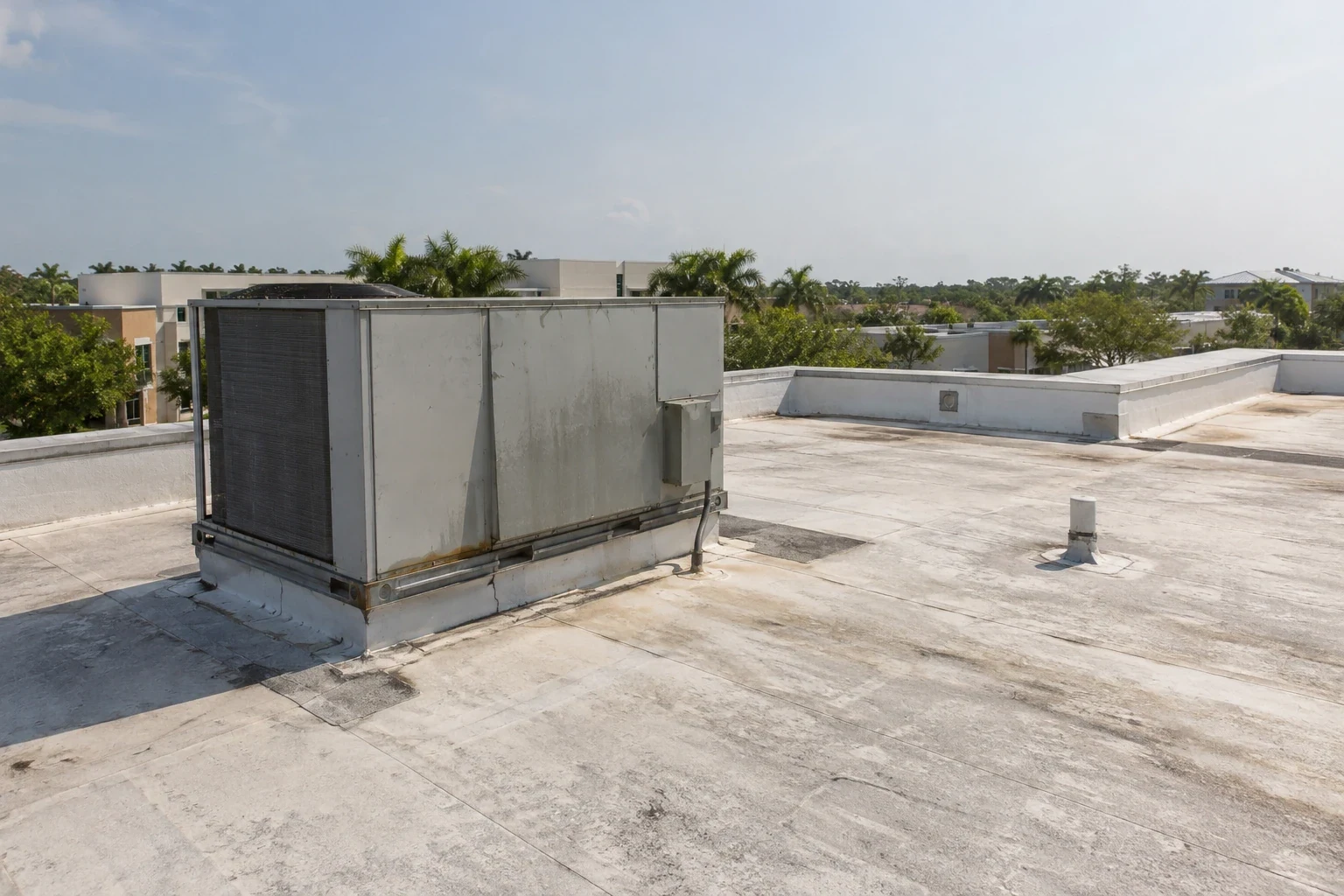
Rooftop equipment and signage take the wind first. Pompano Beach logged a 98 mph gust in Wilma back in 2005, and twelve years later Irma pushed 80 to 100 mph gusts over most of Broward. Rooftop units that are not strapped down, curbs and supports that have loosened and sign structures fastened through the membrane are what come loose, and each one tears open a roof when it goes.
Near the water, salt adds to the wind. Lauderdale-by-the-Sea, on a narrow barrier island, is a town of shops, restaurants and hotels, the kind of properties hospitality groups operate, and the Fishing Village in Pompano Beach pairs its pier with beachfront redevelopment. Retail and restaurant roofs close to the coast need hardware and metal chosen for salt air, and a roof plan built to the 170 mph wind speed that governs the High Velocity Hurricane Zone.
Questions We Hear Often
Grease keeps showing up on our roof. Does that hurt the membrane?
It can, depending on the system. Fats and oils soften some membranes over time. Containment pans under the fan outlets and a grease-resistant material at those spots keep the damage from spreading.
Will we lose sales while the roof is being worked on?
Not if the plan fits your hours. We start before opening, keep trucks and hoists away from entrances and close the roof in sections, so the register and the dining room stay open.
Can every location get a matching report?
Yes. One layout covers all of them: photos, a roof plan, located defects, moisture findings and a ranked repair list. That makes comparison between stores quick for a regional manager.
Where does the landlord's responsibility end and ours begin?
Your lease says. The report helps by showing the condition at a point in time, so both sides work from the same facts when a repair is needed.
What comes loose first on a retail roof in a hurricane?
Unstrapped rooftop units, loose edge metal and sign supports. Check the tie-downs and fasteners before the season, and clear the drains so afternoon rain has somewhere to go.