
National Guard Armory Roofing in Pompano Beach, FL
A National Guard armory is a building people count on exactly when the weather turns, and in Broward that can mean a stormy wet-season afternoon or the week before a named hurricane. Units that may be called out for storm response need a roof that is already tight, with drains running and the edges holding, long before the first outer band reaches the coast.
From Pompano Beach, FL, the Florida National Guard's Miramar Readiness Center sits about 20 miles south-southwest. Armories and readiness centers share the roof habits of other government building roofing: public money behind the work and schedules that follow the drill calendar, plus wide open interiors and mixed training and storage use.
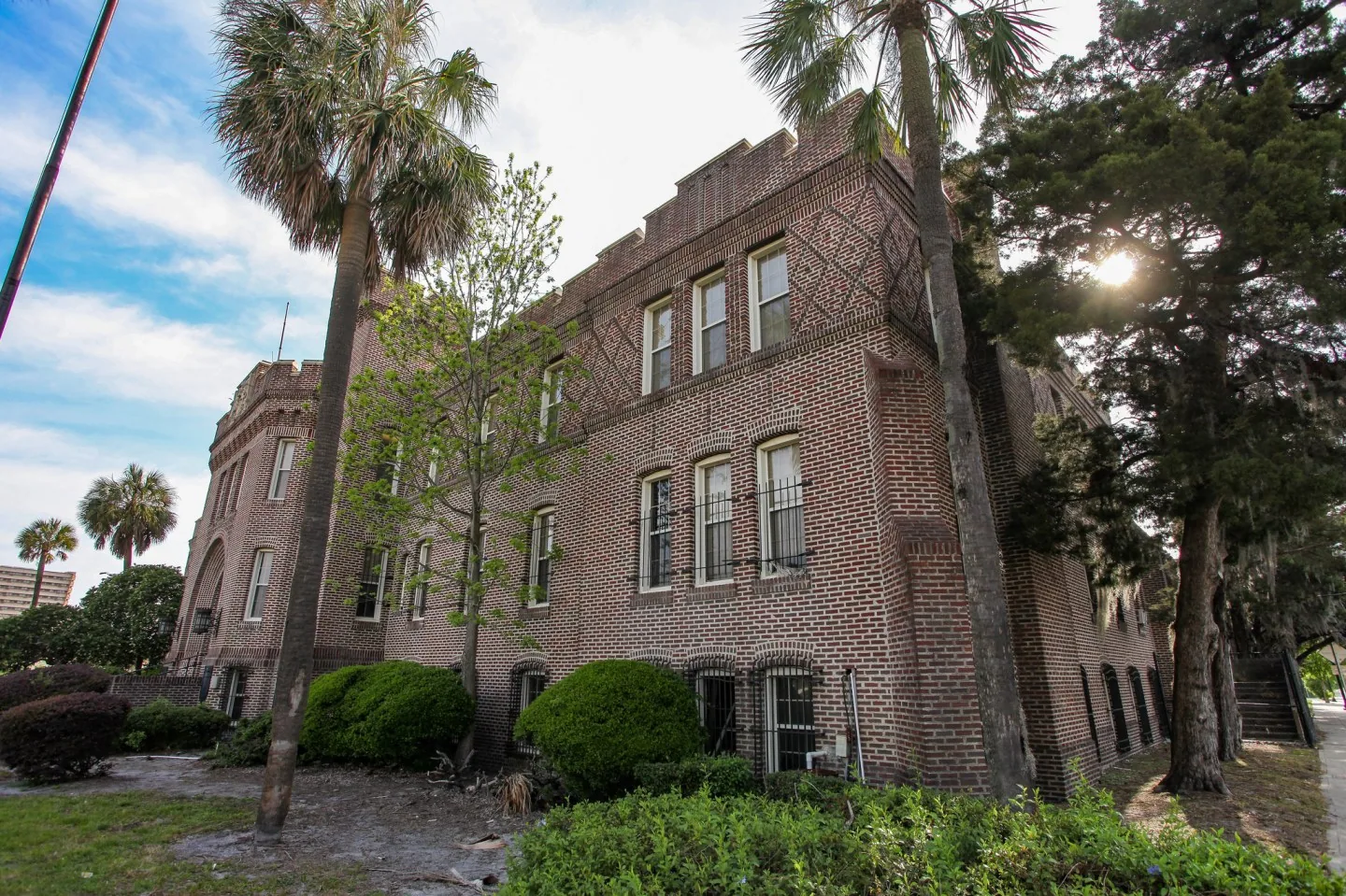
Miramar and Beyond: where the Guard is building
The state announced $87.5 million to expand the existing Miramar readiness center and to build new armories in Homestead, Gainesville and Malabar. For Broward, that means the Miramar facility is being enlarged, and an enlargement is a roofing event in its own right. Wherever a new addition meets an older building, there is a seam in the roof, with flashing, a change in height and sometimes a change in roof system.
Those tie-ins deserve careful design, because water finds the joint between old and new faster than almost anywhere else on a building. Two different roof systems have to be joined with details that suit both, and the older half may have years of wear that the new half does not. We look at the existing roof first, test it for trapped moisture with an infrared moisture survey, and size the transition to what is actually there, not to what the drawings assume.
An armory roof plan should account for both readiness activity and routine community use. We identify drill dates, equipment deliveries and any secure area below the work, then phase tear-off so access stays clear. Large roof drains and wall transitions receive close attention because a blocked path can put water over storage or electrical rooms. The closeout package records the installed assembly, fastener pattern and maintenance points, giving facility staff useful information for future inspections and budget planning.
Big Open Rooms: drill halls, vehicle bays and long spans

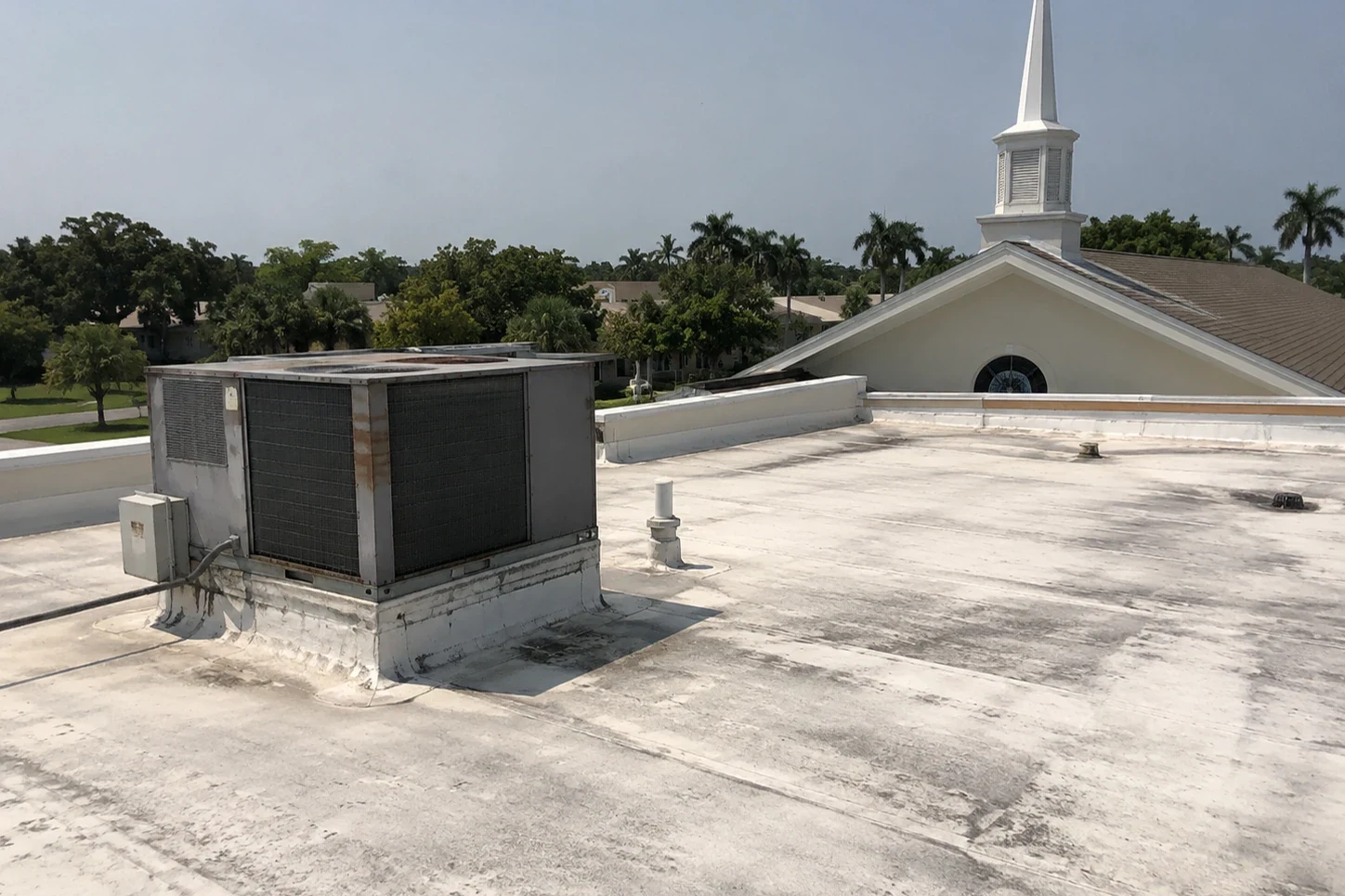
Armories typically include a large drill hall, offices, classrooms and covered or enclosed vehicle space. A long open span needs a long structural deck, and long decks flex a little under load. A flexed low-slope deck holds water in the middle of the span, so ponding can show up on a roof that looked fine when it was new. After a Broward downpour, we watch where the water lingers and how long it stays, because a puddle that is still there the next morning is a drainage problem, not a patch job.
Military hangars share the long-span problem. Tall walls and wide doors also catch wind, and the roof edge takes the first hit. Irma pushed gusts toward 100 mph over much of Broward in 2017, and Wilma left damaged roofs all over the county in 2005. For a building with a big, open interior, standing seam metal and well-attached single-ply membranes are common choices, each with tested edge details approved for the High Velocity Hurricane Zone.
Drill Weekends and Weekdays: finding the working window
Many Guard units train on weekends, so a weekday morning can be quiet inside an armory while a Saturday is crowded. That pattern can help a roofer, if the unit agrees: tear-off and noisy work land on the days when fewer people are inside, and the crew finishes and cleans up before the next drill. The unit's own calendar, not ours, makes the call, and if a training exercise moves, our schedule moves with it.
Staging matters as much as the schedule. Parking lots and vehicle yards are often busy with equipment, so we agree on a laydown area and a crane or lift location in advance, keep walkways and bay doors clear, and protect equipment stored below an open roof section. Our occupied building reroofing approach fits here: work in sections, dry in every day, and leave the building secure at night.
Public Money, Public Paperwork: how state-funded roof work moves
Armory projects usually come with funding that is tied to a bid, a scope and a calendar. Submittals are reviewed before material is ordered, inspections happen at set steps, and the final package of photos and paperwork has to be in order before the work is accepted. A roofer who treats that as an afterthought slows down the people trying to spend the money well.
We write scopes in plain terms, list each layer of the proposed assembly, and keep photos that show what was found under the old roof. An agency planning several buildings, as public agencies often do, gets the same clear unit descriptions and written condition data that a budget office can read. Roofing on federal and state military property is often specified to the Unified Facilities Criteria (UFC) for roofing as well, so we read the spec before we price the job.
Storm Duty: a roof that is ready before the call comes
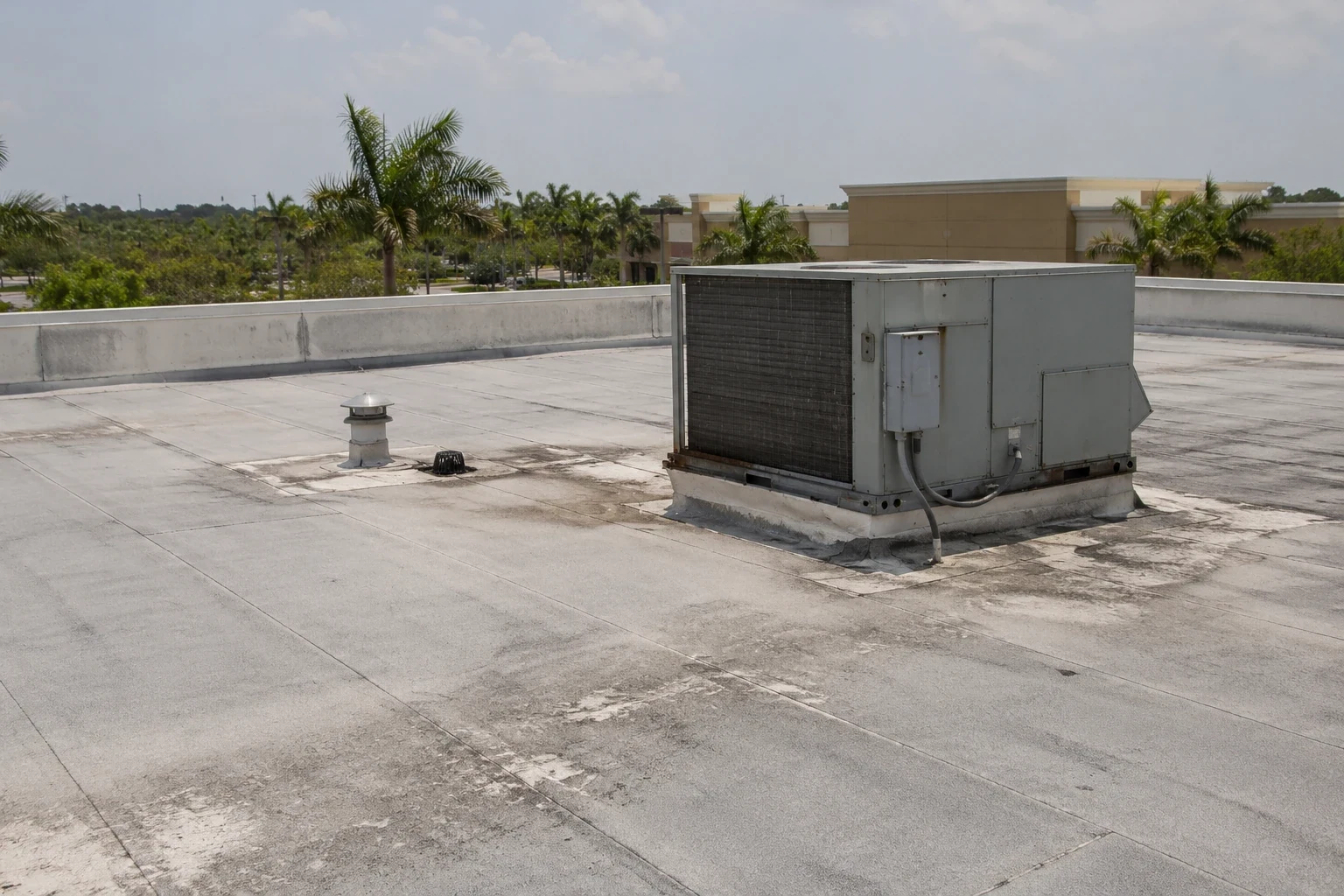
A drill hall that takes on water in September, in the thick of hurricane season, loses more than a ceiling tile. Before each hurricane season, we walk the roof, clear drains and scuppers, check the perimeter metal and make sure rooftop equipment is strapped down. Wilma put 99 mph gusts on Fort Lauderdale in 2005, and Irma brought three tornadoes to Broward in 2017, including an EF-0 near Oakland Park. The lesson from storms like those is to secure everything that can become debris, because a loose cap or a stacked pallet of insulation becomes a missile in a gust.
After a storm passes, the first job is dry-in. A tarp, a temporary patch or a sealed penetration will keep water out of a drill hall long enough to schedule the permanent repair. A leaking roof over stored equipment or a training floor costs more every day it is left open. For a visual record of what the storm did, we take photos of every damaged area and support the building's insurance claim paperwork if the damage is covered.
Questions We Hear Often
Where is the Florida National Guard's Miramar Readiness Center?
In Miramar, about 20 miles south-southwest of Pompano Beach. The state announced $87.5 million to expand it and to build new armories in Homestead, Gainesville and Malabar, so the Broward facility is getting larger.
Why do armory roofs pond in the middle of a span?
Long decks flex under their own weight and under the weight of standing water. That slight sag turns a flat roof into a shallow bowl. Fixes range from added drains or tapered insulation to a different system, depending on how much water stays and for how long.
Can roof work be scheduled around drill weekends?
Often, yes. Noisy work goes into weekday windows when fewer people are inside, and the crew leaves the roof sealed and the site clean before the next drill. The unit sets the calendar and we build the plan to fit it.
What changes when an addition is built onto an older armory?
The joint between the old roof and the new one becomes the weak point. Flashing, height differences and mismatched systems all meet there. We test the older roof for trapped water first, then design a transition detail that suits both sides.
How do you prepare an armory roof for hurricane season?
We walk it early. Drains and scuppers get cleared, edge metal and fasteners get checked, and rooftop units are inspected for loose straps. Anything that could fly, such as loose flashing or stacked materials, is secured or removed from the roof.