Roofing for Insurance Adjusters and Restoration Contractors in Pompano Beach, FL
Hurricane Wilma's eye was wide enough to cover most of Broward County on October 24, 2005, and Irma came through in 2017 and put gusts of 80 to 100 mph over most of Broward. For an adjuster or a restoration contractor in Pompano Beach, FL, the question is seldom whether a storm hit. The harder part is sorting what the storm did from what the sun and the wet season had already done.
We repair and replace commercial roofs after storms, and we document them for the people who price and approve the work: adjusters, carriers, restoration contractors, owners and their managers. Our inspections come with dated photos, moisture maps and a written scope, our emergency line is open every hour of every day, and coverage decisions stay with the policy and the carrier, where they belong.
Storm Record: what Wilma and Irma did to Broward roofs
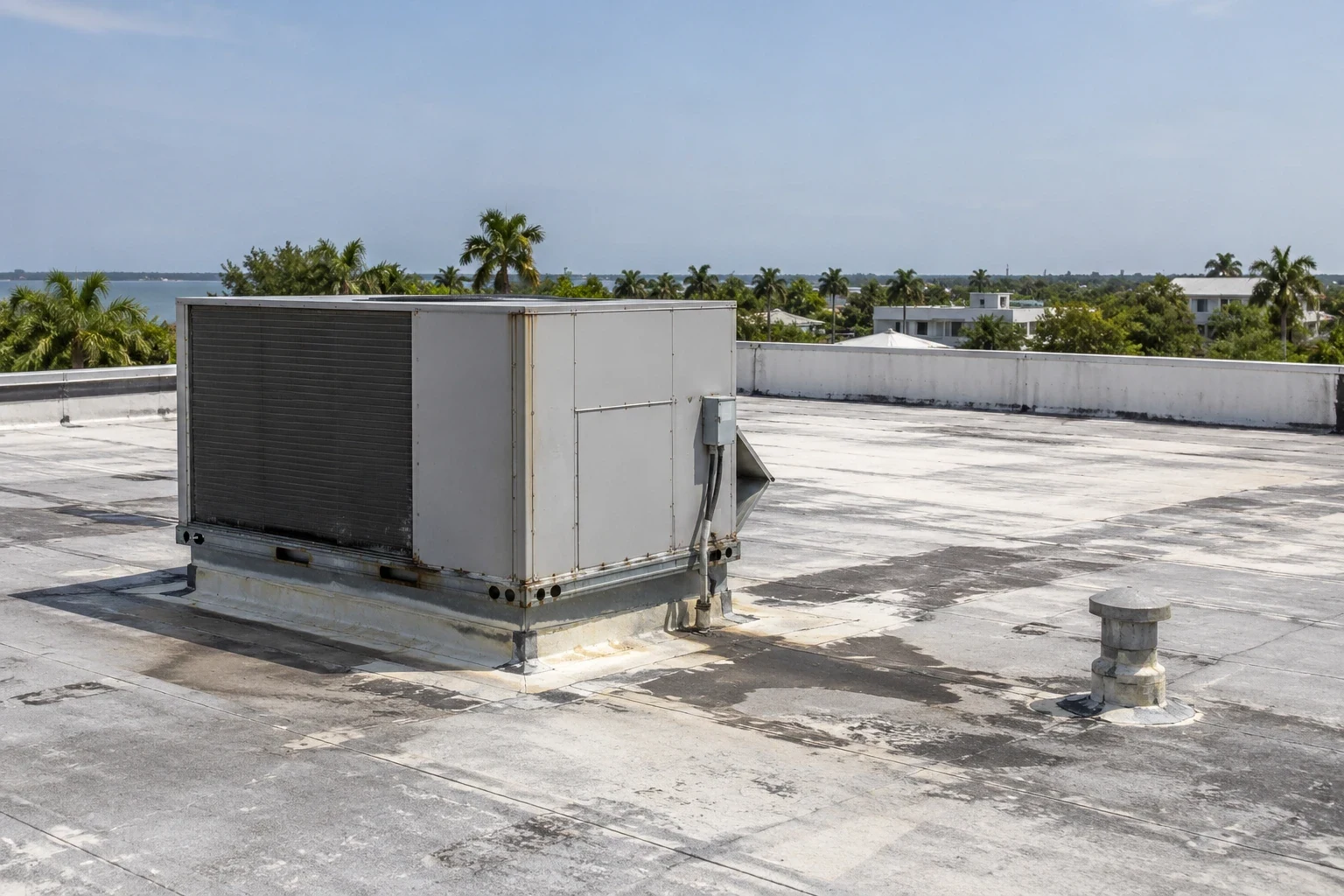
Wilma put a 98 mph gust through Pompano Beach itself, and roof damage was reported across the county. Irma added three tornadoes, one of them an EF-0 that touched down briefly near Oakland Park, and about 3 feet of surge on the coast. Wind like that goes after the same places every time: the perimeter, where edge metal and coping lift first, rooftop equipment sitting on curbs without tie-downs, membrane seams at the corners and any loose ballast on an older system.
A wind event leaves a pattern that a trained eye can read. Peeled membrane that starts at a corner, debris strikes in a line and creases where a sheet flapped all tell a story. We photograph and map that pattern so the loss description matches the roof, and the adjuster who arrives a week later sees what we saw on the first day. A hurricane damage roof repair starts with that record.
Wind or Wear: telling a storm loss from an aging roof
Every adjuster has stood on a failing roof and had to decide how much of the failure belongs to the last storm. Heat and UV do slow work on a Florida roof: chalked surfaces, brittle sealant, seams that open a little more each summer, a low spot that stains after every rain. A storm leaves fresh tears, clean edges, sharp creases and shifted material. Both can live on the same roof.
We separate them in writing. A hands-on walk, core samples and an infrared moisture survey show which areas are wet and how deep the water has traveled, and dated photos tie each finding to a spot on the plan. We do not decide coverage and we do not shade a report in either direction. If a roof was due for replacement before the storm, the report says that, along with what the storm added.
Flood Days: when the drains are what failed
On April 12, 2023, Fort Lauderdale measured roughly 26 inches of rain. A claim review still begins with the building in front of us: we compare its outlet capacity and overflow route with the roof plan. Water that clears as runoff continues is different from a low area that stays full after the rain. We record the drainage, insulation and deck conditions before deciding what the storm changed.
That answer comes from the roof drains and scuppers as much as from the membrane. We check for blockage, low points and undersized outlets, and note whether the water entered through a wind breach, a worn seam or a clogged drain. The repair depends on the answer, and who pays depends on the policy. We describe what we see, with photos of standing-water marks, and leave the coverage call to the carrier.
Dry-In First: stop the water before the estimate
Waiting on an estimate while a roof remains open can leave the building exposed to more water damage. Moisture in insulation can affect ceiling tile and drywall, so we begin with temporary protection: tarping, patching, sealing penetrations and clearing drains. The photos and receipts from that visit go into the file.
Our emergency roof repair line answers any hour of any day, including the first morning after the storm passes. In the Powerline and South Andrews industrial areas, where large low-slope warehouse roofs dominate the market, one breach can wet a wide stretch of insulation, so we mark off the wet area and cover it before anything else.
Scope Sheet: an estimate an adjuster can check line by line
A good repair scope reads like a list someone else can verify: the area affected, the number of layers, whether the insulation is wet, the length of edge metal, each curb and penetration, the drains, and any code-driven items. In Broward every exterior roofing component must hold a Miami-Dade Notice of Acceptance, so a repair can call for different products than the ones on the roof, and the scope should say so up front instead of surfacing later as a supplement.
We price each item on its own, mark which ones trace to the storm and photograph every location, so a desk adjuster in another city can follow the file without a site visit. The same material feeds a written roof condition report that the owner keeps for the next claim or the next sale.
Dry-Out Crews: sharing a building with restoration
On a loss, the roofer is one trade among several. Water extraction, drying equipment, ceiling and drywall work, electrical and the roof all want the same building, and the roof comes first, since interior work under an open roof gets undone by the next afternoon storm. We coordinate with the restoration contractor so the roof is dried in before the tear-out finishes, and we tell the drying crew where we found moisture above their work.
When a general contractor runs the rebuild, we work as the roofing sub on the same schedule. When a property manager is juggling tenants across several suites, we keep one point of contact so the calls do not scatter.
Questions We Hear Often
Can you tell wind damage from age on the same roof?
Usually, yes, because the two leave different marks. Fresh tears, creased membrane and lifted edge metal come from wind. Chalking, brittle sealant and old ponding stains come from years of sun. We map both on one sheet and state which areas worsened because of the storm.
How fast can someone get on a roof after a storm?
As soon as it is safe, at any hour. We send a crew to tarp or patch, and we ask whether anyone is inside the building. A big storm leaves many buildings open at once, so call early and give us the address, the roof type if you know it and where the water is showing.
Do I need an estimate before temporary repairs?
No. Stopping the water comes first, and the estimate follows once the roof is protected. Keep the photos and receipts from the visit, and we will fold them into the file so nothing has to be reconstructed later.
Will you meet our adjuster on the roof?
Gladly. We bring the photos, the moisture map and the scope, point to each finding and answer questions on the spot. A walk together usually settles a disagreement faster than a thread of emailed pictures.
What if the carrier approves less than the roof needs?
We put the difference in writing, with the measurements and findings behind it, and we can walk the roof again with the adjuster. We cannot overrule a carrier, but a clear, dated file gives you and anyone advising you something solid to work from.
Does a repair in Broward have to use approved products?
Every exterior roofing component in the High Velocity Hurricane Zone needs a Miami-Dade Notice of Acceptance, so we check repair materials against current approvals before ordering. It can change the product list and the price, and we flag that in the scope before work begins.