Johns Manville Commercial Roofing in Pompano Beach, FL
The stretch from mid-May to early July is the roughest of the Pompano Beach wet season: damaging thunderstorm winds, tornadoes, lightning, hail and flooding. A roof that only has to shed rain is easy to build. A roof that also has to stand up to hail, a roofing crew's boots, a dropped tool and a gust that lifts the edge is a different job, and that is where a manufacturer with a broad line earns some attention.
Johns Manville sells single-ply membranes in TPO, PVC and EPDM, along with modified bitumen, built-up roofing and rigid insulation. We install, repair and maintain those systems on commercial buildings in Pompano Beach, FL. Because the line covers both thermoplastic and asphalt-based roofs, we get to tell an owner plainly which family suits the building, instead of pushing every roof toward the same system.
Two Families: single-ply sheets and layered asphalt
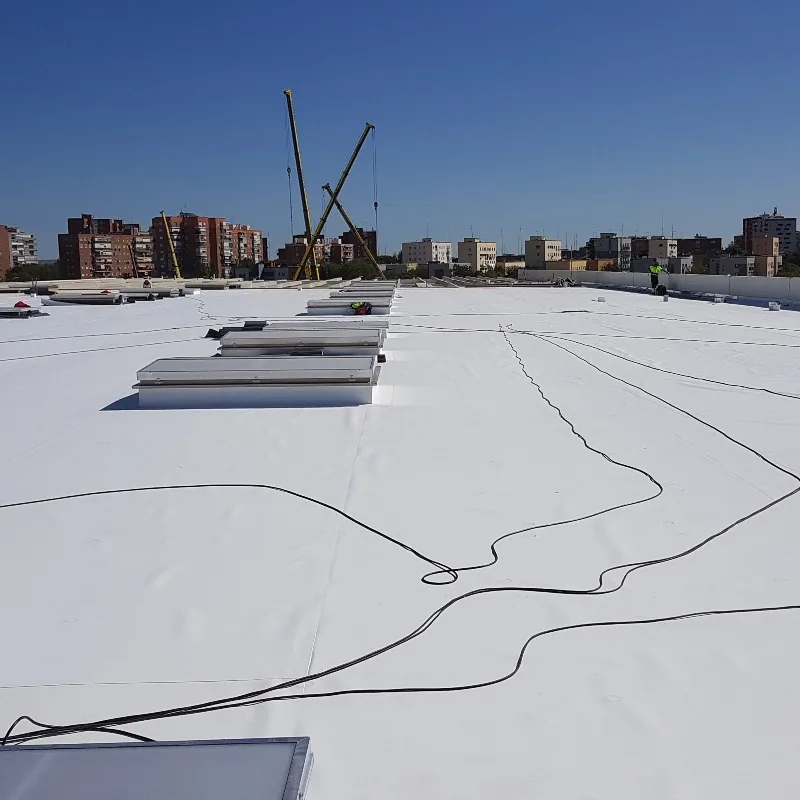
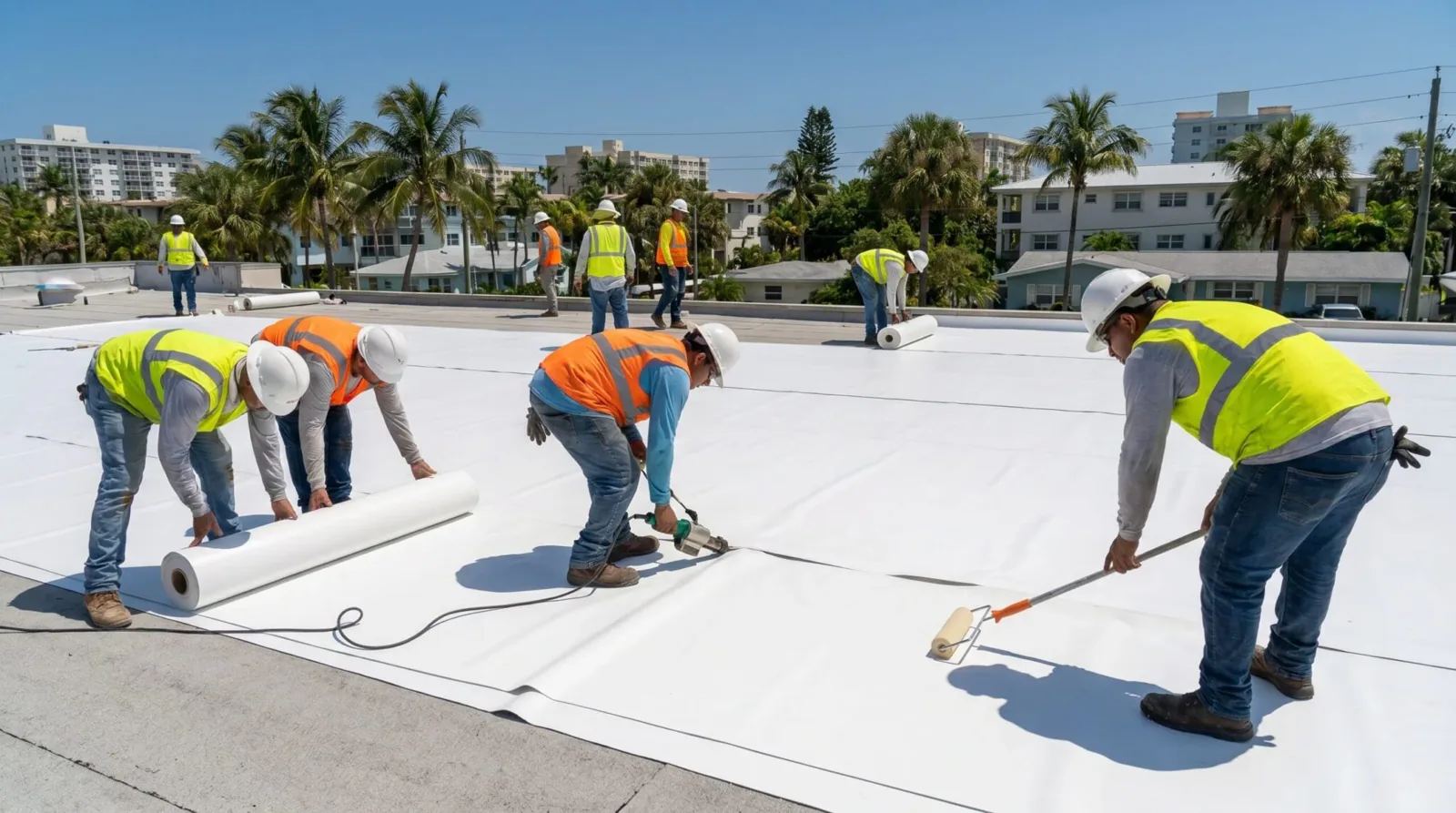
Single-ply is one sheet, either welded or glued at the seams, on top of insulation. It goes on fast, weighs little, and gives an owner a white surface if wanted. Layered asphalt roofs, which means built-up roofing and modified bitumen, use two or more plies, each one bonded to the one below. If the top layer is scuffed or bruised, the plies underneath keep the water out.
Neither is better in the abstract. A long, plain warehouse roof with few penetrations favors a white single-ply. A roof with heavy foot traffic, lots of equipment or a maintenance crew walking it every week often rewards multiple plies. We look at the traffic, the penetrations and the budget, then lay out both options on paper. The tradeoffs between built-up roofing and TPO roofing are real, and the SBS sheets from makers like Soprema sit in the same asphalt family, so the same questions about plies, laps and surfacing apply.
The assembly choice has to match the building as well as the product family. We look at the deck, insulation, existing roof layers, rooftop equipment and expected service traffic, then compare the membrane or asphalt option that fits those conditions. At a drain or parapet, the accessory details matter just as much as the field sheet. A submittal review records the exact layers and attachment method so the crew has a single reference when materials arrive and the owner can see what was installed.
Hail and Foot Traffic: what extra plies protect against
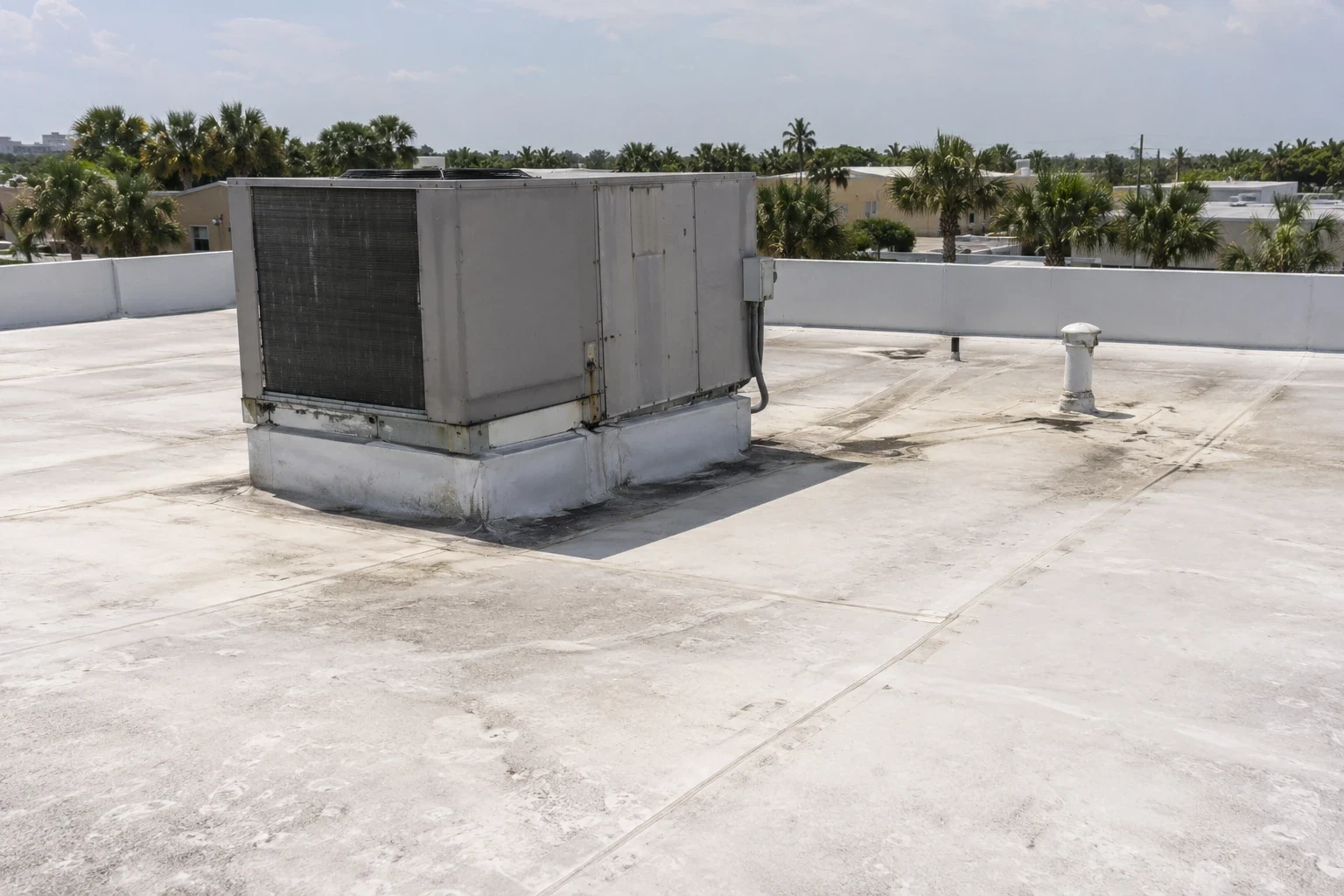
Hail is not an everyday visitor in Broward, but the early wet season can bring it, and a roof that has been soaked for weeks is more vulnerable than a dry one. Thin sheet over soft insulation bruises, and the bruise becomes a leak after the next hard storm. A surfaced cap sheet or a gravel finish takes the hit better, and a firm cover board takes more of the load than foam alone. None of this makes a roof hailproof. It changes how much damage a typical event leaves behind.
Foot traffic does as much damage as weather. Air conditioning technicians, satellite installers and the contractor who comes to change a filter each leave scuffs. We lay walk pads on the paths people actually use, and we flag roofs where the traffic is heavy enough to justify a tougher system. A preventive maintenance visit finds the first scuff before it turns into a puncture.
Torch, Mop or Cold: picking an application that fits your building
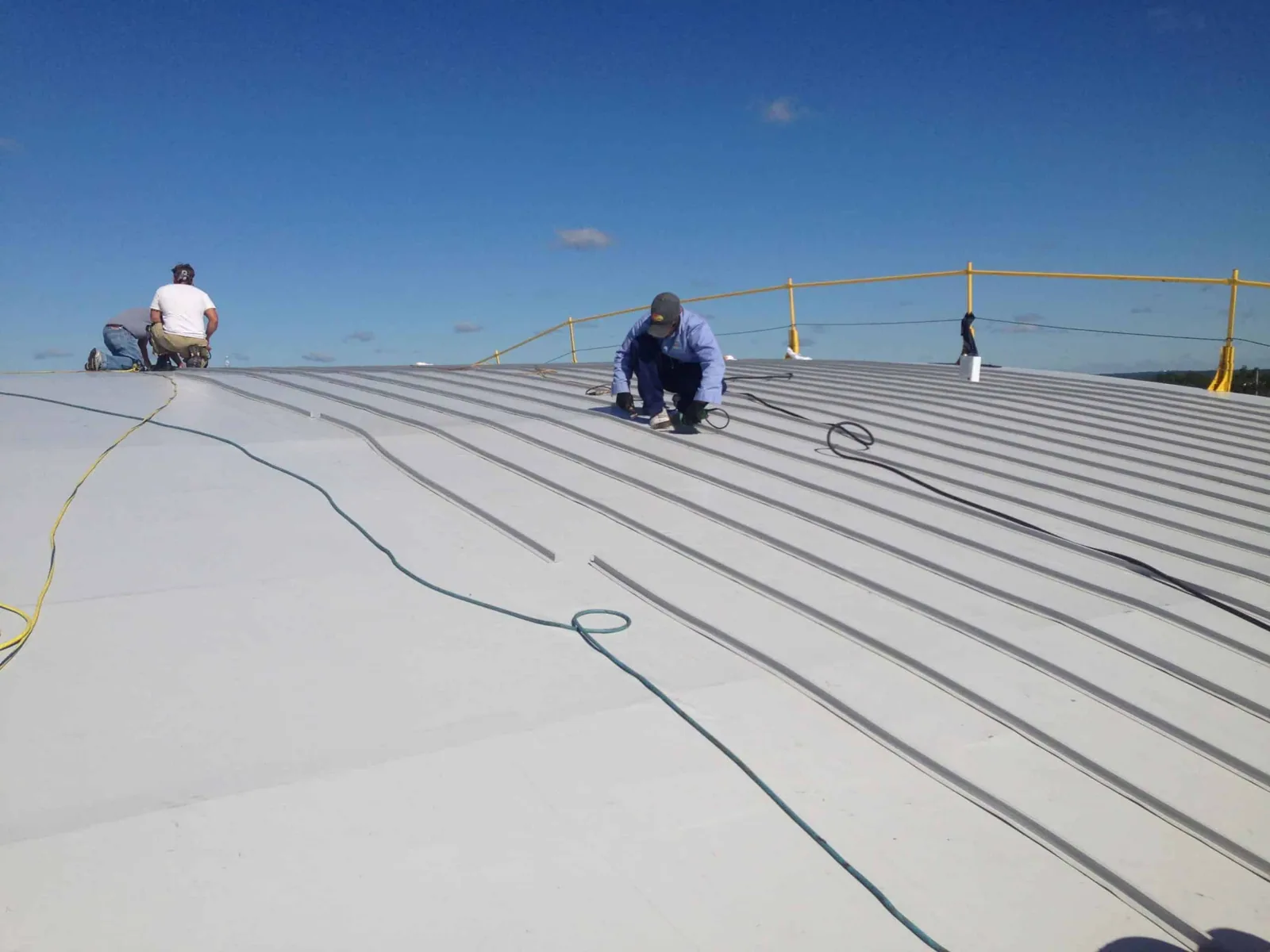
Asphalt systems can be applied with a propane torch, hot asphalt, cold adhesive or self-adhering sheets. Each has a place. Torch work is quick but involves open flame, and many insurers and landlords restrict it, particularly near food, fuel or tenants who live above. Hot mopping puts a kettle on site and fumes in the air. Cold-applied and self-adhering plies avoid both, at some cost in speed and surface sensitivity.
We ask three questions up front: what is stored under this roof, who is in the building and what does the insurer allow. A food warehouse, in a park like the Atlantic Business Center (with about 1.20 million square feet of industrial buildings), gets a very different answer from a medical office with patients below. We write the method into the scope so nobody learns the rules halfway through the job.
ENRGY 3 and Thickness: the part of the roof you cannot see
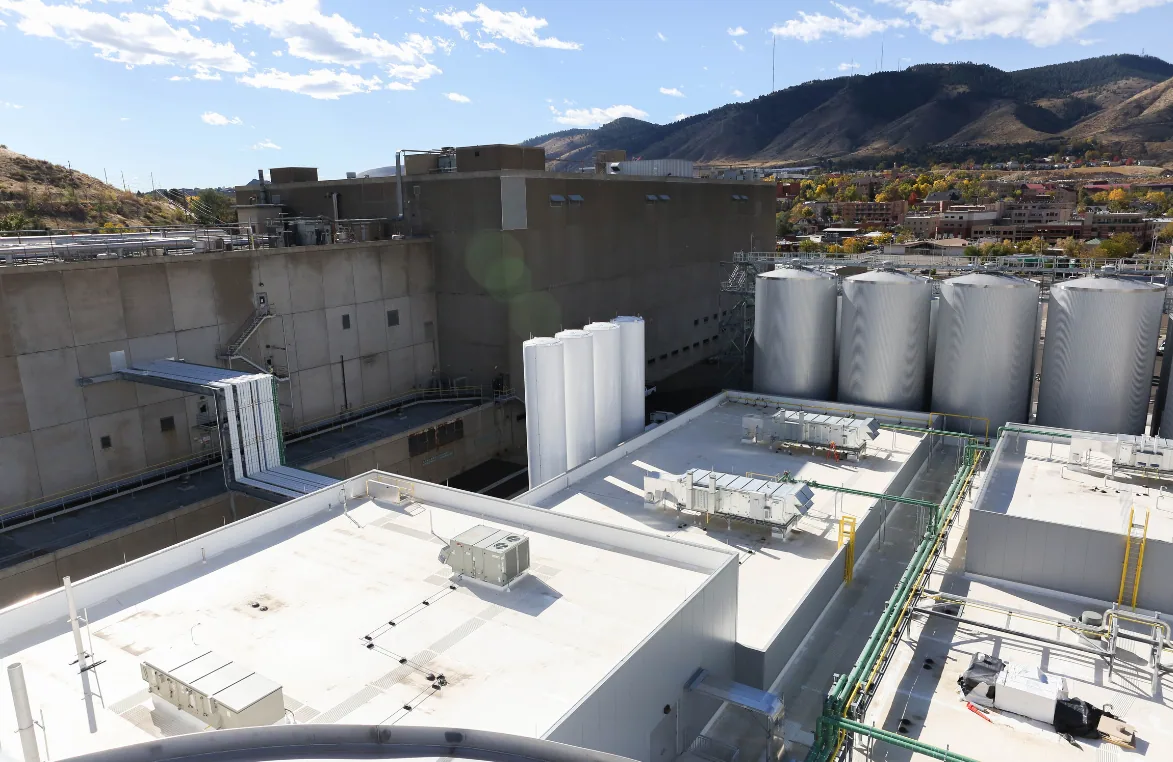
ENRGY 3 is Johns Manville's polyisocyanurate insulation, and it sits under the membrane on many of its commercial roofs. More thickness means better thermal performance, but it also raises the roof surface. That has consequences: parapets become shorter relative to the roof, door thresholds and curbs may need to be raised, and flashing heights have to be rechecked. Reroofing with extra insulation without checking those heights is how an owner ends up with water pouring over a threshold.
Tapered boards solve the other half of the problem. Flat roofs often have sags or dead spots where water lingers after the afternoon storm, and a tapered layer can build a gentle fall to the drains without changing the deck. We measure first, draw the slope, and show how the numbers work before a board is cut. When wet insulation is found, we take it out rather than cover it up. Wet board is heavy, it never dries under a sealed membrane in a county where the dewpoint sits in the 70s all summer, and the moisture it holds keeps feeding blisters and rot in the deck below.
Several Buildings: one manufacturer, many roof ages
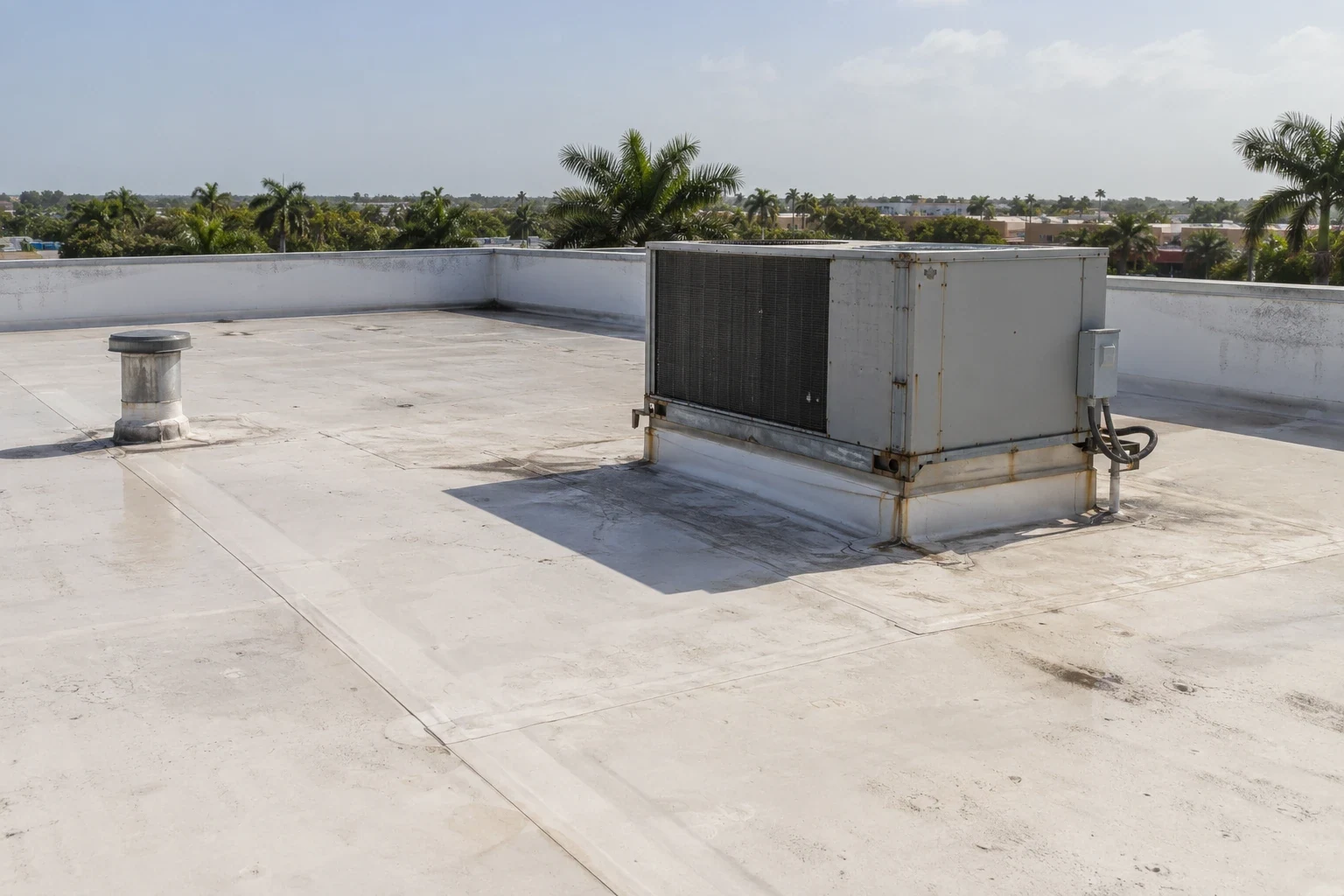
Owners with more than one building rarely have matching roofs. A building in Alpha 250 near Lyons Road and Sample Road and a retail center on Federal Highway will not necessarily share membrane, insulation or leak history. Keeping one manufacturer across a group of buildings makes details, repair materials and specification language easier to standardize, though some owners prefer to compare a second line such as Holcim Elevate at each replacement.
We survey each building the same way and put the findings in one report, then build a multi-site roof program that spreads the spending across years, putting the worst roofs first. If an older roof is already under a Johns Manville system and the plies are still sound, we say so, and we stop short of replacing it.
Questions We Hear Often
Do Johns Manville roofs need to be built to the Broward hurricane rules?
They do, the same as any other commercial roof in the county. The exterior components of the assembly need a valid Miami-Dade Notice of Acceptance, and the wind design for a Risk Category II building here is 170 mph.
Is built-up roofing still a sensible choice in Florida?
For the right building, yes. A multi-ply roof with a surfaced cap holds up to foot traffic and hail better than a thin sheet, and it can be repaired in layers.
Can you add a new single-ply over a JM modified bitumen roof?
In some cases. The old surface must be dry, flat enough and free of blisters, and a cover board or separation layer is usually part of the plan.
What happens if my roof has wet insulation?
We find the wet area with an infrared scan, cut it out and replace it with dry board. Leaving it in place means the next membrane starts out damp.
Which is quieter to install near tenants, hot asphalt or cold-applied plies?
Cold-applied systems have no kettle, no fumes and no open flame. They suit busy buildings, though they need a dry surface and careful timing around the afternoon rain.