Fire and Smoke Damage Roof Repair in Pompano Beach, FL
NWS Miami puts lightning on its short list of early wet-season hazards, right alongside damaging winds, tornadoes, hail and flooding. A strike is one of the few ways a roof can catch fire with nobody touching it. Add a kitchen exhaust fan, a rooftop electrical unit that overheats in July, or a torch left too close to a roof edge, and the list of ways a Pompano Beach, FL building can start burning from the top gets long.
A fire is only part of the damage a roof takes. The rest comes after the trucks arrive, when hose water soaks the insulation, smoke settles into the deck and the membrane that survived is cooked, warped or contaminated. We repair fire and smoke damage on commercial roofs from the first tarp to the final seam, and we work with the people who have to decide what happens to the building next.
Strike and Spark: how a commercial roof catches fire
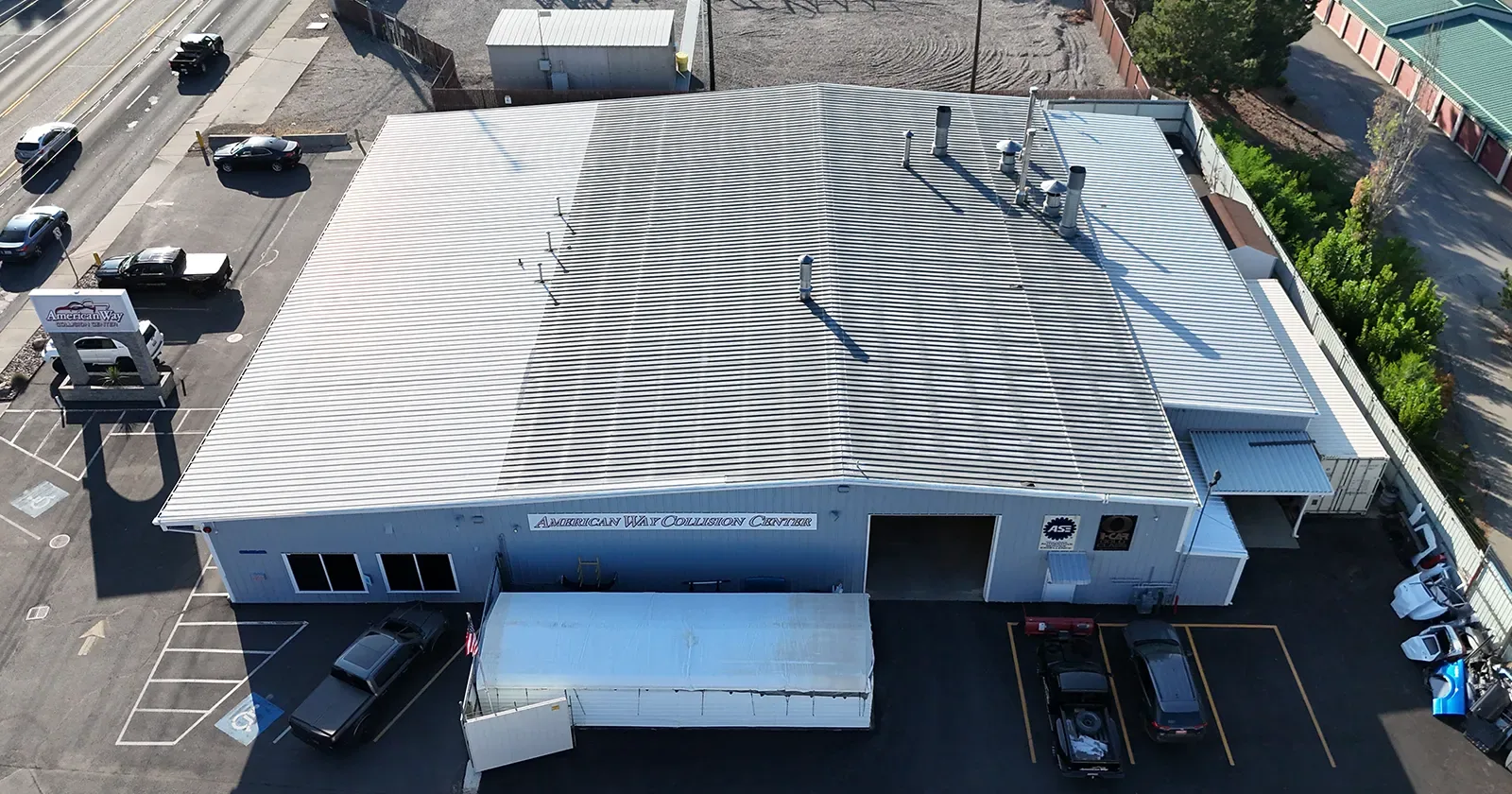
A roof is made of materials that burn when they are pushed far enough. Foam insulation, asphalt layers, rubber and plastic membranes all contribute fuel once flame reaches them. Fire usually arrives from outside the roof system. Lightning is the obvious one, but the long list also includes overheated or faulty rooftop equipment, grease built up in and around kitchen exhaust, electrical faults in lighting and solar wiring, and hot work such as cutting, welding or torch-applied roofing.
A fire inside the building can also push up through a penetration or a skylight and ignite the roof from below. Each source leaves a different pattern of damage, which is why we ask how the fire started before we pick up a tool. A strike leaves a small, deep scorch. A kitchen fire leaves heavy soot around one exhaust opening. A fire from below can burn the underside of the deck and leave the surface looking nearly normal.
After the Trucks Leave: water and smoke on the roof
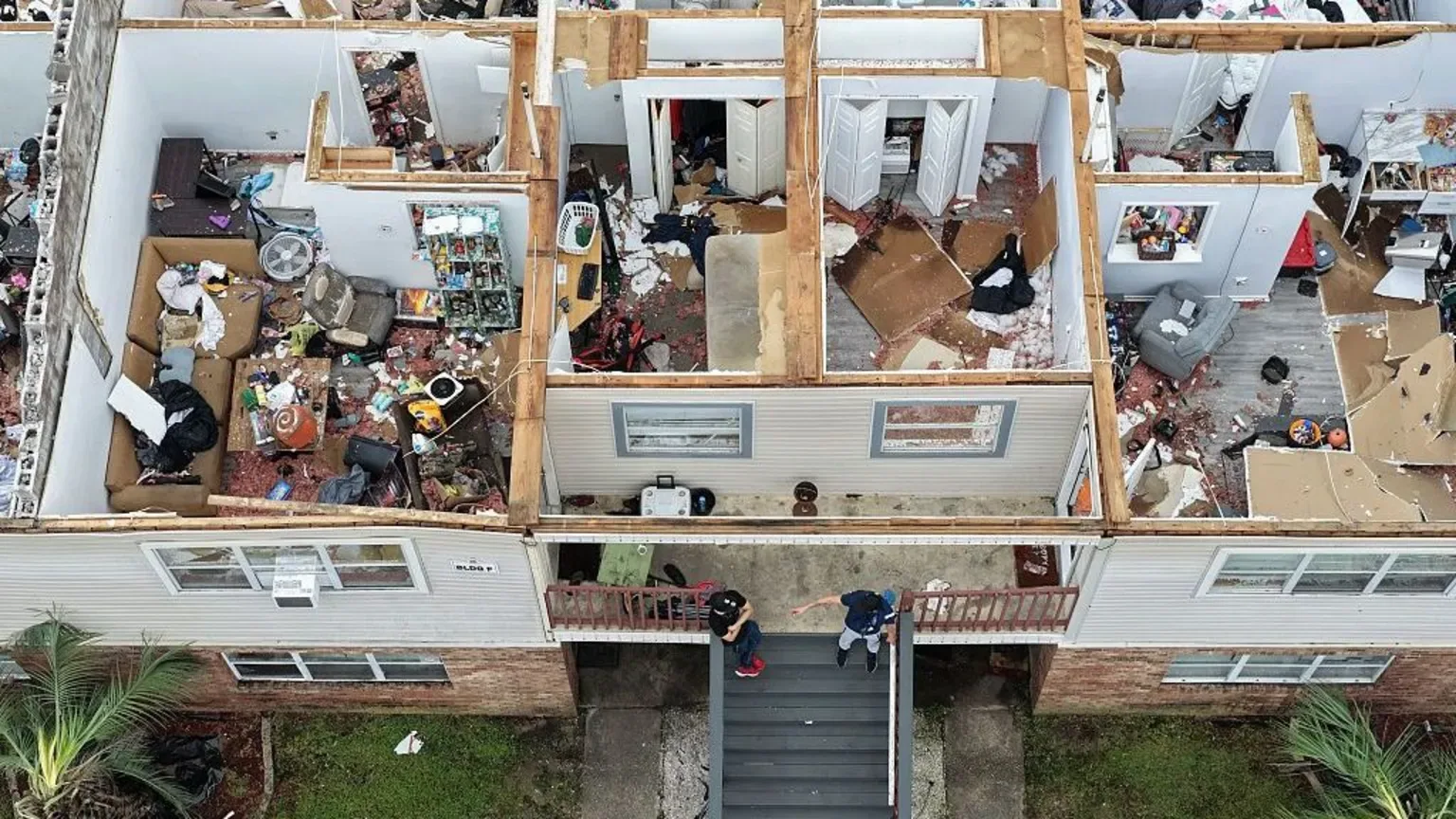
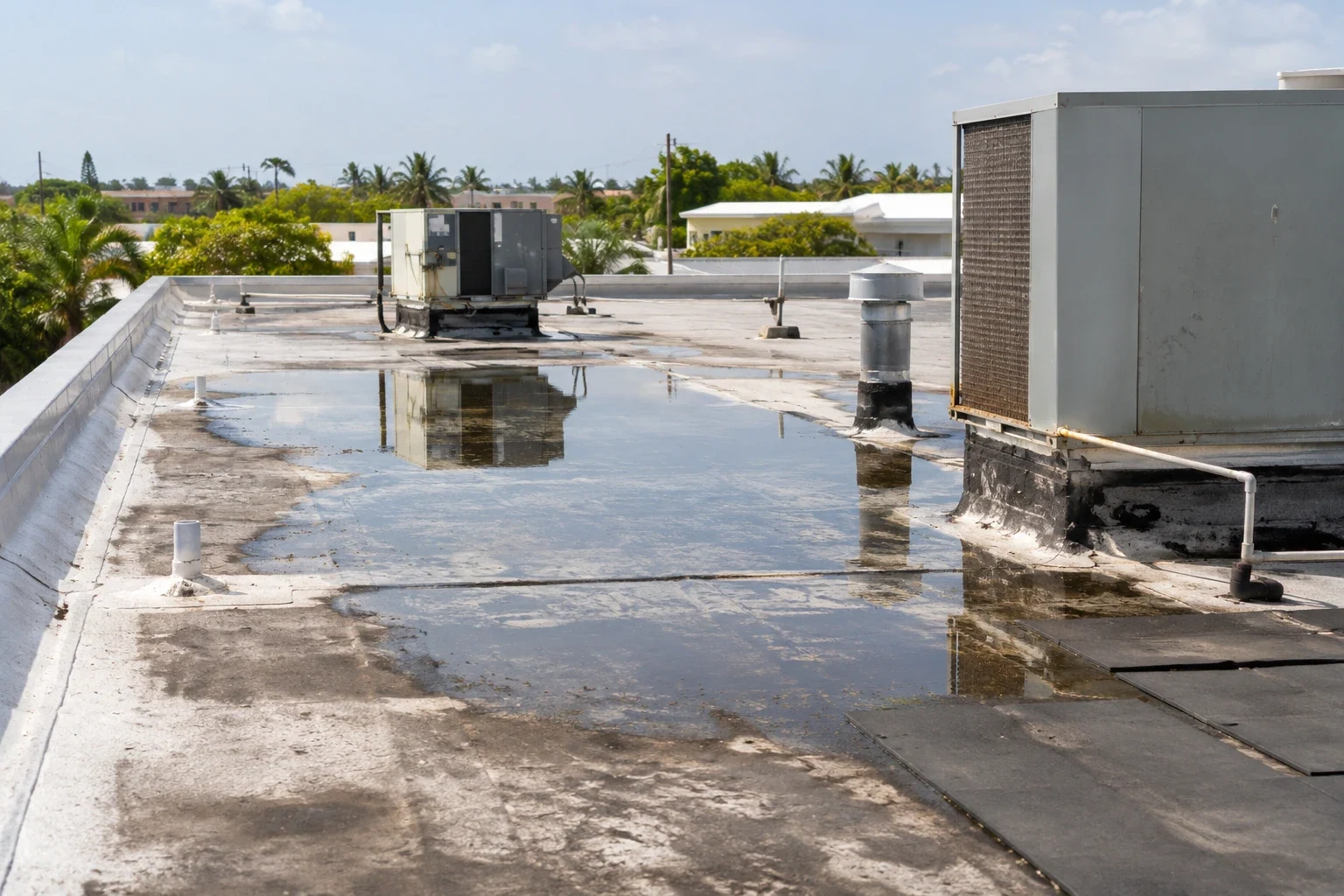
Firefighting water goes into the building and onto the roof, and it ends up in places the fire never touched. Insulation soaks like a sponge, and wet insulation hangs onto its water for a long time in a humid climate where dewpoints sit in the 70s through the summer. Smoke and soot settle into every crevice and film the membrane with a residue that can wreck a patch bond and stain what is left.
For the building owner, the roof becomes a race against the weather. Open decks and burned membrane cannot take an afternoon storm, and the wet season brings one most days. Getting a tarp or temporary membrane over the damaged area within hours matters more than a perfect plan, and our emergency roof response is set up for that call.
Char and Melt: reading what the fire did to the roof
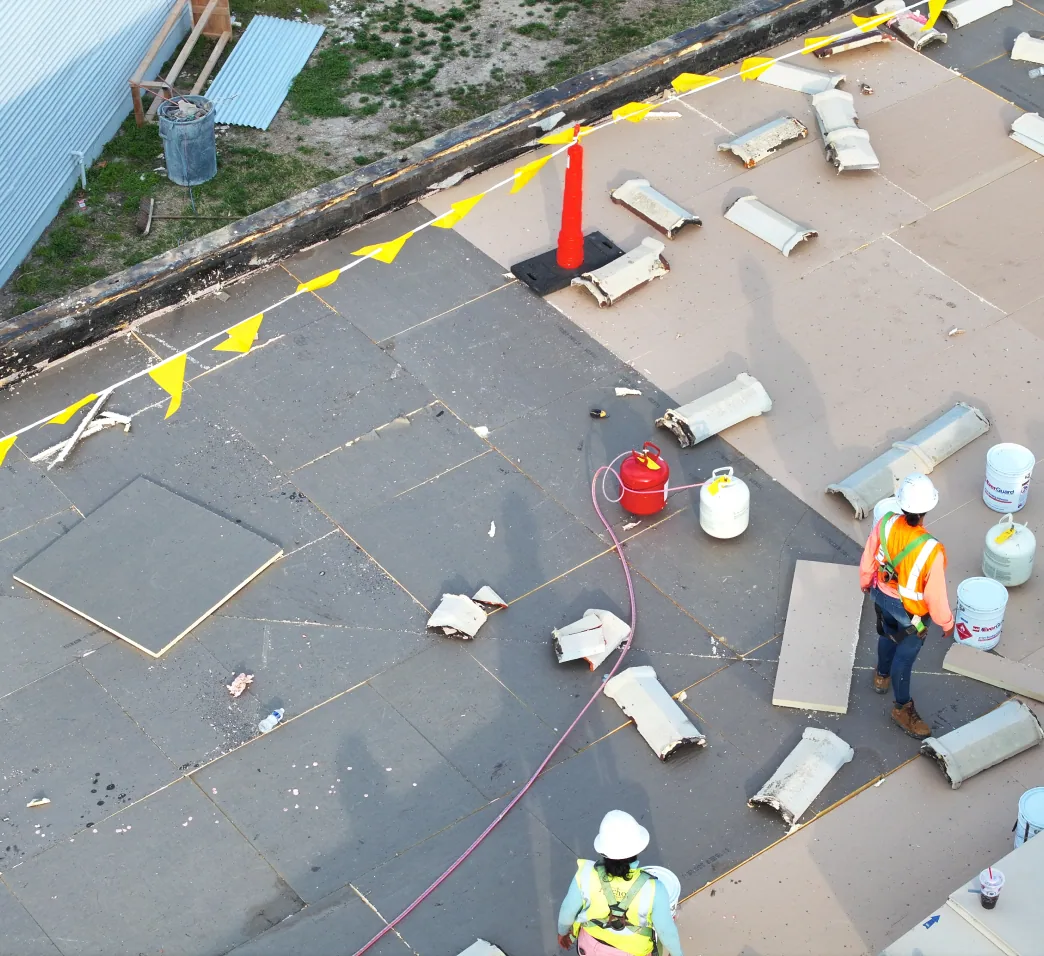
Once the building is cleared for access, we survey the roof for a detailed picture. Membrane that has melted, blistered or turned brittle gets mapped. Insulation is checked for char, shrinkage and moisture, and the deck is inspected for warping, burn-through or loss of strength. Steel decks can twist under heat, and wood or concrete decks can lose capacity in ways that are not visible on the surface. Where the structure looks compromised, we ask a structural engineer to weigh in before anyone puts weight or equipment on the roof.
Smoke damage reaches further than flame damage, so we test the area around the fire, not just the burned spot. Core cuts and moisture readings show how far the wet insulation extends, and we check flashing at nearby penetrations for heat distortion. Everything gets photographed and measured, because the scope that comes out of this survey is what the insurance carrier, the fire marshal and the contractor all rely on.
Making It Safe: tarping, shoring and the first week
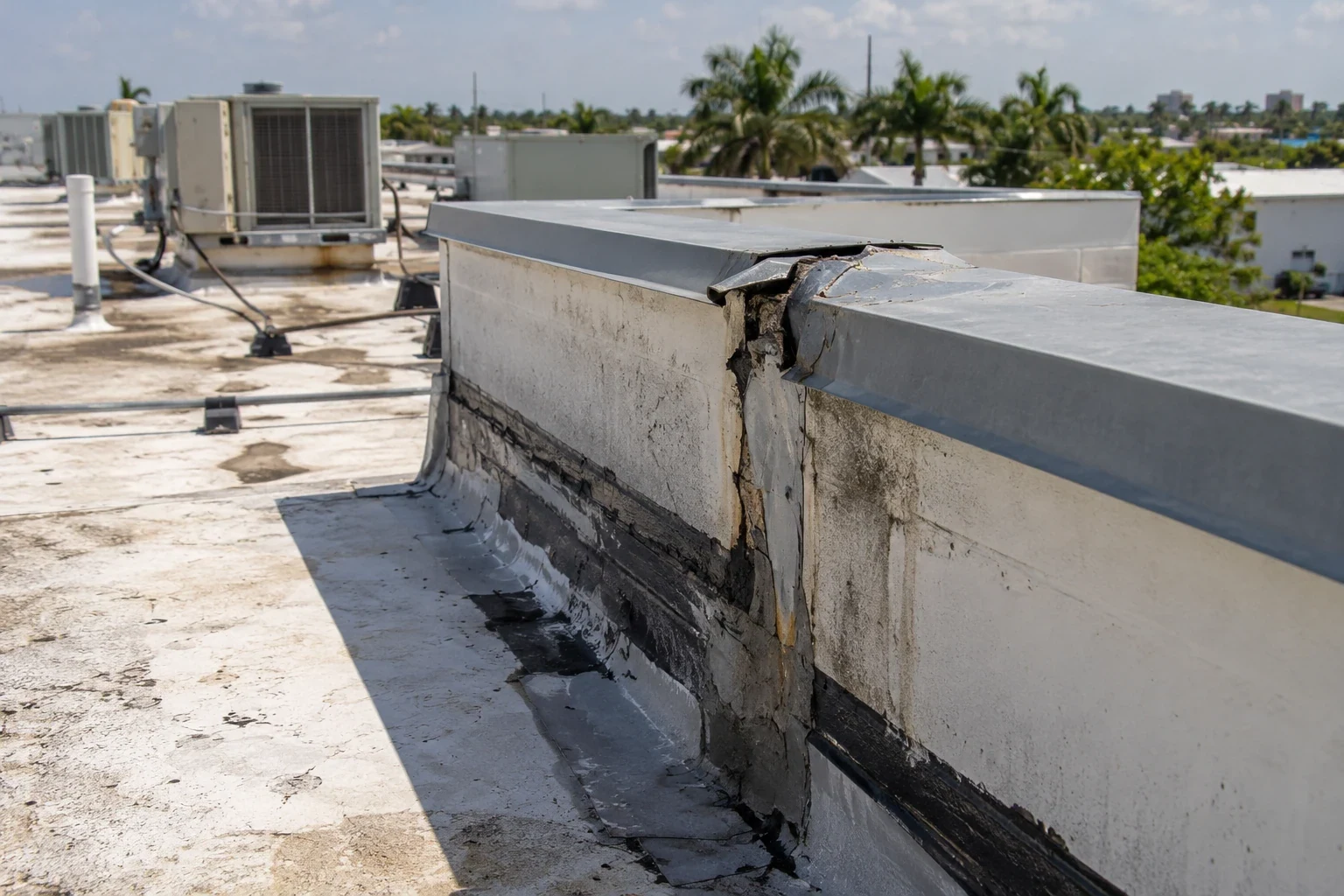
The first job is to stop more damage. That means temporary coverage over exposed areas, a safe route to walk the roof, and in some cases shoring below a weakened deck. Where wet insulation sits over a finished space, we cut it out and dry the area as early as possible, since trapped water in a fire-damaged roof keeps the building from drying.
Next comes the plan. Depending on how much of the roof was affected, the repair can range from replacing a section of deck and insulation and tying in new membrane, to a full tear-off. Cost follows the extent of the burned area, the condition of the structure, how much insulation is wet, and how complicated the access is. A fire-damaged roof often ends up as a roof replacement when more than a small area is involved.
Paper Trail: documenting a fire loss for the carrier
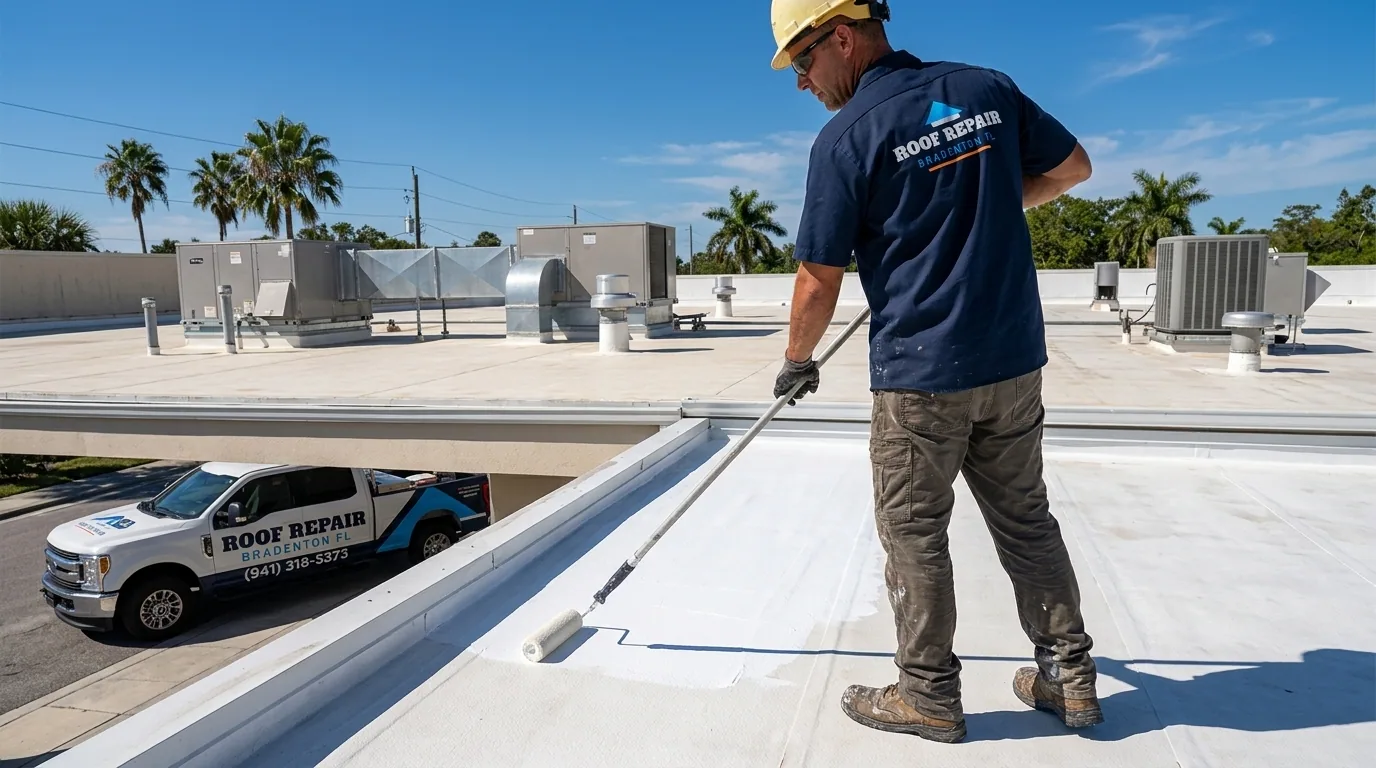
A fire claim lives or dies on documentation. We photograph the damage before anything is moved, mark the burned and wet areas on a roof plan, and keep samples when they matter. The written report separates fire damage from older wear, since adjusters will look for that difference. Our claim documentation gives the owner a clean record to hand over, though the carrier makes the coverage decision.
If the building is leased, the report gives both landlord and tenant the same facts to work from.
Rebuilding to Code: fire ratings and hurricane-zone approvals
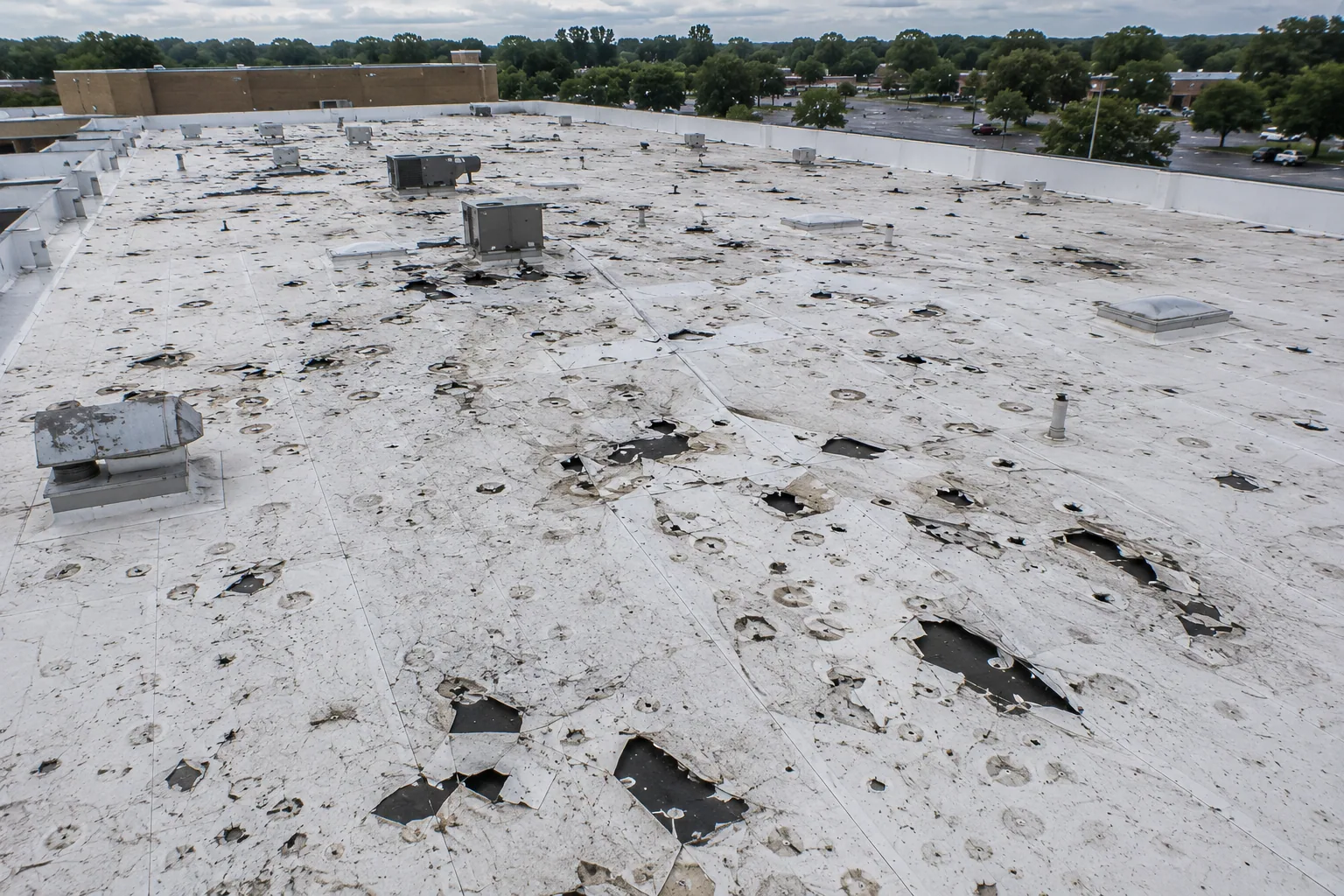
A new roof after a fire has to meet more than one standard. Roof assemblies carry a fire classification, and the replacement parts must keep it. Broward also sits in the High-Velocity Hurricane Zone, so each exterior roofing part must hold a current Miami-Dade product approval, and the roofing chapter of the 2023 Florida Building Code (8th Edition) sets the rules. Rebuilding the roof means picking a tested assembly that satisfies both rules, not just the old materials in a new spot.
That is also the moment to fix whatever made the fire worse. Cleaner penetration details, a walkway away from the exhaust, or a cover board that adds a layer of protection over the insulation can reduce the damage if it happens again. We bring those options to the owner while the scope is still open.
Where the Fire Load Sits: kitchens, hangars and entertainment roofs
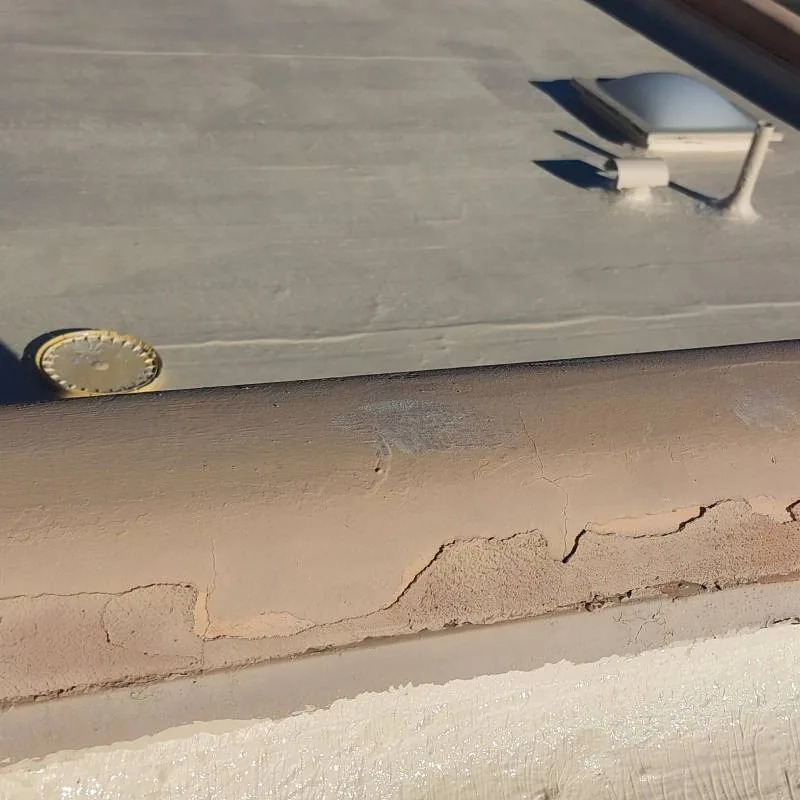
Different buildings carry different risks. Restaurant roofs collect grease around the hood exhaust, and the dining and entertainment district planned along South Dixie Highway Corridor includes restaurant uses that require careful exhaust-flashing details. The Pompano Beach Air Park has aircraft maintenance and avionics shops alongside hangars. After a fire, we inspect the deck, insulation, penetrations and roof attachment before defining repairs. In Gateway Lakes, a mapped industrial area near Lyons Road and the Turnpike, smoke can halt distribution and damage the roof membrane.
Wherever a fire starts, the pattern after it is the same: stop the water, document the loss, repair the structure, rebuild to the rules. A roof opened by hurricane damage follows the same order, and so does a failed detail like flashing at a burned penetration.
Questions We Hear Often
Who should I call first after a fire, the roofer or the insurance carrier?
Both, and the carrier first for the claim number. Our part is the dry-in and the survey, because rain on an open deck makes every number bigger. We can document the roof for the carrier on the same visit.
Can a fire-damaged roof be repaired, or does it need replacing?
A small, contained burn over a sound deck is repairable. When fire has reached the deck, spread under the membrane or soaked a wide area of insulation, replacement is the sounder call, and we show you the photos that support it.
How far does smoke damage spread on a roof?
Further than the flames. Soot coats membranes, hot gases can soften sheets and foam that never caught fire, and smoke contaminates the surface in ways that stop patches from bonding. We test beyond the visible burn to find the edge.
Is the roof safe to walk after a fire?
Not until someone qualified has looked at it. A scorched deck can feel solid and still give way, and wet insulation hides soft spots. We check the structure from below and from above before a crew steps onto the damaged area.
Does a new roof after a fire need new approvals?
Yes, the replacement parts need to match a tested, approved assembly for the High-Velocity Hurricane Zone and keep the roof's fire classification. We select materials with valid product approvals and handle permit paperwork with the building department.